Bean to Bar: Finding the Best Chocolate Tours in the Americas

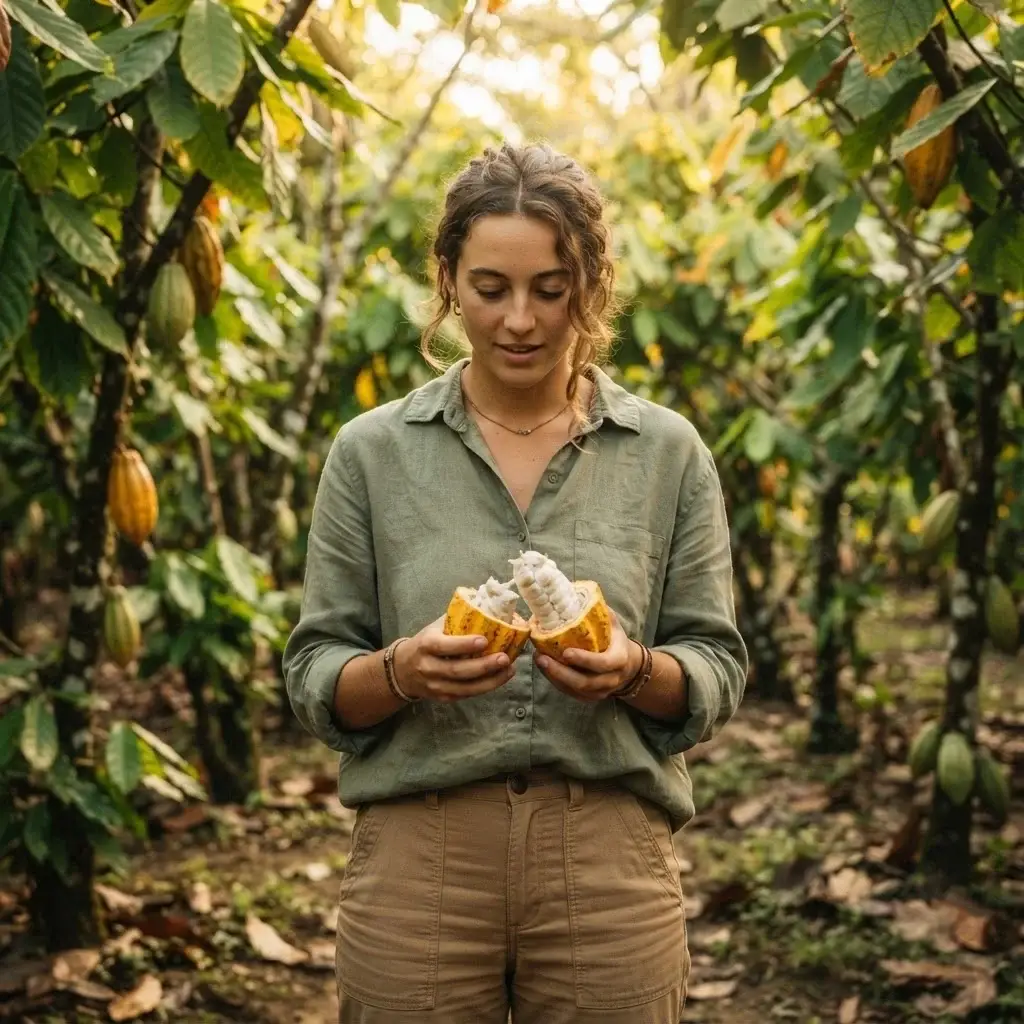
There is something quietly extraordinary about holding a cacao pod for the first time. It’s heavier than you expect, the outside almost leathery, and when someone splits it open in front of you, the white pulp inside smells tropical and bright, nothing like what you picture when you think of chocolate. That moment, the one where everything you thought you knew about chocolate gets quietly rearranged, is exactly what the best chocolate tours in the Americas offer.
I have spent years building a travel life around experiences that teach me something real. Teaching English in Thailand, living with a family in Ghana, hiking through China, these weren’t destinations I picked off a list. They were places I chose because I wanted to understand how the world actually works. And chocolate, it turns out, is one of the most fascinating entry points into the history, culture, and daily life of the Americas. From the Mayan jungles of Belize to the volcanic highlands of Ecuador to a working plantation in Hawaii, the story of cacao is woven into the identity of this entire hemisphere.
This guide is for anyone who wants more than a candy-shop sample. It’s for the solo traveler willing to plan something a little different, the first-timer who wants a cultural experience they’ll actually remember, and the curious reader who has heard about “bean-to-bar” and wants to know what that means in practice. Let’s go find some really good chocolate.
Why Chocolate Tours in the Americas Hit Differently
Chocolate did not originate in Switzerland or Belgium. It originated here, in this hemisphere, thousands of years ago. Researchers at the Natural History Museum of Utah trace the origins of chocolate to ancient Mesoamerica, where cacao was consumed as a ritual drink by the Olmec as early as 1900 BC. The Maya later developed sophisticated cacao cultivation, using the beans as currency and incorporating cacao into ceremonies tied to birth, marriage, and death. The Aztec word “xocolātl” is where our word “chocolate” eventually comes from.
When you take a chocolate tour in the Americas, you’re not just watching someone melt and mold candy. You’re touching the actual origin story. That context changes the whole experience.
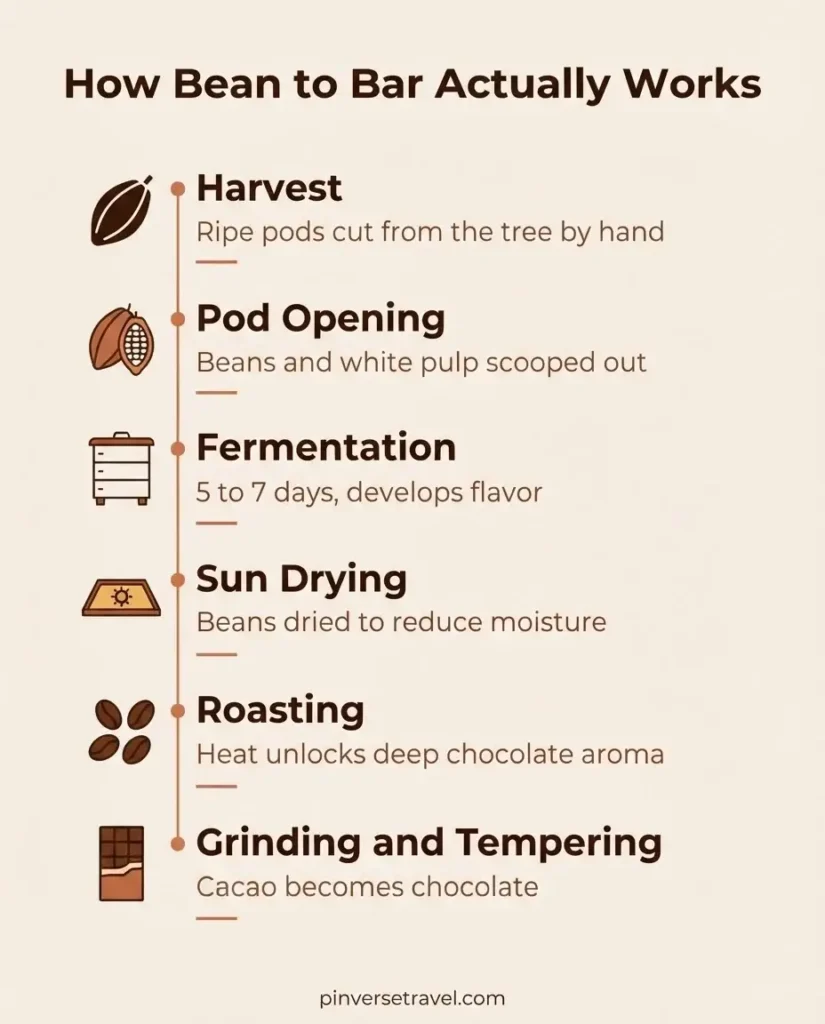
The other thing worth knowing before you start planning: there is a meaningful difference between a factory tour and a cacao-farm experience. Factory tours show you industrial production, interesting in their own way, but the soul of a chocolate tour is the agricultural side. The farm. The pod. The fermentation, the drying, the roasting, the grinding. “Bean to bar” is the phrase used in the specialty chocolate world to describe the process of transforming raw cacao beans into finished chocolate, and producers who do it themselves, from their own land, are the ones worth traveling for. That is the benchmark I used to put this guide together.
Mexico: Where Chocolate Has Deep Roots and a Museum Worth Your Morning
If you’re backpacking through Central America or planning a trip through Mexico, Mexico City and Oaxaca offer two very different chocolate experiences that pair beautifully together.
Mexico City: MUCHO, the Museum of Chocolate
Museo MUCHO, short for Mundo Chocolate, sits at Calle Milán 45 in the Juárez neighborhood. It is one of the only museums in the world entirely dedicated to the cultural and historical role of chocolate, and the fact that it exists in Mexico, where cacao was first cultivated and worshipped, makes it feel exactly right. The MUCHO Museum is open Monday through Sunday, 11 a.m. to 5 p.m. General admission is 85 Mexican pesos, well under $5 USD at current exchange rates, which makes it an easy add to any Mexico City itinerary. Guided tours run every hour from 11 a.m. to 4 p.m.
Inside, the exhibition traces cacao from its Olmec and Mayan roots through the Spanish conquest and into the modern craft chocolate movement. There are interactive displays, a solid café, and a thoughtfully stocked shop with single-origin Mexican bars. It is not a huge space, but it earns its time. Budget about 90 minutes.
Oaxaca: Grinding Cacao the Old Way
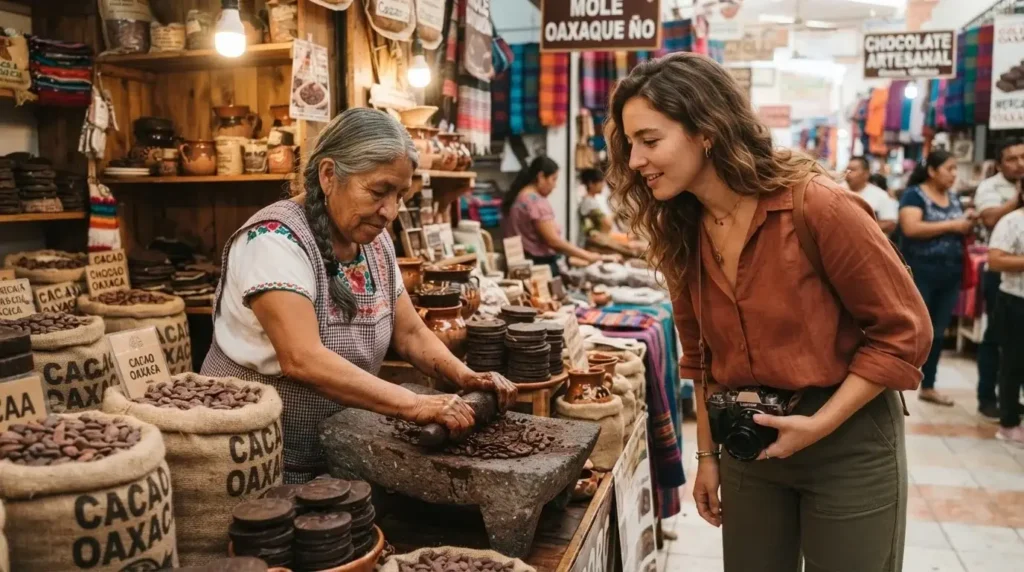
Oaxaca is a different experience entirely. Here, chocolate isn’t a museum exhibit. It’s alive in the markets, in the kitchen, in a cup of tejate (the ancient Oaxacan drink made from cacao, corn dough, and mamey sapote flower). The Mercado 20 de Noviembre in the city center is famous across Mexico for its food stalls and its chocolate vendors, where cacao, sugar, and cinnamon get ground together on stone mills right in front of you. You can taste different blends, buy chocolate paste to take home, and watch the whole process happen in ten minutes.
For something more structured, small-group chocolate and cacao workshops in Oaxaca walk you through roasting cacao beans, grinding them on a traditional metate (stone grinder), and understanding how this process connects to mole, one of Oaxaca’s most celebrated dishes. Many workshops are available through local cultural operators and run one to two hours. Because Oaxaca’s culinary tourism infrastructure is strong and English-speaking guides are common, this is one of the most solo-traveler-accessible chocolate experiences in the region.
What to eat while you’re here: Order a cup of tejate at one of the market stalls. It is cold, slightly grainy, and unlike anything you’ve had before. Then go find a bowl of mole negro and understand how cacao shows up in savory cooking too.
Belize: The Most Culturally Immersive Chocolate Experience in the Americas
If I had to point someone toward one chocolate experience in the Americas that genuinely earns the word “transformative,” Belize’s Toledo District would be at the top of my shortlist. Here in the deep south of the country, Maya communities have been farming cacao for centuries, and a handful of family-run operations have turned that heritage into extraordinary tours.
IXCACAO Maya Belizean Chocolate
IXCACAO Tours is a Maya-Belizean-owned family operation located 11 miles from Punta Gorda in the Toledo District. The name comes from Ix Cacao, the Mayan goddess of cacao and fertility. Juan and Abelina Cho run the farm and tours themselves, which matters enormously. This is not a tourism company that hired guides. This is a family inviting you into their world.
Their tour options range from a basic tasting experience (the Obsidian Tour, about 1.5 hours) to the Gold Tour, which runs from 9 a.m. to 1 p.m. and includes a cacao farm walk, a ceremonial cacao drink, chocolate making, chocolate tasting, and a traditional lunch cooked by Abelina herself. Reviews from travelers who’ve done it are remarkably consistent: the meal alone is worth the trip.
From the reviews: “This is almost certainly the best tourism experience I have ever had in 30+ countries.” That is the kind of thing people say when an experience is genuinely rooted in something real.
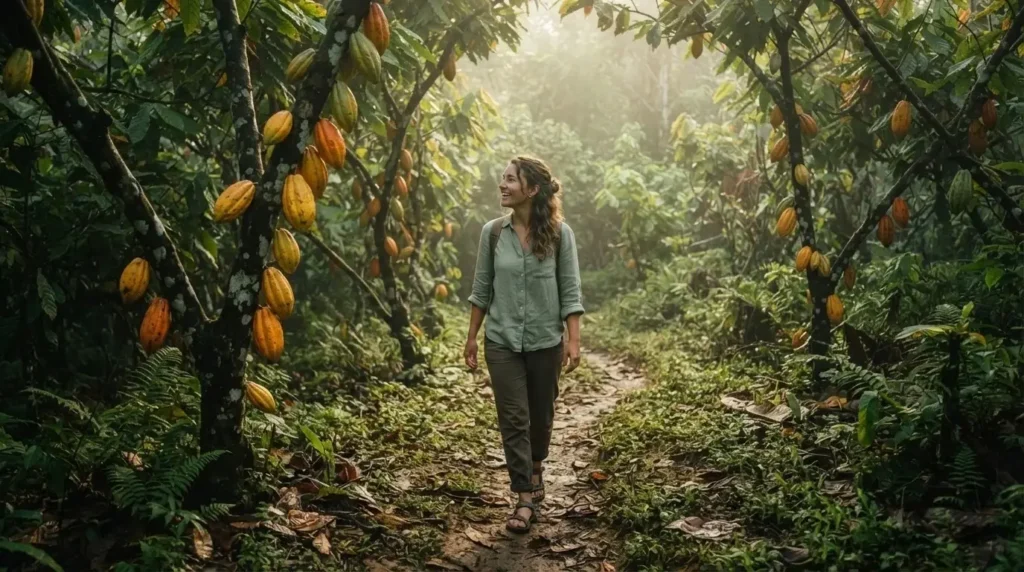
Getting to Punta Gorda takes some planning. From Belize City, you can fly via Maya Island Air or Tropic Air (about 45 minutes), or take the James Bus Line from the main terminal (a long but scenic overland journey of about 5 hours). From Punta Gorda, IXCACAO can help arrange local transport to the farm. All tours are by reservation only, so contact them well in advance, especially in peak season. Prices vary by tour tier and group size, so reach out directly through their site.
The Chocolate Festival of Belize
If your travel calendar is flexible, consider timing a visit to coincide with the Chocolate Festival of Belize, held annually in the Toledo District every May. The 2025 edition ran May 16-18. The festival brings together cacao farmers, chocolate makers, artisans, and food vendors for a multi-day celebration of Belizean cacao culture. It is unpretentious, deeply local, and exactly the kind of thing Emma’s audience travels for.
Ecuador: Cacao’s Most Celebrated Comeback Story
Ecuador grows what many chocolate makers consider the finest cacao in the world. The Arriba Nacional variety, native to the Ecuadorian lowlands, produces a naturally floral, nutty, complex bean that has earned the country a reputation for “fine aroma” cacao recognized globally. Ecuador’s government has even submitted its cacao cultural landscape for consideration as a UNESCO World Heritage tentative listing, citing the deep cultural and historical relationship between Ecuadorian communities and cacao cultivation.
What that means for travelers is that the raw material of a chocolate tour here is genuinely world-class. The question is where to experience it.
Hacienda Chocolat (Note: There is a Hacienda Chocolat in Puerto Rico as well, covered below. In Ecuador, watch for similar hacienda experiences near Guayaquil.)
The region around Guayaquil is Ecuador’s cacao heartland, and several haciendas in the area offer tours of working cacao farms. Hacienda El Castillo runs highly-rated cacao plantation tours from Guayaquil, and operators like Happy Gringo offer day-trip and overnight farm experiences that include chocolate making, animal interactions, and a genuine view of rural Ecuadorian agricultural life.
What to expect: you’ll walk the fields, see the pods growing directly on the trunk of the tree (a striking visual, since cacao pods don’t grow on branches but directly from the bark), split pods open to taste the fresh pulp, and follow the process through fermentation and drying. Many tours end with a tasting of locally made chocolate alongside a cup of hot cacao.
Getting there: tours from Guayaquil can be arranged as day trips. It’s one of the more accessible hacienda experiences in South America for solo travelers, since operators handle transportation and most offer English-speaking guides.
What to eat: Look for “colada de cacao,” a hot cacao drink made with raw cacao paste, panela (unrefined cane sugar), and cinnamon. It is nothing like hot chocolate. It is deeper, earthier, and tastes like the land it came from.
Peru: The City Workshop That Actually Delivers
Peru has become one of the great cacao-producing countries in South America, with regions like Cusco, San Martín, and Amazonas producing award-winning beans. For travelers who want a hands-on chocolate-making experience without the logistics of a remote farm visit, Lima offers one of the best urban workshop options in the hemisphere.
ChocoMuseo, Lima and Cusco
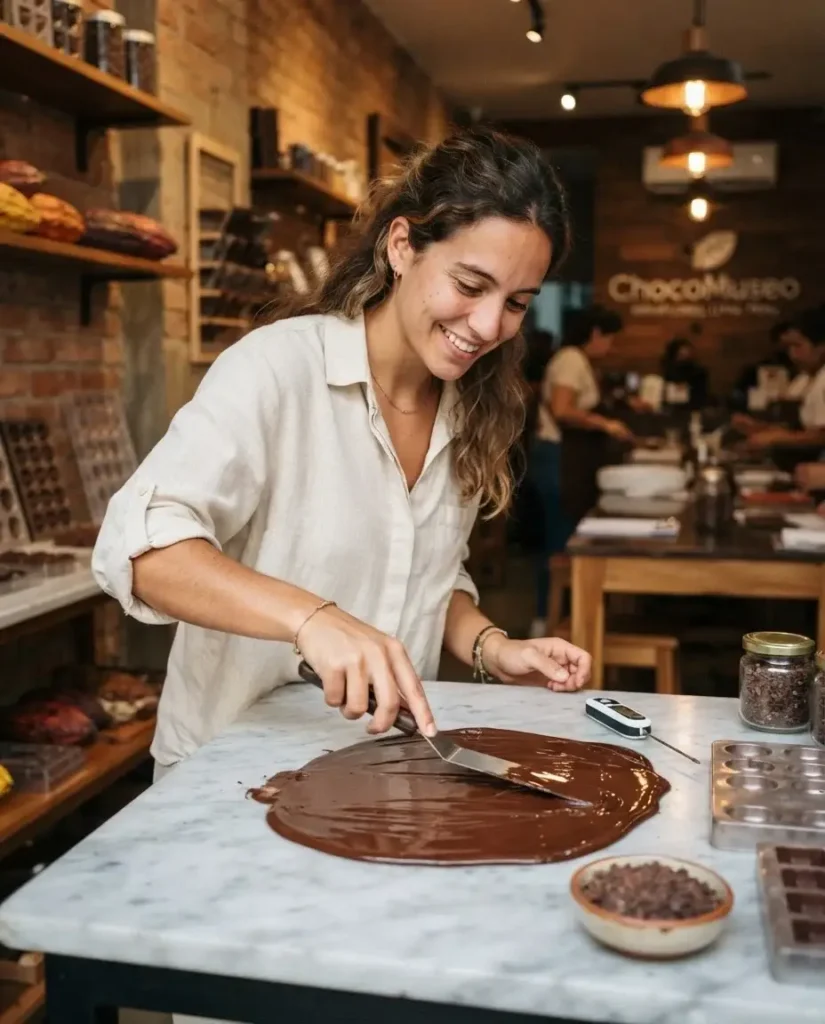
ChocoMuseo has locations in both Lima (Miraflores) and Cusco, and the experience at each is thoughtfully built. The museum section is free. The ChocoMuseo Lima Miraflores bean-to-bar workshop runs two hours and costs $30 USD for adults ($25 for children under 11). Sessions run daily at 10 a.m., 12:30 p.m., 3 p.m., and 5:30 p.m., making it easy to fit into a travel day without rearranging your whole itinerary. A shorter 45-minute mini workshop is also available for around $15 USD.
In the workshop, you follow the process from roasted bean to finished bar, which includes grinding, tempering, and molding your own chocolate to take home. The Cusco location adds the bonus of operating alongside Incan-history sightseeing, so if you’re doing a Peru trip built around Machu Picchu, this is a natural half-day add-on before or after.
The Miraflores location sits inside the Inka Plaza handicraft market on Avenida Petit Thouars 5330, which means you can combine the workshop with shopping for local artisan goods. Solo travelers consistently praise it as approachable, English-friendly, and genuinely fun without being performative.
Hawaii (Big Island): America’s Only Domestic Cacao Farm Tours
Yes, Hawaii grows cacao. Specifically, the Kona coast of the Big Island has a small but serious cacao farming community, and visiting here is a genuinely different kind of chocolate tour because the context is so different from Latin America. There is no Mayan history here, but there is a beautiful story of tropical agriculture, volcanic soil, and small American farmers building something from scratch with a crop most of the country doesn’t know is grown domestically.
The Original Hawaiian Chocolate Factory
The Original Hawaiian Chocolate Factory in Kailua-Kona is the flagship of Big Island chocolate tourism. Bob Cooper runs walking tours through his working cacao orchard on Wednesdays and Fridays only, at 9 a.m. and 11 a.m. The cost is $30 per adult, $12 for children ages 6-12, and free for children under 5. Reservations are required (available through their website), and they ask you to arrive 15 minutes early.
The tour is about an hour and covers every step of the process, from the growing trees to the finished bars. You’ll sample milk, dark, and rare Criollo chocolates, the Criollo being one of the most prized and rarest cacao varieties in the world. The whole experience has an intimate, personal quality because this is a small, family-run operation, not a commercial facility.
Getting there: the factory is in the Keauhou area of Kona. You will need a rental car, as this part of the Big Island is not easily accessed by public transit. From Kailua-Kona town center, it is a short drive south on Highway 11.
What to eat while on the Big Island: pair your chocolate experience with a Kona coffee tasting. The same volcanic soil that produces exceptional cacao also produces world-famous coffee, and several farms near the OHCF grow both. It is one of the better food-tourism combos available anywhere in the country.

Puerto Rico: A Caribbean Cacao Experience Close to Home
For travelers based in the U.S. who want an immersive cacao experience without international travel logistics, Puerto Rico has emerged as a genuinely compelling option. The island’s cacao farming culture is small but dedicated, and Hacienda Chocolat stands out as the most polished and visitor-ready operation on the island.
Hacienda Chocolat
Hacienda Chocolat offers immersive farm tours that walk guests through their cacao fields, teach the artisanal production process, and end with chocolate tastings paired with rum, wine, or whiskey. It is a more elevated experience in terms of presentation, but the agricultural heart of it is genuine. All tours are by reservation only, with no walk-ins accepted. Tour availability opens up about 2 to 3 months in advance, so plan ahead, especially if you’re visiting during peak winter season.
Puerto Rico is a U.S. territory, meaning Americans don’t need a passport to visit, flights from the East Coast are often under three hours, and the island’s tourism infrastructure is solid. For a solo traveler who wants a meaningful cacao experience without the complexity of an international trip, this is worth seriously considering.
How to Choose the Right Chocolate Tour for You
Here’s what I’d think about before booking anything:
How deep do you want to go? If you want the full cultural immersion, the farm walk, the ceremonial drink, the meal, and the family context, Belize’s IXCACAO or Ecuador’s hacienda tours are in a different league than a city workshop. If you want a fun, accessible two-hour experience that fits between other sightseeing, ChocoMuseo Lima or MUCHO Mexico City are excellent.
How comfortable are you with logistics? City-based workshops in Lima, Mexico City, and Oaxaca are very easy to reach as a solo traveler using public transit or a short taxi ride. Farm tours in Toledo District (Belize) or rural Ecuador require more planning, usually advance booking, potentially a domestic flight, and local transport coordination. They are absolutely doable solo, but give yourself more lead time.
What time of year are you going? The Belize Chocolate Festival (held each May in the Toledo District) is worth planning around if your schedule allows. In general, dry season across Central America runs roughly December through April, making farm visits easier.

Ecuador’s cacao harvest runs roughly October through February in most producing regions.
Budget anchor: Most city workshops run $15 to $35 USD per person. Farm experiences, especially in Belize and Ecuador, range from $30 to $100 or more depending on the operator, inclusions, and transportation. Puerto Rico’s Hacienda Chocolat sits in the mid-to-upper range. Hawaii’s OHCF is straightforward at $30 per adult.
One Last Thing
I left a demanding job to build a life where I got to choose my own experiences. That decision came with uncertainty and a steep learning curve, but it also gave me years of mornings in places like this, watching someone crack open a cacao pod and explain what their grandparents grew and why it matters. The best travel experiences I’ve had weren’t the most comfortable ones. They were the ones that taught me something. Chocolate tours, especially the farm-level, family-run, culturally rooted kind, have a way of doing exactly that.
Pick one destination. Book the reservation. The perfect moment to start planning is right now.