The Most Surprising Local Dishes in North and South America

There is a moment that happens to almost every traveler, usually on the first full day in a new country. You are standing in front of a market stall or a tiny restaurant with a handwritten menu, and you realize you have no idea what anything is. You want to eat like a local. You want the real thing, not the version designed for visitors. But between the language barrier, the unfamiliar ingredients, and the very human fear of making a mistake in public, it is easy to end up pointing at the safest-looking option and settling for something generic.
I have been in that exact spot more times than I can count. When I was backpacking solo across Europe, I learned quickly that the most meaningful food moments almost never happened in the restaurants closest to the main tourist attractions. They happened when I slowed down, watched where the locals lined up, and was willing to try something I had never heard of. That lesson has followed me into every trip I have planned since, and it applies even more powerfully across the Americas.
North and South America together form one of the most gastronomically rich regions on the planet. The combination of indigenous traditions, European colonial influence, African heritage, and Asian immigration waves has produced food cultures that are genuinely unlike anywhere else in the world. And the best dishes, the ones that actually tell you something about a place, are often the ones travelers walk right past because they do not know what they are looking at.
This guide is here to change that. We are going to travel from Canada to the Caribbean to the southernmost tip of Argentina, and I am going to walk you through the most surprising, most culturally loaded, and most worth-seeking-out local dishes across the hemisphere. Not a generic list, but real context for what you are eating, why it matters, and how to find the genuine version of it.
North America: More Than You Think
Canada’s Poutine: Simple Ingredients, Serious Cultural Weight
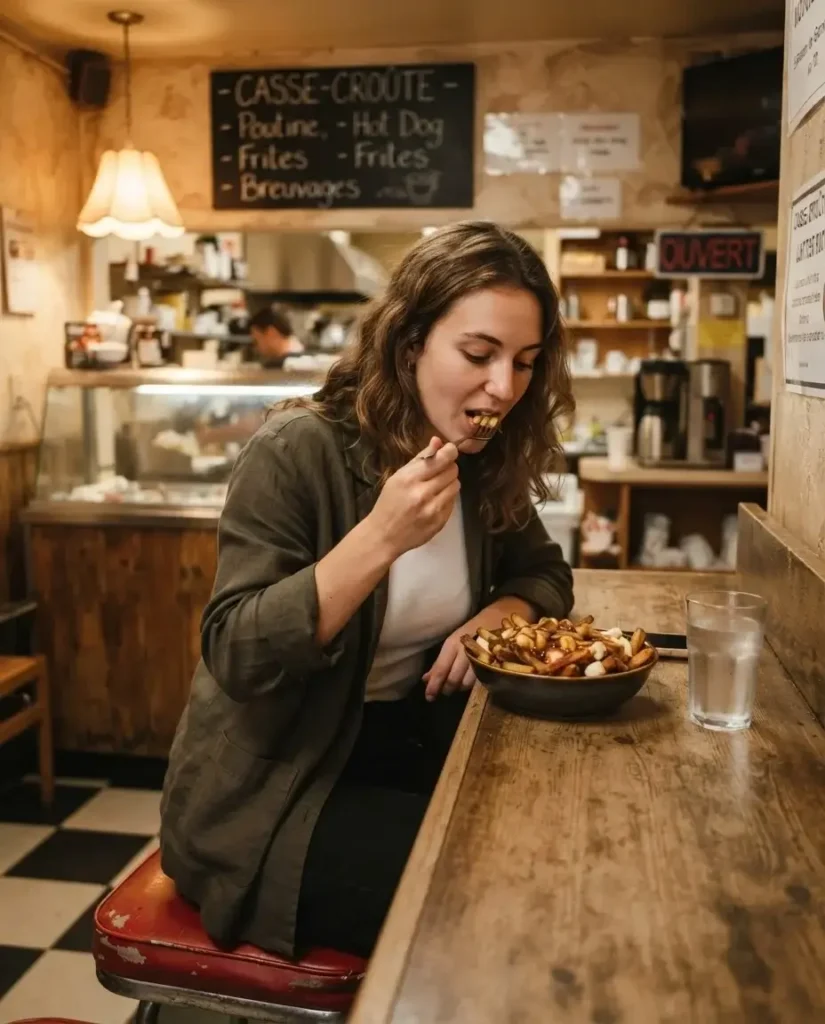
If you have never had poutine, the description does not do it justice. Crispy French fries, fresh cheese curds, and hot gravy, all served together in a way that sounds simple until you take the first bite and understand why Canadians are fiercely possessive of it. The dish is not just comfort food. It is a piece of Quebecois identity.
According to Canadian Food Focus, poutine was born in rural Quebec in the late 1950s, likely at a snack bar in Warwick where a customer asked for cheese curds on his fries and gravy. The owner’s response, loosely translated, was “that’s going to make a damn mess,” and somehow the name stuck. By the 1960s and 70s, it had spread across the province and eventually the whole country.
The thing travelers get wrong about poutine is treating it as a novelty to photograph. The real experience is eating it fresh, when the cheese curds are still slightly squeaky and the gravy is hot enough to soften them just around the edges without melting them completely. In Montreal and Quebec City, you will find poutine at tiny late-night casse-croute shops, and that is exactly where you want to be eating it, at 11pm after a long day of walking, standing at a counter, no fanfare required.
A quick tip from what solo travelers consistently report: skip the chain versions for your first experience. Ask your hostel or hotel which local snack bar nearby does it best and go there instead.
Mexico’s Market Food: A UNESCO-Recognized Living Tradition
Mexico is one of the very few countries in the world where the national cuisine has been formally recognized as an intangible cultural heritage. According to the UNESCO inscription on traditional Mexican cuisine, the food system in Mexico is a comprehensive cultural model, built on corn, beans, and chili, and held together by collective community practices that go back thousands of years. Nixtamalization, the ancient process of treating corn with lime to unlock its nutritional value, is one of the reasons the tortilla is not just a flatbread but a genuinely nutritious staple. This recognition happened in 2010, and it applies to the food of Michoacan specifically as a regional model, though the culinary philosophy runs across the whole country.
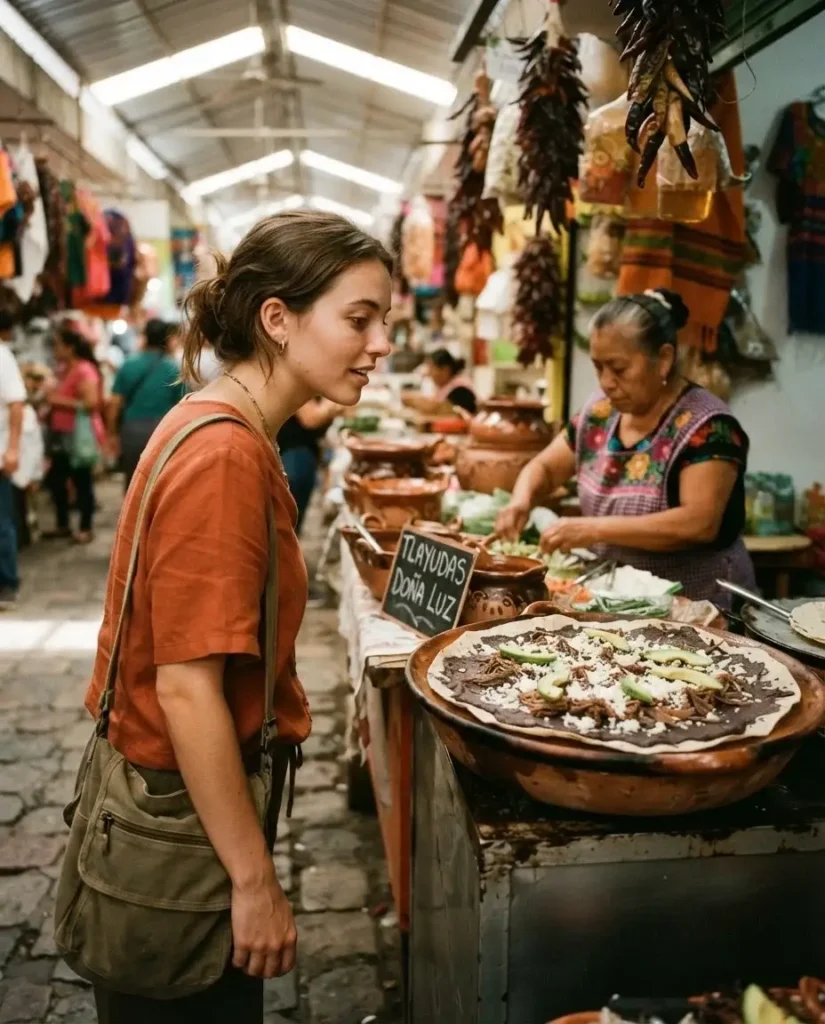
For travelers, this means that eating at a market in Oaxaca or Puebla or Mexico City is not just a meal. It is participation in a living cultural practice that has survived thousands of years. The mole negro of Oaxaca, made with over 30 ingredients including several types of dried chili and dark chocolate, takes days to prepare and is served at celebrations and family gatherings. A tlayuda, the giant toasted tortilla loaded with black bean paste, asiento (unrefined pork fat), tasajo (dried beef), and cheese, is Oaxaca’s beloved street food and one of the most texturally satisfying things you can eat standing up.
When you are in Mexico City, the food court of Mercado de San Juan or the stalls around Mercado Jamaica offer a completely different window into the country’s produce and regional specialties than anything you will find in a tourist zone. Slow down, look for the stalls with the longest lines of locals, and let yourself be a little lost.
The Navajo Fry Bread Story: Food as History
One of the most culturally significant and often overlooked foods in North America is Navajo fry bread, the base of what many call an “Indian taco.” The dough is made from white flour, lard, and baking powder, deep fried, and topped with beans, ground meat, cheese, lettuce, and tomato. It is sold at Native American cultural events across the American Southwest, particularly in New Mexico, Arizona, and Utah.
But fry bread carries a weight that its delicious, golden surface does not immediately reveal. From what historians and Native scholars consistently document, fry bread did not exist in pre-colonial Indigenous food culture. It emerged in the 1860s when the Navajo Nation was forcibly displaced from their homeland and given government rations of white flour, lard, and sugar, ingredients that had no place in their original diet. Fry bread was born from survival, not tradition.
Today it is both celebrated and contested within Native communities. For many, it is a symbol of resilience and identity. For others, it is a reminder of trauma. As a traveler, eating fry bread at a tribal event where it is being sold and celebrated is very different from ordering it at a tourist-facing restaurant. The context matters enormously. If you get the chance to try it at a pow-wow or cultural fair, do. Order it with full awareness of the story behind it, and spend a moment with that knowledge before your first bite.
The Caribbean: Where Every Island Has Its Own Food Language
Jamaica’s Ackee and Saltfish: The National Dish That Surprises Everyone
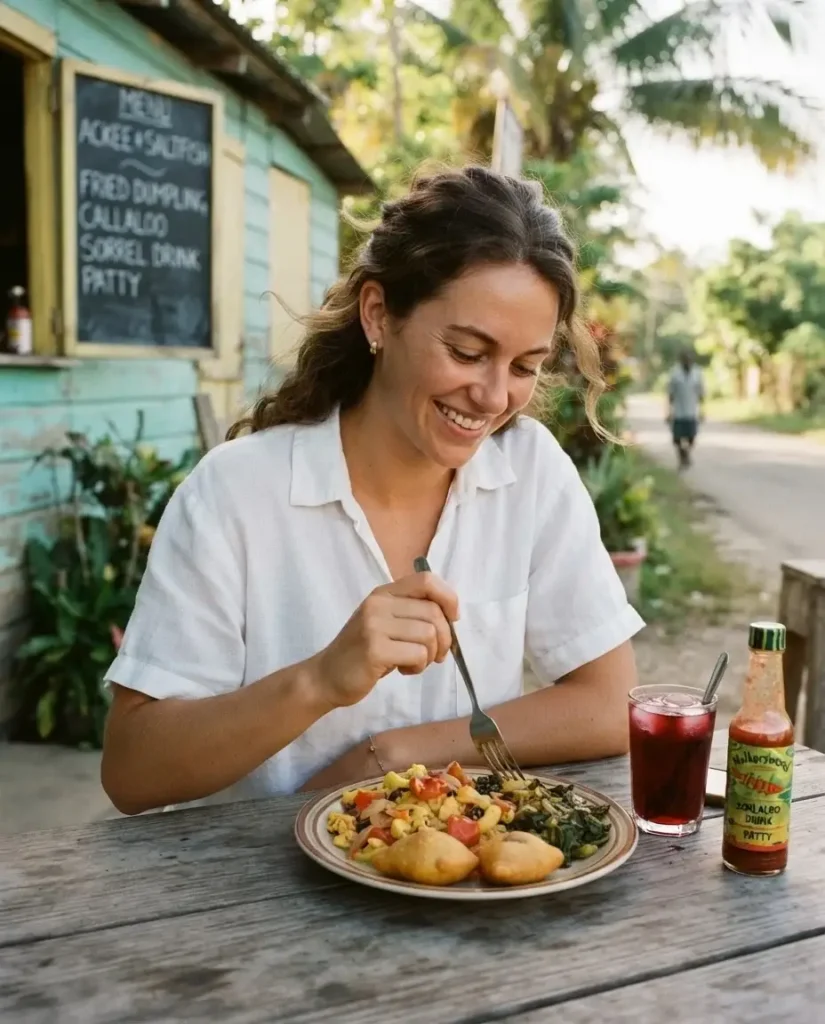
If someone told me that Jamaica’s national dish is a fruit sauteed with salted cod and served for breakfast, my reaction before I understood it would have been pure skepticism. But ackee and saltfish is one of those dishes that makes you immediately understand why a country chose it. The ackee is a bright yellow fruit that, when cooked, has the texture of creamy scrambled eggs with a mild, almost buttery flavor. Paired with the intense saltiness of the rehydrated cod, plus scotch bonnet pepper, onions, and tomatoes, the combination is savory, warming, and deeply satisfying in a way that makes complete sense as the start of an active day.
According to Visit Jamaica’s official food guide, National Geographic ranked ackee and saltfish as the 2nd best national dish in the world. That ranking tracks once you have tried it. The dish is served at everything from upscale restaurants in Kingston to roadside breakfast spots across the island, and the best versions come with fried dumplings, callaloo (a leafy green similar to spinach), and bammy, a fried cassava cake.
One important note for travelers: raw, unripe ackee is toxic. The fruit must be properly ripened and prepared before eating. You will never encounter this problem at a reputable restaurant, but it is worth knowing. Stick to prepared ackee from established food stalls or restaurants and you are completely fine.
South America: A Continent That Takes Food Seriously
Peru: The Food Capital of the Americas
In 2026, Time Out surveyed over 24,000 people globally and named Lima, Peru the world’s best city for food. This is not a surprise to anyone who has followed the rise of Peruvian gastronomy over the past two decades. Peru has won the World Travel Awards title of World’s Leading Culinary Destination multiple times, and the official Peru tourism gastronomy page gives a sense of just how seriously the country takes its food identity, from Amazonian cuisine to Novo-Andean cooking to the acclaimed fine dining scene of Lima.
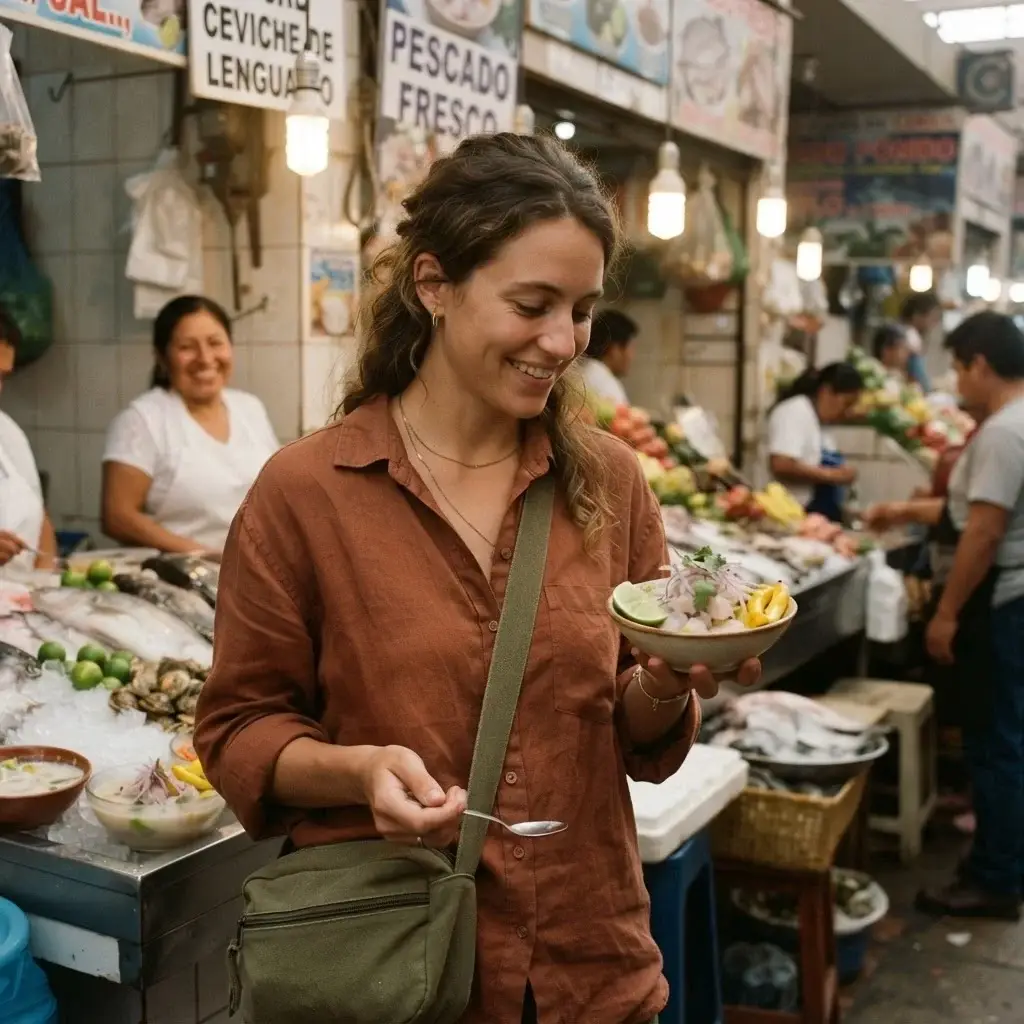
The dish that most travelers come looking for is ceviche, and rightly so. Fresh raw fish, usually corvina or sea bass, is marinated in lime juice with aji amarillo chili, thin-sliced red onion, and salt. The citric acid effectively “cooks” the fish through a process called denaturing, and the result is something cold, bright, and intensely flavorful. The marinade left at the bottom of the bowl, called leche de tigre (tiger’s milk), is considered a cure for hangovers and is often drunk straight. Ceviche in Peru is a midday food, served fresh for lunch, and eating it late in the day at a random restaurant is considered a red flag.
Beyond ceviche, lomo saltado is Peru’s ultimate comfort food. A Chinese-Peruvian fusion dish born from the 19th century wave of Chinese immigration, it is a stir-fry of beef strips, tomatoes, and onions with soy sauce and vinegar, served alongside both white rice and French fries, both appearing on the same plate. That combination sounds excessive until you try it and realize the fries absorb the sauce beautifully.
For the more adventurous, cuy, or roasted guinea pig, is a centuries-old Andean staple and still widely eaten in the highlands around Cusco and Arequipa. It is typically roasted whole over an open fire or in a clay pot and served with potatoes and aji sauce. From what travelers who have eaten it consistently report, the flavor is closer to rabbit or dark chicken meat than anything alarming, and the experience of trying it at a family-run restaurant in Cusco is one of the more genuinely memorable meals a visitor can have.
Argentina’s Asado: Not Just a Meal, a Ritual
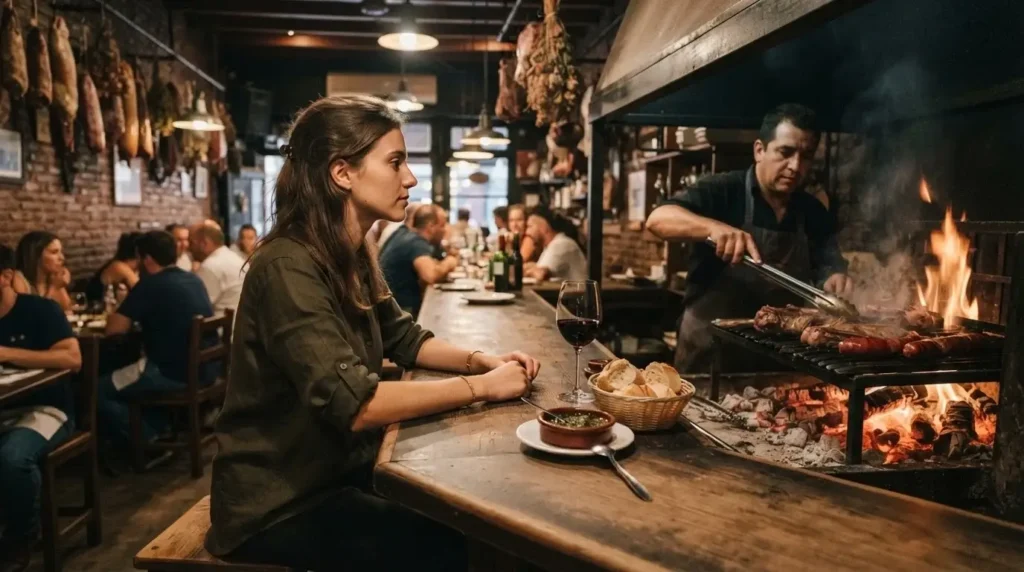
Argentina’s relationship with beef is something that goes far beyond food preferences. The asado, or Argentine barbecue, is a cultural ceremony. According to Argentina’s official tourism guide to asado, the word refers not just to the grilled meat itself but to the entire gathering it creates, the cuts that come off the parrilla (grill) in a specific order, the role of the asador (grill master), the choripan (chorizo sandwich) that comes out first as a starter, the chimichurri passed around the table, and the sobremesa, the hours of conversation that follow the meal and are considered as important as the food itself.
The cuts that matter most are entraña (skirt steak), bife de chorizo (strip loin), and vacío (flank steak). Offal cuts like morcilla (blood sausage) and molleja (sweetbread) are also staples, and if you are eating at an authentic parrilla, these will be offered before the main cuts arrive. If you have only ever eaten at chain steakhouses, eating asado in Argentina is a genuinely different experience. The meat is cooked slowly over wood or charcoal embers, not flames, which means it takes time. You do not rush an asado.
For solo travelers, one of the best ways to experience an asado without waiting for an invitation to someone’s home is to look for parrilla restaurants in Buenos Aires’ Palermo or San Telmo neighborhoods that seat guests at a shared counter around the open grill. You will often end up in conversation with the person next to you before the first cut arrives.
Bolivia’s Salteña: The Morning Pastry That Beats Every Other
Bolivia is one of the most overlooked food destinations in South America, and the salteña is the most overlooked dish in Bolivia. Visually, it resembles an empanada. But the moment you bite into it, you understand that comparing the two is like comparing a croissant to a bread roll.
A salteña has a sweet, slightly firm baked crust that holds a liquid stew-like filling of slow-cooked beef or chicken, potatoes, olives, raisins, hard-boiled egg, and a generous pour of spiced, gelatinized broth. When baked, the gelatin liquefies inside the pastry. The technique of eating a salteña correctly is its own small art form. You turn it upright and bite from the top, using the crust as a bowl to avoid the filling spilling everywhere. You will fail your first time. Everyone does. That is part of the experience.
Salteñas are strictly a morning food in Bolivia, sold from around 9am to noon. In La Paz and Sucre, you will find salteña shops on nearly every block in residential neighborhoods, with queues forming early. The best ones cost the equivalent of about one US dollar. Pair it with api, a warm purple corn drink spiced with cinnamon and cloves, and you have one of the most distinctive breakfasts on the continent.
Colombia’s Bandeja Paisa: A Plate That Believes in Going All In
Colombia’s bandeja paisa originated in the Antioquia region and has become what many consider the national dish. It is not a subtle plate. A full bandeja paisa arrives with red beans, white rice, ground beef, a fried egg, chicharron (fried pork belly), chorizo, avocado, sweet plantain, and an arepa, all on a single oversized tray. It is traditionally the midday meal for laborers who needed fuel for physically demanding work, and the portions reflect that.
For solo travelers, ordering a full bandeja paisa alone is genuinely a lot of food. Many Colombian restaurants offer a half portion, or you can visit a place where the bandeja comes as part of a set lunch, called the corriente or menu del dia, which includes a soup, the main plate, and a fresh juice, all for roughly $3 to $5. The menu del dia system across Colombia is one of the best deals in travel food, and locals eat it daily.
Arepas deserve their own mention. These griddled corn cakes vary dramatically across regions, from the thick, cheesy arepas de choclo in Medellin to the thin, crispy versions of the coast. Eating your way through arepa variations across different Colombian cities is a quietly compelling way to understand how much regional diversity exists in a country’s food culture.
Eating Smart Across the Americas: A Few Honest Notes
Food is one of the great joys of travel and also one of the places where travelers get into trouble.
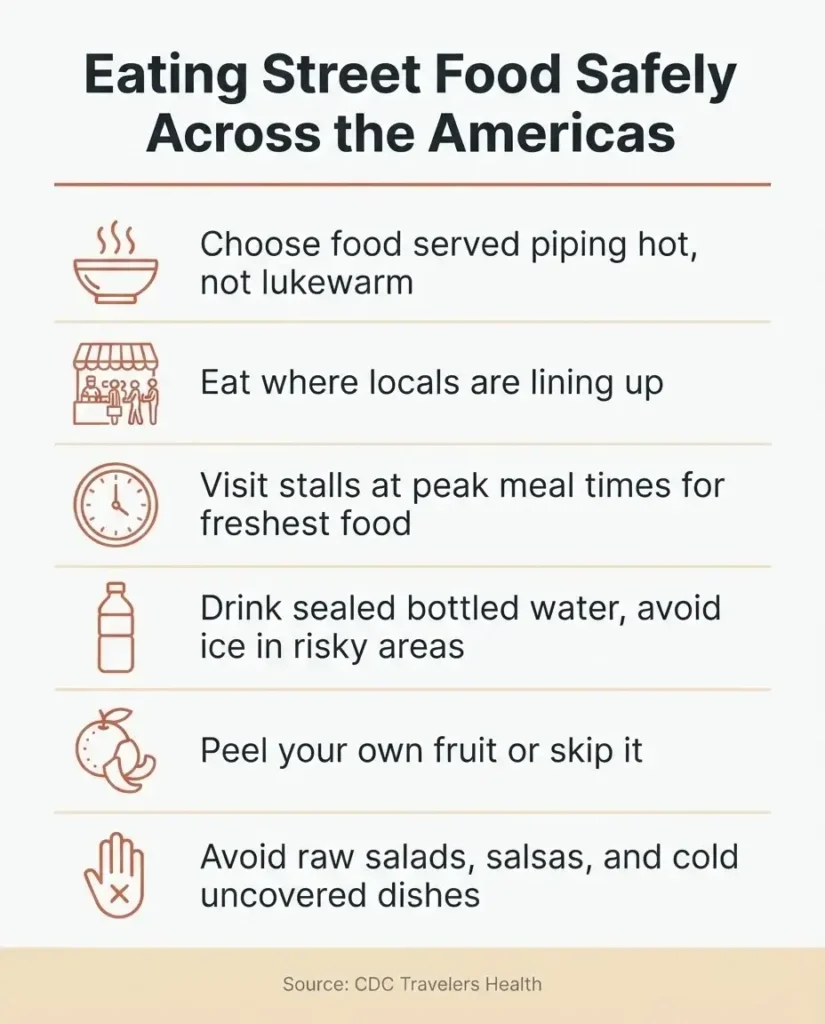
Street food across the Americas is mostly wonderful and safe when you make smart choices. The CDC’s food and water safety guidance for travelers is worth reading before any international trip, particularly the notes on street food safety, which recommends choosing food that is cooked and served steaming hot. I would add: eat where locals eat, eat at peak meal times when turnover is high, avoid anything sitting uncovered in the heat, and do not let fear make your decisions for you.
The TasteAtlas guide to best-rated dishes in South America is also a genuinely useful reference tool when you are in a new city and want to look up what the region is known for before you head out to eat.
Most importantly: slow down. The best meal I ever had in Europe was not at a Michelin-starred restaurant. It was at a tiny corner place where the owner brought out extra bread without being asked. The Americas are full of those moments, if you let yourself find them.
A Note on What These Dishes Have in Common
Looking across all of these, from poutine to salteñas to ackee and saltfish to ceviche, a pattern emerges. The most unique local dishes in the Americas are almost always born from necessity, migration, or survival. Poutine came from Quebec dairy surplus. Fry bread came from forced displacement and government rations. Lomo saltado came from Chinese immigrants adapting to Peruvian ingredients. Ackee and saltfish came from the African diaspora’s resourcefulness during the colonial era.
Food is history you can eat. That framing changes the experience of trying something unfamiliar. You are not just ordering off a menu. You are placing yourself in a story that started long before you arrived, and that is exactly the kind of travel worth pursuing.
Start with one dish you have never heard of. Order it without Googling it first. Let the flavor land, and then ask someone what it is made of and why it matters here. That conversation, that willingness to be curious, is what separates a real trip from just being somewhere.