There is a moment that every traveler eventually reaches, the one where a beautiful destination starts to feel a little hollow. You have stood at the viewpoint, taken the photo, ticked the box, and walked away wondering whether your visit actually added anything to the place, or whether it quietly took something away. That feeling is what pushed me toward eco-tourism, and it is probably what brought you to this article.
Eco-tourism is one of those words that gets thrown around so casually that it has almost lost its meaning. Resorts slap “eco” on their name, tour operators use green imagery on their websites, and it can feel impossible to know what is genuinely sustainable and what is just clever marketing. What I have come to understand through years of researching and exploring is that real eco-tourism has three non-negotiable ingredients: it minimizes environmental impact, it actively supports local communities, and it educates visitors about the ecosystems they are entering. If your travel experience does all three things, you are on the right track.
The Americas are extraordinary for eco-tourism. North, Central, and South America together contain some of the most biodiverse, dramatic, and ecologically significant landscapes on the planet. Whether you are working with a modest budget, planning your first solo trip, or simply trying to make more intentional choices about where your travel dollars go, this guide is for you. Let’s walk through the destinations I think are genuinely worth your time, your money, and your care.
Costa Rica: The Benchmark for Doing It Right
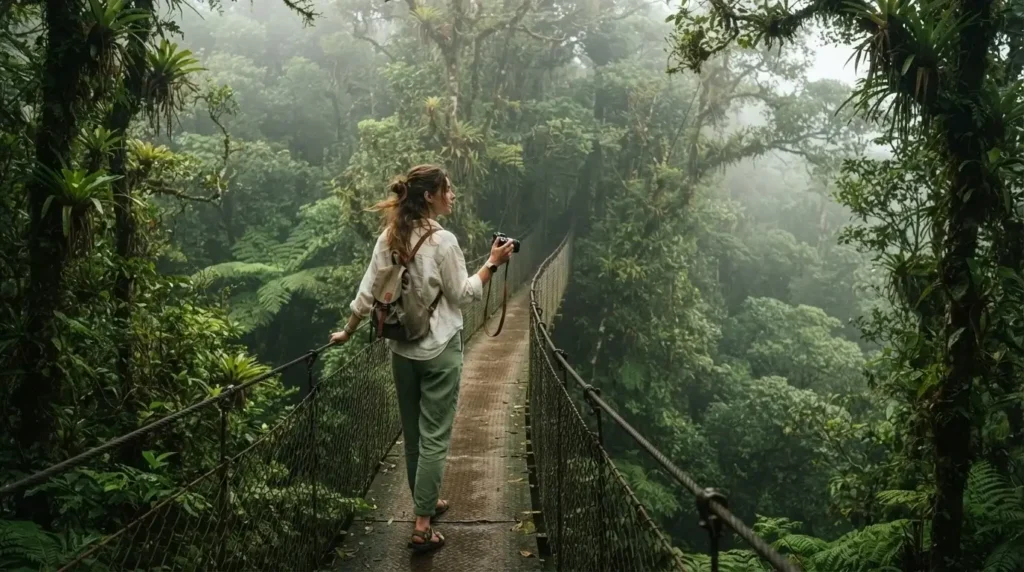
If there is one country in the Americas that has earned its eco-tourism reputation honestly, it is Costa Rica. This is not just a marketing story. Costa Rica has spent decades building a government-backed framework for sustainable tourism, and the results are visible everywhere from the reforested hillsides to the sea turtle conservation programs that employ local guides rather than outside contractors.
The country’s Certification for Sustainable Tourism (CST) program, developed by the Costa Rican Tourism Institute (ICT), is one of the most rigorous in the world and has been recognized by the Global Sustainable Tourism Council. It rates lodges, hotels, and tour operators on a scale of one to five “leaves” across four areas: the physical-biological environment, service management, the external social environment, and the client experience. When you see a four- or five-leaf rating on a Costa Rican property, that is not a self-awarded badge. It means something. The official Costa Rica Tourism Board’s sustainable tourism page is where I always tell people to start when they are planning a trip and want to understand what certified sustainable travel actually looks like here.
The biodiversity is genuinely staggering. Costa Rica covers just 0.03% of the Earth’s surface but contains approximately 5% of the world’s biodiversity. Its 30 national parks, 19 wildlife refuges, and 8 biological reserves protect everything from lowland rainforest to cloud forest to Caribbean coastline. Tortuguero National Park on the Caribbean side is one of the most important nesting sites for green sea turtles in the Western Hemisphere. The Osa Peninsula, home to Corcovado National Park, is considered by National Geographic to be one of the most biologically intense places on Earth.
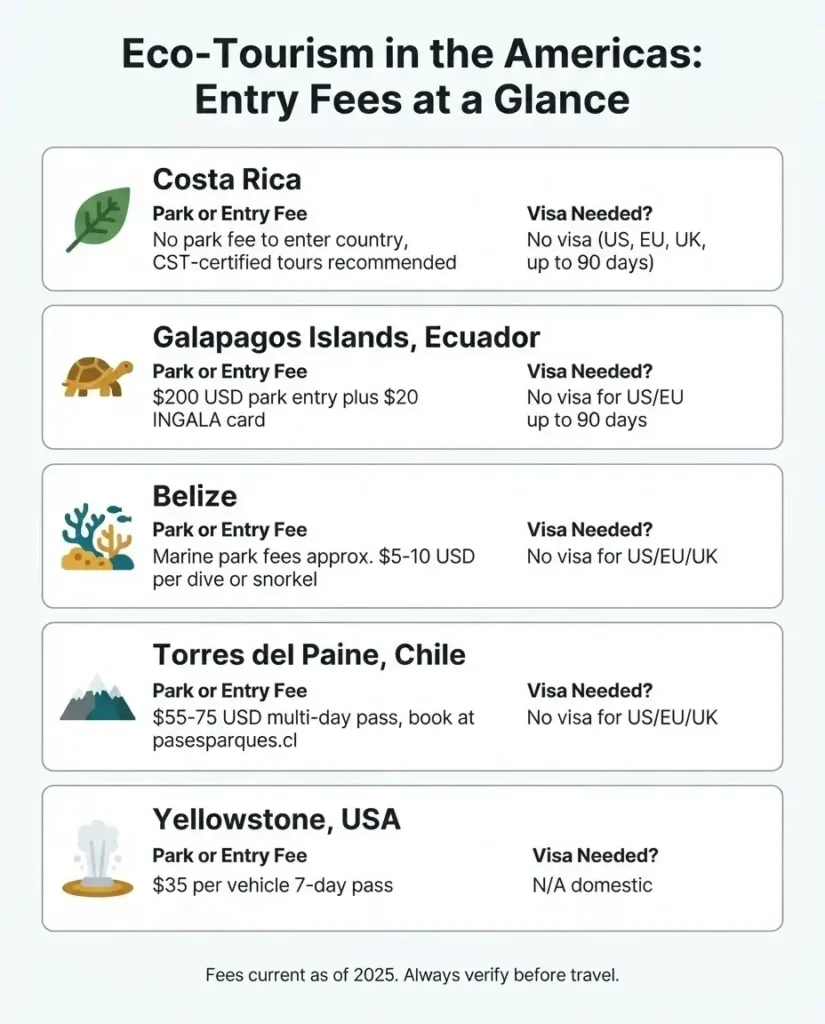
For solo travelers, Costa Rica is one of the most accessible entry points into serious eco-tourism. It has well-developed infrastructure for independent travel, a strong culture of community-based tourism, and English is widely spoken in tourist areas. Getting around by shuttle bus between towns is easy, affordable, and lets you move between habitats, rainforest to volcano to coast, without feeling like you need a packaged tour. Expect to spend around $50-$90 USD per day as a budget-conscious solo traveler when you factor in accommodation, food, and activities. From a practical standpoint, no visa is required for US, EU, UK, Canadian, or Australian passport holders for stays up to 90 days. For sustainability context and what to do in detail, the ICT’s sustainability overview is genuinely one of the more thorough and honest official tourism resources I have come across anywhere.
What to eat: look for local sodas, the small family-run restaurants serving casado, which is a plate of rice, beans, plantains, salad, and your choice of protein. This is not just the most affordable way to eat in Costa Rica, it is the most direct way to put money into local hands.
The Galapagos Islands, Ecuador: Where Eco-Tourism Is Non-Negotiable
The Galapagos Islands sit roughly 1,000 kilometers off the coast of Ecuador in the Pacific Ocean, and they operate under some of the most tightly managed visitor controls of any destination on earth. This is not a place you visit casually. Visiting here requires forethought, preparation, and genuine respect for the rules, and I say that as someone who finds rigid rules a little frustrating when traveling. In this case, every restriction exists for a reason.
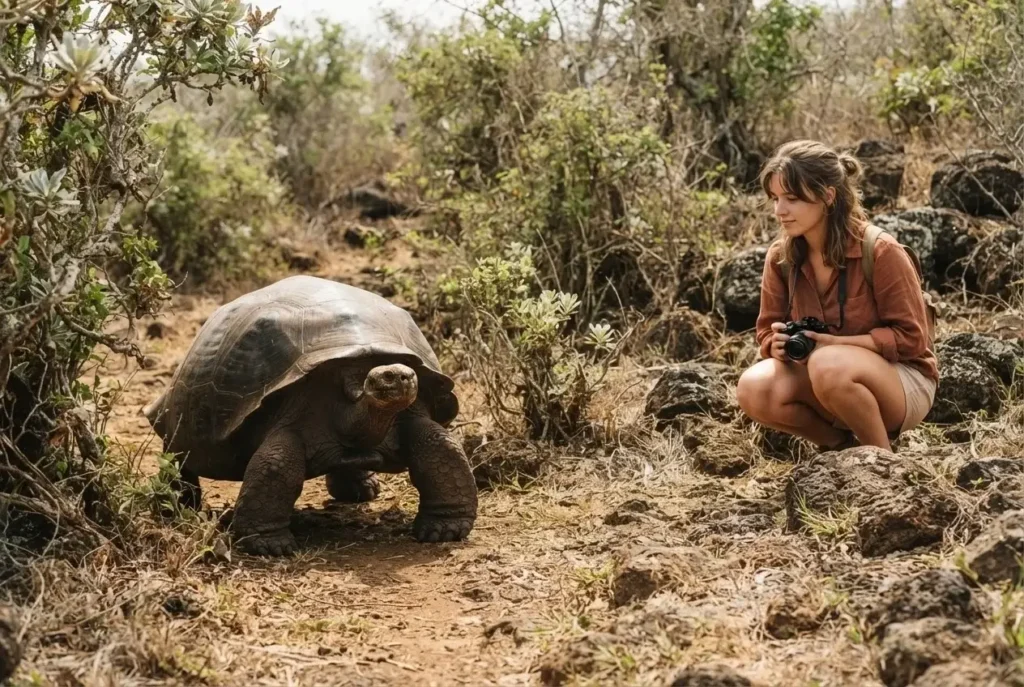
The islands were recognized as a UNESCO World Heritage Site in 1978, the very first year the program launched, which tells you everything you need to know about their ecological significance. As the UNESCO World Heritage listing for the Galapagos describes, the archipelago sits at the confluence of three ocean currents and functions as a living museum of evolution, the same one that shaped Charles Darwin’s theory of natural selection after his 1835 visit. Marine iguanas, flightless cormorants, giant tortoises, the world’s most northerly penguins, and 18% endemic marine species call this place home. It is unlike anywhere else on Earth.
Getting here requires flying to either Quito or Guayaquil on mainland Ecuador, then catching a flight to Baltra or San Cristobal island. The entry process has several layers: you need to fill out an online Sworn Declaration Form up to 72 hours before your flight, purchase an INGALA Transit Control Card for $20, and pay the Galapagos National Park entrance fee of $200 for international visitors over 12 (children under 12 pay $100). US citizens do not need a visa for Ecuador for stays under 90 days. Yes, this adds up quickly, and the Galapagos is not a cheap destination even for budget travelers.
But from what solo travelers and eco-tourists consistently report, nothing they have experienced elsewhere compares to snorkeling alongside sea lions that have no fear of you, or watching giant tortoises move through the landscape with the same unhurried calm they have maintained for centuries.
Most visitors choose between a live-aboard boat expedition (which covers more ground and gets to more remote islands) or a land-based stay on one of the inhabited islands, with daily excursions. Land-based trips are significantly more affordable. All tours in the park must be conducted with licensed naturalist guides, which means your money directly supports a trained local workforce and ensures that wildlife interactions remain respectful and non-disruptive.
What to eat: fresh ceviche in Puerto Ayora on Santa Cruz Island is exceptional and typically inexpensive at local market stalls. It supports local fishermen and the Galapagos culinary identity in one bowl.
The Amazon Rainforest, Peru: Eco-Tourism With Purpose
Most people associate the Amazon with Brazil, and Brazil’s portion of the rainforest is enormous. But from an eco-tourism standpoint, Peru’s Amazon, specifically the Madre de Dios region and Manu Biosphere Reserve, offers some of the most responsibly managed and scientifically significant visitor experiences in the hemisphere.
From what independent travelers and conservation researchers consistently report, the Peruvian Amazon’s ecolodge model is one of the most thoughtful in the world. The Amazon Conservation Association operates three biological conservation stations in the region, including lodges at Wayqecha, Manu, and Los Amigos, each of which functions as both a visitor experience and an active scientific research hub. Staying at one of these is not simply a jungle holiday. It places you inside a functioning conservation effort, with local guides who hold generational knowledge of the forest. A portion of every visit fee funds ongoing research and community employment.
The biodiversity numbers in this region are almost absurd. Manu Biosphere Reserve alone contains more bird species than the entire United States. Mammals, reptiles, insects, and plant species are catalogued in numbers that researchers are still updating. The catch, and it is a fair one, is that getting here is genuinely remote. From Cusco you travel by bus and then boat, a journey of several hours depending on which lodge you are visiting. This is not a quick weekend destination. Plan for at least four to five days to make the journey worthwhile, and budget for the full experience including transport from Cusco.
Solo travelers should know that visiting the Peruvian Amazon without a guide is not advisable and in many protected areas is not permitted. This is one destination where booking through a certified operator is genuinely in your interest, not a tourist industry preference. Look for operators certified by Peru’s Ministry of Foreign Trade and Tourism (MINCETUR).
What to eat: in Puerto Maldonado, the gateway town for the Tambopata Amazon region, try juane, a traditional Amazonian dish of rice, chicken, and spices wrapped and cooked in bijao leaves. It is tied to local festivals and found in family restaurants throughout the town.
Belize: The Reef, the Jungle, and the Real Eco Experience
Belize is one of those destinations that travel writers have been calling underrated for so long that it might not technically qualify as underrated anymore. But in terms of the depth and quality of its eco-tourism infrastructure, it still does not get the same level of attention as Costa Rica, and that makes it worth your time precisely because it is slightly less saturated.
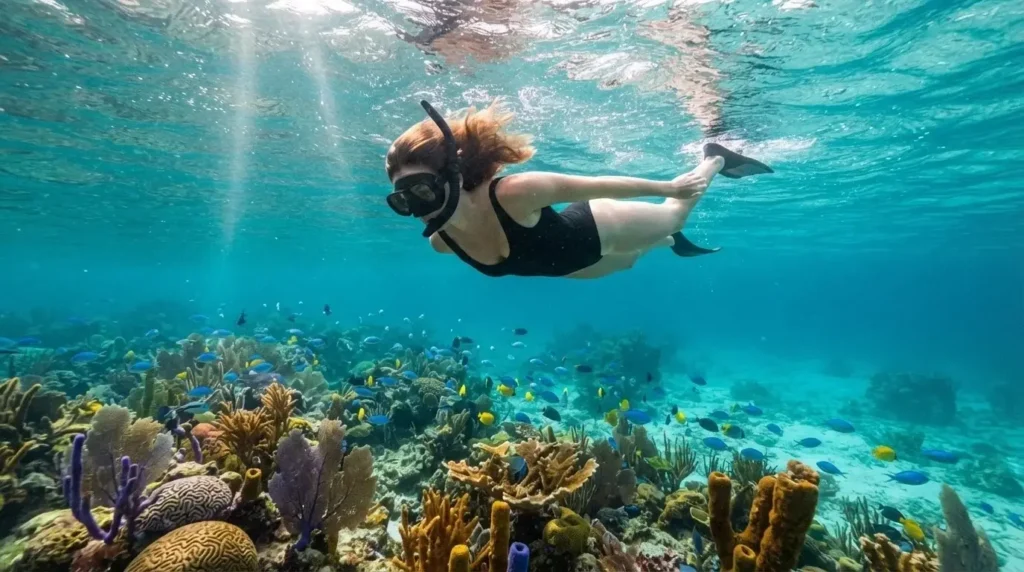
The Belize Barrier Reef Reserve System is the largest barrier reef in the Northern Hemisphere, stretching 185 miles along the coastline. It was recognized as a UNESCO World Heritage Site in 1996 and was notably removed from the UNESCO endangered list in 2018 after Belize banned offshore oil drilling in its waters, a rare example of a government making a significant economic sacrifice for conservation. Snorkeling and diving here, particularly around the Hol Chan Marine Reserve near Ambergris Caye and the Shark Ray Alley site, places you inside one of the most ecologically rich marine environments in the world.
Inland Belize is equally compelling and far less discussed. The country is about 70% forested and contains significant ancient Maya archaeological sites nested within working jungle ecosystems. The Mountain Pine Ridge Forest Reserve and the Cockscomb Basin Wildlife Sanctuary, the world’s first jaguar preserve, offer hiking and wildlife watching that few destinations can match. The Cockscomb Basin is home to tapirs, pumas, ocelots, and the largest concentration of jaguars in Central America.
English is the official language of Belize, which makes it unusually accessible for solo travelers from English-speaking countries. It is also the only Central American country without a Spanish-speaking majority, a quirk of its colonial history as British Honduras that makes navigating logistics significantly easier. No visa is required for most Western passport holders. The Belize dollar is pegged to the US dollar at 2:1, which makes budgeting simple.
What to eat: stewed chicken and rice and beans, served with fried plantains and coleslaw, is the national comfort food and available everywhere. In coastal towns, look for conch fritters, which are made from the sea snail that is farmed sustainably to protect wild populations.
Torres del Paine, Patagonia, Chile: For the Solo Traveler Ready to Push Themselves
If there is a destination in the Americas that regularly shows up in conversations about transformative travel, it is Torres del Paine. And unlike most places that carry that reputation, it genuinely earns it.
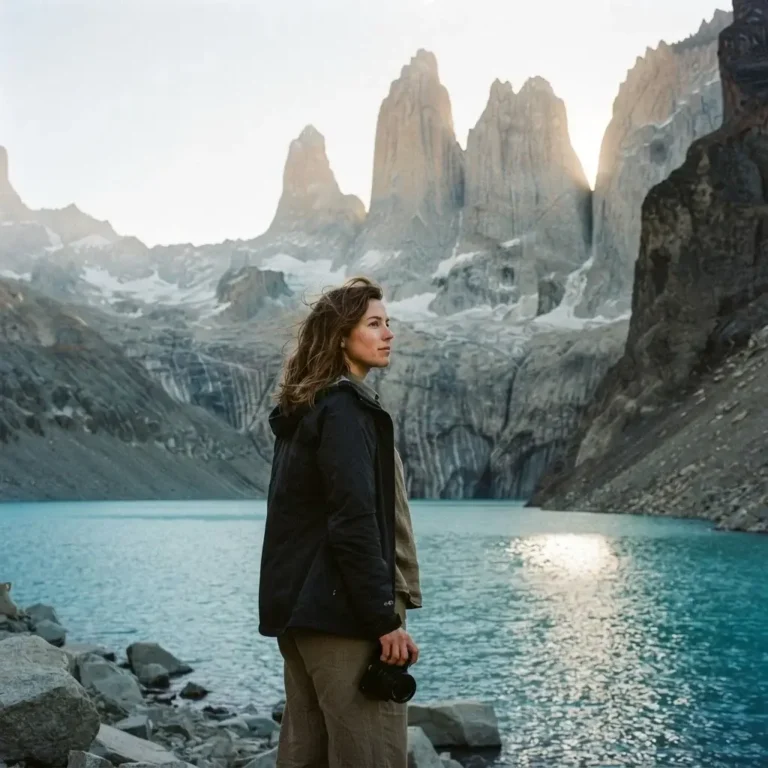
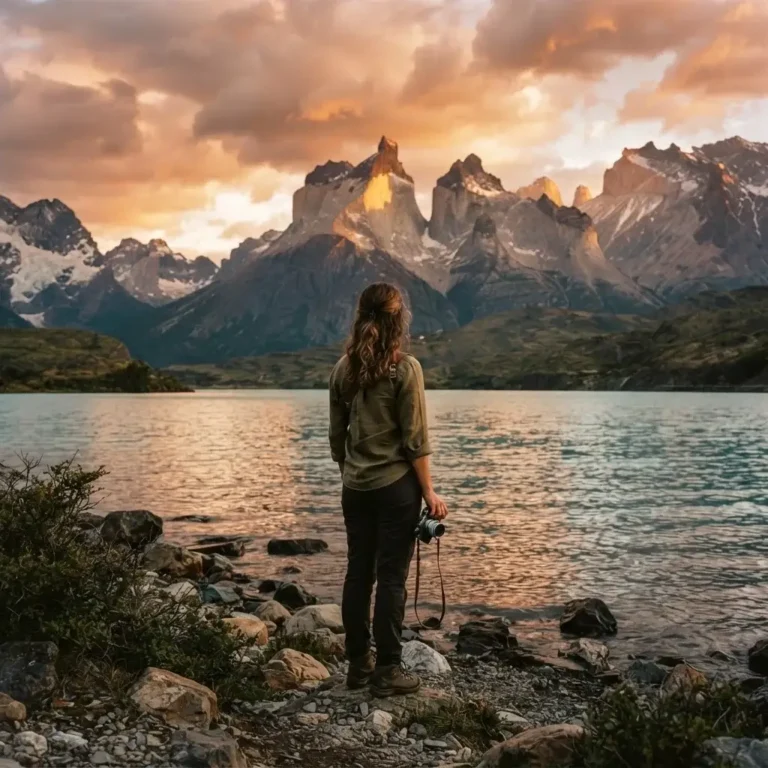
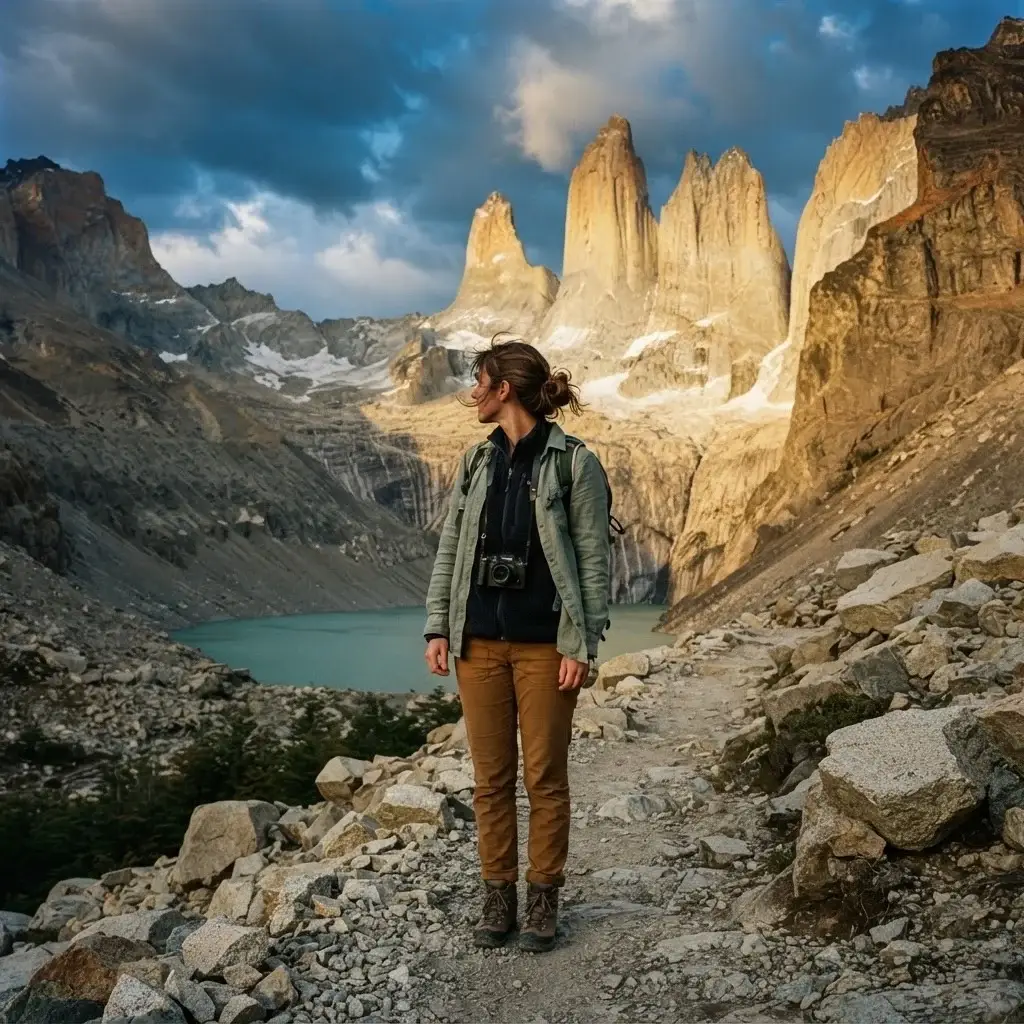
The national park sits in the Magallanes region of Chilean Patagonia, near the southern tip of South America, and the landscape is unlike anything in North America or Europe. Granite towers rising over 2,800 meters from an ice field, glacial lakes in shades of turquoise that look digitally enhanced, condors overhead, and guanacos grazing in valleys that feel genuinely wild. Solo travelers consistently describe this place as physically demanding, logistically complex, and among the most meaningful trips they have ever taken.
Getting here is part of the journey. You fly into Punta Arenas or Puerto Natales (the gateway town), and from Puerto Natales you take a bus to the park entrance. All entrance tickets must be purchased in advance through Chile’s official national parks portal, pasesparques.cl, and in 2025 a multi-day foreign visitor pass costs approximately $55-$75 USD. Buying in advance is not optional during peak season (November through March), as the park manages visitor numbers carefully to protect its ecosystem. Campsites and refuges inside the park must also be booked well ahead, sometimes months in advance for the famous W-Trek circuit.
From what experienced Patagonia hikers consistently report, the W-Trek (a 5-day hike through the park’s highlights) is achievable for first-timers with reasonable fitness, good gear, and solid preparation. The O-Circuit is longer and more demanding but offers even more solitude and wilder terrain. For solo travelers, the trail system is well-marked and you will almost always find other hikers nearby, which makes the experience social despite the remote setting.
The key eco-tourism principle here is leave no trace. The park has suffered from campfire damage in the past, and all open fires are strictly prohibited. Use only designated cooking areas and pack out everything you bring in.
What to eat: in Puerto Natales before or after your hike, lamb is the regional specialty. The town’s restaurants serve it slow-roasted in ways that reflect centuries of Patagonian shepherding culture. A bowl of hearty cazuela stew after days on the trail is one of the simple, memorable pleasures the area offers.
Yellowstone, USA: North America’s Ecological Anchor
It would be a mistake to write about eco-tourism in the Americas and skip Yellowstone. North America’s first national park is also one of its most ecologically complex, and it is significantly more accessible, particularly for US-based travelers, than any of the international destinations on this list.
Yellowstone sits atop one of the world’s largest volcanic calderas and contains more than half of the Earth’s active geysers, including Old Faithful. But the real ecological story here is the wolf reintroduction program, which began in 1995 and has become one of the most studied examples of trophic cascade in modern ecology. The return of wolves to Yellowstone changed the behavior of elk herds, which allowed riverbanks to revegetate, which stabilized the hydrology of streams, which supported beaver populations and songbird habitats. The park is a living classroom for how complex ecosystems function when left intact.
The National Park Service’s Yellowstone planning guide is the most reliable and comprehensive resource for logistics. Current entry fees (2025) are $35 per vehicle for a 7-day pass. Non-US residents 16 and older pay an additional $100 per person surcharge, a significant change that came into effect recently. The America the Beautiful Annual Pass at $80 for US residents covers entry to all NPS sites and is outstanding value for anyone planning multiple parks.
For solo travelers, Yellowstone is genuinely well set up. The Grand Loop Road connects most major sites and is drivable in sections. Lamar Valley in the northeast corner of the park is the best place for wolf and bison watching.
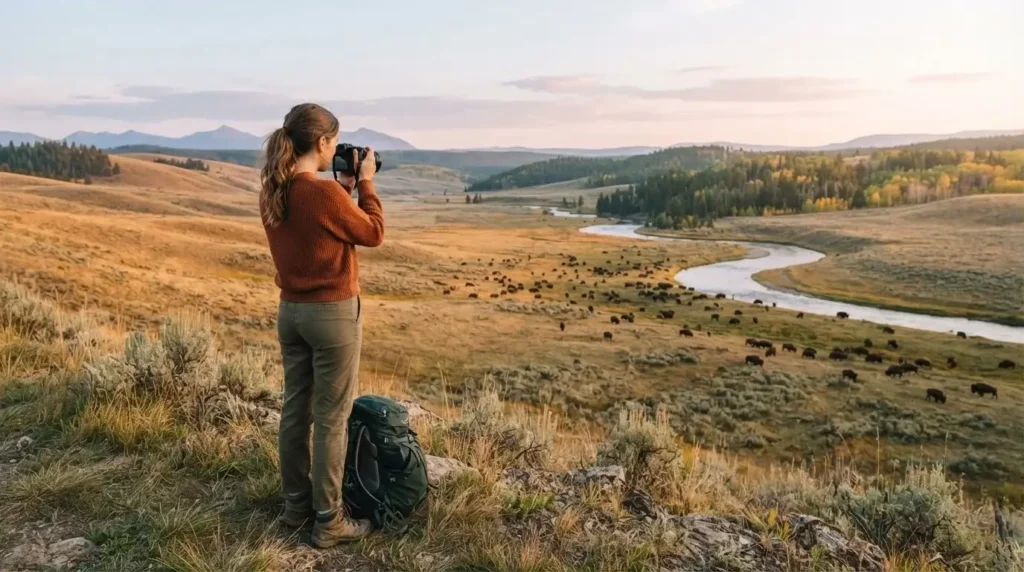
The Hayden Valley offers similar wildlife density. September through early October is a particularly good time to visit: the summer crowds thin out, elk are in the rut (an unforgettable spectacle), and the aspens turn gold in the surrounding hills.
What to eat: West Yellowstone, the gateway town on the park’s western edge, has solid local dining. Try the bison burgers, which are sourced from sustainably ranched local herds, as a tangible and delicious connection to the regional food culture.
A Note on Spotting Greenwashing Before You Book
Before I close, I want to be direct about something that most eco-tourism listicles gloss over entirely. Not everyone marketing themselves as eco-friendly is telling the truth. Greenwashing in travel is real and widespread, and it can be hard to detect when you are researching from a laptop thousands of miles away.
Some practical questions worth asking any operator before you book:
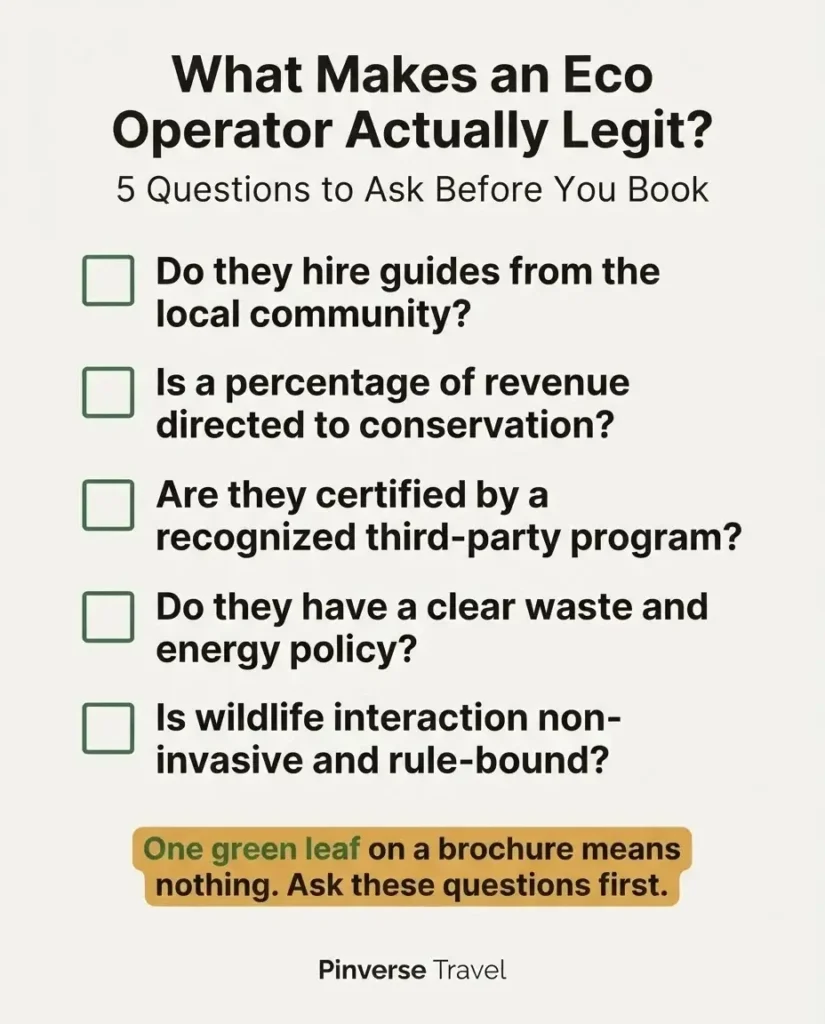
Do they employ local guides from the surrounding community, or do they bring in outside staff? Is a percentage of their revenue directed to local conservation or community projects, and can they show documentation? Are they certified by a recognized third-party program like the CST in Costa Rica, Rainforest Alliance, or a national tourism authority’s sustainability program? Do they have a stated policy on waste management, energy use, and wildlife interaction?
The best eco-tourism experiences I have researched, and the ones experienced travelers consistently describe as genuinely transformative, tend to be smaller-scale, community-connected, and less polished than the big-resort eco-branded alternatives. A smaller lodge with solar panels, staff from the neighboring village, and a guide who grew up tracking wildlife in that forest will teach you more and do more good than a luxury “eco-resort” with a composting bin in the lobby.
The Americas offer some of the most powerful experiences in eco-tourism available anywhere on Earth. The destinations above are all worth serious consideration, but more than any specific destination, what matters is the intention you bring and the operators you choose to support. Go curious, go carefully, and go knowing that the way you travel matters.