How Cooking Classes in Latin America Changed How I Travel

There is a moment in every good trip where something shifts. Not the Instagram moment at the famous viewpoint, not the guided tour of the historic cathedral. Something quieter than that. For a lot of travelers I’ve talked to, and for me thinking about my own experiences in places like Ghana and Thailand, that shift often happens around food. Not eating at a restaurant, but actually learning to make something. Standing in a kitchen that isn’t yours, using ingredients you can’t pronounce yet, following the lead of someone who has cooked this dish their whole life.
Latin America has been quietly building one of the richest culinary travel scenes in the world. And if you’re planning a trip to this region and wondering whether a cooking class is worth your time and money, I want to make a case that it might be the best single experience you add to your itinerary. Not because it’s trendy. Because it actually works.
This guide covers the best places for cooking classes in Latin America, city by city, with honest details on what to expect, what you’ll learn, and how to make the most of it whether you’re traveling solo, on a budget, or just trying to go deeper than a typical tourist experience.
Why Cooking Classes Work So Well as a Travel Experience
When I lived with a family in Ghana, I didn’t just learn about the culture by visiting markets or monuments. I learned it at the table. I watched how a meal was prepared, who made it, what it meant, and how long it took. Food carries culture in a way that no museum exhibit quite replicates.
Latin America is extraordinary in exactly this way. The food traditions here aren’t decorative. They are living systems, tied to geography, history, indigenous knowledge, colonial influence, and family identity. A cooking class that actually explains this context, and they do exist, will give you more insight into a country than a week of sightseeing might.
Beyond the cultural value, cooking classes are genuinely great for solo travelers. You walk in alone and within thirty minutes you’re chopping vegetables next to a retired schoolteacher from Canada and a honeymooning couple from Germany. The shared task breaks down social barriers faster than almost anything else. If you’re nervous about solo travel, this is one of the most natural ways to meet people.
According to research from The Borgen Project on food tourism in Latin America, culinary tourism in the region also funnels revenue directly into local communities, often more effectively than conventional tourism. Booking a class with a local operator instead of a large international platform makes a tangible difference.
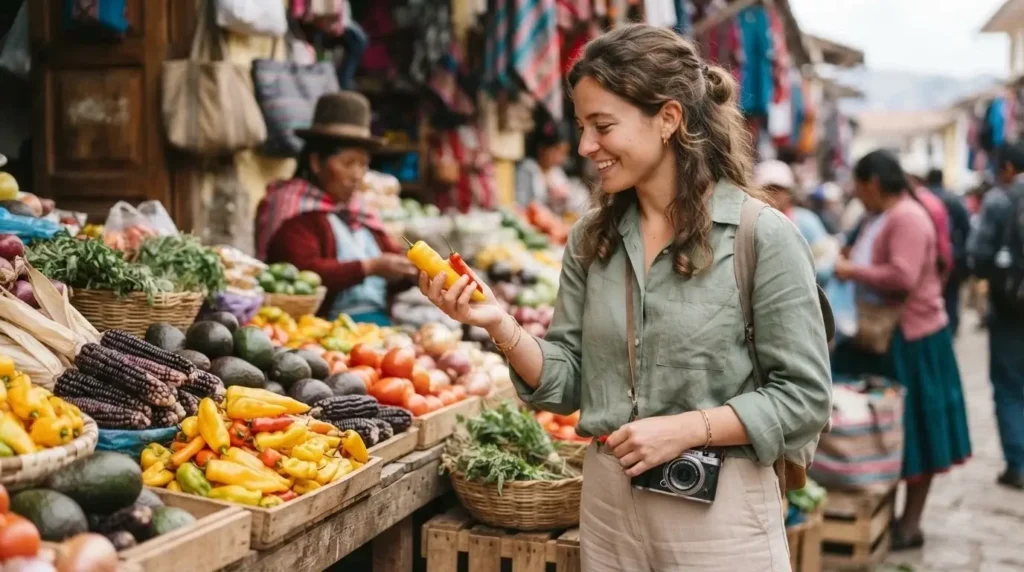
Peru: The Culinary Capital of Latin America
Peru has held the title of World’s Leading Culinary Destination at the World Travel Awards for over a decade in a row, winning the title again in both 2024 and 2025. That’s not a marketing campaign. That’s a track record. If you want to understand why, the best place to start is a kitchen.
Lima: Where Peruvian Cooking Gets Serious
Lima is one of those cities that consistently surprises people. The food scene here ranges from street ceviche stands to restaurants that appear on the World’s 50 Best list, and the cooking class scene reflects that same range. National Geographic calls Lima South America’s culinary capital for good reason: the city has transformed itself into one of the continent’s most exciting places to eat, and the best classes here reflect that ambition.
What solo travelers consistently report about Lima classes is that most of them start at a local market, usually the Surquillo Market in the Miraflores district, before moving into a kitchen. You’ll learn to read the market, identify the different varieties of Peruvian potato (there are over 3,000 of them, which is a fact that genuinely deserves to be appreciated), pick fresh aji amarillo peppers, and understand how flavors are built in Peruvian cooking. Then you cook, usually a four-course spread that might include ceviche, causa, lomo saltado, and a pisco sour.
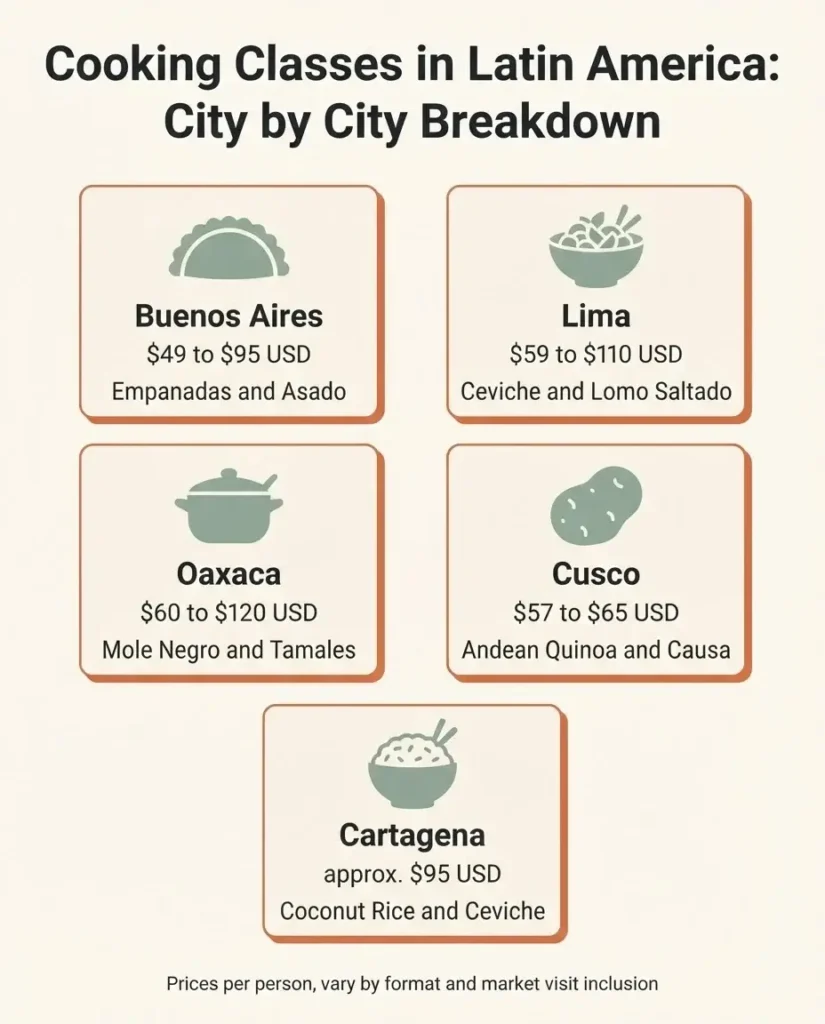
Prices in Lima run from around $59 for a class-only experience to $95 or more if a market visit and tastings are included. Most sessions run three to four hours. A few schools in the Miraflores neighborhood operate smaller, more intimate classes with six to eight students. Those fill up fast, so booking at least a week ahead is wise during the high season of June through August.
What to look for: a class that includes a market visit is always worth the extra cost in Lima. The market is half the education.
Cusco: Cooking at Altitude with Ancient Ingredients
Cusco sits at 3,400 meters above sea level, and the altitude alone changes how you experience everything, including food. The cooking class scene here is less polished than Lima but arguably more intimate. Most classes start with a visit to the San Pedro Market, one of the most atmospheric markets in South America, where vendors sell everything from dried herbs and grains to fresh cheeses and chicha morada (a purple corn drink).
Peru’s official tourism board highlights the country’s culinary diversity as stretching from the coast to the highlands, and Cusco’s cuisine reflects that highland tradition distinctly. You’ll work with quinoa, purple corn, fresh herbs like huacatay, and Andean potatoes you genuinely won’t find in a grocery store at home. The dish you cook is often a traditional four-course meal built around Andean staples.
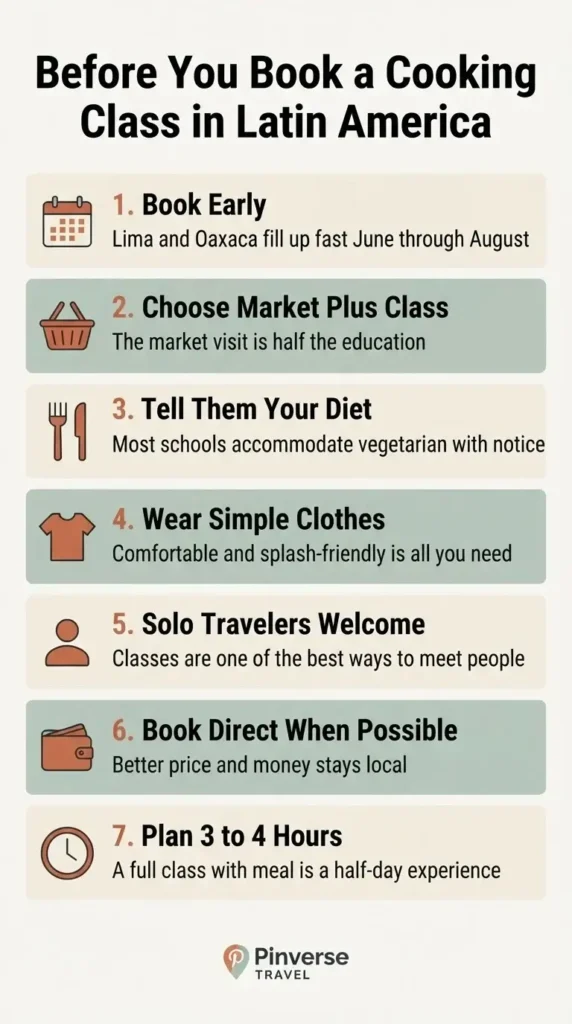
Cusco classes typically run $57 to $65 per person for a market visit plus a full cooking session. Groups are usually small, which is excellent news for solo travelers. The chefs who run these experiences tend to be deeply knowledgeable and genuinely proud of what they’re teaching. Budget tip: book directly with a local operator through their website or at their physical school rather than through a large international booking platform. You’ll often get a better price and your money stays in the local economy.
Mexico: Two Cities, Two Completely Different Culinary Worlds
Mexico’s culinary traditions are so distinct that UNESCO inscribed Traditional Mexican Cuisine on its Representative List of Intangible Cultural Heritage of Humanity in 2010, recognizing it as a comprehensive cultural system built on corn, beans, chili, ancestral farming techniques, and generations of female cooks. That recognition matters when you’re choosing where to take a class, because you’re not just learning recipes. You’re stepping into something with deep roots.
Oaxaca: The Heartland of Mexican Cooking
If you ask any serious food traveler which city in Mexico they’d choose for a cooking experience, a huge number of them will say Oaxaca without hesitating. The city is the center of Mexican culinary tradition in a way that’s hard to overstate. Mole negro, tlayudas, memelas, chapulines (toasted grasshoppers), mezcal: these aren’t just local specialties, they are emblems of a food culture that has been developing for centuries in the valleys and mountains surrounding the city.
Culinary Backstreets, one of the most respected independent culinary travel platforms, runs their Oaxaca city guide and describes the city’s food heritage as a direct product of its geography: a valley surrounded by mountains, rich soil, and warm weather that has allowed an extraordinary diversity of ingredients to develop over time.
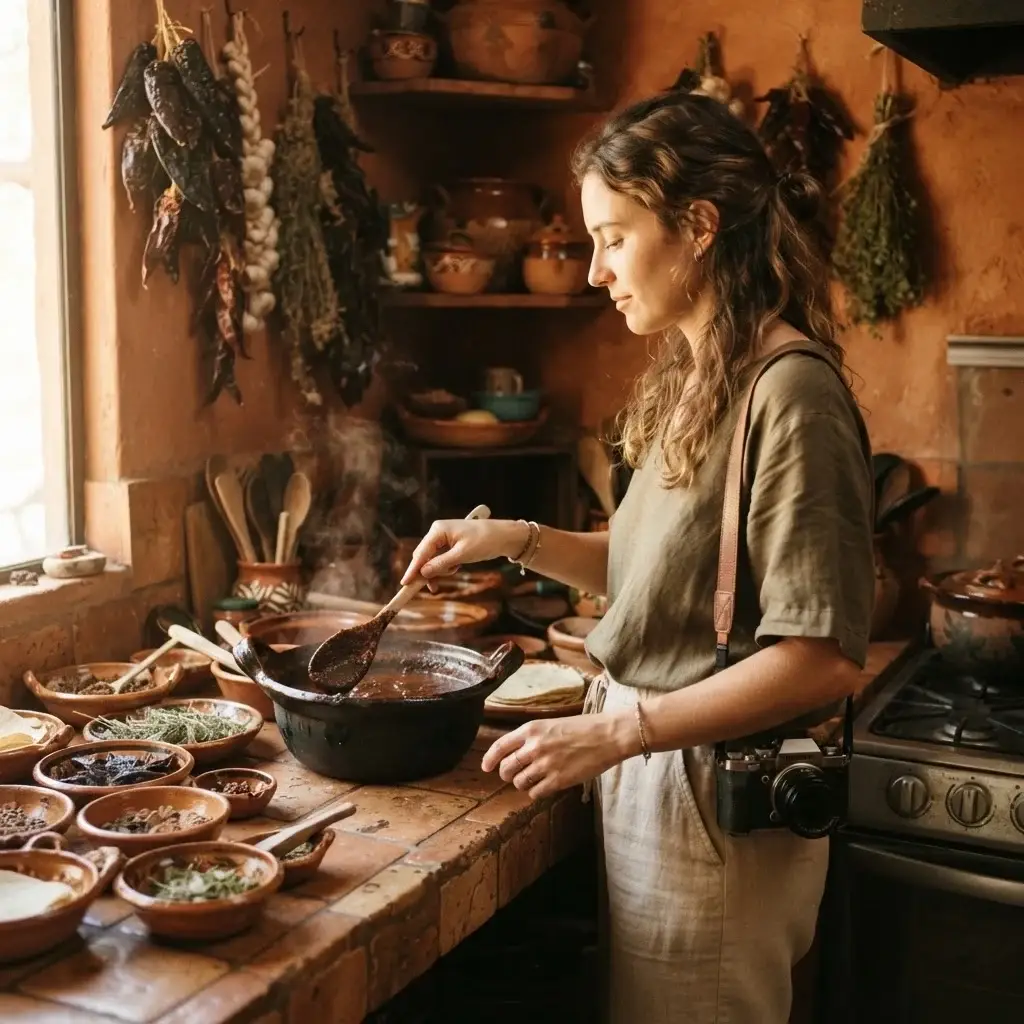
Most Oaxacan cooking classes begin at one of two places: the Mercado 20 de Noviembre or the Mercado Benito Juarez. Both are large, loud, beautiful, and full of vendors who have been selling the same products for generations. In a class, you’ll learn to make mole from scratch, which is a process that takes time and patience and will change how you feel about any mole you eat for the rest of your life. You might also make fresh tortillas on a comal, prepare tamales, or work with toasted chilies in ways that explain why Mexican food is as complex as it is.
Classes in Oaxaca typically run from $60 to $120 depending on the format, market visit included or not, and group size.
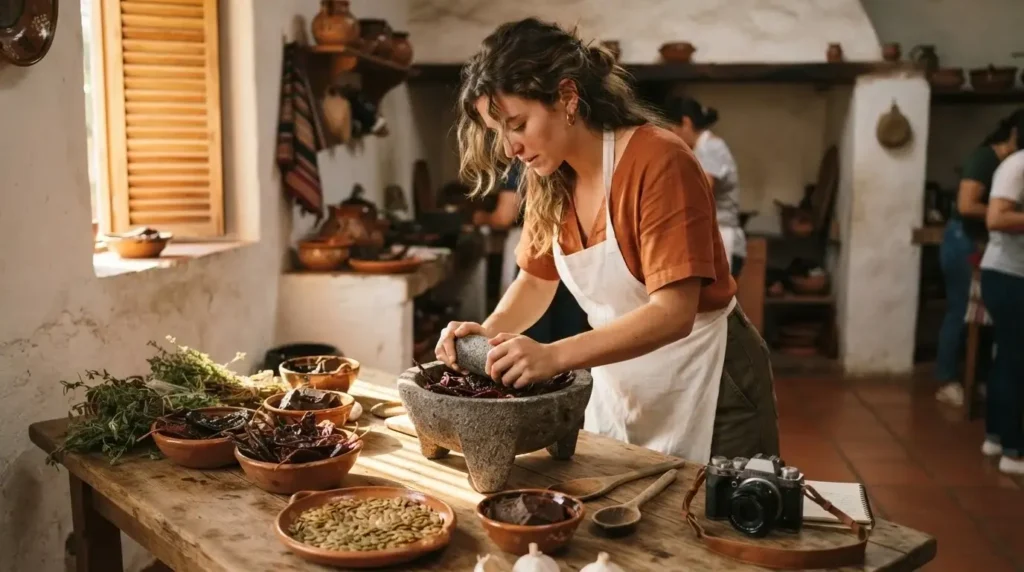
Many of the best-regarded local classes are run out of home kitchens or small culinary spaces in the city center, which keeps the atmosphere personal and genuinely warm.
One practical note for solo travelers: Oaxaca is an extremely safe and walkable city with a strong solo travel community. You will not feel out of place going to a class alone.
Mexico City: A Different Kind of Food Education
Mexico City deserves its own chapter, because the food experience here is distinct from Oaxaca. CDMX is massive, cosmopolitan, and has a street food culture that is widely considered among the best in the world. A cooking class here leans more toward the urban experience: learning to make tamales in a home kitchen in Roma Norte, or working with a professional chef to understand the regional diversity of Mexican cuisine in a modern teaching kitchen.
Classes in Mexico City generally run from around $60 to $100 per person for a three-hour hands-on session with a market visit. The city’s markets, especially Mercado de San Juan in the Centro Historico, are extraordinary, stocked with ingredients from every corner of the country. A class that starts there grounds you in the full picture before you ever turn on the stove.
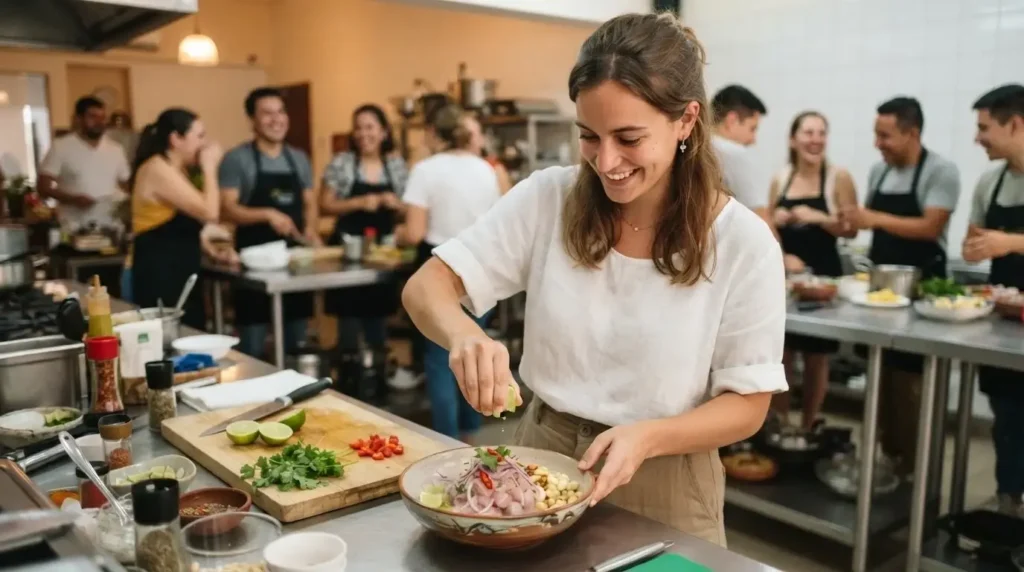
Colombia: Cartagena’s Caribbean Kitchen
Cartagena is not the first city people think of for culinary travel in Latin America, and that’s exactly why it’s worth your attention. The Caribbean coast of Colombia has its own distinct food tradition, quite separate from the interior of the country, built around fresh seafood, coconut milk, plantains, and coastal spices that reflect a history connecting indigenous, African, and Spanish influences.
The Cartagena Cooking School is one of the longest-running dedicated culinary schools in the city, offering hands-on participatory classes in traditional Cartagena and Colombian cuisine. Their classes are priced at approximately COP 392,000 (roughly $95 to $100 USD at current exchange rates) and cover dishes like coconut rice, black pudding, shrimp ceviche, and plantain ceviche. They also offer a ceviche-specific class and a cocktail class that focuses on Colombian cocktails and local drinks. Everything is taught in a participative format, meaning you’re cooking, not watching.
What makes Cartagena particularly good for a solo traveler is the city’s generally easy-going, social atmosphere. Classes here tend to have a relaxed energy. You’ll likely spend more time laughing and asking questions than you will worrying about technique.
A practical note: if you’re combining Cartagena with a visit to Bogota or Medellin, know that both of those cities also have solid cooking class scenes of their own, particularly Bogota, which is increasingly recognized as a serious food destination in its own right.
Buenos Aires: Argentina on a Plate
Buenos Aires is one of the great food cities of South America, and it operates on a different rhythm from the rest of Latin America. Dinner here starts at 9 or 10 at night. The wine flows easily. The conversation goes long. A cooking class in Buenos Aires tends to reflect that same spirit: generous, sociable, and unhurried.
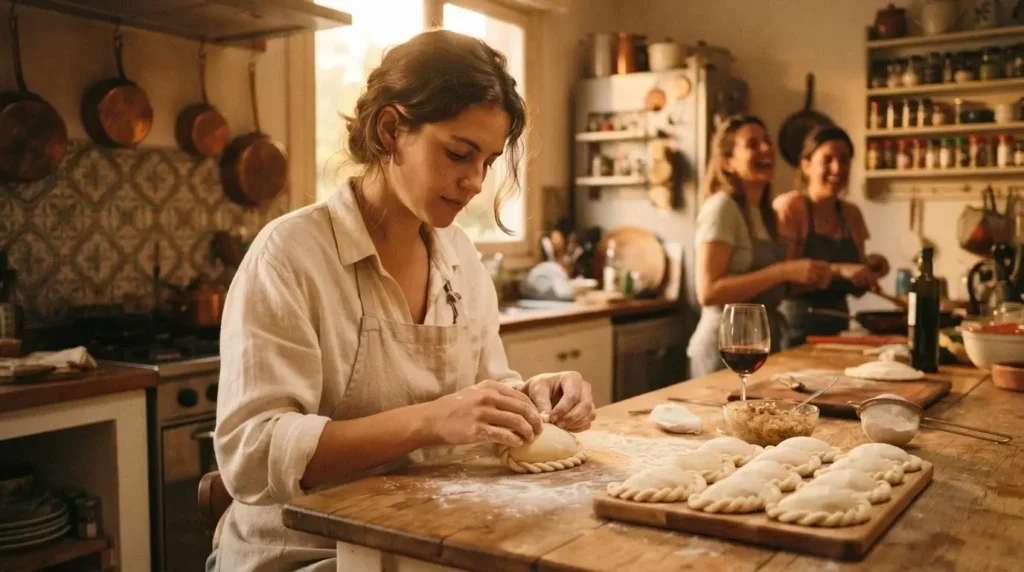
What you’ll learn in a Buenos Aires class depends on the school, but the common threads are empanadas (a genuine art form here, with dozens of regional variations), traditional Argentinian asado technique (grilling over wood or charcoal in a very specific and culturally serious way), dulce de leche in its many forms, and often a wine or Malbec pairing component. The Argentine Experience, one of the most well-known Buenos Aires cooking experiences, combines a hands-on cooking session with a wine education and a full shared dinner. It’s worth checking their calendar and booking ahead since it’s popular year-round.
Prices in Buenos Aires range from around $49 for a shorter class with wine to $85 or more for a Michelin chef-designed experience. The city is also home to some genuinely excellent multi-day culinary programs for travelers who want to go deeper.
For solo travelers, Buenos Aires is one of the easiest cities in Latin America to meet people. The cooking class scene here tends to attract other travelers rather than tour groups, which means the social atmosphere is usually lively and friendly.
Practical Tips Before You Book Anything
On format: The best format for a first-timer is almost always a market visit followed by a hands-on cooking class with a shared meal at the end. It covers the full arc from raw ingredient to finished dish, and the shared meal is where the genuine connection with other travelers and the instructor happens.
On timing: Book early for Lima and Oaxaca, especially between June and August. Cartagena classes tend to have more availability year-round. Cusco fills up during the Inca Trail and Machu Picchu high season (also June through August), so don’t leave it until the last minute.
On going alone: Every experienced solo traveler I’ve spoken to says cooking classes are one of the best activities to do alone on a trip. You’re not sitting at a dinner table by yourself. You’re doing something active and shared. The kitchen equalizes everyone.
On dietary restrictions: Most reputable schools across Lima, Oaxaca, Buenos Aires, and Cartagena can accommodate vegetarian diets with advance notice. Vegan accommodation is improving but varies more by school. Gluten-free is possible at some, but check directly with the school before booking if this matters to you.
On what to wear: Wear clothes you don’t mind getting splashed on. Bring an extra layer if you’re in Cusco, because the altitude means the temperature can drop quickly even during the day.
On price vs. value: A cooking class that costs $80 in Lima or Oaxaca is not a small purchase, but consider what you’re getting: three to four hours with a local expert, all ingredients, a market tour, and a meal. Compare that to a mediocre restaurant dinner and the value shifts quickly.
The experiences that cost a little more and include the market tend to be worth every dollar.
A Word on What You Take Home
The thing I noticed when I was teaching English in Thailand is that the moments that lasted longest weren’t the ones where I was observing. They were the ones where I was participating, making mistakes, being corrected, and trying again. That’s exactly what a cooking class gives you. You go home with a recipe, a technique, and a story. That combination is hard to beat.
Latin America’s culinary culture is one of the richest and most varied in the world. Whether you’re rolling empanadas in Buenos Aires, grinding chili paste for mole in Oaxaca, or building a ceviche in Cartagena’s Caribbean heat, you’ll leave the kitchen understanding something about that place that no guidebook fully captures. And you’ll probably be a better cook too.