
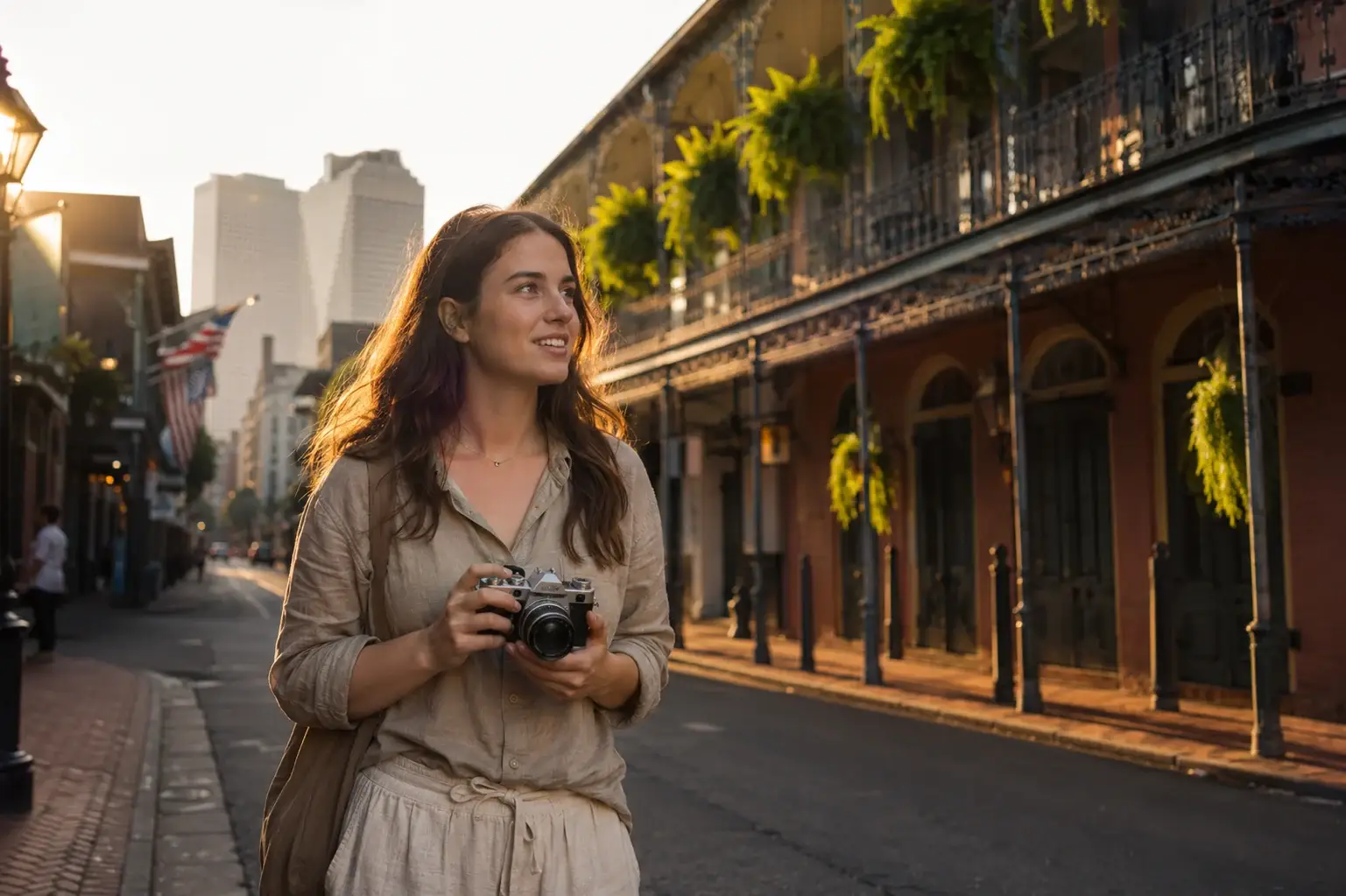
When I worked as a certified sightseeing guide back in New York City, I spent hours studying how cities tell their stories. I learned that you cannot understand a place just by looking at its tall buildings or buying cheap souvenirs. You have to listen to its sounds and taste its food.
Years later, when I finally saved up enough money from waitressing to quit my rigid nine-to-five office job, New Orleans was one of the very first places I ran to. I wanted a city that did not feel like a corporate spreadsheet. I wanted a place that felt alive.
New Orleans is exactly that. It is a city built on rhythm, resilience, and rich culinary traditions. But if you are planning your first trip, it is very easy to feel overwhelmed. You might worry about safety, getting lost, or falling into expensive tourist traps that serve microwaved gumbo.
That is why I put together this highly detailed, practical 4-day itinerary for New Orleans: music & food tour style. This guide is built from my own boots-on-the-ground experiences. It is designed to give you the exact steps, safety tips, and local secrets you need to explore the Big Easy with total confidence, even if you are traveling completely by yourself.
Day 1: The Heart of the French Quarter and Frenchmen Street
The French Quarter is the oldest neighborhood in the city. Many travelers make the mistake of staying on Bourbon Street the whole time, but that is not where you find the real magic. We are going to start your trip by exploring the historic streets, eating classic Creole dishes, and finding the real birthplace of local jazz.
Morning: Beignets, Architecture, and Jackson Square
Start your first morning early at Café du Monde on Decatur Street. Yes, it is famous, and yes, there will be a line. But the line moves fast, and the powdered sugar is absolutely worth it.
Order a plate of three beignets—which are pillows of fried dough covered in a mountain of powdered sugar—and a hot café au lait. A café au lait is chicory coffee mixed with warm milk. Chicory is a root that locals roasted and ground up during the Civil War when real coffee was scarce. It gives the drink a deep, woody flavor that pairs perfectly with the sweet dough.
Emma’s Insider Secret: Do not wear black clothes to Café du Monde. The powdered sugar gets everywhere, and you will look like you walked through a snowstorm all day. Grab a table inside or on the patio rather than getting the to-go line. It is a much better experience for people-watching.
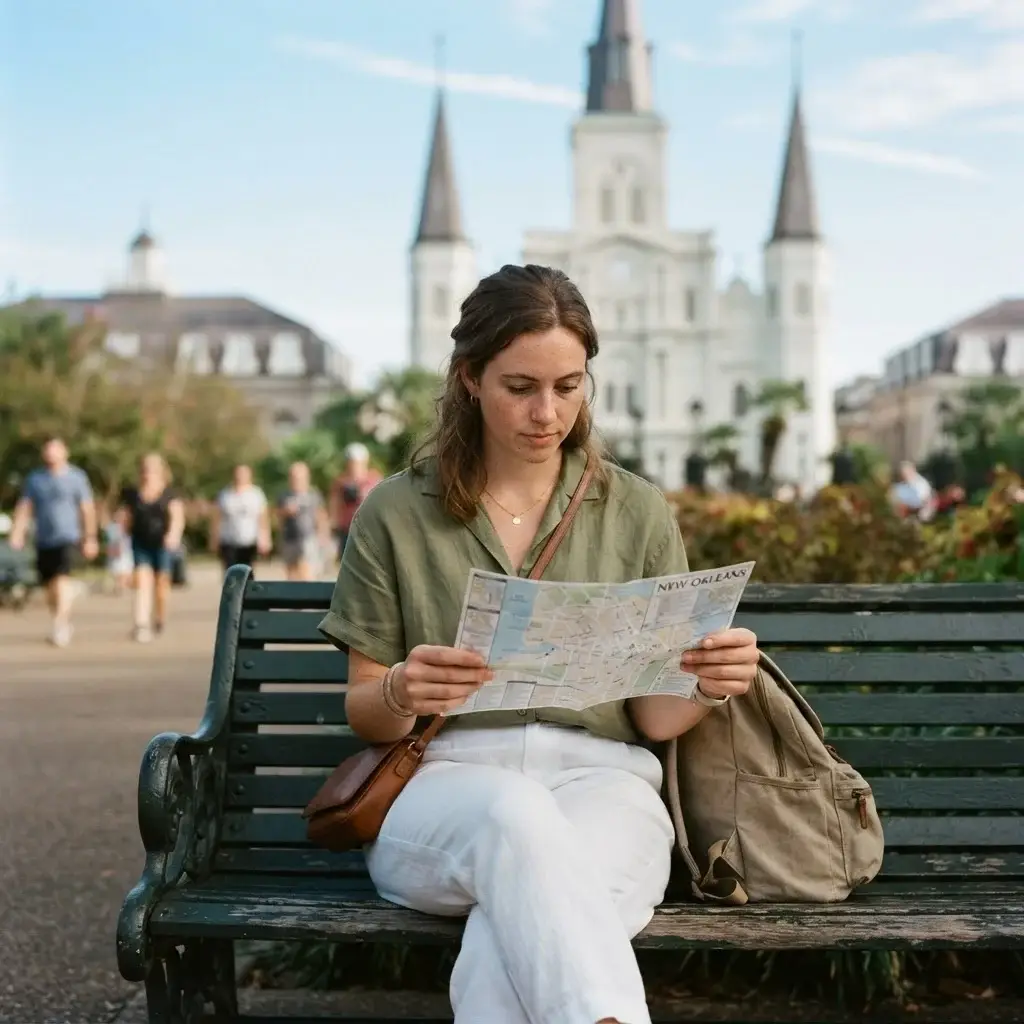
After eating, walk across the street to Jackson Square. This is the historic center of the city. You will see the beautiful St. Louis Cathedral with its white steeples. The square is always full of local painters, fortune tellers, and brass musicians. Take your time walking through the green paths and looking at the historic ironwork balconies.
If you are a solo traveler who feels a bit nervous, this is a great place to sit on a bench, adjust your map, and realize that you are safely surrounded by people.
Afternoon: Muffulettas, Voodoo History, and Hidden Courtyards
For lunch, walk over to Central Grocery on Decatur Street or a nearby local deli to try a classic New Orleans muffuletta sandwich. This giant round sandwich was created by Italian immigrants who moved to the city. It is packed with layers of ham, salami, mortadella, provolone cheese, and a thick, tangy chopped olive salad that soaks deep into the sesame bread. One sandwich can easily feed two people, so if you are solo, ask for a quarter or a half size.
Spend your afternoon walking down Royal Street. This street is famous for antique shops, art galleries, and street performers. It is much quieter and cleaner than Bourbon Street. Look for open alleyways that lead into hidden brick courtyards filled with green ferns and fountains. These courtyards were designed hundreds of years ago to keep homes cool during the hot summer months.
To understand the culture here, you must understand Voodoo. It is not the scary stuff you see in Hollywood movies. It is a real religion brought over by enslaved West Africans that blended with local Catholic traditions. Stop by the New Orleans Historic Voodoo Museum on Dumaine Street to see real altars, historic artifacts, and learn about Marie Laveau, the famous Voodoo Queen of the city.
Evening: Creole Gumbo and the Jazz Revival on Frenchmen Street
As the sun sets, skip the neon lights of Bourbon Street and head toward Faubourg Marigny. This neighborhood is right next to the French Quarter and is home to Frenchmen Street, which is where the locals go to hear real live music.
Before you start listening to music, you need a solid dinner. Stop by a local spot like Clover Grill or a classic neighborhood joint for a bowl of authentic Creole gumbo. Good gumbo takes hours to make. It starts with a roux, which is a slow-cooked mixture of flour and fat that must be stirred constantly until it turns the color of dark chocolate. It is then filled with the “holy trinity” of local cooking—onions, bell peppers, and celery—along with chicken and spicy andouille sausage.
Now it is time for the music. Walk down Frenchmen Street. You do not need to buy expensive tickets ahead of time. Just walk along the sidewalk and listen to the sounds drifting out of the open doors.
- The Spotted Cat Music Club: This is a tiny, legendary room. There is usually no cover charge, but you must buy at least one drink to support the band. You will see people dancing right next to the stage to traditional jazz and swing.
- Snug Harbor Jazz Bistro: If you want a sit-down experience to listen to modern jazz masters, this is the place. It has been a staple of the street for decades.
- Blue Nile: A larger venue that features incredible brass bands and funk music that will make your feet move instantly.
Navigation & Safety Advice: Frenchmen Street is safe and very lively at night. However, when you leave the music clubs to walk back to your hotel, stay on well-lit main streets like Decatur or Esplanade. Do not wander down dark, empty side streets alone. If your hotel is more than a few blocks away, use a rideshare app or call a local taxi.
Day 2: Garden District Mansions and Soul Food Traditions
Today we are leaving the French Quarter behind to explore a completely different side of the city. The Garden District is famous for its massive oak trees, historic mansions, and historic cemeteries.
Morning: The St. Charles Streetcar and Historic Mansions
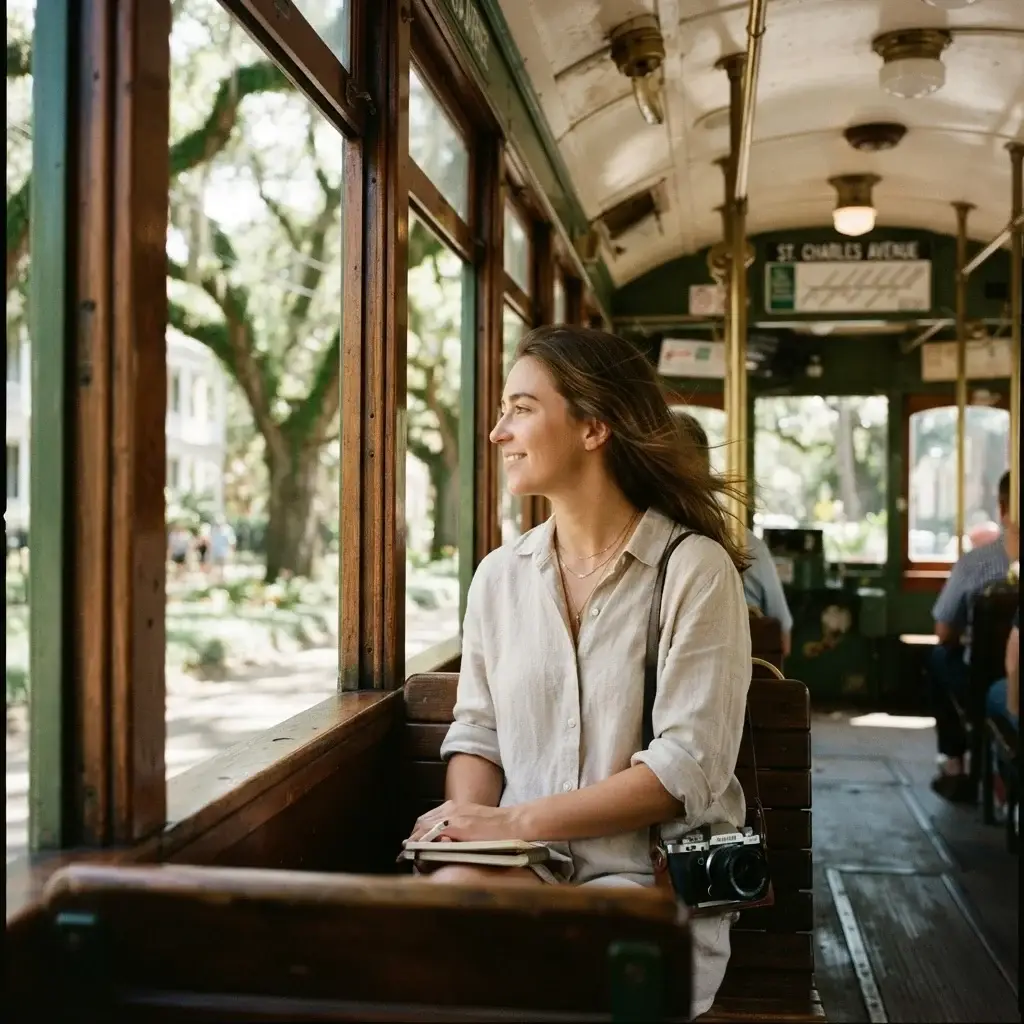
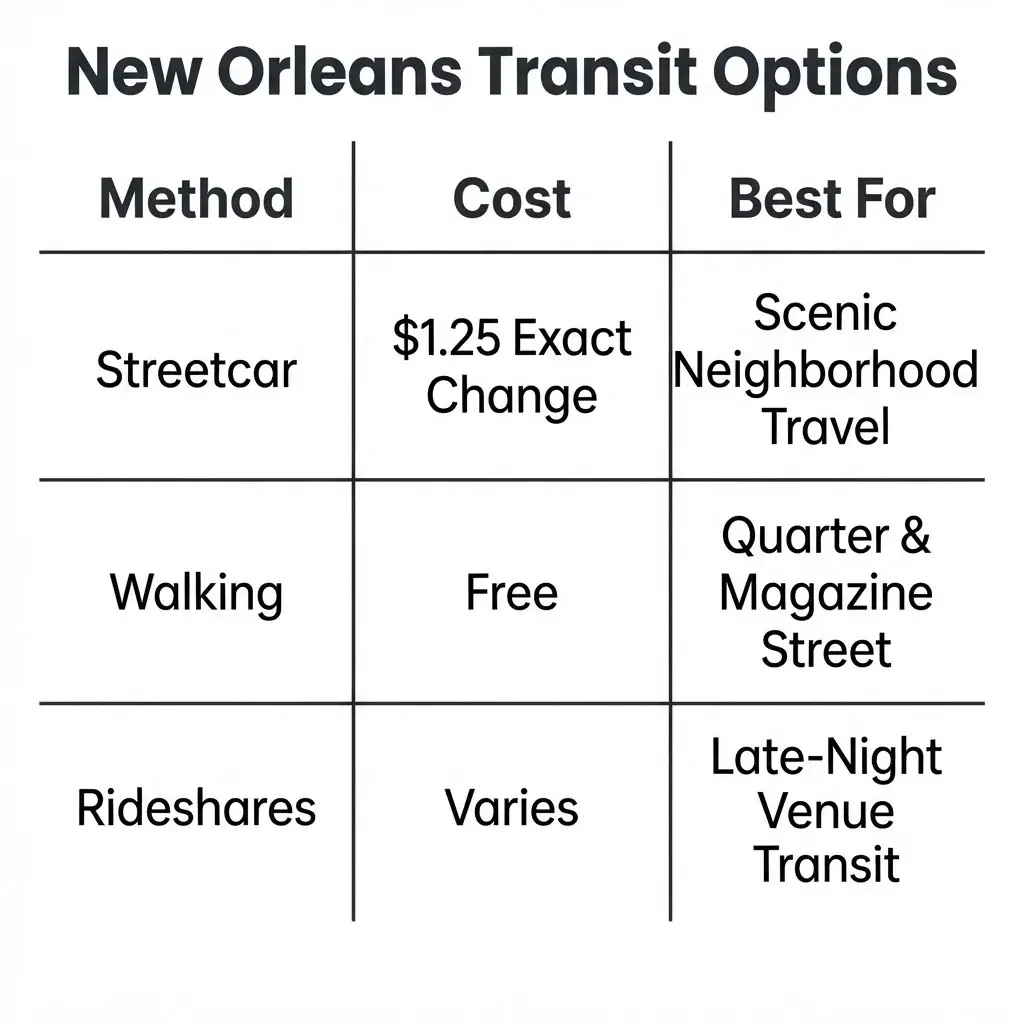
Start your morning by jumping on the St. Charles Avenue Streetcar. This is the oldest continuously operating streetcar line in the entire world. It costs exactly $1.25 for a single ride, and you must pay with exact change in cash or use the local transit app.
Slide into one of the vintage wooden seats and open the window. As the streetcar rumbles along, you will watch the scenery change from downtown buildings to massive, historic live oak trees that drape over the tracks.
Get off the streetcar at Washington Avenue and walk into the heart of the Garden District. This neighborhood was built in the 1800s by wealthy Americans who moved to the city after the Louisiana Purchase. They wanted to show off their wealth, so they built massive Greek Revival and Italianate mansions surrounded by large, lush gardens.
Take a self-guided walking tour down Prytania Street and Coliseum Street. Look for the famous “Cornstalk Fence” mansion and houses with intricate cast-iron lace decorations.
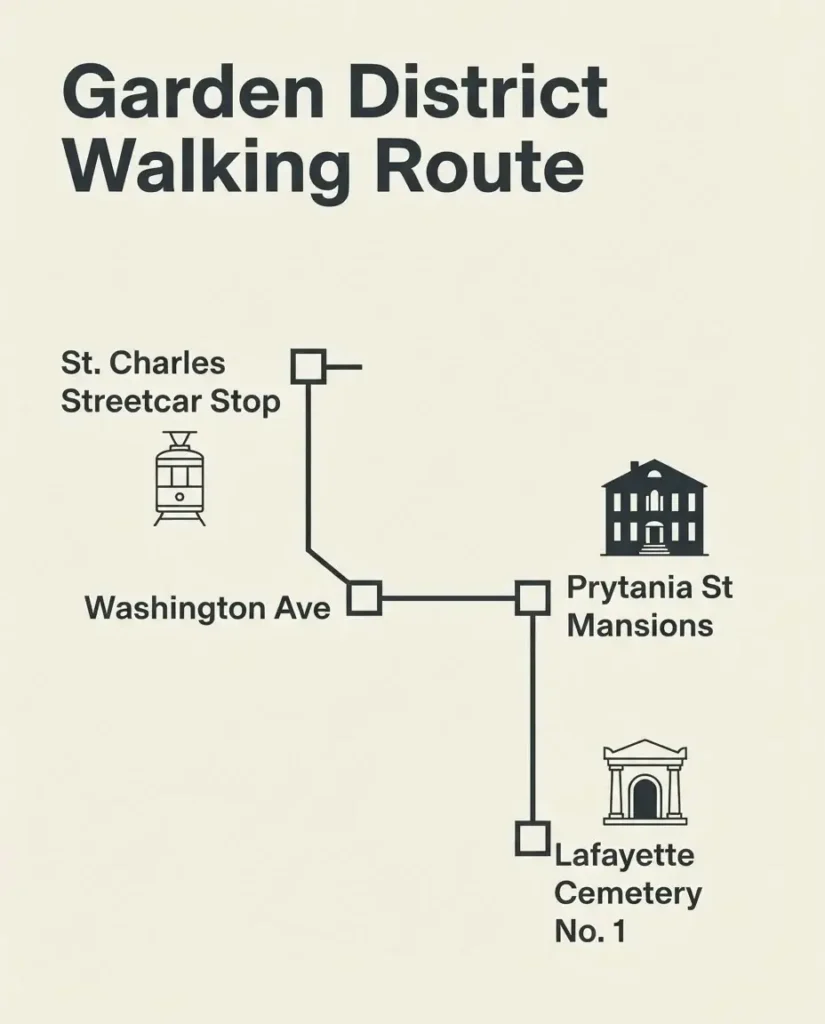
Garden District Walking Route Recommendation:
[St. Charles Streetcar Stop] -> Walk down Washington Ave -> Turn left on Prytania St -> View historic mansions -> End at Lafayette Cemetery No. 1
Afternoon: Po’Boys, Cemeteries, and Magazine Street
By lunchtime, you will be hungry. Walk a few blocks toward the river to Magazine Street and find a neighborhood joint serving authentic New Orleans po’boy sandwiches.
A po’boy is served on local French bread that has a very crispy crust on the outside and a soft, fluffy texture on the inside. You can get them filled with roast beef and rich gravy, but my absolute favorite is the fried shrimp po’boy.
When you order, the person behind the counter will ask if you want it “dressed.” Always say yes. “Dressed” means they will add lettuce, tomatoes, pickles, and plenty of mayonnaise.
After lunch, walk over to Lafayette Cemetery No. 1. You will notice right away that the tombs are built entirely above the ground. Because New Orleans has a very high water table and sits below sea level, digging graves into the ground is impossible—the coffins would literally float up when it rains. Instead, families built beautiful stone and brick tombs that look like miniature houses. This is why the city’s burial grounds are often called “Cities of the Dead.”
Spend the rest of your afternoon exploring Magazine Street. This is a six-mile stretch of local boutique shops, vintage clothing stores, independent bookstores, and small coffee houses. It is a fantastic place to buy unique souvenirs made by local artists rather than the plastic beads you see in the tourist shops.
Evening: Fine Dining Secrets and Traditional Preservation Jazz
New Orleans is home to some of the oldest family-run restaurants in America. For dinner, head back toward the edge of the Quarter or the Central Business District for a classic Creole dining experience. If you want a true taste of old-world New Orleans, consider checking out a historic spot like Commander’s Palace or Galatoire’s.
Make sure to order Trout Amandine or a dish with rich Remoulade sauce. Remoulade is a cold, tangy mayonnaise-based sauce mixed with mustard, paprika, and chopped pickles that pairs beautifully with fresh Gulf seafood.
To wrap up your evening, we are going to experience a true piece of American history. Walk to Preservation Hall on St. Peter Street. Founded in 1961, this rustic, weathered building was created to protect traditional New Orleans jazz at a time when rock and roll was taking over the world.
There is no air conditioning, no bar, and no phone screens allowed inside. You sit on simple wooden benches or stand in the back. The space is small and intimate.
When the horn players start blowing their instruments, the acoustic sound bounces off the old wooden walls and shakes the floorboards. It is a deeply emotional experience that always reminds me why I left my corporate desk to travel.
Booking Tip: Preservation Hall is incredibly popular. You can try to stand in the general admission line outside before a show, but I highly recommend booking your tickets online a few weeks in advance to guarantee a seat.
Day 3: Treme Culture, Swamp Adventures, and Late-Night Brass
On your third day, we are going deep into the musical roots of the city by visiting the oldest African American neighborhood in the United States. Then, we will take a quick afternoon trip into nature to see the beautiful wetlands that surround the city.
Morning: The Soul of Treme and Congo Square
Walk over to the Treme neighborhood, which sits just across New Orleans Street from the French Quarter. This neighborhood is the true cradle of New Orleans music and culture. It is where gospel, blues, and brass band music mixed together to create jazz.
Start your morning inside Louis Armstrong Park. At the front of the park, you will find Congo Square. In the 1700s and 1800s, Spanish and French colonial laws allowed enslaved people to gather here on Sundays to sing, dance, drum, and trade goods. This was the only place in America where African musical rhythms and drum patterns were openly preserved. Those identical rhythms eventually evolved into the jazz beats we hear today.
After visiting Congo Square, walk a few blocks to the New Orleans African American Museum. The museum features amazing exhibits on the history of the neighborhood, local civil rights leaders, and the incredible visual arts created by Black residents.
Take your time walking down the quiet residential streets of Treme. You will pass colorful shotgun houses—which are narrow, single-story homes where the rooms are lined up straight from the front door to the back door.
Afternoon: Swamp Alligators and Fried Chicken Feast
To fully understand New Orleans, you have to understand the water that surrounds it. After your morning in Treme, book a half-day tour out to the Honey Island Swamp or the Jean Lafitte National Historical Park and Preserve. Many tour companies will pick you up right from your French Quarter hotel in a comfortable shuttle bus.
As you glide through the quiet bayous on a flat-bottom boat, you will see massive cypress trees covered in Spanish moss rising out of the green water. Your local guide will point out wild alligators swimming quietly along the banks, blue herons fishing for breakfast, and nesting bald eagles.
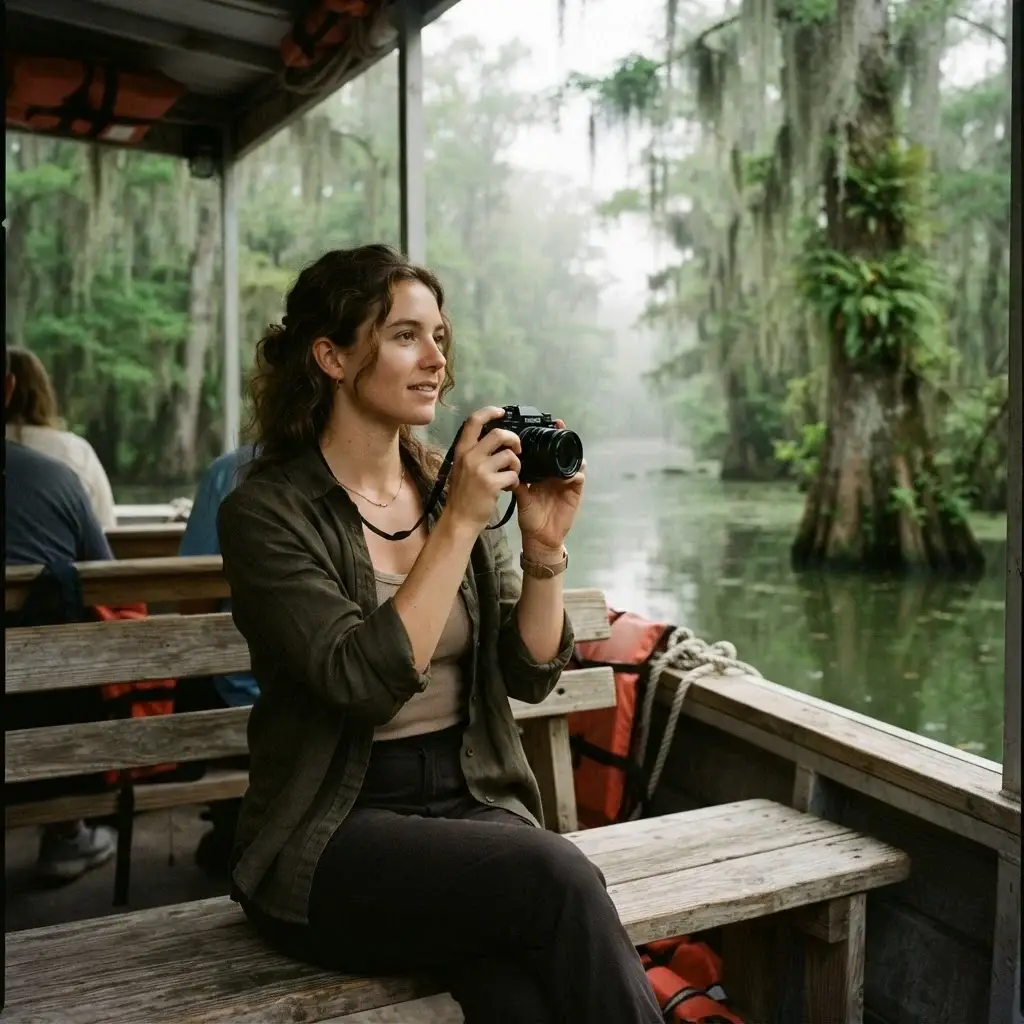
It is incredibly peaceful and offers a sharp, beautiful contrast to the loud music of the city streets.
When you get back to the city in the late afternoon, you will be starving. Head straight to Willie Mae’s Scotch House or a similar neighborhood soul food restaurant. Willie Mae’s is world-famous for its fried chicken.
The crust is incredibly light, airy, and shatteringly crispy, while the meat inside stays perfectly juicy. Pair it with a side of smoky red beans and rice or creamy baked macaroni and cheese. It is comfort food at its absolute finest.
Evening: Crawfish Etouffee and Neighborhood Brass Bands
For dinner, seek out a plate of authentic crawfish étouffée. The word étouffée is a French term that means “to smother.”
To make this dish, a cook smothers fresh crawfish tails in a rich, buttery blonde roux packed with onions, green peppers, and garlic, then serves it hot over a bed of white rice. It is rich, warm, and deeply satisfying.
After dinner, it is time to experience the modern energy of New Orleans music. Look up where the Rebirth Brass Band, the Soul Rebels, or the Hot 8 Brass Band are playing tonight. These modern bands take traditional jazz instruments—like trumpets, trombones, saxophones, and heavy sousaphones—and blend them with modern funk and hip-hop beats.
Venues like the Maple Leaf Bar on Oak Street or Tipitina’s on Uptown Uptown are the best places to catch these high-energy shows. The crowd will be sweating, jumping, and dancing together in a big, joyful mass of energy.
Do not be shy—get out on the dance floor and let yourself move to the heavy bass of the sousaphone. This is how the city heals, celebrates, and connects.
Day 4: Mid-City Escape, Bayou St. John, and a Musical Farewell
On your final day, we are going to escape the downtown crowds and explore Mid-City. This is a relaxed, residential area where you can experience how locals live, eat, and relax along the historic waterways.
Morning: Beignet Comparisons and Giant Oak Trees
We started Day 1 with beignets, and we are going to start Day 4 with them too—but with a local twist. Take the Canal Streetcar line directly out to City Park and stop by the Morning Call or the Café Du Monde location tucked inside the park grounds.
Grab your hot pastries and sit down near the water. It is fun to compare these to the ones you ate on your first day while enjoying a much quieter atmosphere.
After breakfast, spend your morning exploring New Orleans City Park. This massive green space is actually 50% larger than Central Park in New York City.
Walk over to the Couturie Forest or visit the Besthoff Sculpture Garden, where you can see over 90 incredible modern sculptures nestled along walking paths under towering live oak trees. Some of these trees are over 800 years old, with massive branches that stretch all the way down to touch the ground.
Mid-City Morning Highlights:
[Morning Call / Cafe Du Monde] -> [Besthoff Sculpture Garden] -> [800-Year-Old Live Oaks]
Afternoon: Snoballs, Seafood Gumbo, and Bayou St. John
As the afternoon sun gets hot, do what locals do to cool down: buy a real New Orleans snoball. Do not call it shaved ice or a snow cone. A real snoball is made by an industrial machine that shaves a block of ice into a fine, fluffy powder that texture-wise looks exactly like real winter snow.
The ice is then soaked in sweet, homemade flavored syrups. Stop by Hansen’s Sno-Bliz on Tchoupitoulas Street or a Mid-City stand.
Emma’s Flavor Order: Get wedding cake flavor and ask for “condensed milk” poured over the top. It turns the fluffy ice into a rich, creamy, melt-in-your-mouth treat that is absolutely incredible on a hot afternoon.
For a late lunch, find a local seafood joint along Carrollton Avenue or near the bayou for a bowl of seafood gumbo. Unlike the meat-heavy gumbo you ate on Day 1, seafood gumbo is usually made with a lighter, oil-based roux and is loaded with fresh Gulf shrimp, blue crab meat, and oysters, seasoned with ground sassafras leaves called filé powder.
Spend your afternoon walking along the grassy banks of Bayou St. John. This historic natural waterway was used by Native Americans and early French explorers to move goods between the Mississippi River and Lake Pontchartrain.
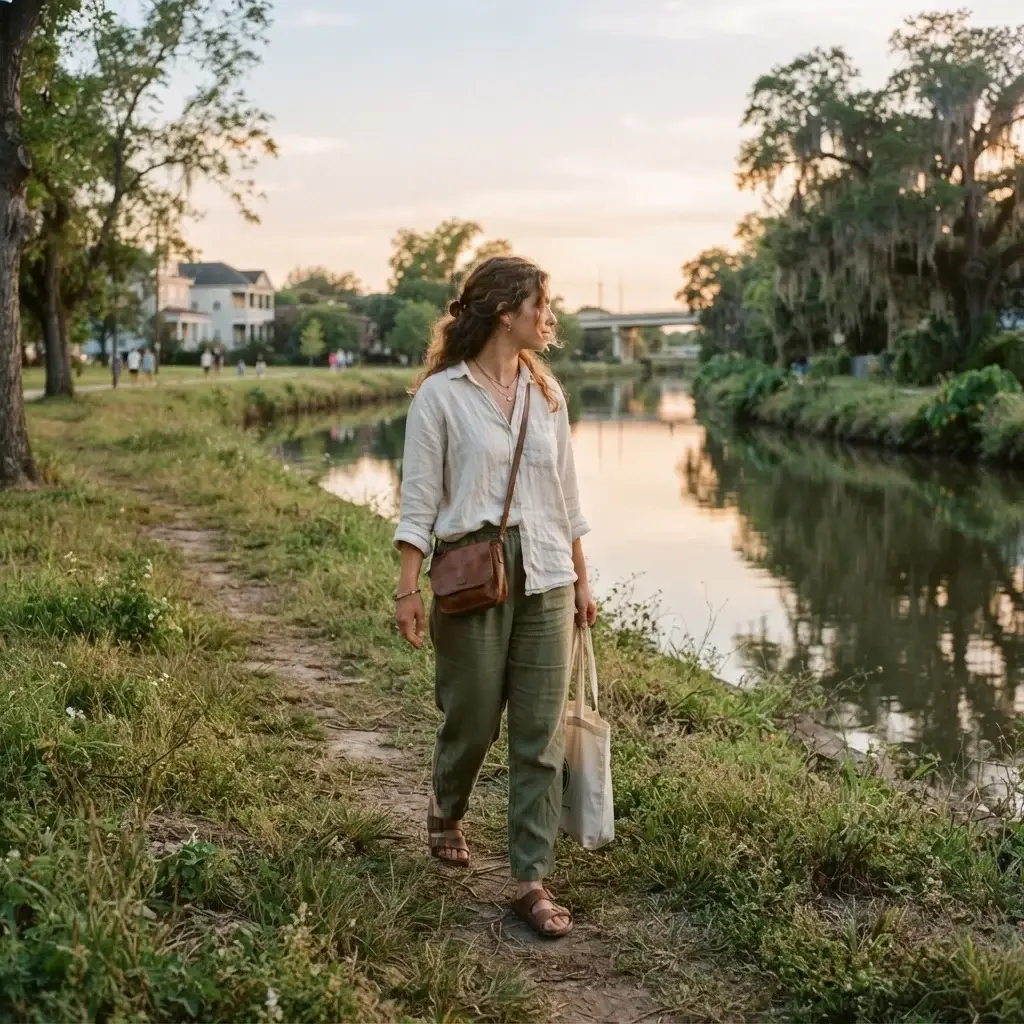
Today, it is a peaceful gathering place where locals paddleboard, kayak, walk their dogs, and sit on blankets to watch the sunset.
Evening: Final Feast and a Jazz Farewell
For your final dinner in the city, find a restaurant that serves authentic Creole jambalaya. Jambalaya is a one-pot rice dish inspired by Spanish paella.
It mixes rice, tomatoes, onions, spices, chicken, andouille sausage, and shrimp together so that the rice completely absorbs all the incredible flavors of the meat and broth as it cooks. It is hearty, slightly spicy, and deeply comforting.
To close out your four-day journey, head back to Frenchmen Street or a historic club like the Maple Leaf Bar for one last musical set. Sit near the back, sip your drink, and look around the room.
Think back to how you felt before you boarded your flight to New Orleans. You might have felt nervous about traveling to a new city alone, or stressed about your daily routine back home.
But over the last four days, the rhythm of this city has helped you slow down, step out of your comfort zone, and experience a truly unique culture. You did not just check things off a tourist list—you built real travel confidence.
Practical New Orleans Travel Packing and Logistics Guide
To ensure your four-day trip goes smoothly without any unexpected surprises, use these practical logistics tips.
Getting Around the City Without a Car
Do not rent a car for this itinerary. Parking in the French Quarter is incredibly expensive, often costing over $40 a night at hotels, and the historic streets are narrow, crowded, and filled with one-way signs.
- Public Transit: The local streetcars and buses are highly affordable and easy to use. Download the LePass app on your smartphone to purchase digital day passes, check real-time arrival schedules, and map out your routes smoothly.
- Walking: The French Quarter, Garden District, and Magazine Street are highly walkable. However, the old brick sidewalks can be very uneven due to historic tree roots breaking through the pavement.
- Pack broken-in, supportive sneakers with thick soles. Leave your high heels at home.
- Rideshares: Uber and Lyft operate everywhere in the city and are highly reliable for late-night transit between music venues.
Weather and Food Safety Tips
New Orleans can get incredibly hot and humid, especially between June and September. If you are traveling during these months, pace yourself.
Drink plenty of water throughout the day to stay hydrated between alcoholic beverages. When exploring remote areas or taking a swamp tour, it is always wise to review active health updates regarding local insects by checking the CDC Travelers’ Health destination guidelines, which offer highly reliable advice on food safety and bug bite prevention for travelers.
Solo Traveler Safety Advice
Is New Orleans safe for solo travelers? Yes, absolutely, but you must use common sense just like you would in any major city.
- Stay Aware: It is easy to get distracted by street performers and brass bands. Keep your eyes up, stay aware of your surroundings, and do not look down at your phone screen constantly while walking.
- Secure Your Belongings: Pickpockets operate in crowded areas like Bourbon Street and Jackson Square. Never put your wallet or smartphone in your back pocket. Use a cross-body bag that zips shut securely across the front of your body.
- Watch Your Alcohol Intake: New Orleans has no open-container laws, meaning you can legally walk down the street with a drink in your hand. It is easy to overindulge. Pace yourself, keep an eye on your glass at all times, and never accept drinks from strangers.
- Stay on the Main Paths: If a street looks dark, empty, or feels wrong in your gut, trust your instincts. Turn around immediately and head back toward well-lit, crowded main streets.
Understanding New Orleans Food Vocabulary
Before you step into a local restaurant, review this quick culinary guide so you can order with total confidence.
| Dish Name | What It Is | What It Tastes Like |
| Roux | Flour and fat cooked slowly together | Nutty, rich, and forms the flavor base for gumbos. |
| Gumbo | Thick, slow-simmered soup over rice | Earthy, smoky, and deeply savory. |
| Jambalaya | One-pot rice, meat, and vegetable dish | Hearty, spicy, and similar to Spanish paella. |
| Etouffee | Smothered seafood in a buttery sauce | Rich, sweet, and heavily buttery. |
| Po’Boy | Classic sandwich on crispy French bread | Crunchy on the outside, soft and savory inside. |
| Beignet | Deep-fried dough with powdered sugar | Sweet, hot, and melt-in-your-mouth light. |
Stop Waiting and Start Exploring
It is incredibly easy to spend your days sitting at home, looking at travel photos on social media, and waiting for the absolute “perfect moment” to take a trip. But if my years on the road have taught me anything, it is that the perfect moment rarely exists.
You have to create it. New Orleans is a city that rewards curiosity, courage, and an open heart. It is a place where you can lose yourself in the music, find yourself through the culture, and return home with a renewed sense of independence.
Pack your bags, put on your most comfortable walking shoes, and go experience the magic of the Big Easy for yourself. The music is already playing.



