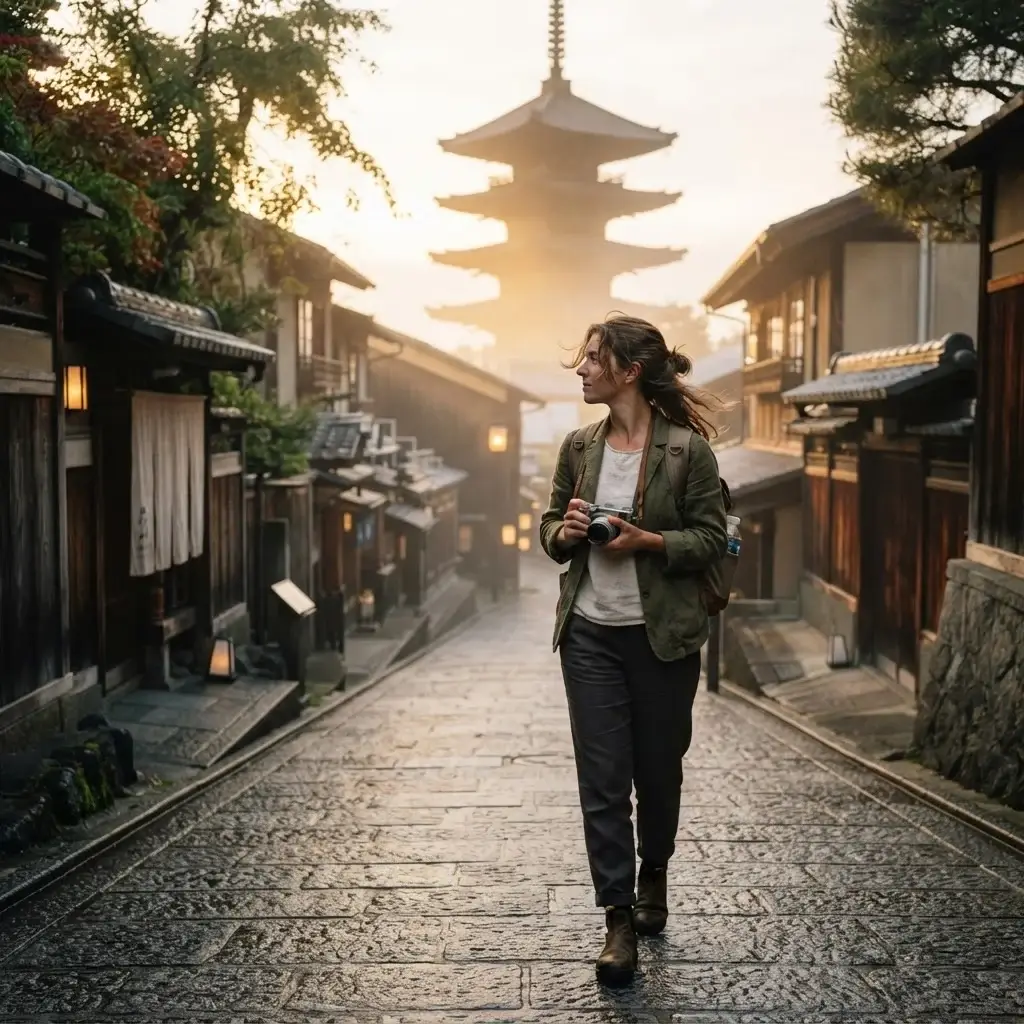
I know exactly how you feel. You are looking at a map of Kyoto, and your head is spinning. There are over one thousand Buddhist temples in this city. There are hundreds of Shinto shrines. There are bamboo forests, traditional tea houses, and historic markets spread out across miles of land. You only have forty-eight hours, and you are terrified of messing it up.
When I worked as a certified sightseeing guide in New York City, I watched thousands of tourists make the same mistake. They would try to see twenty different landmarks in a single weekend. They spent their entire vacation running from subways to buses, staring at paper maps, and checking boxes on a list. By the time they left, they were exhausted, stressed, and they could barely remember what they saw.
When I quit my traditional 9-to-5 office job to travel the world full-time, I promised myself I would stop traveling that way. I learned that rushing through a city kills the magic of exploration. You do not need to see every single shrine in Japan to fall in love with its history. You just need a smart, realistic plan that lets you slow down and breathe.
This comprehensive 2-day itinerary for exploring Kyoto is built for the traveler who wants depth over speed. We are going to skip the frantic pace and focus on experiencing Kyoto deeply. You will learn how to beat the heavy crowds, how to navigate the local transit systems without panic, and where to find authentic local meals. Put away your stress, stop waiting for the perfect moment, and let’s plan your adventure together.
Pre-Trip Logistics: Building Your Travel Confidence
Before you pack your bags, you need to get your logistics sorted. Anxiety thrives on the unknown. If you know exactly how you are getting into the city, how you will pay for things, and what to wear, your fear will wash away. Let’s look at the basic building blocks of a smooth trip to Kyoto.
When to Visit Kyoto Mindfully
Kyoto is beautiful all year, but different seasons bring different crowds. Spring brings the famous pink cherry blossoms, and autumn brings brilliant red maple leaves. These seasons are stunning, but they are also incredibly crowded and expensive.
If you want a quieter, more personal experience, consider visiting during the late winter months like February, or the early summer month of June. The weather might require a warm coat or an umbrella, but you will have space to walk and think.
Before you book your flights to Japan, it is always smart to check official travel updates. I always read the latest safety ratings and entry rules on the US Department of State Travel advisory page for Japan to make sure my paperwork is perfect before I leave home.
Getting Into Kyoto
Most international travelers arrive in Japan via Tokyo or Osaka. If you are coming from Tokyo, the easiest way to travel is by using the Shinkansen, which is the famous Japanese bullet train. The journey takes about two and a half hours. The train drops you directly at Kyoto Station, which is the main transit hub of the city.
If you are coming from Osaka, you can take a local rapid train on the JR Kyoto Line. This ride is cheap and takes only thirty minutes.
Mastering Kyoto Transit Without Panic
Kyoto does not have a massive subway web like Tokyo or New York. Instead, Kyoto relies heavily on its public bus system. Many first-time travelers find the buses scary, but they are simple once you know the rules.
- Get an IC Card: This is a rechargeable plastic transit card. You can buy a Welcome Suica or Pasmo card at the airport, or an Icoca card at Kyoto Station. You load money onto it, and then you just tap it when you enter and exit trains or buses. It saves you from having to buy paper tickets every single time.
- Bus Boarding Rules: In Kyoto, you enter the bus through the back door. You exit through the front door next to the driver. When you exit, you tap your IC card on the digital reader or drop your cash into the fare box. A single ride inside the city zone costs a flat rate of 230 yen for adults.
- Google Maps is Your Best Friend: Google Maps works perfectly in Kyoto. It will tell you the exact bus number to wait for, which bus stop letter to stand at, and how many stops are left until your destination.
Packing for 20,000 Steps
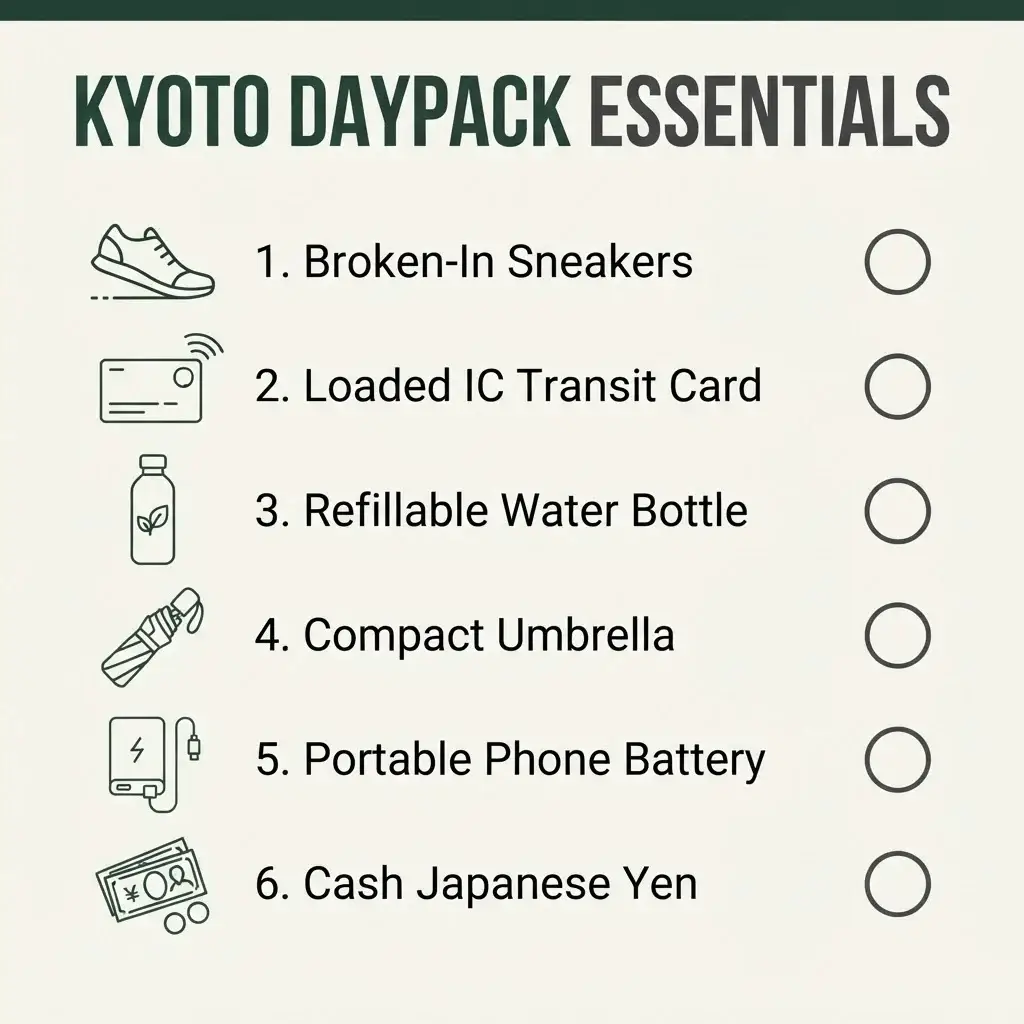
You will walk a massive amount during these two days. Kyoto is full of stone hills, gravel paths, and wooden stairs. Leave your fashionable, uncomfortable shoes at home. You need a broken-in pair of supportive sneakers.
Pack a small, lightweight daypack. Inside, keep a refillable water bottle, a small umbrella, and a portable battery charger for your phone. You will be using your phone constantly for maps and photos, and a dead battery in a foreign city can trigger instant panic.
It is also important to consider your physical well-being when traveling to a new country with different foods and climates. To prepare your body for the trip and see what vaccines or health steps you might need, you can look over the CDC Travelers’ Health recommendations for Japan to keep yourself safe and healthy on the road.
Day 1: Eastern Kyoto (Higashiyama) & Deep Traditions
Our first day focuses on the historic heart of Kyoto: the Higashiyama district. This area features narrow lanes, dark wooden buildings, and classic stone paths. It looks exactly like the Japan you have seen in old movies. Because it is so beautiful, it gets incredibly busy. Our strategy today is to start very early, take a long break when the crowds peak, and explore the quiet spaces mindfully.
Day 1 Route Overview:
Kyoto Station ➔ Kiyomizu-dera ➔ Sannenzaka & Ninenzaka ➔ Kodai-ji Area (Lunch) ➔ Philosopher’s Path ➔ Gion & Pontocho (Dinner)
6:30 AM – The Morning Magic of Kiyomizu-dera
Most tourists do not wake up early on vacation. That is your secret weapon. Kiyomizu-dera, a massive Buddhist temple built on the side of Mount Otowa, opens its gates at 6:00 AM.
Navigation: From Kyoto Station, walk to the bus terminal outside the north exit.
Go to Stand D2 and board Bus Number 206. Ride the bus for about 15 minutes
and get off at the Kiyomizu-michi stop. From there, walk east up the hill
for 10 minutes until you see the bright red temple gates.
When you arrive at 6:30 AM, the air is cool, the sun is low, and the tourist buses have not arrived yet. You will share the temple grounds with just a few local residents and monks.
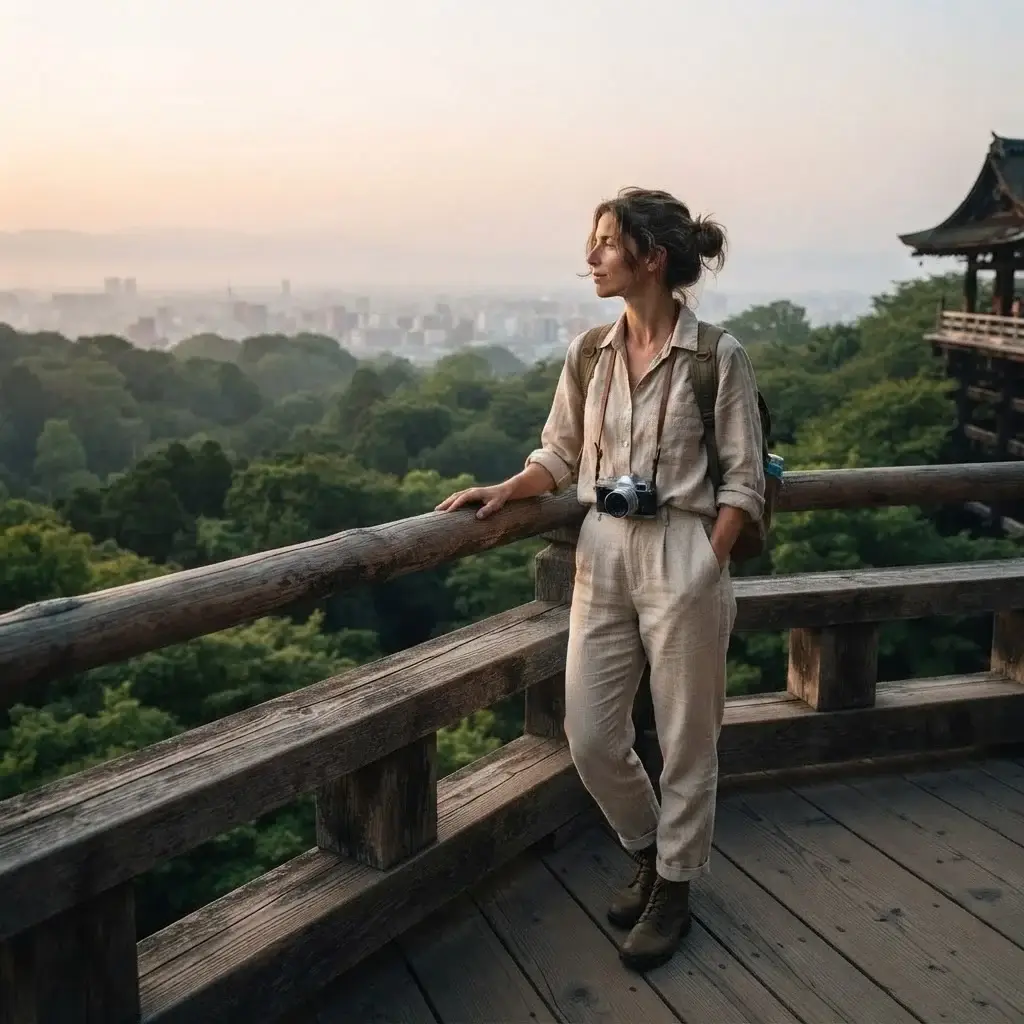
The most incredible part of this temple is the main hall’s wooden stage. It projects out over the hillside, supported by massive wooden pillars. This entire structure was built without using a single metal nail. Stand on the edge of the wooden deck and look out over the city of Kyoto. It is a view that gives you a profound sense of peace.
Because of its deep history and incredible preservation, this temple is protected as a global treasure. You can read all about its architectural wonders and historical importance on the official UNESCO World Heritage Kyoto page, which describes how these ancient buildings have survived for centuries.
Down below the main hall, you will see the Otowa Waterfall. The water divides into three separate streams. Local tradition says that each stream offers a different blessing: health, success in school, or a good love life. Use the long poles with metal cups to catch the water and pour it over your hands. Drink from just one stream—superstition says if you try to drink from all three out of greed, none of the blessings will come true.
Insider Secret: Do not buy your entry ticket with cash if you want to save time.
The ticket window accepts IC cards, which lets you bypass any small lines that
might form even early in the morning.
8:00 AM – Walking the Empty Slopes of Sannenzaka and Ninenzaka
When you leave Kiyomizu-dera, you will walk down the hill and turn right onto Sannenzaka Slope. This path, along with the connecting Ninenzaka Slope, forms the most famous walking route in Kyoto. By midday, these stone stairs are packed shoulder-to-shoulder with thousands of tourists. But at 8:00 AM, they are quiet, empty, and peaceful.
Take your time walking down these stone steps. Look at the preserved wooden machiya (traditional Japanese townhouses) that line the streets. Many of these houses have small paper lanterns hanging by the doors and small statues of Tanuki (raccoon dogs) sitting on the doorsteps to bring good luck.
This is the perfect moment to practice slow observation. Look at the patterns in the wooden walls. Listen to the sound of your own shoes hitting the stone path. Stop and look at the Yasaka Pagoda, a five-story wooden tower that rises high above the neighborhood. This tower has stood through fires, wars, and earthquakes since the year 1440.
Culture Tip: Be careful on these stairs! Local legends say that if you trip
and fall on Sannenzaka, you will have three years of bad luck. If you fall
on Ninenzaka, it is two years of bad luck. It is just an old story to make
sure people walk carefully, but it works!
10:30 AM – The Great Midday Escape and Tofu Lunch
By mid-morning, the shops along Ninenzaka begin to open their wooden doors. Souvenir stores, matcha cafes, and craft shops come to life, and the tour groups arrive. This is when the streets get loud and crowded. Instead of fighting the crowds, we are going to dive into a peaceful temple garden for a rest.
Walk north toward Kodai-ji Temple. This temple was built in 1606 by a woman named Nene to honor her late husband, the leader Toyotomi Hideyoshi. The temple grounds are home to a breathtaking Zen rock garden, where the gravel is raked into patterns that resemble waves in the ocean. Sitting on the wooden veranda of Kodai-ji and staring at the dry landscape garden is a wonderful way to ground your mind when the outside world gets busy.
Around 12:00 PM, it is time for lunch. The area around Kodai-ji is famous for a traditional Kyoto specialty called yudofu (hot tofu boiled in a simple broth). Many western travelers think tofu sounds boring, but Kyoto tofu is entirely different. The city has incredibly clean, soft groundwater, which makes the local tofu sweet, smooth, and creamy.
What to Eat: Find a local restaurant like Tosuiro or a small noodle shop
near the temple gates. Order a set meal that features yudofu served in a
wooden pot, along with vegetable tempura and hot green tea.
How to Eat It: Lift the warm tofu gently out of the water using a slotted spoon,
place it into your small personal bowl, add a few drops of savory soy sauce,
and sprinkle fresh ginger and green onions on top. It is a clean, comforting
meal that fills you up without making you feel heavy or sleepy.
2:00 PM – Strolling the Peaceful Philosopher’s Path
After lunch, we are going to move away from the busy central streets of Higashiyama and head north. We are going to visit the Philosopher’s Path, a stone walkway that runs alongside a quiet, stone-lined canal.
Navigation: Walk out to the main street called Higashioji-dori. Find the closest
bus stop and catch Bus Number 203 or 204 heading north. Get off at the
Ginkakuji-michi stop. Walk east for five minutes toward the mountains,
and you will see the start of the path near the silver pavilion.
The path gets its name from Nishida Kitaro, a famous Japanese philosopher who used to walk this exact route every single day to practice meditation while walking to Kyoto University. The path is roughly two kilometers long, and it takes about thirty minutes of continuous walking to complete. But you should not rush it.
The canal is lined with hundreds of trees. Big, green moss coats the stone walls, and large koi fish swim slowly against the current in the clear water. As you walk, you will pass small, independent art galleries, quiet residential homes, and tiny cafes run by local families.
If you feel tired, stop at a small cafe along the path and order a cup of iced matcha tea or a sweet rice dumpling called dango. Sitting by the water and watching the leaves movement in the wind is exactly what slow travel is about. It builds your confidence because you realize you do not need a loud, exciting attraction to enjoy yourself. The quiet moments are often the ones that stick in your soul forever.
5:30 PM – Twilight Exploration in Gion
As the sun begins to set, take a bus or walk back south toward Gion, which is Kyoto’s historic geisha district. Twilight is the most magical hour to visit this neighborhood. The old wooden buildings are lit up by the soft, warm glow of red paper lanterns, and the evening air smells like woodsmoke and roasting green tea.
Walk down Hanami-koji Street, which is the main artery of the district. If you are lucky, you might spot a maiko (an apprentice geisha) or a geiko (a fully trained geisha) walking quickly down the alley on her way to an evening appointment. She will be wearing a stunning silk kimono and traditional wooden sandals that make a distinct clacking sound on the pavement.
Critical Etiquette Rules for Gion:
– Never touch a geisha or a maiko under any circumstance.
– Never block her path or stand in front of her to take a photo.
– Do not use selfie sticks or lean against private wooden fences.
– Many side alleys in Gion now have signs that strictly ban photography.
Always look for these signs. If you see a camera symbol with a red line through it,
put your phone inside your bag. Violating these rules can result in a hefty cash fine.
Be a respectful traveler, not a disruptive tourist.
If you want a deeper look at the layout of this historic neighborhood and its surrounding temples, I suggest looking at a comprehensive map resource. You can check out the Lonely Planet Kyoto overview maps and district guides to find your way through the small alleys safely.
7:30 PM – A Memorable Dinner in Pontocho Alley
For dinner, cross the Kamogawa River over the Shijo Bridge and walk into Pontocho Alley. This is a very narrow pedestrian lane that runs parallel to the river. It is barely wide enough for three people to walk side-by-side, and it is packed with tiny restaurants, bars, and food stalls.
Dinner Suggestion: Look for a small restaurant that serves Kushikatsu
(skewered meats and vegetables that are lightly battered and fried until crispy).
Sit at the wooden counter, order a few skewers of lotus root, shiitake mushrooms,
and local pork, and watch the chef cook your food directly in front of you.
Etiquette Note: If you receive a shared bowl of dipping sauce on the counter,
remember the golden rule: double-dipping is strictly banned for health reasons.
Dip your skewer once before you take a bite, and use cabbage leaves to scoop
extra sauce onto your plate if you need more.
After dinner, take a slow walk along the banks of the Kamogawa River. Local couples and friends sit along the stone ledges of the water to chat and enjoy the cool evening breeze. It is a beautiful, grounded end to your first twenty-four hours in Kyoto.
Day 2: Bamboo Groves, Ancient Gardens & Thousand Shrines
Today we split our time between two opposite sides of the city. In the morning, we head south to witness the endless red gates of Fushimi Inari. In the afternoon, we head far west to the quiet riverside district of Arashiyama. Today requires a bit more train travel, but the natural beauty and spiritual spaces are worth every mile.
Day 2 Route Overview:
Kyoto Station ➔ Fushimi Inari Taisha ➔ Arashiyama (Lunch & Tenryu-ji) ➔ Bamboo Grove ➔ Okochi Sanso Garden ➔ Kyoto Station (Dinner)
6:30 AM – Climbing Through the Red Gates of Fushimi Inari Taisha
Fushimi Inari Taisha is the primary Shinto shrine dedicated to Inari, the Shinto god of rice and business. It is famous for its paths lined with over ten thousand bright orange-red torii gates. Like Kiyomizu-dera on Day 1, this site becomes incredibly packed with tourists by 9:00 AM. To experience its mystical energy, you must arrive early.
Navigation: Go to Kyoto Station and find the JR Nara Line trains (usually track 8, 9, or 10).
Board a local train and ride it for two stops. Get off at Inari Station.
The journey takes just 5 minutes, and the entrance to the shrine is
directly across the street from the station exit.
When you arrive at 6:30 AM, the shrine is incredibly quiet. Walk past the massive main hall and follow the signs for the Senbon Torii (the path of a thousand gates). Here, the large gates are placed so close together that they form a bright orange tunnel that cuts off the morning sun.
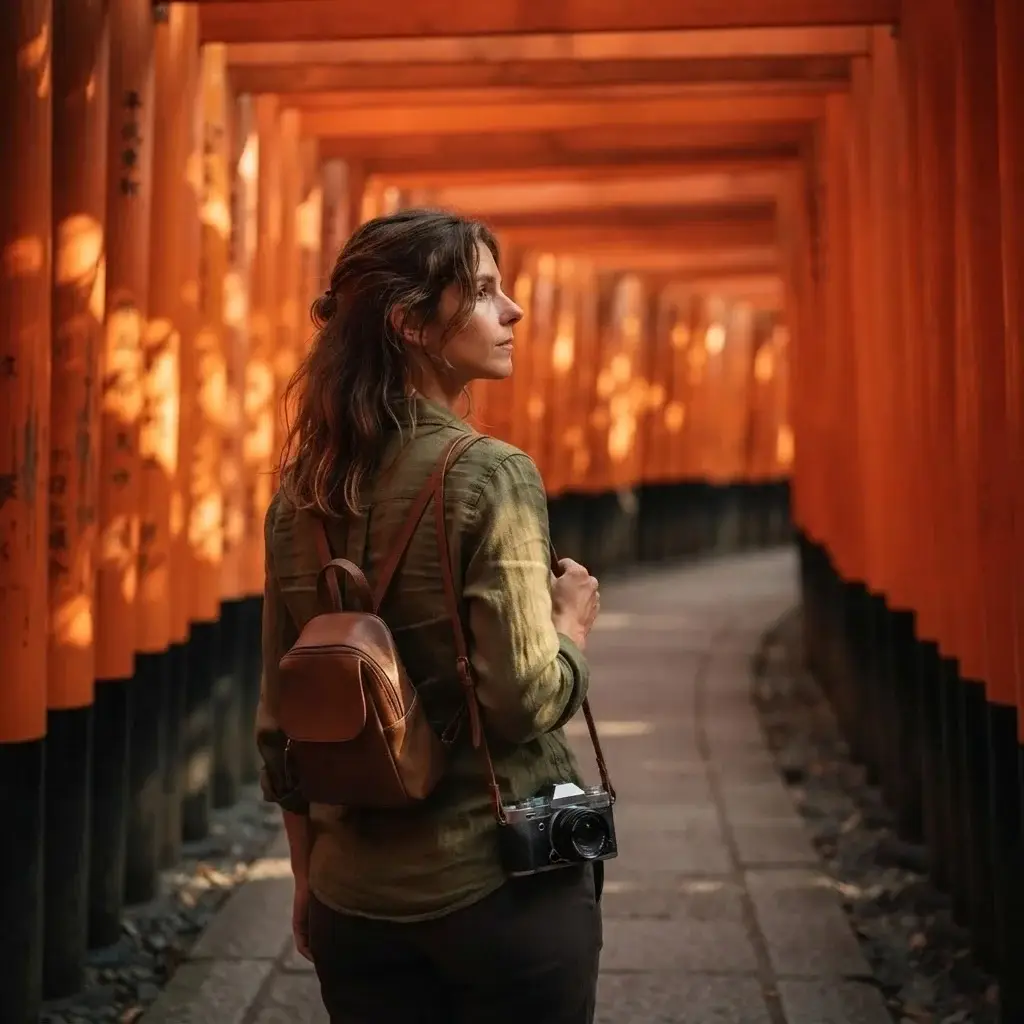
As you hike up the mountain path, look closely at the bases of the gates. You will see black characters carved into the wood. These are the names of the companies and individuals who purchased the gates to show gratitude for their business success or to ask for good fortune.
You will also notice hundreds of stone statues of foxes along the mountain trails. In Shinto belief, foxes are the sacred messengers of the god Inari. Many of these foxes hold a key in their mouths, which represents the key to a traditional rice granary.
The Mental Strategy: You do not have to hike all the way to the top of Mount Inari.
The complete loop takes about two full hours of steep stair climbing. Hike for
about twenty or thirty minutes until you reach the Yotsutsuji Intersection.
Here, the crowds thin out completely, and you get a beautiful morning view of the
Kyoto valleys. Take a few deep breaths, snap your photos, and then turn around
to head back down the mountain.
9:30 AM – Moving Across the City to Arashiyama
Now we are going to make our biggest transit move of the weekend, traveling from the southeast corner of Kyoto to the western edge of Arashiyama. This transition is simple if you follow the train lines.
Navigation Steps:
1. Walk back to Inari Station and board the JR Nara Line train back to Kyoto Station (5 minutes).
2. At Kyoto Station, look at the big overhead electronic screens and find the JR San-in Line (also called the Sagano Line, usually tracks 31, 32, or 33).
3. Board a local or rapid train heading toward Kameoka or Sonobe.
4. Ride the train for about 15 minutes and get off at Saga-Arashiyama Station.
From the station exit, follow the signs and walk west for ten minutes through a quiet residential neighborhood until you reach the main street of Arashiyama near the Oi River.
10:30 AM – A Slow Riverside Lunch
Before we dive into the crowded bamboo paths, let’s find an early lunch by the water to recharge your batteries. The landscape here is magnificent. High, forested mountains rise steeply out of the wide green river, and traditional wooden pleasure boats glide slowly across the water.
Walk along the river bank toward the Togetsukyo Bridge (which translates beautifully to the “Moon Crossing Bridge”). This wooden bridge has been a landmark in Arashiyama for over four hundred years.
What to Eat: Find a small restaurant overlooking the river that serves
Sansai Soba (hot or cold buckwheat noodles topped with crisp, wild mountain vegetables).
If it is a warm day, order Zaru Soba, which are cold noodles served on a bamboo mat.
How to Eat It: Mix a little bit of green wasabi and sliced green onions into your cup
of savory dipping sauce. Pick up a small bundle of noodles with your wooden chopsticks,
dip the lower half of the noodles into the sauce, and slurp them quickly. Slurping is not
rude in Japan! It draws air into your mouth, which cools the hot food and enhances
the complex flavors of the broth.
12:00 PM – The Ancient Zen Art of Tenryu-ji Temple
After lunch, enter the main gates of Tenryu-ji Temple, which sits right on the main street of Arashiyama. Founded in 1339, this is the most important Zen temple in the entire western district.
While many of the wooden temple halls have been rebuilt over the centuries due to historic fires, the garden is completely original. Designed by the famous Zen master Muso Soseki, the Sogenchi Pond garden looks exactly the same today as it did in the 14th century.
The garden uses a classic design technique called shakkei (borrowed scenery). Soseki designed the pond and the walking paths so that the distant mountains of Arashiyama appear to be a natural extension of the temple garden itself. Sit quietly on the long wooden steps of the main hall and look at the reflection of the pine trees and rocks in the still water. It feels like looking at a living painting.
1:30 PM – Walking Through the Arashiyama Bamboo Grove
Exit through the north gate of Tenryu-ji Temple, and you will step directly into the world-famous Arashiyama Bamboo Grove. This is an incredible natural pathway where thousands of giant, green bamboo stalks grow straight up toward the sky.
Because you are arriving in the afternoon, this path will be busy with other travelers. Do not let the crowds frustrate you. Instead, adjust your focus. Look away from the people on the path and cast your eyes upward. Watch how the bright green bamboo stalks sway slowly back and forth in the breeze.
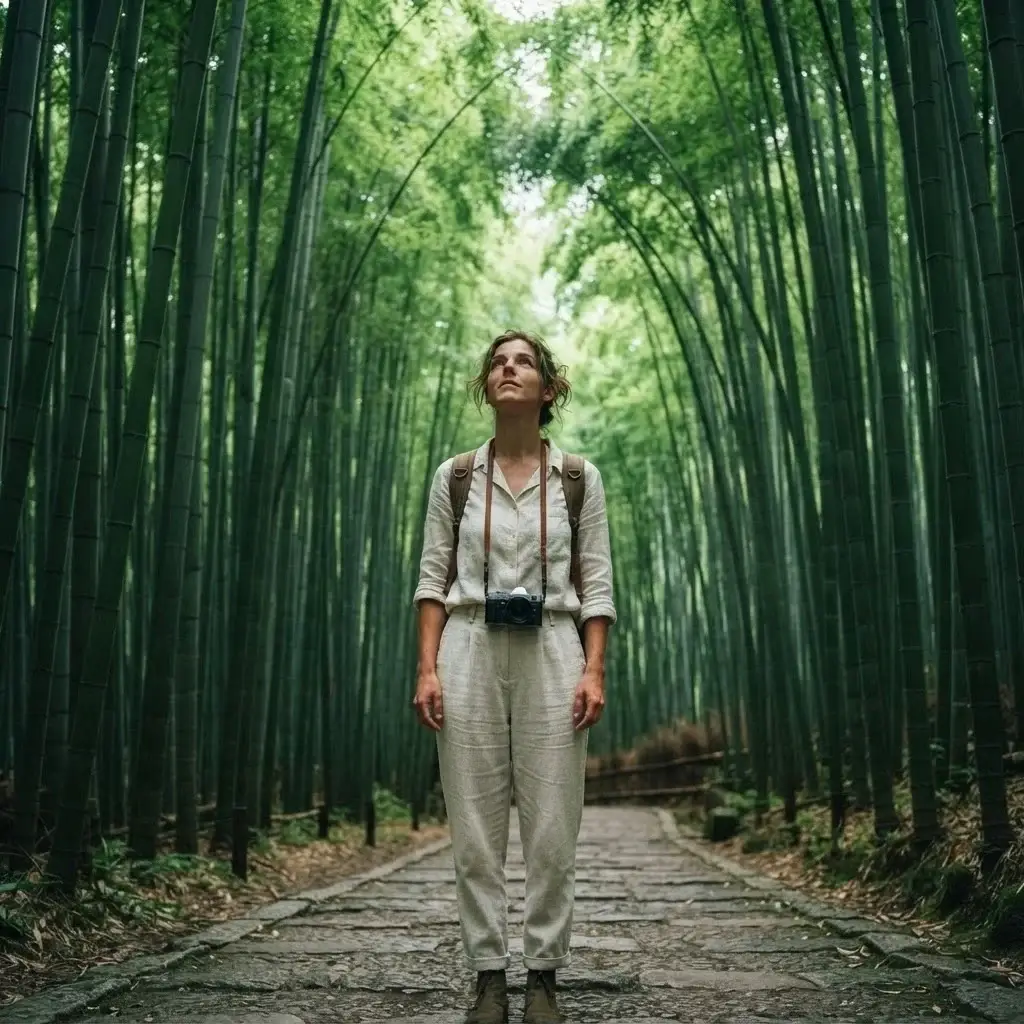
Listen closely to the unique sounds of the grove. When the wind moves through the paths, the dry bamboo stalks knock gently against one another, creating a soft, hollow creaking sound. The rustling of the bamboo leaves sounds like gentle rainfall. It is such a beautiful, relaxing acoustic space that the Japanese Ministry of the Environment has named it one of the “100 Soundscapes of Japan.”
2:30 PM – The Ultimate Slow Travel Reward: Okochi Sanso Garden
Most tourists walk to the end of the bamboo path, take a few quick photos, and immediately turn around to go back to the train station. By doing that, they miss the best hidden sanctuary in western Kyoto.
At the very top end of the bamboo grove path, you will see a small wooden gate with a sign that reads “Okochi Sanso Garden.” This is the private estate of Denjiro Okochi, a famous Japanese silent movie actor who spent thirty years of his life building this mountaintop garden by hand. There is a cash entry fee of 1,000 yen, which scares away the budget tour groups. This fee is your ticket to total peace.
The garden path twists and turns up the hillside, leading you through beautifully manicured moss gardens, fields of wild flowers, and quiet wooden viewing pavilions. At the highest point of the trail, you get an open, panoramic view of the deep Hozu River gorge on one side, and the sprawling city of Kyoto on the other.
The Best Part: Your entry ticket includes a free treat! When you finish your walk,
follow the signs to the traditional wooden tea house on the grounds. Sit down on
a red tatami mat, and a host will serve you a warm bowl of frothy, high-grade
matcha green tea alongside a sweet sugar cake. It is a quiet, meditative experience
that embodies the soul of Pinverse Travel.
6:00 PM – A Farewell Feast at Kyoto Station
Take the JR train from Saga-Arashiyama back to Kyoto Station. For your final evening in the city, we are going to explore a food paradise located inside the train station itself. Kyoto Station is a massive, futuristic building made of steel and glass, and its upper floors are home to some of the best casual dining spots in Japan.
Take the elevators up to the 10th floor of the station building to find the Kyoto Ramen Koji (Ramen Street). This is a corridor packed with seven different regional ramen shops from all over Japan, each serving a distinct style of noodle soup.
Dinner Recommendation: Look for a shop that serves Kyoto-style ramen. This features
a rich, dark broth made from chicken bones and local soy sauce, packed with thick slices
of tender pork belly, fresh bamboo shoots, and a giant handful of green Kujo scallions.
How to Order: You will buy your meal ticket from a digital vending machine outside
the shop door. Press the button for your favorite ramen style, insert your cash or tap
your IC card, and hand the paper ticket to the staff when you walk inside. It is fast,
fun, and incredibly delicious.
After your meal, walk out onto the 11th-floor skyway bridge inside the station roof. Look out through the giant glass panels at the city lights glowing in the night sky. Look at the bright white Kyoto Tower rising into the dark air. You did it. You explored the ancient capital of Japan in forty-eight hours without losing your peace of mind.
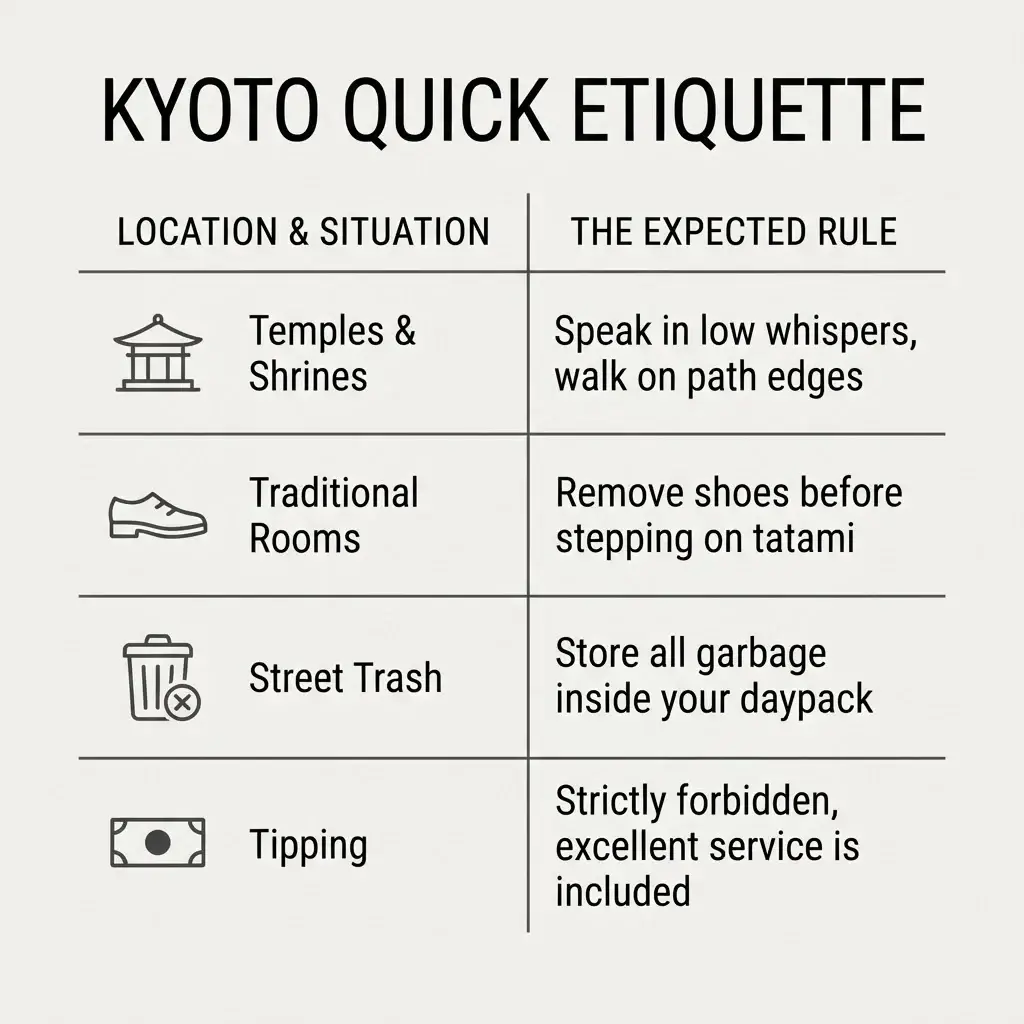
Kyoto Essential Cultural Etiquette
To travel with confidence, you need to understand the local social customs. When I first started traveling solo across Europe and teaching English in Thailand, I made dozens of cultural mistakes because I didn’t take time to study local traditions. In Japan, showing respect for the local culture opens doors and builds beautiful human connections. Here are a few essential rules to keep in mind during your 2-day itinerary for exploring Kyoto:
| Location / Situation | The Expected Etiquette Rule | Why It Matters Locally |
| Buddhist Temples | Bow slightly at the entry gate; keep your voice down to a quiet whisper. | These are active places of worship and meditation, not amusement parks. |
| Shinto Shrines | Walk on the left or right sides of the paths; never walk directly down the center. | The center of the path is reserved for the Shinto gods to walk. |
| Entering Traditional Rooms | Take off your sneakers if you see a raised wooden floor or straw tatami mats. | Outdoor shoes carry dirt and damage the delicate, hand-woven straw floors. |
| Handling Your Trash | Keep all wrappers and empty bottles inside your daypack until you return to your hotel. | There are almost no public trash cans on Kyoto streets to prevent littering. |
| Tipping at Restaurants | Never leave extra cash tips on the table. It is considered awkward and confusing. | Excellent service is included in the price; leaving extra money feels uncomfortable. |
Whenever you are unsure of what to do, just slow down, take a step back, and watch how the local residents behave. If they bow, bow. If they are quiet, lower your voice. The world always rewards travelers who show curiosity, respect, and humility.
No matter how well you plan, remember that small mistakes and surprises are a normal part of every great journey. It is always wise to protect your trip and your health with a solid backup plan. To learn more about covering your trip expenses, medical needs, or lost bags on the road, you can look over the custom coverage options on the World Nomads Travel Insurance planner page to travel with an extra layer of safety.
Moving Beyond Fear: Take the First Step
When I sat in my gray office cubicle years ago, staring at a computer screen and dreaming of places like Kyoto, I was frozen by fear. I kept telling myself that I didn’t have enough money, that I couldn’t speak Japanese, and that traveling solo to Asia was too dangerous for a woman like me. I kept waiting for that mythical “perfect moment” to arrive.
But the truth is, the perfect moment does not exist. Confidence does not appear out of nowhere before you travel. Confidence is a muscle that only grows after you take action.
You do not need to speak perfect Japanese to explore Kyoto. You do not need a massive bank account, and you do not need a travel partner. All you need is the courage to buy a ticket, step onto the plane, and follow a simple, realistic plan like this one.
Kyoto is waiting for you. Its ancient wooden temples, quiet moss gardens, and glowing paper lanterns are real, and they are within your reach. Stop letting uncertainty hold you back from living a life of adventure. Pack your bags, trust your feet, and take that first beautiful step today.