Best Seafood in Central America: 5 Destinations Worth the Trip

There’s a moment I think every food-focused traveler knows. You’re sitting somewhere you’ve never been, a plastic chair, a picnic bench, maybe a wobbly stool near the water, and something arrives in a bowl or on a plate that completely changes how you think about a place. That’s what seafood in Central America does. It isn’t just good food. It tells you who built the culture here, where the water comes from, which communities learned to make do with what the ocean gave them and turned it into something remarkable.
I’ll be honest: before I started seriously researching this part of the world as a travel destination, I didn’t think of Central America as a seafood region. I thought about it in terms of volcanoes, colonial cities, jungle treks. But once you start pulling on that thread, you realize that the coastlines here, both the Pacific and the Caribbean, are producing some of the most interesting seafood food culture in the entire hemisphere. And the best part is that it’s still under-covered, which means fewer crowds, lower prices, and a lot more authenticity.
This guide is built for people who want to eat well, travel thoughtfully, and not just wander into whatever restaurant has English menus and laminated photos. Here are five destinations that are worth organizing a trip around, each with its own distinct seafood identity and the dishes that matter most when you get there.
Belize: Lobster Season, the Barrier Reef, and a Celebration You Can Eat Your Way Through
If you are going to plan one seafood-focused trip in Central America, Belize is the argument for going sooner rather than later. The reason is simple: the country sits on top of the Belize Barrier Reef Reserve System, a UNESCO World Heritage Site inscribed in 1996 and the second-largest barrier reef system in the world. Over 500 species of fish live within it. That marine biodiversity doesn’t just make for incredible snorkeling. It fills the menus.
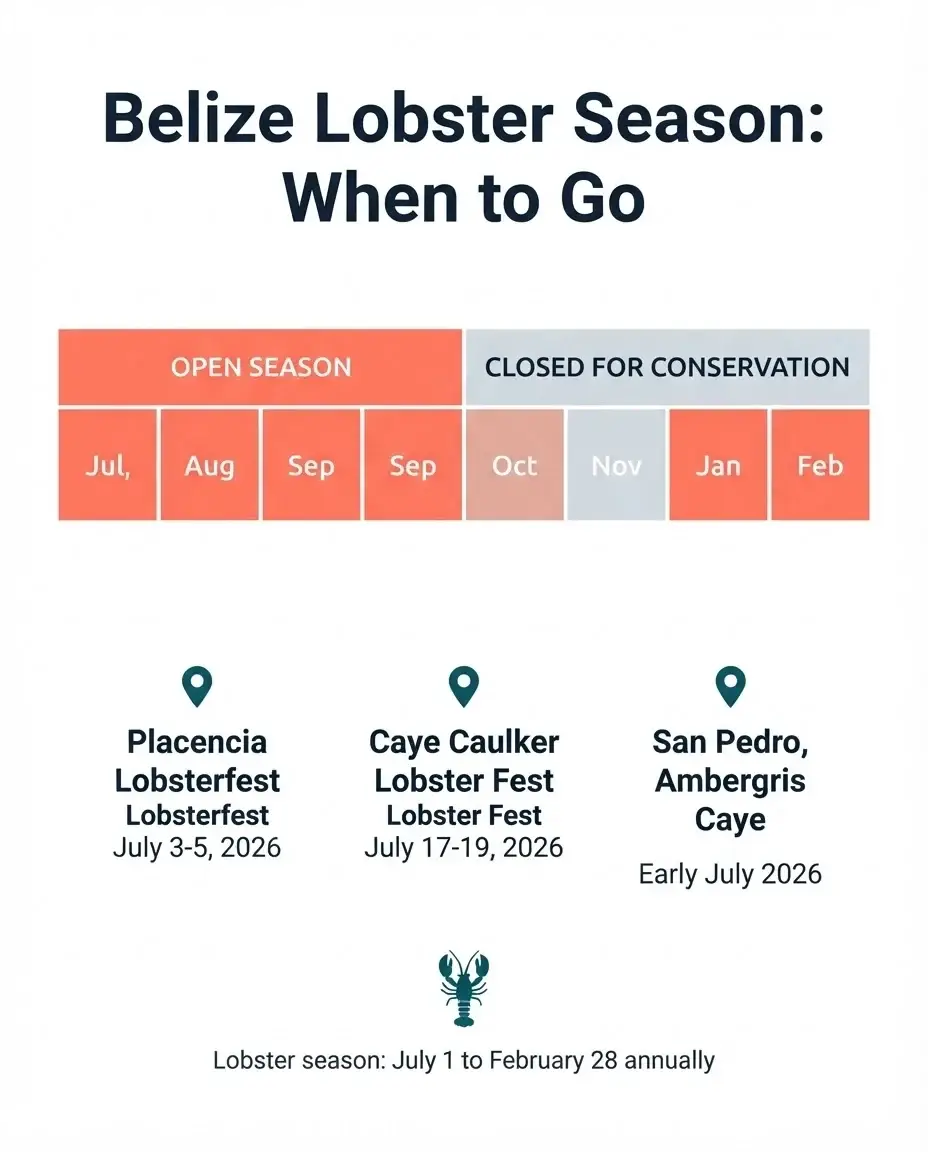
The cornerstone of Belizean seafood culture is the spiny Caribbean lobster. This isn’t the cold-water Maine lobster most North Americans picture. There are no claws. The meat is all in the tail, slightly sweet, firm, and exceptional when grilled simply with lime and butter or folded into a taco with local spices. Belize protects this resource seriously. Lobster season opens July 1 and runs through February 28, with the fishery closed from March through June to allow breeding populations to recover. If you are traveling between March and June, you won’t find legally caught local lobster on any reputable menu, and that’s actually a sign of a responsible place.
The best time to visit for the full experience is early July, when coastal towns throw their annual Lobster Fest celebrations. For 2026, Placencia Lobsterfest runs July 3-5 and Caye Caulker Lobster Fest is scheduled for July 17-19, with San Pedro on Ambergris Caye hosting the largest and liveliest version across roughly the first two weeks of July. These are community events, not tourist performances. You’ll find lobster ceviche, lobster fritters, grilled lobster tails, and lobster served over rice and beans cooked in coconut milk, which is one of those combinations that sounds simple until you taste it and realize it’s perfect.
For solo travelers, Caye Caulker is often the easier base. It’s a small, flat island with a genuinely relaxed pace, and the seafood there is fresh, plentiful, and reasonably priced at the local spots near the water. You can walk almost everywhere. The ferry from Belize City takes about 45 minutes. Ambergris Caye is larger, slightly more developed, and closer to some of the best reef snorkeling, which pairs beautifully with a morning at the fish market and an afternoon in the water.
Beyond lobster, keep an eye out for tapou, Belize’s version of the Garifuna seafood coconut stew, made with fish, plantain, green banana, cassava, coconut milk, and spices. It’s warming, deeply savory, and utterly specific to this stretch of Caribbean coastline.
Panama: A Fish Market That Runs Like Infrastructure
Panama City surprises a lot of travelers who expect it to be all high-rises and banking. The city is modern, yes, but right at the entrance to the historic neighborhood of Casco Viejo, sitting where the city literally begins, is the Mercado de Mariscos. It’s a working fish market, not a curated food-hall experience, and it opens around 5:00 a.m. when fishing boats arrive and unload their catch.
According to Casco Viejo 360’s detailed guide to the market, peak commercial activity winds down by 9:00 or 10:00 in the morning, which means if you want to see the market at its most alive, you need to get there early. Hotels and restaurants across Panama City source from here. It is, in a very real sense, where the city feeds itself. The market is open every day except Mondays.
Inside, you’ll find corvina (white sea bass), pargo (red snapper), shrimp, crab, lobster, and tuna. Prices hover around $4-5 per pound for most fish and crab, with shrimp running approximately $5 per pound, though this shifts with the season and the daily catch. The building has an upstairs restaurant where you can eat what’s on display below, and the outdoor waterfront courtyard fills up with local families in the evening.
The dish you need to order in Panama is ceviche de corvina. It’s made with raw corvina marinated in fresh lime juice until the acid gently firms the fish, then combined with finely chopped onion, celery, and a little habanero heat. It’s served cold, often with saltine crackers on the side. From what solo travelers and food writers consistently report, it’s one of the most refreshing things you’ll eat anywhere in the region. Light, clean, aggressively citrusy, and deceptively simple. The key is the corvina itself, which has a firm, mild flesh that holds up to the lime without going mushy.
Panama is also an easy solo travel destination. US citizens need only a valid passport and proof of onward travel for a stay of up to 180 days. The city’s layout is manageable, and Casco Viejo, where you’ll want to stay to be close to the market, is one of the most charming and walkable neighborhoods in all of Central America.
Honduras: The Bay Islands, Garifuna Soul Food, and Responsible Eating
Roatan is the most visited of Honduras’s Bay Islands, and it draws a lot of scuba divers for good reason. The reef here is extraordinary. But what most dive-focused travelers miss is that Roatan also sits at the intersection of Caribbean, Creole, and Garifuna food traditions, and that combination produces some of the most culturally specific seafood cooking in all of Central America.
The Garifuna are an Afro-Indigenous people with deep roots along the Caribbean coastline of Honduras, Guatemala, and Belize. Their food traditions center on fish, coconut, cassava, plantain, and green banana, and their signature dishes are found nowhere else on earth in quite the same form. On Roatan, you can find sopa de caracol, a rich conch soup cooked in coconut milk with cassava, plantain, and coriander.

You can also find tapado de pescado, the Honduran version of the Garifuna coconut fish stew, loaded with white fish, yams, squash, and yucca.
One thing worth knowing before you eat: Roatan has a lobster season that mirrors Belize’s, open July 1 through February 28. Outside that window, if a restaurant is serving lobster, it’s poached, which is both illegal and harmful to the reef ecosystem. Roatan Divers’ Bay Islands Responsible Seafood Guide lists green-light seafood as locally caught lionfish, tuna, wahoo, and mahi-mahi, and flags lobster, conch, grouper, and snapper as yellow or red depending on the season. Being aware of this before you sit down at a restaurant makes you a more informed eater, and honestly, the more travelers who ask the right questions, the better the incentive for restaurants to source responsibly.
For solo travelers, Roatan is very manageable. Most accommodation clusters around West End and West Bay Beach, both walkable and full of small restaurants and local spots. The vibe is more laid-back dive community than resort row, which means you’ll end up eating at picnic tables by the water next to experienced divers, expats, and local fishermen. That’s exactly the right context for this kind of food.
Guatemala: Livingston and the Dish That Tastes Like the Caribbean
Most people who travel to Guatemala stick to Antigua, Lake Atitlan, and the Mayan ruins at Tikal. Almost nobody makes it to Livingston, and that is a significant miss for anyone serious about food.
Livingston is a small Caribbean port town accessible only by boat, either from Puerto Barrios or from Belize. No road connects it to the rest of Guatemala. The population is predominantly Garifuna, and the food reflects that completely. You won’t find the corn tortillas and black beans that define most of Guatemalan cuisine. Instead, you’ll find fish cooked in coconut milk, green plantain, and the dish that food writers and travelers consistently call one of the most remarkable things they’ve eaten in the region: tapado.
Tapado is a thick seafood stew with a base of coconut milk, loaded with fish, shrimp, crab, and occasionally lobster, simmered with green banana, plantain, yuca, and tropical spices.
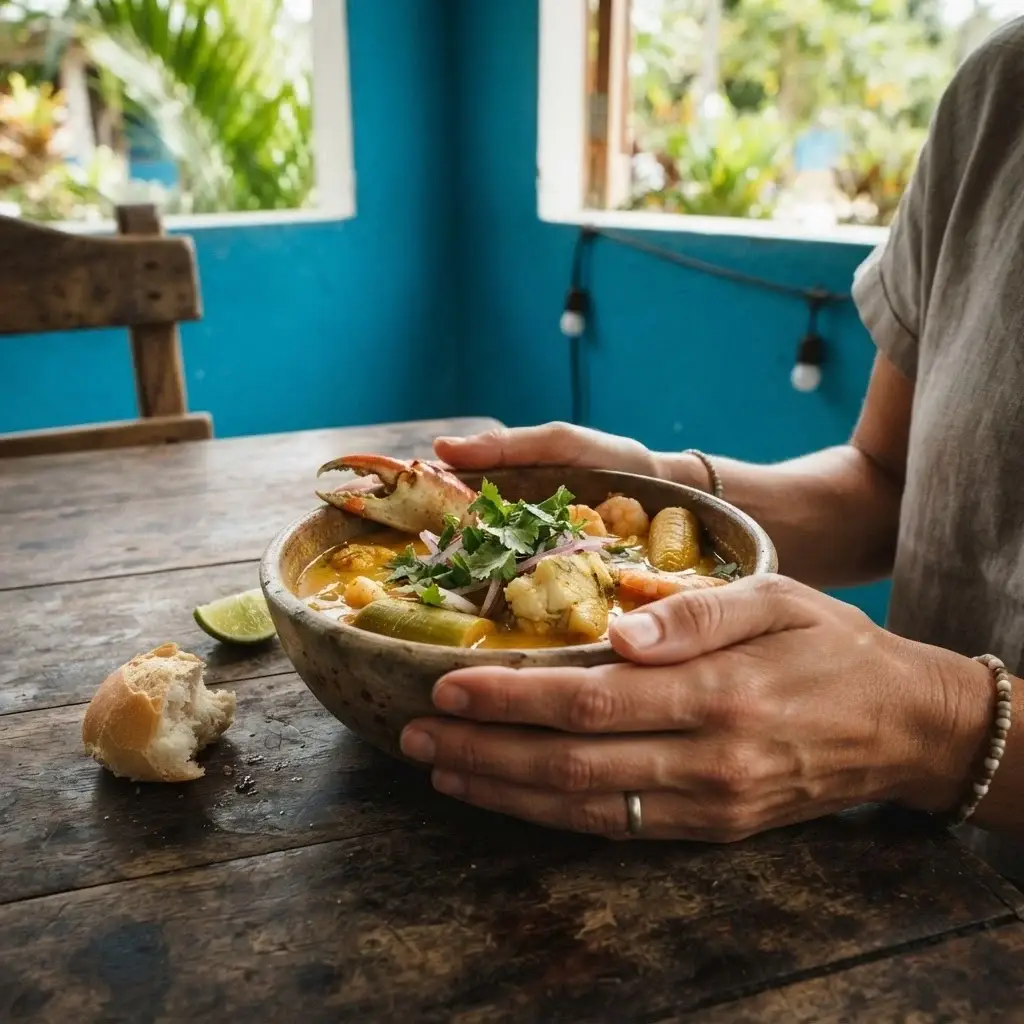
It is warming and rich without being heavy, and the coconut-seafood combination is one of those flavor pairings that feels entirely correct once you’ve tasted it. You can read more about the history and ingredients behind tapado to understand how deeply the dish is tied to Garifuna cultural identity before you arrive, which makes the actual meal mean more.
The practical logistics for Livingston require a little planning. The most common route is to take a bus from Guatemala City or Antigua to Puerto Barrios, then a lancha (small boat) from Puerto Barrios to Livingston. The lancha ride takes about 30 minutes. Alternatively, if you’re coming from Belize, you can take a boat from Punta Gorda, Belize, across the water to Livingston, which is a beautiful approach and makes a natural part of a multi-country loop.
There are small guesthouses and basic but comfortable hotels in Livingston. As a solo traveler, I’d suggest spending two nights, eating tapado at least twice, and walking the beach road in the evening where you’ll hear punta music drifting out of the bars and guesthouses. It is a genuinely off-the-radar experience, and the food is the reason to go.
Costa Rica: Two Coasts, Two Completely Different Plates
Costa Rica gets a lot of attention as a travel destination, but the seafood conversation here is often reduced to “fresh fish by the beach,” which misses what actually makes the country interesting to eat in. The key is understanding that Costa Rica has two coasts with two very different culinary identities, and the Caribbean side is where the more distinctive food lives.
The Pacific coast, particularly areas like Tamarindo in Guanacaste, offers excellent ceviche tico, the Costa Rican take on ceviche made with white fish or shrimp marinated in lime with cilantro and a little heat. It’s lighter and simpler than Peruvian ceviche, made with fewer ingredients, and that restraint is the point. You’ll also find arroz con camarones y pollo, a coastal rice dish cooked in the liquid from both chicken and shrimp that absorbs all that flavor into the grain itself. These are good, honest dishes, and the Pacific coast fishing towns are generally easy to navigate solo, with plenty of casual spots right on the water.
But for depth and distinctiveness, the Caribbean coast, specifically Puerto Viejo de Talamanca and the nearby village of Cahuita, offers something you genuinely can’t find on the Pacific side. The food here reflects the Afro-Caribbean population that has defined the culture of this coastline for generations. Rice and beans are cooked in coconut milk, not simply served alongside each other. Fish is prepared with allspice, scotch bonnet pepper, and thyme, building a flavor profile that leans toward Jamaica and the broader Caribbean more than toward Central America. The official Visit Costa Rica tourism guide notes that the Caribbean region is specifically known for its Afro-Caribbean culture and seafood, and the difference is real and noticeable the moment you sit down to eat.
In Puerto Viejo, look for the small local sodas (family-run restaurants) rather than the beachfront spots that cater entirely to surf tourists. The fish dishes at the community-run spots are usually fresher, cheaper, and more reflective of what people actually cook at home. Red snapper with rice and beans cooked in coconut milk, fried plantain on the side, and a cold Imperial beer is one of those meals that costs next to nothing and stays in your memory for years.
A Few Things Worth Knowing Before You Go
Central America is genuinely accessible for first-time and solo travelers. US citizens need only a valid passport and proof of onward travel for stays in Belize, Costa Rica, Panama, Honduras, and Guatemala. Entry is typically allowed for 90 to 180 days depending on the country, and no advance visa is required for most Western passport holders. Always carry a small amount of local currency for markets and street food, since seafood at the source is almost always a cash experience.
On the question of food safety at markets: the single best indicator of a good seafood stall is freshness, not cleanliness theater. Fish should smell like the ocean, not like fish. Eyes should be clear, flesh should be firm. The busiest stalls with the fastest turnover are almost always the safest bet because nothing sits around long enough to become a problem. If you’re eating ceviche, the lime juice does do real work in breaking down bacteria, but it’s not a substitute for good ingredients. Trust your nose and trust the busy spots.
And pay attention to seasonality. Ordering lobster in April in Belize or Roatan means you’re being served something caught illegally, harming a fishery that local communities depend on. Part of eating well while traveling is eating in the right season.
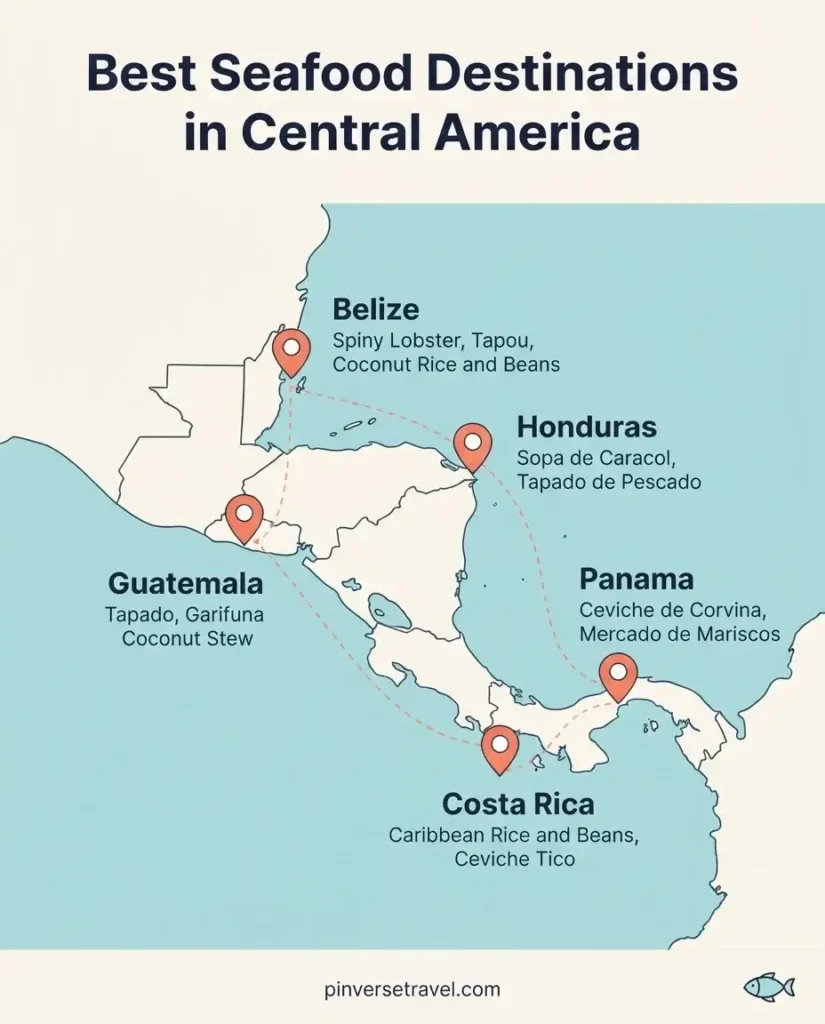
The TasteAtlas overview of Central American seafood dishes is a good starting point for understanding which dishes belong to which country and what makes each one culturally distinct.
The last thing I’ll say is this: the seafood culture in Central America is one of the most underrated food experiences in the world. People plan trips to Southeast Asia or Southern Europe specifically to eat near the water. Central America deserves the same consideration, and it’s still at the stage where you can walk into a local market, pay a few dollars, and eat something you will talk about for years. That window doesn’t stay open forever.