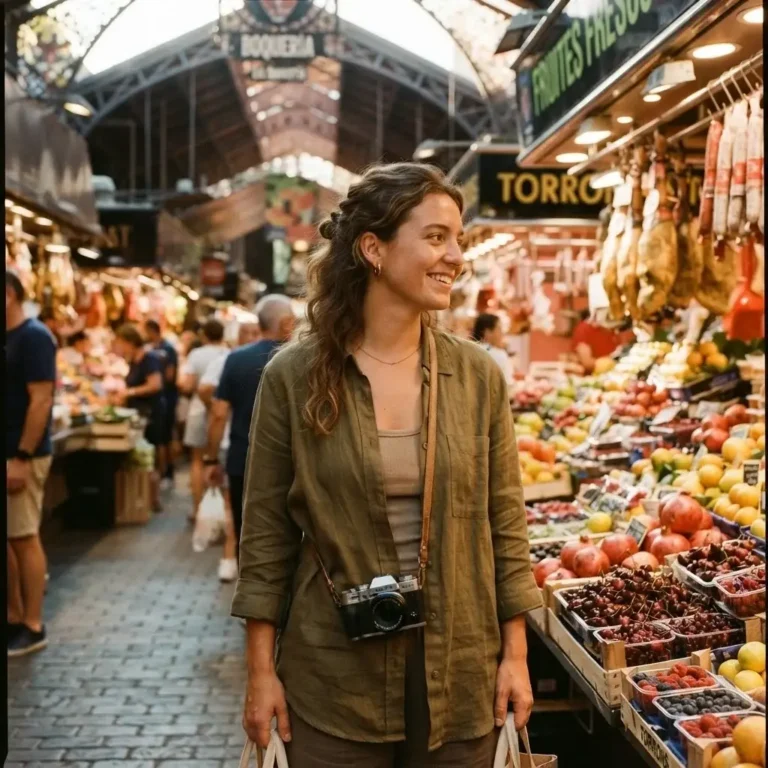

Eco-Friendly Destinations in Europe: A Solo Traveler’s Guide

Let me start with something honest. For years I thought “eco-friendly travel” was a thing other people did. The kind of people who had special water bottles, remembered their tote bags, and somehow always knew which train to take. I was sitting at a gray desk in New York back then, dreaming about the world and assuming the greener version of it was expensive, complicated, and a little out of my league.
It isn’t. That’s the whole point of this guide.
Some of the best eco-friendly destinations in Europe are also some of the easiest, cheapest, and safest places I’d send a first-time solo traveler. Green cities tend to have brilliant public transit, walkable centers, clean air, and a slower rhythm that happens to be perfect when you’re figuring things out on your own. So this isn’t a lecture. It’s a plan. I’ll show you what “eco-friendly” actually means so nobody can greenwash you, where to go, how to move between places without a giant carbon footprint, and how to do all of it without pretending to be a perfect traveler. I’m certainly not one.
What “Eco-Friendly” Really Means Before You Book Anything
Here’s the trap I want you to avoid. A hotel slaps the word “green” on a sign because they ask you to reuse your towel, and suddenly they’re “sustainable.” A city calls itself eco because it has a nice park. Marketing is easy. Proof is harder.
When I look at a destination now, I care about three things. First, how people get around, because transport is usually the biggest slice of a trip’s footprint. Second, whether the place protects the things that make it special instead of selling them off to overtourism. Third, whether locals actually benefit from visitors showing up. You can feel all three of these on the ground within a day of arriving.
The good news is you don’t have to judge this alone. Europe has real, verifiable systems for this. The one I trust most for cities is the European Union’s own European Green Capital Award, and you can read the actual profiles of past and current winning cities on the European Commission’s site rather than taking a travel blog’s word for it. When a city has earned that title, it went through a serious, evidence-based review. That’s the difference between a green claim and a green fact.

The Green Capitals: Cities That Earned the Title
If you want a shortcut to trustworthy eco-friendly destinations in Europe, start with the cities the EU has actually recognized. These are not random picks. They competed and won.
Vilnius, Lithuania, the 2025 Green Capital
Vilnius holds the European Green Capital title for 2025, and honestly, it’s having a moment that most travelers haven’t caught onto yet, which is exactly why I’d go now. The city has poured energy into greener public transport, more bike lanes, and pedestrian-first zones, and it runs community sustainability projects all year, from tree planting to eco-focused art. You can see how the city frames its own effort on the official Vilnius Green Capital 2025 page, which is also a genuinely useful planning resource.
For a solo traveler, Vilnius is a gift. The Old Town is compact and walkable, prices are gentle compared to Western Europe, and the whole place feels safe and unhurried. Eat your way through cepelinai, the hearty potato dumplings, and don’t skip the beetroot soup that turns bright pink in summer. Get around on foot and by public transit; you won’t need a taxi.
Ljubljana, Slovenia, the quiet blueprint
Ljubljana won the Green Capital title back in 2016, and it never stopped. The city center is largely car-free, the river is lined with cafes, and you can drink the tap water straight from public fountains. It’s one of the most livable small capitals I’ve researched, and the local tourism board is refreshingly transparent about how it operates, which you can dig into on the city’s own sustainable tourism in Ljubljana page.
What makes Ljubljana special for a nervous first-timer is scale. You cannot really get lost. Walk the Ljubljanica river, cross the Dragon Bridge, ride the funicular up to the castle, and eat at the open-air market where local farmers sell directly. Try štruklji, rolled dumplings that come sweet or savory. Slovenia as a whole is small enough to see by train and bus, which brings me to something worth knowing.
Slovenia runs a national certification called the Green Scheme of Slovenian Tourism, and it’s one of the most rigorous in the world. Towns, hotels, and even attractions earn Bronze through Platinum ratings, so you can literally choose where to stay based on a verified rating. You can browse how the whole Slovenia Green scheme works on the national tourism site, and it’s the clearest example I know of a country making sustainability something you can check rather than something you have to trust.
Copenhagen, Denmark, and the city that pays you to be good
Copenhagen has chased carbon neutrality harder than almost any capital, and it shows in the bike lanes that feel like highways for cyclists. But my favorite thing about it is a scheme called CopenPay, where the city actually rewards tourists for low-impact choices, offering perks for things like arriving by train, cycling, or helping with small green tasks. It flips the usual guilt of travel into something playful.
Copenhagen is not the cheapest city on this list, I won’t pretend otherwise. But you can offset that by skipping taxis entirely, renting a bike like a local, eating from food halls instead of white-tablecloth restaurants, and staying slightly outside the center. Grab a smørrebrød, the open-faced rye sandwich, from a market rather than a fancy spot and you’ve eaten like a Dane for a fraction of the price.
Looking ahead: Guimarães, Portugal
If you’re planning further out, keep Guimarães on your radar. This historic Portuguese city takes the European Green Capital title for 2026, so it’s about to get a wave of investment and attention. Portugal in general is one of the more affordable corners of Western Europe, and Guimarães, often called the birthplace of the nation, pairs deep history with a fresh green push. Going the year a city holds the title means you catch it at its most energized.
The Azores: Proof That Nature Can Be Protected and Visited
Not every eco-friendly destination is a city, and the Azores might be the most inspiring example on the planet. This Portuguese archipelago in the middle of the Atlantic became the world’s first certified archipelago under the EarthCheck Sustainable Destination program, which is a genuinely big deal. You can read the details straight from the certifying body in EarthCheck’s own announcement about the Azores, and it’s a rare case where the marketing and the substance actually match.
What that means for you on the ground is real. Whale watching here is managed responsibly, the hiking trails through volcanic craters and hydrangea-lined roads are protected, and the local government treats the islands as something to safeguard rather than sell out. The official Azores sustainable tourism site lays out how they think about visitor impact, and it’s worth a read before you go.

For solo travelers, São Miguel, the main island, is a soft landing. Rent a small car only if you must, or use local tours to reach the crater lakes of Sete Cidades and the steaming geothermal valley of Furna. Try cozido das Furnas, a stew cooked underground using volcanic heat, which is about as low-carbon as cooking gets. Eat the local pineapple and drink the island tea grown on Europe’s only tea plantations. This is the kind of place that quietly changes how you think about a trip.
Getting Around: The One Choice That Matters Most
Here’s the part most eco listicles skip, and it’s the single biggest lever you have. How you move between places usually matters more than any reusable water bottle. Trains in Europe emit dramatically less carbon than flying, often up to around 75 percent less per passenger than driving and far less than a short-haul flight, which is exactly why several European governments have started restricting short domestic flights altogether.
This is where Europe genuinely spoils you. The rail network is so good that “the green choice” and “the convenient choice” are frequently the same thing.
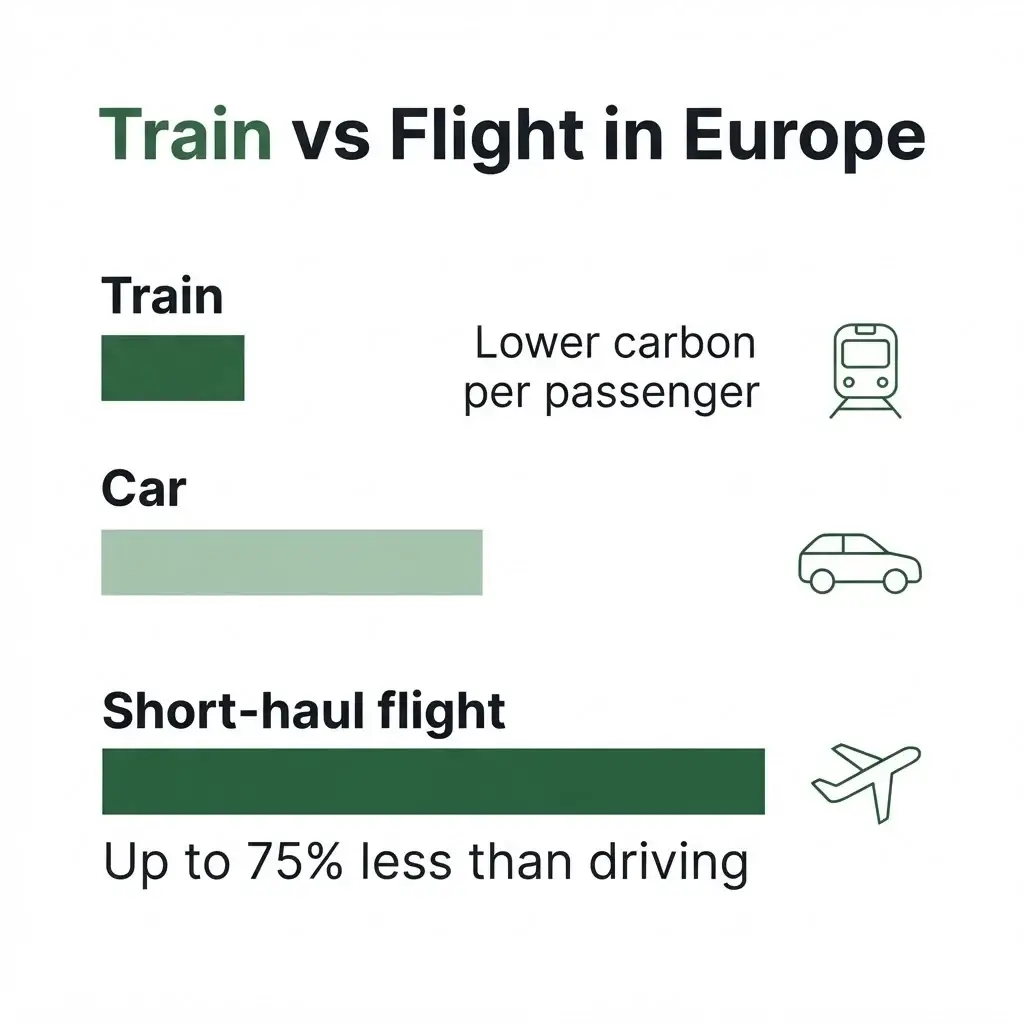
A single rail pass can carry you across borders, and if you want to plan a low-impact route, the Interrail sustainable travel section even compares the footprint of popular routes so you can see the difference for yourself. When I backpacked across Europe on almost no money, trains were how I did it, not because I was trying to be virtuous back then, but because they were affordable, safe, and the easiest way to travel solo. The environmental win was a bonus I only appreciated later.
A few practical notes from that experience that still hold. Night trains save you a hostel night and a day of travel at once. Regional trains are cheaper than the flashy high-speed ones and show you more countryside. And within cities, the greenest option is almost always the one that’s also the most fun: walking, then cycling, then public transit, in that order.

Skip the rideshares and you’ll save money and see more.
Is Eco-Friendly Travel Actually More Expensive? Let’s Be Honest
This is the myth I most want to break, because it kept me from trying for too long. The idea that sustainable travel is a luxury for people with money is mostly backward.
Think about what green travel actually asks of you. Walk and take transit instead of taxis. Eat local and seasonal instead of imported and fancy. Stay longer in fewer places instead of hopping constantly. Choose trains over last-minute flights. Every one of those is cheaper, not pricier. The expensive version of travel is the rushed, taxi-everywhere, eat-at-tourist-traps version, and that’s also the higher-footprint version. The values and the budget point in the same direction.
The one place people get tripped up is thinking “eco hotel” means “expensive boutique hotel.” It doesn’t have to. Hostels, guesthouses, and small family-run places are often the greenest option and the cheapest, because a family running a six-room guesthouse simply uses less of everything than a sprawling resort. When I lived with a family in Ghana, I saw how little a household could run on while still being warm and generous, and it reset my sense of what “enough” looks like when I travel. You need far less than the industry tries to sell you.
How to Check a Green Claim Yourself
I don’t want you to trust me blindly, or any blog for that matter. So here’s how I verify a place before I recommend it, and how you can too.
Look for third-party certification, not self-declared labels. A destination that’s been assessed by an outside body has done the hard part for you. The Green Destinations organization runs a well-known Top 100 program, and you can browse the current Green Destinations listings to see which places have submitted real, reviewed sustainability work rather than just talking a good game. Between that, the EU Green Capital list, and national schemes like Slovenia Green, you have three independent ways to fact-check almost anywhere in Europe.
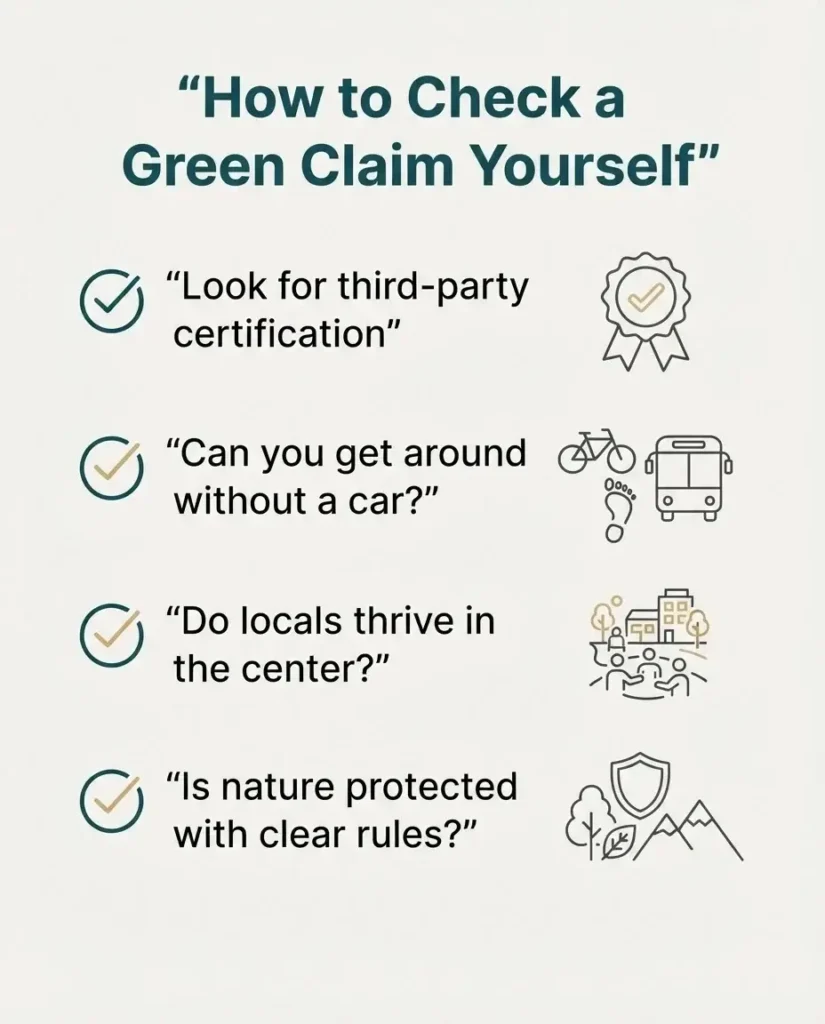
Then apply the sniff test on arrival. Can you get around without a car? Are locals visible and thriving in the center, or has it been hollowed out for tourists? Is nature protected with clear rules, or trampled? You’ll know within a day.
A Realistic Word on Doing This Solo, and Imperfectly
I’ll be straight with you, the way I try to be with everyone who reads Pinverse Travel. You will not travel perfectly. You’ll take a flight when the train doesn’t make sense. You’ll forget your reusable bottle. You’ll accidentally eat at a tourist trap. I’ve done all of it. Sustainable travel is not a purity test, and treating it like one just scares people off before they start.
What actually matters is direction, not perfection. Choosing greener destinations, moving by rail when you can, staying longer, spending your money with locals, these add up. And here’s the part I love most as a solo traveler: eco-friendly places tend to be exactly the kind of places where traveling alone feels natural and safe. Walkable centers, good transit, calm streets, locals who are used to visitors. The green choice and the confident-solo-traveler choice keep turning out to be the same choice.
So pick one place off this list. Book the train. Give yourself permission to figure the rest out as you go. That’s how every meaningful trip I’ve ever taken actually started, not with a perfect plan, but with a single brave decision to go.