Best Scenic Railways for Slow Travel in Europe (Solo Guide)

The first time slow travel really clicked for me, I was on a train, not a plane. I was backpacking solo across Europe with a pass, a too-heavy bag, and no real plan past the next city. Somewhere between one country and the next, I stopped checking the clock. The window did all the talking. Fields turned into hills, hills turned into mountains, and I realized I did not want to arrive. I wanted to keep going.
That feeling is the whole reason this guide exists. If you have been daydreaming about the great scenic railways of Europe but you are not sure which ones are worth it, how to afford them, or whether you can really do it on your own, I want to walk you through it like a friend who has ridden a lot of trains and made most of the mistakes for you.
Let me be honest before we start. Some of these routes I have personally rolled through with my forehead against the glass. Others I have researched carefully and pulled from what solo travelers and the rail operators themselves consistently report. I will always tell you which is which, because the last thing you need is a guide who pretends every train seat has their name on it.
What “Slow Travel by Rail” Actually Means
People hear “slow train” and picture something creaky and inconvenient. That is not what we are doing here.
Slow travel by rail means two things at once. Sometimes the train itself moves slowly on purpose, crawling up a mountain so you can actually see it. And sometimes the train is perfectly normal, but you choose to travel unhurried, stopping in small towns, letting a three-hour trip become a three-day one.
Both count. The magic is the same. You trade the stress of airports and the blur of ticking destinations off a list for something richer. You watch a country change shape in front of you. You talk to the person across the aisle. You eat lunch in a village you had never heard of that morning.
This is the version of travel I fell in love with, and it happens to be the friendliest kind of travel for someone going solo. Trains give you structure and safety without stealing your freedom. You are never truly alone on a train, but you are never obligated to perform for anyone either. For a first-timer nervous about doing this on their own, that balance is gold.
How to Choose Your First Scenic Railway
Here is the mistake I see daydreamers make. They pick the single most famous train, build the whole trip around it, and burn a big chunk of budget on one four-hour ride. Sometimes that is the right call. Often it is not.
Before you fall for a name, ask yourself three questions. Do I want mountains, coast, or countryside? Do I want a purpose-built panoramic tourist train, or an ordinary regional line that happens to be gorgeous and costs a fraction as much? And how much time do I actually have to go slow?
That last one matters most. A truly slow rail trip is not a single showpiece ride. It is a chain of scenic legs with real stops between them. So as we go through these routes, I am grouping them by the kind of landscape and mood they give you, not by how Instagram-famous they are.
The Alpine Giants: Switzerland’s Panoramic Trains
If you close your eyes and picture a scenic European train, you are probably picturing Switzerland. The country basically invented the panoramic-window mountain train, and two names dominate the conversation.
Bernina Express vs Glacier Express: which one?
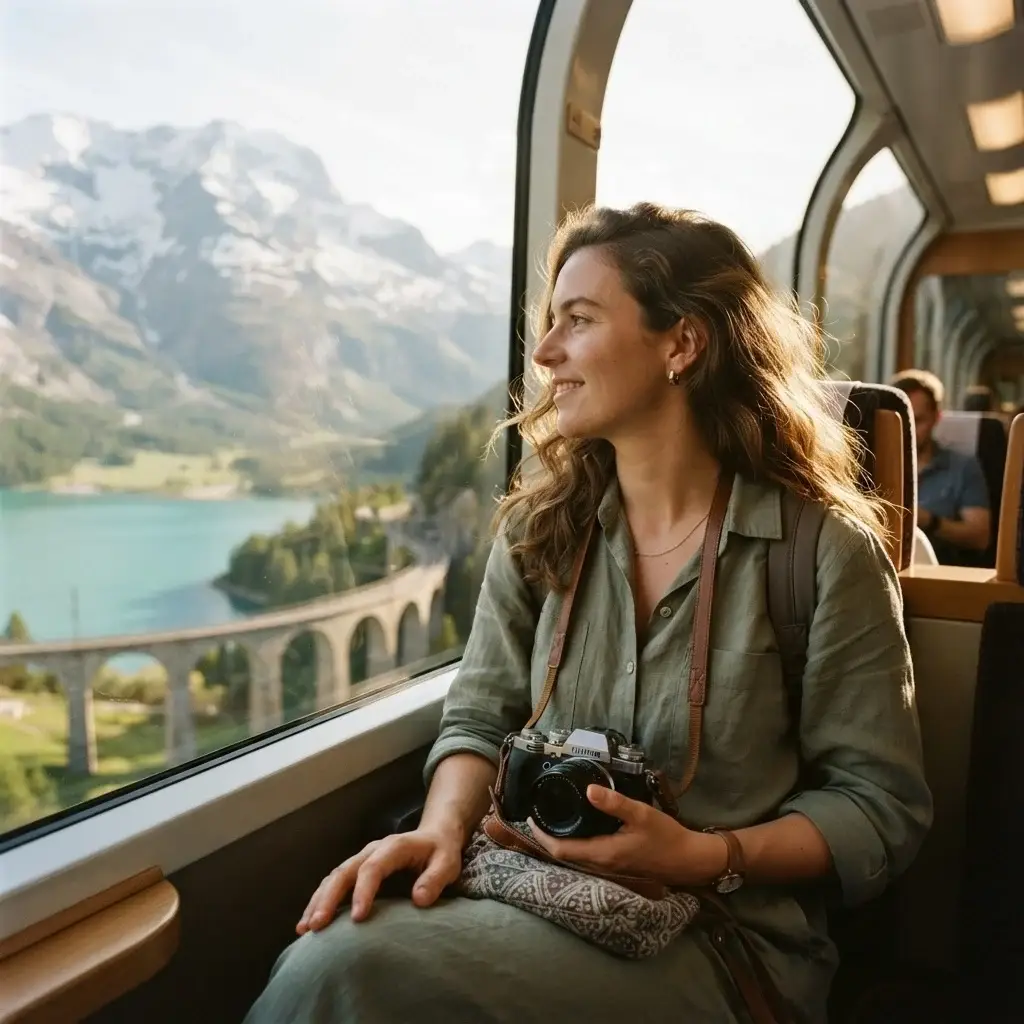
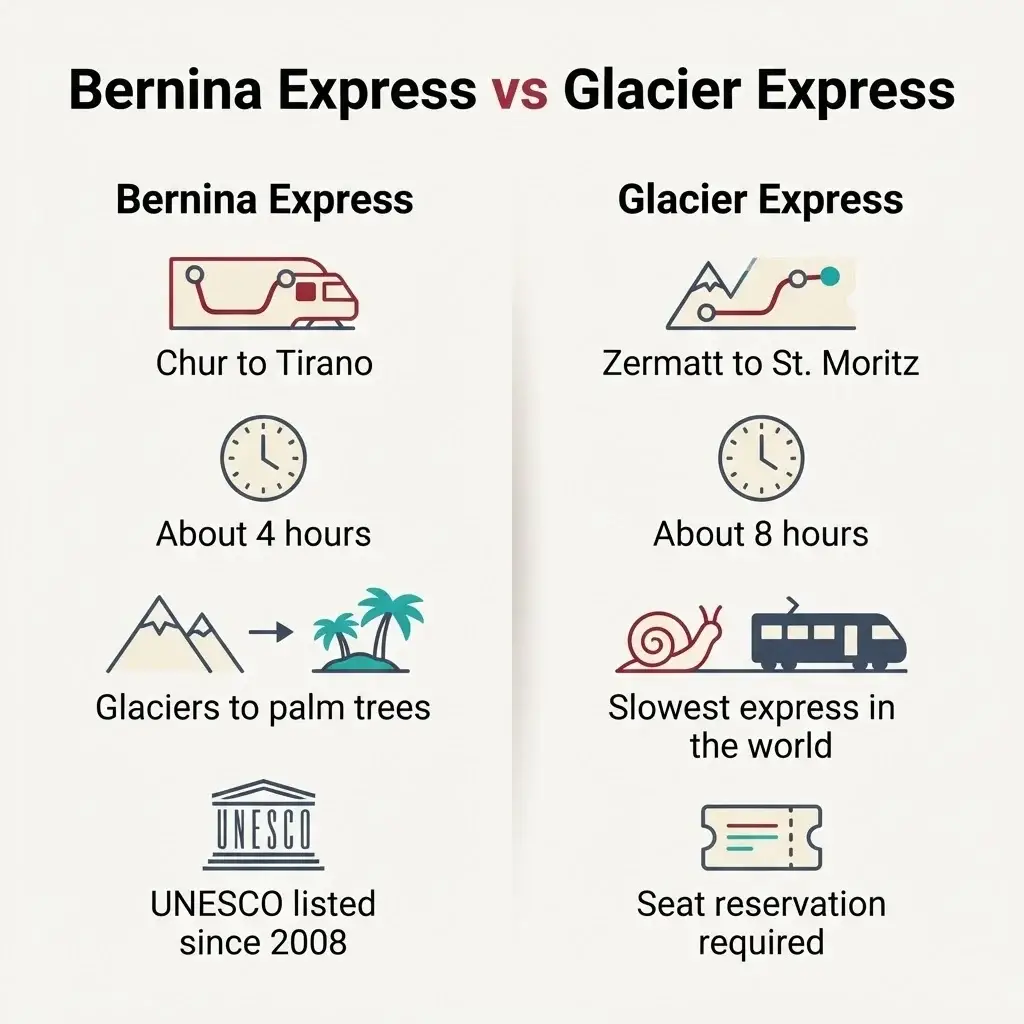
People ask me this constantly, so here is the plain version. The Glacier Express runs between Zermatt and St. Moritz and markets itself as “the slowest express train in the world,” about eight hours of pure Alpine theater. The Bernina Express runs between Chur and Tirano in Italy and is shorter, roughly four hours, but arguably more dramatic per minute because it climbs from glaciers all the way down to palm trees on the Italian side.
The Bernina route is the one I would send a first-timer to. It runs over 196 bridges and through 55 tunnels, past the famous Landwasser Viaduct and the looping Brusio Circular Viaduct, and both the Albula and Bernina lines have been a UNESCO World Heritage Site since 2008. When I want the current timetable, reservation rules, and honest details straight from the source, I go to the operator’s own page for the Bernina Express run by the Rhaetian Railway, which also flags things like the engineering diversion via Vereina that reroutes some trains from late October into November 2026. Onboard there is free Wi-Fi, though honestly you will forget your phone exists.
One practical note that trips people up. These panoramic trains require a paid seat reservation on top of your ticket or pass. That is not optional and it is not the same as the fare.
The reservation and budget reality nobody warns you about
Here is where slow travel gets smart. The scenery of the Bernina and Glacier routes runs along regular Rhaetian Railway tracks. That means you can ride the exact same rails, see the exact same viaducts, on ordinary regional trains for a fraction of the price, with no mandatory panoramic surcharge. You give up the curved roof windows and the at-seat catering. You keep the mountains.
If you do want the full Glacier Express experience, go in with clear numbers. A single second-class fare across the whole St. Moritz to Zermatt route runs around 213 Swiss francs, and the seat reservation starts at about 54 francs on top, climbing higher in peak season and first class. You can check the live breakdown on the official Glacier Express price page before you commit. If you hold a Swiss Travel Pass, the base fare is covered and you mostly just pay the reservation, which changes the math completely. This is exactly the kind of small research step that separates a smooth solo trip from an expensive surprise.
Fjords and Waterfalls: Norway’s Rail Drama
Norway is where slow rail travel stops feeling like sightseeing and starts feeling like being inside a landscape painting.
The Bergen Railway and the Flåm Railway
The Bergen Railway crosses nearly 500 kilometers between Oslo and Bergen in about seven hours, climbing over Hardangervidda, the largest mountain plateau in Northern Europe. It regularly lands on lists of the most beautiful train journeys in the world, and the reason is contrast: you leave a city, pass through forested valleys, and end up in a stark, treeless high plateau that looks like another planet, all in one ride. The official Visit Norway guide to the Bergen Railway lays out the seasonal differences well, and season really does change everything here. The same route is green and open in summer and buried in dramatic white in winter.
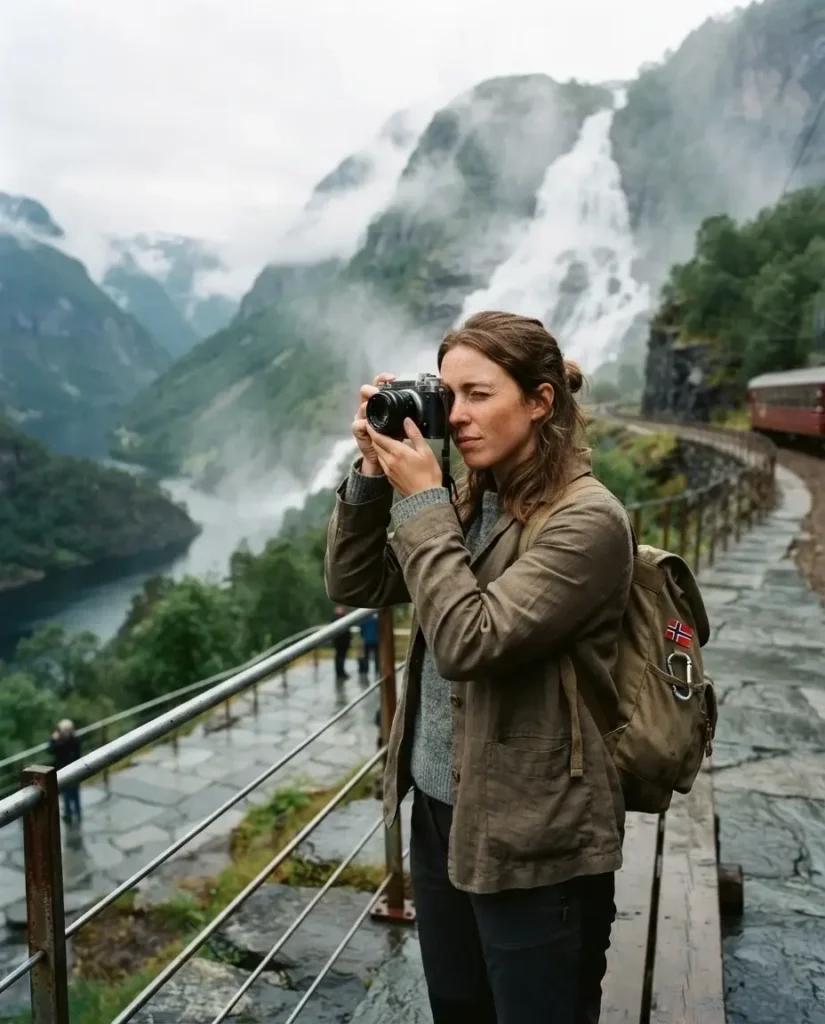
The showstopper branch is the Flåm Railway, one of the steepest standard-gauge lines in the world. It is short, under an hour, but it drops through a valley of waterfalls so close you could almost touch them, with a stop at the Kjosfossen falls. This is the classic combo: ride the Bergen Line, branch off at Myrdal, take Flåm down toward the fjord, and you have built a genuinely slow, multi-part day out of scenery alone.
The wilder, quieter Rauma Line
If you want the Norway experience with fewer crowds, look at the Rauma Line, about 114 kilometers between Dombås and Åndalsnes. It threads past the sheer Trollveggen rock face and the Kylling Bridge, and because it is less famous, it feels more like a local discovery. From what solo travelers consistently report, this is one of the best “second train” choices in Scandinavia once you have done the headline routes.
Coast and Cliffs: Italy’s Riviera Rails
Not every great scenic railway climbs a mountain. Some hug the sea, and Italy does this beautifully.
The Cinque Terre Express
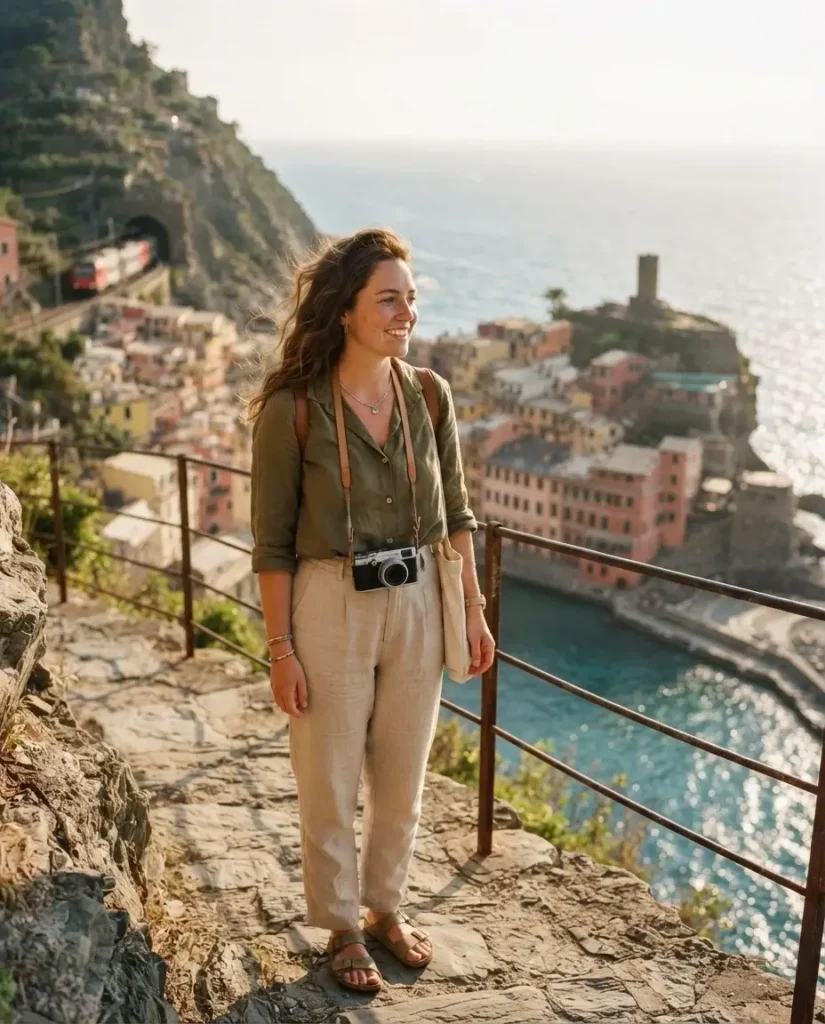
The Cinque Terre Express is the little train that connects the five famous cliffside villages of the Ligurian coast plus the towns of Levanto and La Spezia. It runs roughly every 20 minutes, which makes it the most relaxed slow-travel tool imaginable. You do not plan around it. You just walk to the station whenever you feel like moving on, hop off at whichever village pulls you in, and hop back on later. I always check current times and the Cinque Terre Card details on the official Cinque Terre train timetable so I am not standing on a platform guessing.
What to eat here is not a side note, it is the point. This is the home of trofie pasta with pesto, fresh anchovies from Monterosso, and paper cones of fried seafood you eat while walking. Traveling solo, I love that a place like this makes eating alone feel normal. You grab your cone, find a wall by the water, and you are just another person enjoying lunch, not a table for one being pitied.
Hidden-in-Plain-Sight Gems: The Trains Locals Love
The routes in this section are the ones seasoned slow travelers quietly prize because they deliver enormous beauty without the tour-bus energy.
The Centovalli Railway, Switzerland to Italy
The Centovalli line runs about 52 kilometers between Locarno in Switzerland and Domodossola in Italy, crossing 83 bridges and passing through 31 tunnels in just under two hours as it winds through the “hundred valleys” it is named for. It is a small train through remote alpine villages, chestnut forests, and narrow gorges, and it happens to link two larger rail networks, so it slots perfectly into a longer slow itinerary. You can plan around the real schedule and stops using the official Vigezzina-Centovalli railway site. If you asked me where to send someone who wants the Swiss-Italian scenery without the Bernina Express price tag or crowds, this is my answer.
The Semmering Railway, Austria
The Semmering Railway holds a special place in rail history. Built between 1848 and 1854 across 41 kilometers of mountains, it is often called the world’s first true mountain railway, and it became a UNESCO World Heritage Site in 1998. The engineering is genuinely moving when you understand it: 14 tunnels, 16 major viaducts, and dozens of little arched stone bridges, all built by hand in the mid-1800s and still carrying trains today. The UNESCO listing for the Semmering Railway explains why it earned its status, and reading it before you ride turns the trip from a pretty view into a story you are part of. It runs between Gloggnitz and Mürzzuschlag, climbing to nearly 900 meters at the pass.
The West Highland Line, Scotland
The West Highland Line runs from Glasgow out to Oban, or on to Fort William and Mallaig, and it is regularly called one of the most scenic railway journeys in the world. The stretch to Mallaig crosses the Glenfinnan Viaduct, which film fans will recognize instantly, and rolls past lochs and empty moorland that feel wonderfully remote. The best part for a slow, budget-minded solo traveler is that the ordinary scheduled ScotRail service covers this same route, so you do not need a pricey special train to see it. The official ScotRail guide to the West Highland Line is where I would start for routes and times. I have found the Scottish Highlands to be one of the gentlest places to travel alone, quiet, friendly, and easy to navigate by rail.
Should You Buy a Rail Pass?
This is the question that paralyzes people, so let me simplify it.
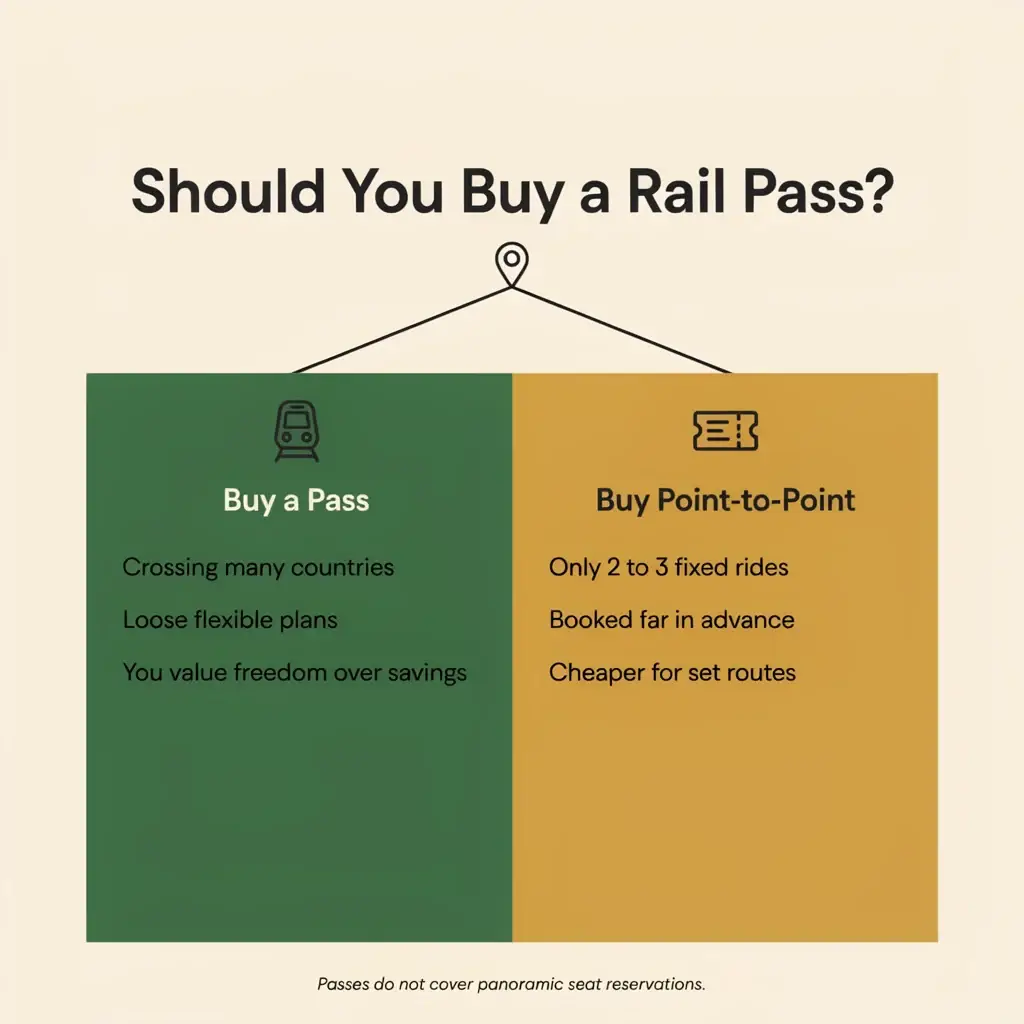
A rail pass like Interrail (for Europeans) or Eurail (for everyone else) is worth it when you are moving often across multiple countries and want flexibility to change plans on a whim. That flexibility is the soul of slow travel, and it is how I traveled when I first backpacked Europe. What a pass does not automatically do is cover the extra seat reservations on premium panoramic trains like the Glacier and Bernina Express. You still pay those separately.
If your trip is really just two or three fixed long rides, point-to-point tickets bought in advance are often cheaper. If your trip is loose, wandering, and spread across borders, a pass usually wins and, more importantly, it removes the pressure to over-plan. My honest rule: buy the pass if the freedom itself has value to you, not only if the spreadsheet says you save twelve euros.
Timing, Seats, and the Small Stuff That Makes or Breaks It
A few things I wish someone had told first-time me.
Shoulder season is your friend. Late spring and early autumn give you fewer crowds, easier reservations, and, in the mountains especially, gorgeous light. High summer is beautiful but busy, and panoramic trains sell out.
Which side to sit on genuinely matters, and it varies by route, so a two-minute search for your specific train before you board pays off in views. On mountain climbs the scenery often flips from side to side, so an aisle seat you can lean across is not the worst thing.
Pack lighter than you think. Small mountain trains and village platforms are not built for giant suitcases, and as a solo traveler you carry your own bag up every step. When I finally switched to one manageable backpack, my whole trip got easier and, weirdly, braver.
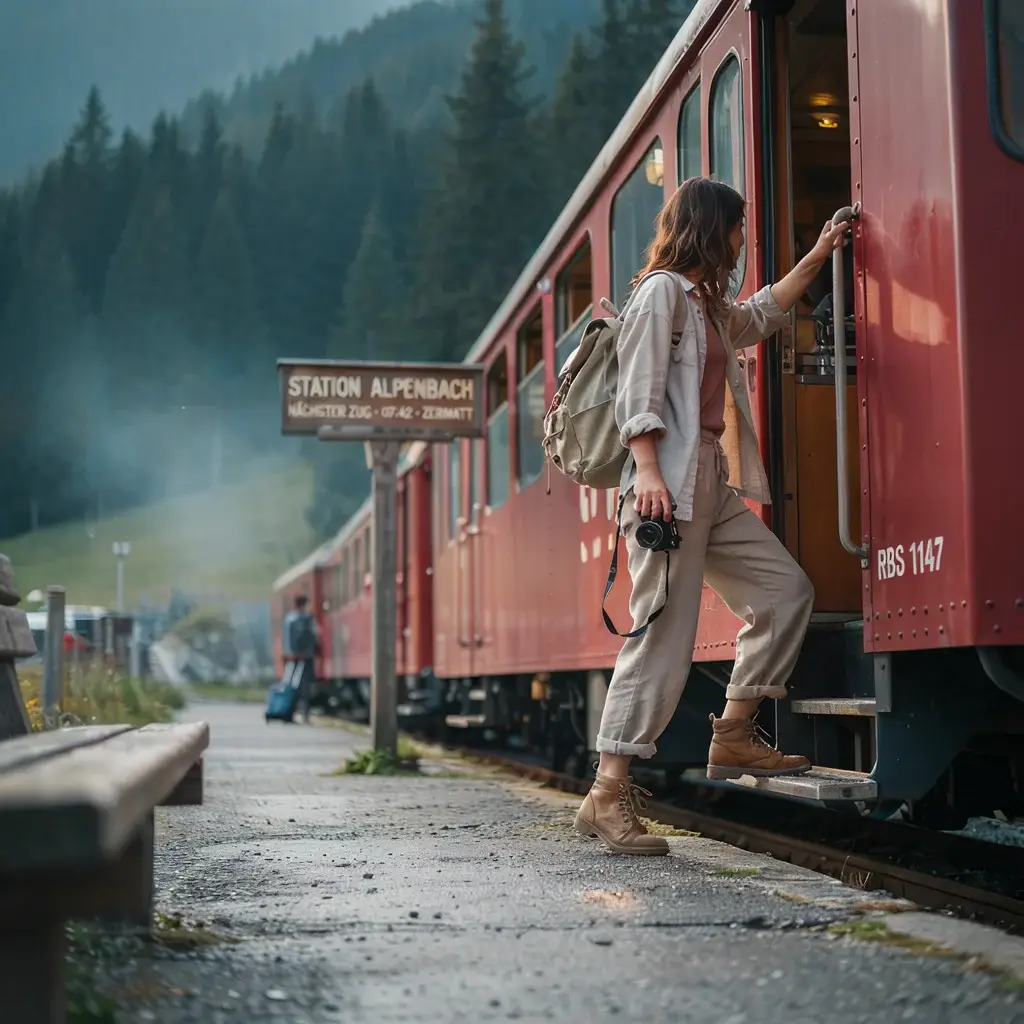
Nothing builds confidence like knowing you can pick up and move without a struggle.
And eat regionally at every stop. The food is part of the route. Pesto on the Ligurian coast, hearty mountain fare in the Alps, waffles and cinnamon buns in Norway. Eating what a place is known for, even alone, is one of the quiet joys of this kind of travel.
You Are More Ready Than You Think
If you have read this far, the honest truth is that the planning is the hard part, and you just did a big chunk of it. Scenic rail travel is one of the most forgiving ways to see the world on your own. The train knows where it is going. The stops are marked. The scenery does the heavy lifting. All you have to do is get on.
Pick one route that made your chest lift a little while you were reading. Just one. Look up its next departure, its reservation rules, and one town along the way you could stop in. That is not a fantasy anymore, that is an itinerary. And the version of you sitting by that window, watching a country unfold at the speed of a slow train, is going to be very glad you stopped waiting for the perfect moment and started with a single ticket.