I still remember the first time I tried to plan a trip to a massive city. It was London, shortly after I graduated from the State University of Albany. I had spent years sitting behind a desk studying rhetoric, followed by a brief, suffocating stint in a traditional 9-to-5 office job. When I finally saved up enough money by working late-night waitressing shifts, I promised myself I would see the world.
But as I sat on my living room floor with three different guidebooks and forty open browser tabs, panic set in. I wanted to see everything. I mapped out every single hour of my day. 9:00 AM: Big Ben. 10:15 AM: Westminster Abbey. 11:30 AM: Walk across Westminster Bridge.
Do you know what actually happened? My flight was late. I got turned around on the London Underground. By noon on day one, my perfect, hour-by-hour schedule was in absolute tatters. I felt like a total failure, stressed out and exhausted, running from one tourist attraction to the next without actually seeing the city.
Years later, I worked as a certified sightseeing guide in New York City. Day after day, I watched tourists step off buses looking like zombies. They were desperately checking items off a massive list, completely blind to the living, breathing city right in front of them.
That is when I realized something crucial: overplanning is the absolute enemy of adventure.
When you crowd every minute of your day with activities, you block out the magic of travel. You do not leave room for the tiny alleyway cafe you discover by accident. You miss out on chatting with a local shopkeeper for an hour. You turn your hard-earned vacation into a corporate management project.
You do not need a rigid schedule to have a perfect trip. You just need a framework. Let us walk through exactly how to create a personalized city itinerary that gives you structure without trapping you in a cage.
1. The Anchoring Method: Choose Your One “Must-Do” Per Day
The biggest mistake travelers make is trying to do three major sights in a single morning. If you try to see the Louvre, walk the Champs-Élysées, and climb the Eiffel Tower before lunch, you will spend your entire day sweating in transit lines or fighting crowds.
Instead, I use what I call the Anchoring Method. For every day you spend in a city, you pick exactly one major, non-negotiable activity. This is your anchor. Everything else you do that day will naturally float around it.
Step-by-Step Selection
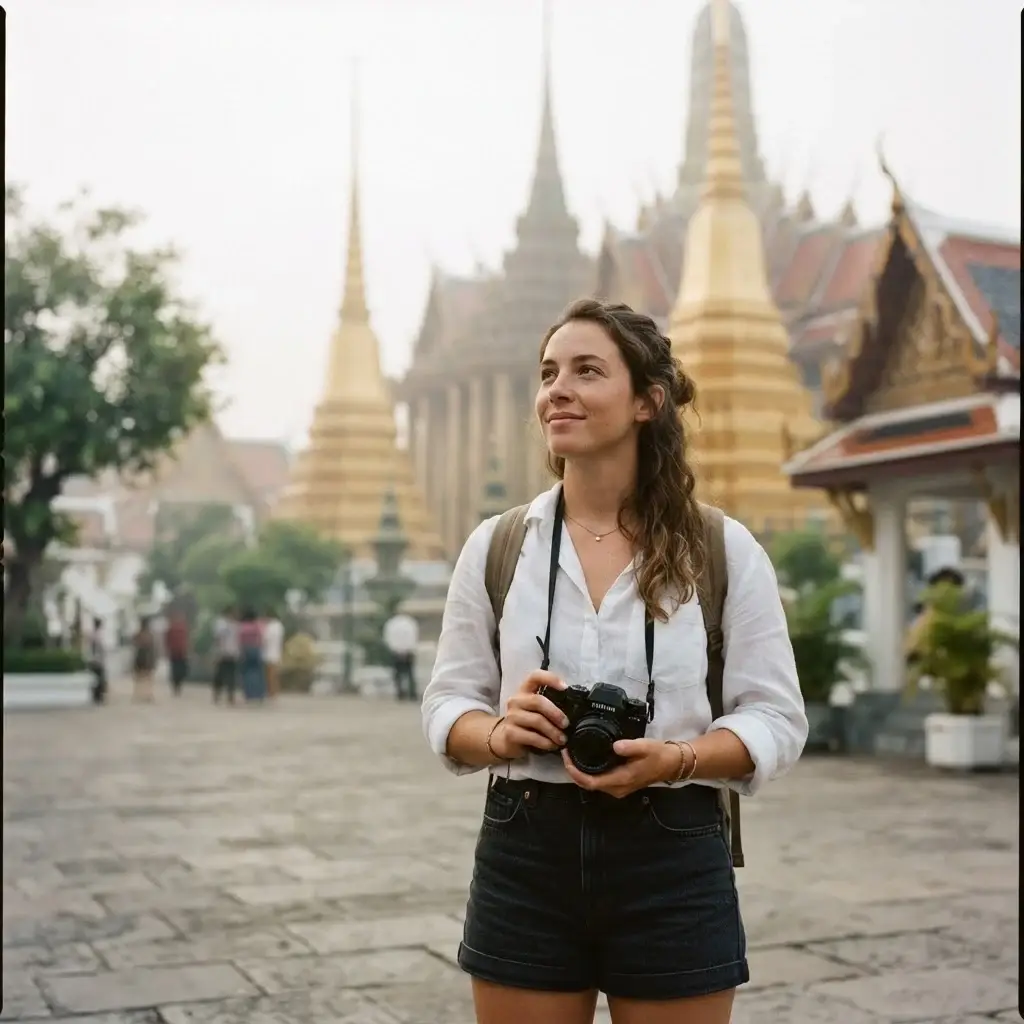
When you look at a massive city like Bangkok, your anchors should be the experiences that require your peak energy or specific booking times. For instance, you might decide that Tuesday is your day to explore the historic heart of the city. Your single anchor for that day is visiting the grand palace grounds.
Once you set that anchor, you stop adding major sights to that day. If you want to check cultural guidelines before you visit, you can look through the official destination guides and cultural etiquette tips from the Tourism Authority of Thailand to make sure your clothing covers your shoulders and knees. This single piece of planning saves you from being turned away at the gate, which is a classic overplanning headache.
Creating the Visual Anchor Map
Open a digital map tool like Google Maps. Put a star on your anchor for Day 1, Day 2, and Day 3. Notice where they sit geographically. If your Day 1 anchor is on the far north side of the city, do not make your Day 2 anchor a spot on the far south side unless you want to spend hours sitting in traffic. Space them out logically so you explore one broad geographic zone per day.
Leaving the Afternoon Wide Open
If your anchor is in the morning, your afternoon is completely free. This is where the magic happens. After you finish your morning anchor, you do not look at a strict schedule. Instead, you walk out of the exit, look around, and ask yourself a simple question: “What looks interesting right now?”
Maybe it is a park across the street. Maybe it is a busy street market. Because you only had one anchor, you have the physical and mental freedom to follow your curiosity.
2. Cluster Your Secondary Points of Interest
Once your daily anchors are locked in, you can look at your secondary desires. These are the places that would be “nice to see” but will not break your heart if you miss them. The secret here is geographic clustering.
The 15-Minute Walking Radius
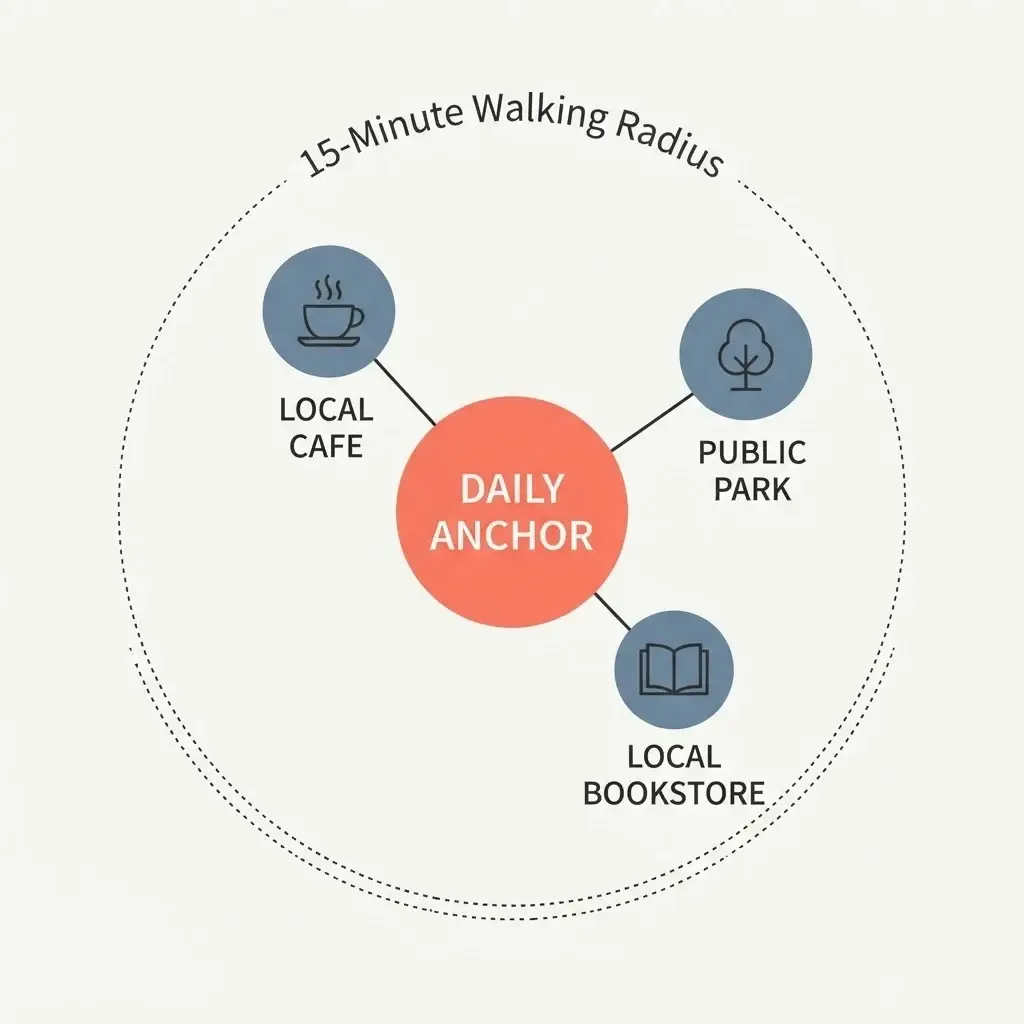
Draw an imaginary circle around your daily anchor. Anything that sits within a 15-minute walk of that anchor is part of that day’s cluster. If you are visiting a historic cathedral in the middle of a European city, look for small museums, plazas, or gardens right next to it.
By keeping your secondary options within walking distance, you eliminate the need for complicated transit plans in the middle of the day. You are simply strolling through a neighborhood, knowing that three or four cool things are nearby if you feel like stepping inside.
The “Menu” Mindset
Do not write these secondary spots down as a timeline. Write them down as a menu. When you sit down for dinner, you do not eat every single item on the menu; you choose what you are in the mood for at that exact moment.
Treat your secondary travel clusters the same way. If it is 2:00 PM and it starts to rain, look at your menu and pick the cozy indoor bookstore you noted nearby. If it is beautiful and sunny, skip the bookstore and sit in the neighborhood park instead. You are still matching your desires to your day, but you are letting the present moment dictate your choices.
Keeping the List Intentionally Short
Limit yourself to three secondary options per anchor. If you list ten things, your brain will secretly treat it as a checklist, and the pressure of overplanning will creep back in. Pick three distinct options—perhaps one green space, one cultural spot, and one neighborhood market. This gives you plenty of variety without creating mental clutter.
3. Map Out Your Culinary Logistics (But Don’t Book Every Meal)
Nothing ruins a day of exploring faster than being “hangry” in a neighborhood packed with overpriced tourist trap restaurants. When you are starving and exhausted, you make bad food choices. You end up paying double for a microwaved meal right next to a major monument.
To prevent this, you do not need to make formal dinner reservations for every single night. You just need a loose culinary strategy.
The Two-Block Rule
As a rule of thumb, never eat at a restaurant where you can clearly see a major tourist attraction from your table. If you can see the Colosseum or the Eiffel Tower from your restaurant seat, you are likely paying a massive premium for mediocre food.
Instead, walk at least two blocks away from the main tourist strip. Turn down a quiet side street. Look for places where the menu is written only in the local language, or where the tables are filled with loud, laughing locals. That is where you will find the real soul of the city’s food culture.
Finding Daily Lunch Spots Near Your Anchor
Since you already know where your daily anchors are, do a quick five-minute search for food options in that specific neighborhood before you leave your accommodation. Look for casual, traditional lunch spots.
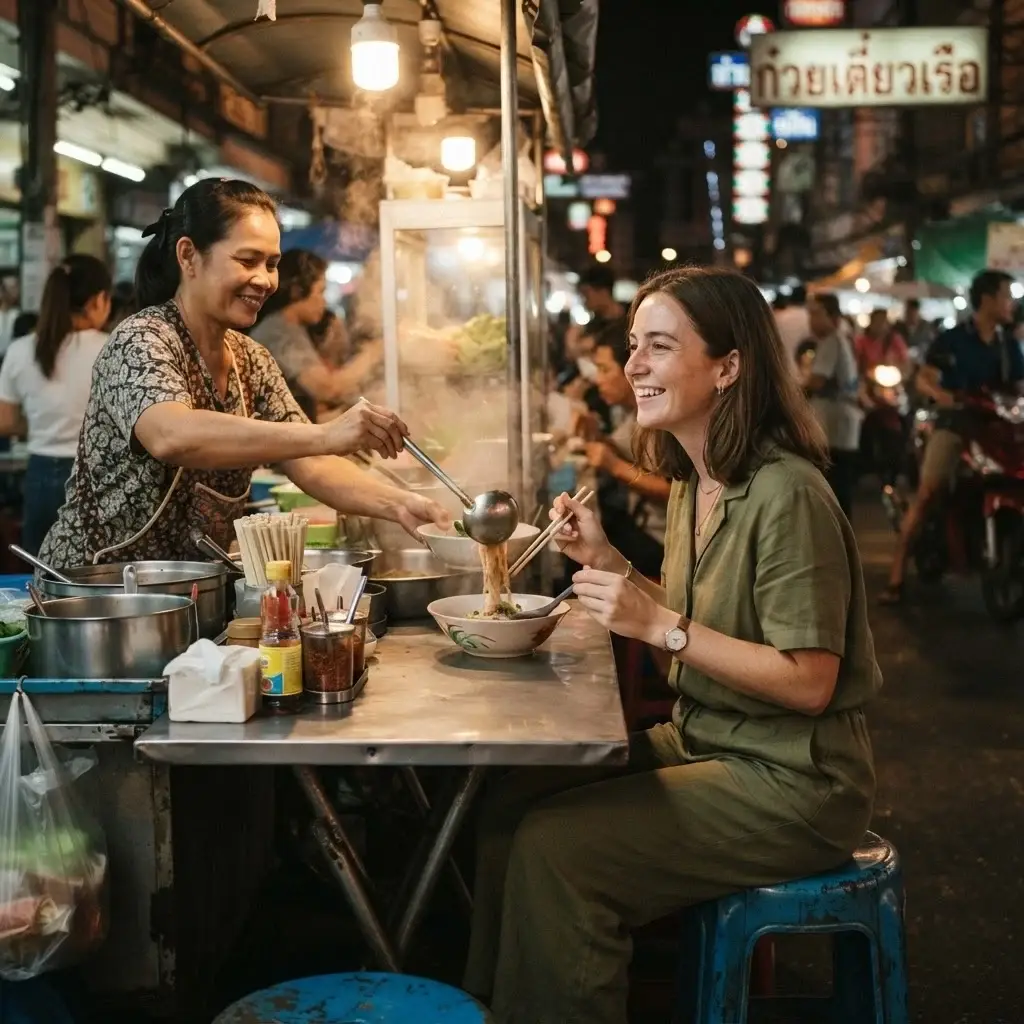
If you are exploring a city in Southeast Asia or Latin America, identify the central neighborhood market. These markets are goldmines for cheap, authentic, and incredibly delicious meals. You can pull up a plastic stool, point to what looks good, and eat a world-class meal for the price of a coffee back home.
Staying Healthy on the Road
When exploring street food or new water systems, it pays to be smart so you don’t spend your trip stuck in a hotel bathroom. I always check the latest health tips by reading through the CDC Travelers’ Health destination advisories and food safety guidelines before I land in a new country. It tells me exactly what vaccines I need and whether the tap water is safe to drink, meaning I can dive into the local food scene with total confidence instead of constant worry.
4. Master Local Transit and Arrival Logistics
The most stressful part of any city trip is the first two hours. You step off a long flight or train ride, you are carrying heavy bags, you do not speak the language, and you have no idea how to get to your hotel. This is the one area where detailed planning is absolutely required.
The Arrival Plan
Never wing your arrival. Before you pack your bags, write down a clear step-by-step plan for getting from the airport or train station to your bed. Write down the name of the transit line, the cost of the ticket, the name of the exit station, and a physical description of your hotel’s street.
Print this information out or save it as a screenshot on your phone. If your phone battery dies or you cannot get a local cell signal upon landing, you will not feel stranded or helpless.
Downloading Local Apps Ahead of Time
Every major city has a preferred ride-sharing or transit app. Do not wait until you are standing on a busy sidewalk to download it. If you are traveling through cities in Singapore, Malaysia, or Indonesia, you should download the regional transport apps and look at how Grab works for travelers using their official ride-hailing services before you leave home. Having your payment details pre-loaded means you can call a safe, metered ride instantly without arguing with rogue airport taxi drivers over a price.
| Region | Primary Transportation App | Key Benefit |
| Southeast Asia | Grab | Fixed pricing, no language barrier |
| Europe / North America | Uber / FreeNow | Widespread availability, reliable |
| Global Cities | Citymapper / Google Maps | Excellent public transit routing |
Understanding the Transit Passes
Most large cities offer a multi-day transit pass that gives you unlimited rides on buses, trams, and subways. Find out if the city has a 3-day or 7-day tourist card.
Buying an unlimited pass on your very first morning is an incredible way to build travel confidence. If you board the wrong train or miss your stop, you do not have to worry about wasting money on a new ticket. You just hop off, cross the platform, and take the train back in the opposite direction for free. It turns a stressful mistake into a minor, funny detour.
5. Build Mandatory “Buffer Zones” Into Your Daily Flow
If your itinerary looks like a solid block of color from morning until night, you are setting yourself up for burnout. True slow travel requires white space on the page.

You need periods of time where you are legally required to do absolutely nothing.
The 3:00 PM Reset
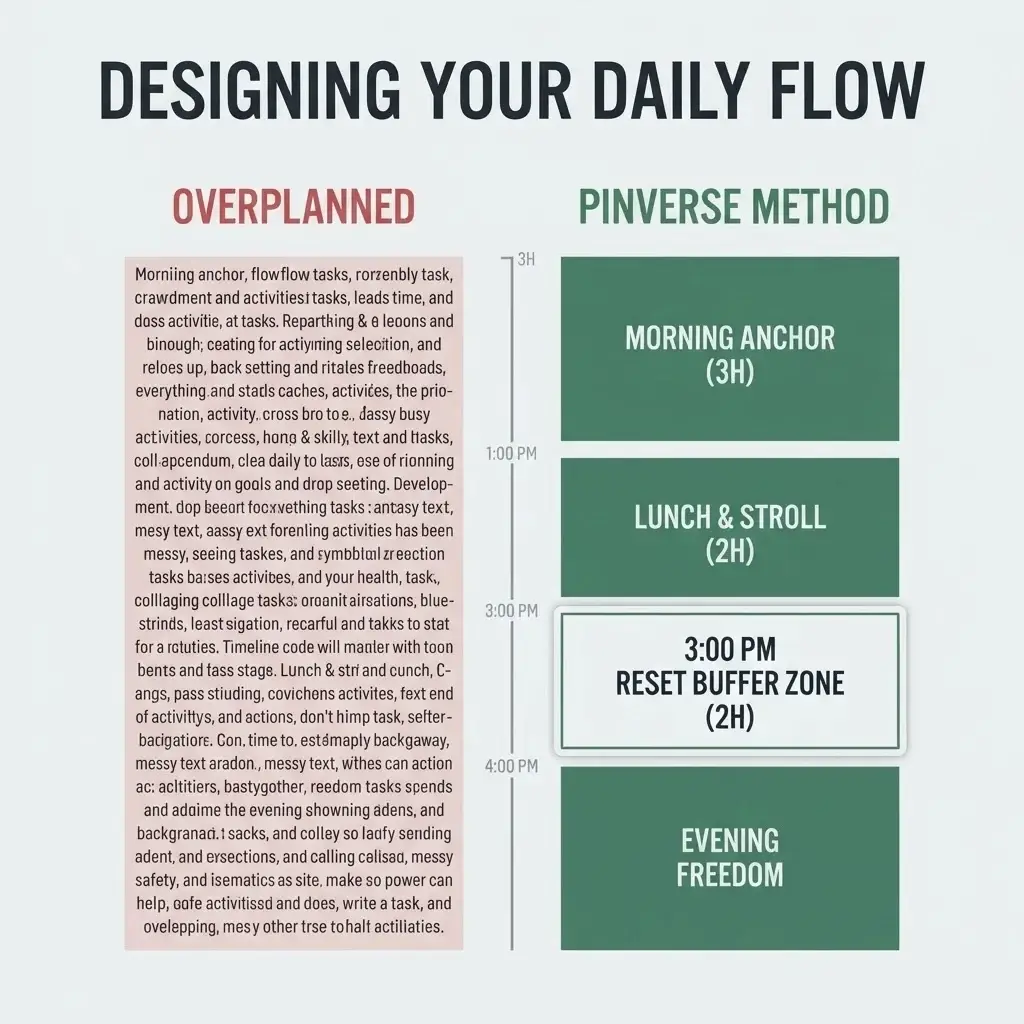
I highly recommend creating a mandatory “buffer zone” every day around 3:00 PM. This is usually the hottest, most crowded, and most tiring part of the day in any major city.
Instead of pushing through the fatigue, head back to your accommodation for an hour. Wash your face, lay down, charge your phone, or read a book.
If you are staying too far away from the center to go back, find a quiet public park, sit under a tree, and watch the locals go about their day.
Spontaneity Requires Empty Time
Think back to your own life. Your best memories rarely happen when you are rushing to make a meeting. They happen during the quiet, unplanned gaps between events.
By deliberately leaving a two-hour gap in the middle of your afternoon, you open the door for the unexpected. You might stumble upon an outdoor concert, an interesting street protest, or a beautiful local market that wasn’t listed in any guidebook. You can only experience these things if you have the time to stop and look.
Embracing the Art of “Sitting Still”
When I taught English in Thailand, I learned that some of the deepest cultural understandings do not come from looking at old monuments. They come from sitting quietly at a small tea shop or noodle stall and observing the rhythm of daily life. Watch how parents interact with their children, how neighbors greet each other, and how the city breathes. That is the real education of travel, and it costs absolutely nothing.
6. How to Prioritize Sights Based on Your True Interests
When you sit down to create a personalized city itinerary, you have to learn to ignore the “shoulds.” You will see lists online telling you that you must visit a specific art museum, or you must visit a certain ancient ruin. But if you absolutely hate art museums, why would you spend $30 and three hours of your life standing in line to see one?
Stripping Away the Guilt
Travel is not a competitive sport. There is no prize for seeing the most things. If you prefer sitting in a local coffee shop reading a book over visiting a massive military history museum, do that. Your itinerary should reflect your personal passions, not the desires of a generic travel writer or a social media influencer.
Checking Official Security and Entry Rules First
Once you choose the few sights that truly match your interests, protect your choices by checking official entry guidelines. Before I set foot in a new country, I always verify the specific entry requirements by checking the US Department of State Travel advisories and foreign visa rules to ensure my passport has enough blank pages and valid months left. Knowing these strict government rules ahead of time means your actual travel days stay completely relaxed and surprise-free.
Balancing Famous Landmarks with Quiet Neighborhoods
A great personalized itinerary has a natural balance of high energy and low energy. If your morning anchor is a massive, crowded landmark, make sure your afternoon is spent in a quiet, residential neighborhood.
For example, if you spend your morning exploring a historic palace or dense museum, spend your afternoon walking through a nearby residential area where real people live, work, and shop. This contrast prevents “museum fatigue” and gives you a much more honest view of the city’s identity.
7. The Practical Framework: Packing Your Digital Safety Net
You do not need an extensive paper binder full of confirmations to stay safe and organized on the road. In fact, carrying too much physical paperwork can make you a target for pickpockets because you look distracted and overwhelmed. Instead, build a slim, powerful digital safety net.
Digital Document Organization
Create a single cloud folder or email thread containing copies of your passport, your travel insurance policy, and your hotel bookings. Make sure this folder is available offline on your smartphone.
Securing Your Journey Before You Go
When you travel solo, true confidence comes from knowing you are protected if something goes wrong. Whether it is a lost bag, a canceled flight, or an unexpected medical issue, I always recommend reading through the World Nomads Travel Insurance coverage options and safety guides before your departure date. Having that simple digital safety net in your pocket means you can handle flight delays or missed trains with a calm smile, knowing you are fully covered.
Using Offline Maps to Save Battery and Data
Before you step out of your hotel lobby, download the entire offline map of the city onto your phone. This allows you to use your phone’s GPS navigation even if you lose your cellular data connection or find yourself in a dead zone.
Using offline maps also saves an immense amount of battery power, which is your lifeline when you are out exploring from sunrise to sunset. You can turn your phone to airplane mode, navigate through winding alleys with total ease, and never worry about getting truly lost.
8. Learning to Value Cultural Immersion Over Checkboxes
The ultimate goal of minimizing your planning is to maximize your connection to the local culture. When your schedule is loose, you can say “yes” to invitations. You can take the time to learn a few words of the local language and use them with the market vendors.
The Value of Historic Preservation
When you do visit the historic core of a city, take the time to understand why it matters. Instead of just taking a quick photo and walking away, read about the people who built it. For instance, if you are visiting an ancient city center or a protected landscape, you can read the historical background on the UNESCO World Heritage official site listings and preservation pages to discover the deep architectural stories behind the stones. That tiny bit of context turns a boring pile of rocks into a thrilling, living piece of human history.
Meeting People Natively
When you are not staring down at a strict timetable, your body language changes. You look up. You make eye contact. You smile at people.
This open posture invites human connection. Some of my absolute best travel memories did not come from famous monuments. They came from a local street vendor teaching me how to properly roll a traditional snack, or a student practicing their English with me on a public ferry.

These moments cost nothing, require zero planning, and stay with you for the rest of your life.
9. How to Handle Itinerary Changes When Things Go Wrong
Let us be completely honest: something will go wrong on your trip. A train will strike, a museum will be closed for an unexpected holiday, or a sudden downpour will soak your clothes.
If you have an overplanned, hour-by-hour itinerary, a single delay causes a domino effect that ruins your entire day. But if you have a flexible, personalized framework, an itinerary change is simply a change of direction.
Embracing the Pivot
When a door closes, look for an open window. If the line to enter a famous tower is three hours long, do not waste your precious morning standing on hot concrete. Walk away. Look at your neighborhood cluster menu and head toward that quiet local art gallery or public garden instead.
The Beauty of Travel Mistakes
Many of the most memorable stories on my blog started as massive planning mistakes. I took the wrong bus, I missed a connection, or I arrived at a destination a full day earlier than my hotel booking.
In the moment, those situations can feel frustrating. But when you look back, those challenges are exactly where your confidence grew. You learned that you are strong, resourceful, and completely capable of solving problems on your own in a foreign environment.
10. The Ultimate One-Page Itinerary Checklist
To help you put this entire strategy into immediate action, use this simple one-page framework for every single day of your city trip. If you can fit your daily plan onto a small index card, you have achieved the perfect balance of structure and freedom.
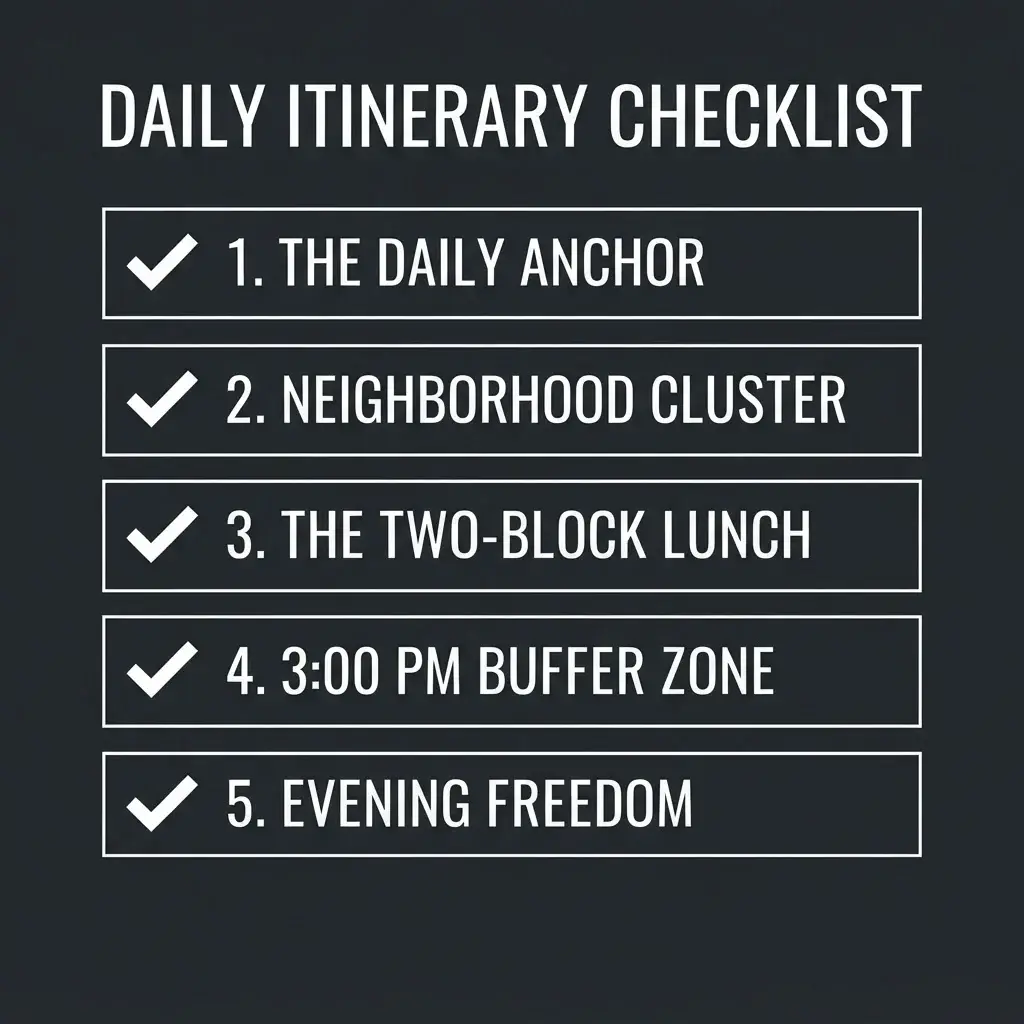
- The Daily Anchor: Choose one major activity for the morning (e.g., historical site, major museum).
- The Neighborhood Cluster: List three walkable, secondary spots right next to your anchor (e.g., one cafe, one park, one bookstore).
- The Lunch Strategy: Find one traditional, local eating spot located at least two blocks away from the tourist crowds.
- The 3:00 PM Buffer Zone: Block out two hours for absolute rest, reflection, or wandering without an active map.
- The Evening Freedom: Leave the night completely blank for spontaneous dinners, night walks, or resting up for the next day.
By stripping away the pressure of the infinite checklist, you give yourself the greatest gift a traveler can receive: the freedom to truly experience the city. Stop planning your trip like a corporate executive. Start designing it like a curious human being. The world is waiting for you, and it is far more beautiful, friendly, and surprising than any rigid schedule could ever predict.