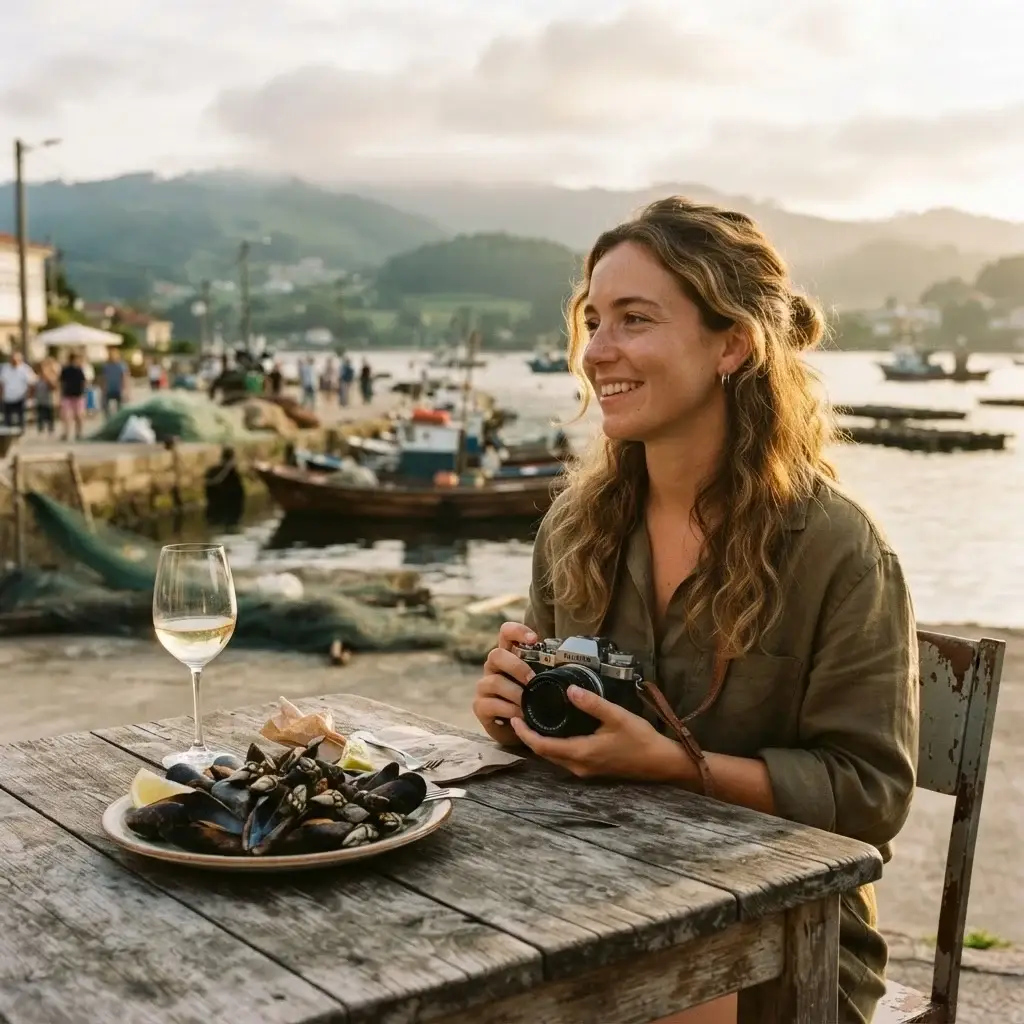
The best seafood meal of my life did not happen in a fancy restaurant. It happened at a rough wooden table on a European coast, with a paper napkin, a cold drink, and a pile of shellfish I could barely name. I was traveling solo, a little unsure of myself, and I almost walked past the place because it looked too plain. That is the thing about great seafood in Europe. The best of it rarely looks like the postcard. It looks like a plastic chair by the water and a fisherman’s wife telling you what came in that morning.
If you have been daydreaming about a trip built around fresh fish and salty air, this guide is for you. I want to help you figure out where to go, what to order, roughly what to pay, and how to avoid the overpriced spots that separate nervous travelers from their money. You do not need a big budget or a food degree. You just need a little courage and a willingness to sit down somewhere local and say yes to whatever the sea gave up that day.
Let me walk you through the coasts I would send a first-time solo traveler to, and the honest reasons why.
First, how to spot a tourist trap before you sit down
This one skill will save you more money and more disappointment than any single destination on this list. I learned it the hard way while backpacking around Europe on almost no budget, back when I was working flexible jobs between trips and counting every coin.
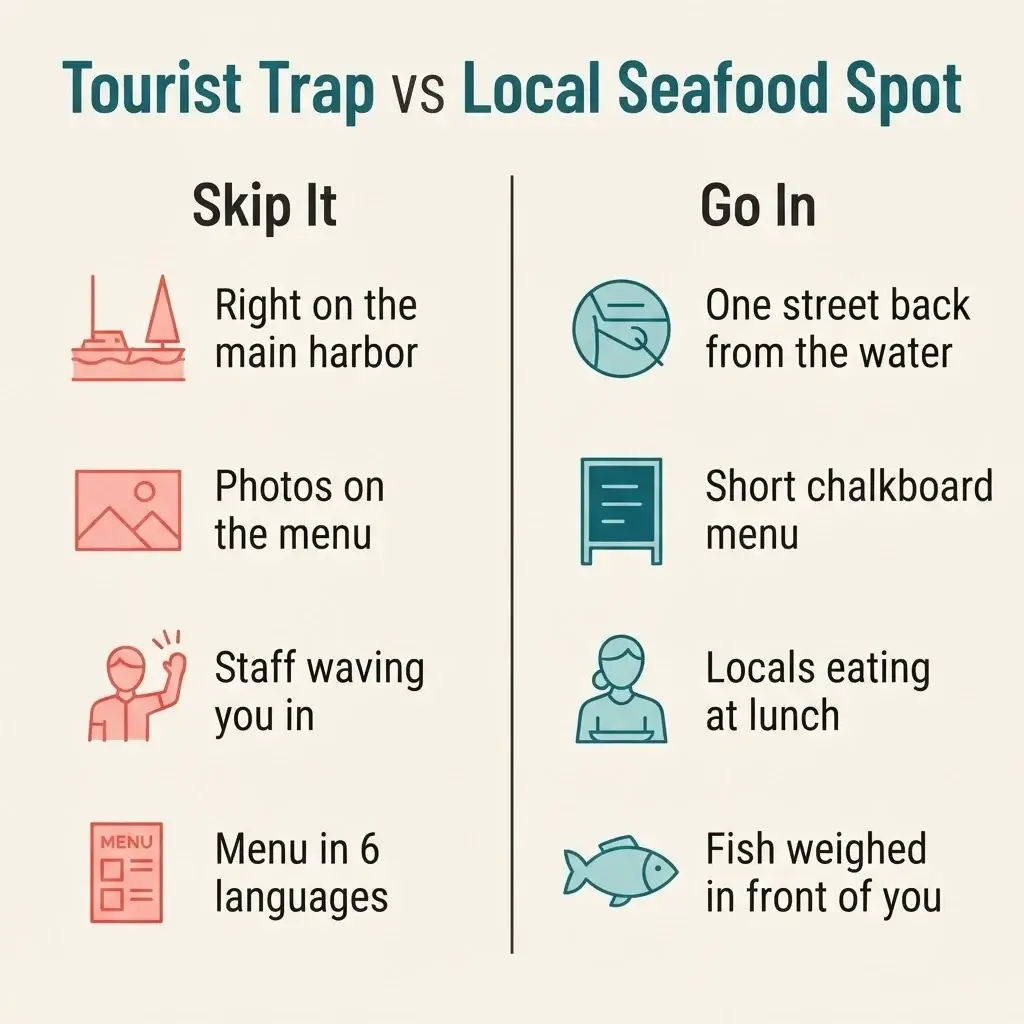
Here is what I watch for. If a restaurant sits directly on the most photographed stretch of harbor, has photos of the food on the menu, has a person outside waving you in, and offers a menu in six languages, walk on. Those places pay premium rent for the view and they know you will not come back, so they have no reason to impress you.
Instead, look for the small place one or two streets back from the water. Look for a short menu, ideally handwritten or on a chalkboard, that changes with the catch. Look for older locals eating there at lunch. If the fish is displayed whole on ice and they weigh your choice in front of you, that is usually a very good sign. Ask “what is fresh today” and order that, not the thing you planned to order. The sea decides the menu, not you.
Eating alone at these spots feels intimidating the first time. It gets easier fast. Bring something to read, sit near the action, and remember that a solo diner who orders the daily catch and asks one curious question is often treated better than a rushed group. Curiosity is a passport.
Galicia, Spain: the shellfish capital most travelers skip
If you want to eat like royalty for a fair price, aim for the northwest corner of Spain. Galicia is cold, green, rainy, and completely obsessed with the sea. This is not the sunny Spain of the brochures, and that is exactly why the seafood is world class and the crowds are thinner.
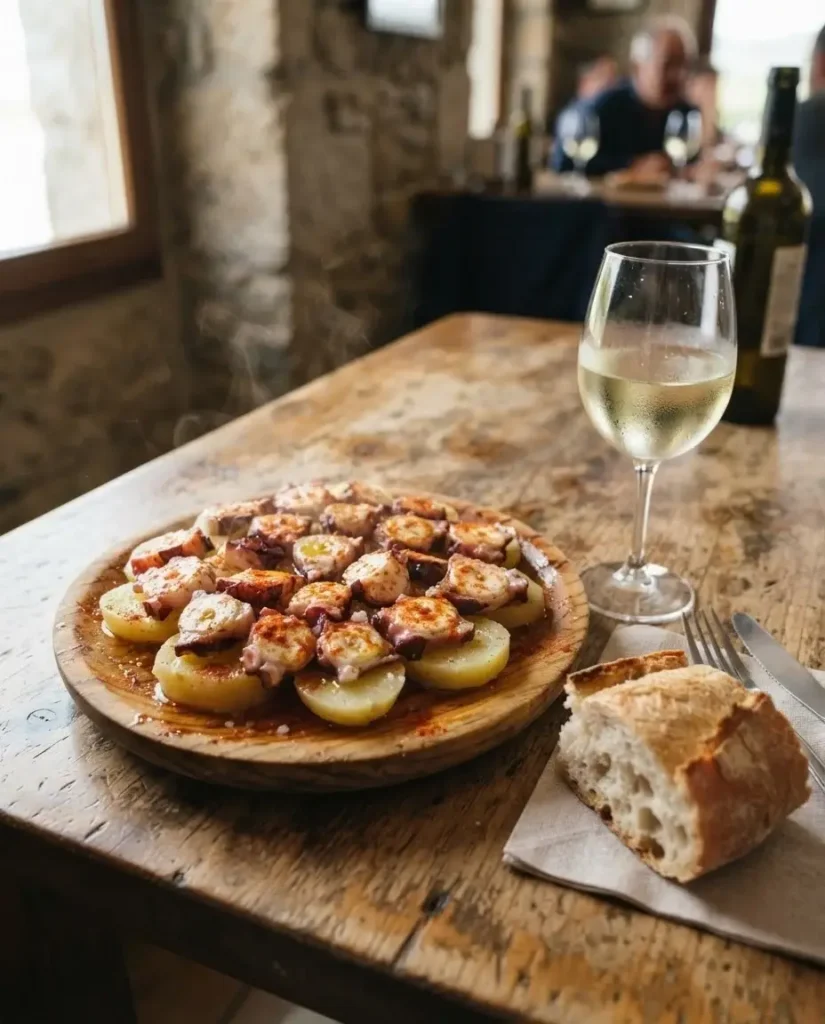
The signature dish here is pulpo a la gallega, octopus boiled until tender, sliced, and dressed with olive oil, coarse salt, and paprika, usually served on a wooden plate. It sounds simple. It is unforgettable. The other local legend is percebes, or goose barnacles, strange-looking shellfish that cling to storm-battered rocks. Harvesters risk their lives on those cliffs, which is why percebes are some of the priciest shellfish in Europe. Try them once so you understand what the fuss is about.
The town I would point a first-timer toward is O Grove, on the Rías Baixas estuaries where mussels, oysters, and scallops are farmed on wooden rafts you can see from shore. If your timing is flexible, the region’s tourism board runs a well-organized guide to the O Grove seafood festival, or Festa do Marisco, held every October, and it is one of the friendliest ways I know to taste a dozen kinds of shellfish in one afternoon among mostly Spanish visitors rather than tourists. You can read the details on the official Rías Baixas seafood festival page.
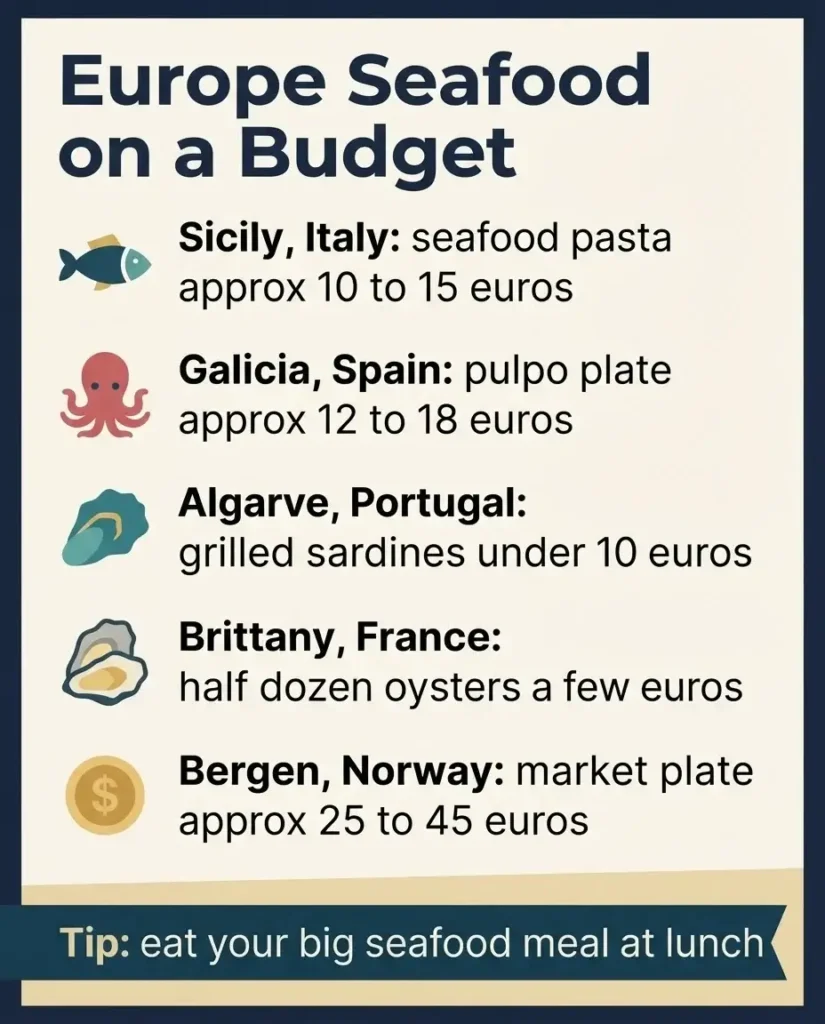
Budget note: a plate of pulpo runs roughly 12 to 18 euros, mussels are cheap and generous, and percebes are the splurge. Order tap water and the house white and you can eat brilliantly for well under 30 euros.
San Sebastián, Spain: seafood you eat standing up
A few hours east along the coast sits San Sebastián, or Donostia, in Basque Country, and it is one of the great food cities on earth. Here the seafood magic happens as pintxos, small plates lined up along the bar in the Old Town. You do not sit for a long dinner. You stand, eat one or two things, pay, and move to the next bar. It is social, mobile, and honestly perfect for solo travelers because nobody expects you to linger.
Look for Cantabrian anchovies, grilled squid, salt cod, and gilda skewers of anchovy, olive, and pepper. The trick is to eat only one or two pintxos per bar and keep moving, because each bar has its specialty. The city’s own tourism site keeps a genuinely useful neighborhood breakdown of where to go for pintxos in San Sebastián, which helped me understand the etiquette long before I felt brave enough to belly up to a crowded bar alone.
A short train or drive away, the fishing town of Getaria grills whole turbot over open flames right on the street, and it is one of the purest seafood experiences in Spain. Budget-wise, pintxos run about 2 to 4 euros each, so a satisfying crawl across three or four bars with drinks lands around 20 to 30 euros. Point at what looks good, hold up a finger for how many, and pay at the end. That is the whole system.
Sicily, Italy: markets, sardines, and North African flavor
Sicily is where Italy meets the rest of the Mediterranean, and you taste it in the seafood. The island’s cooking layers in Arab, Spanish, and Greek influences, so sardines might arrive with pine nuts and raisins, and swordfish shows up rolled and stuffed.
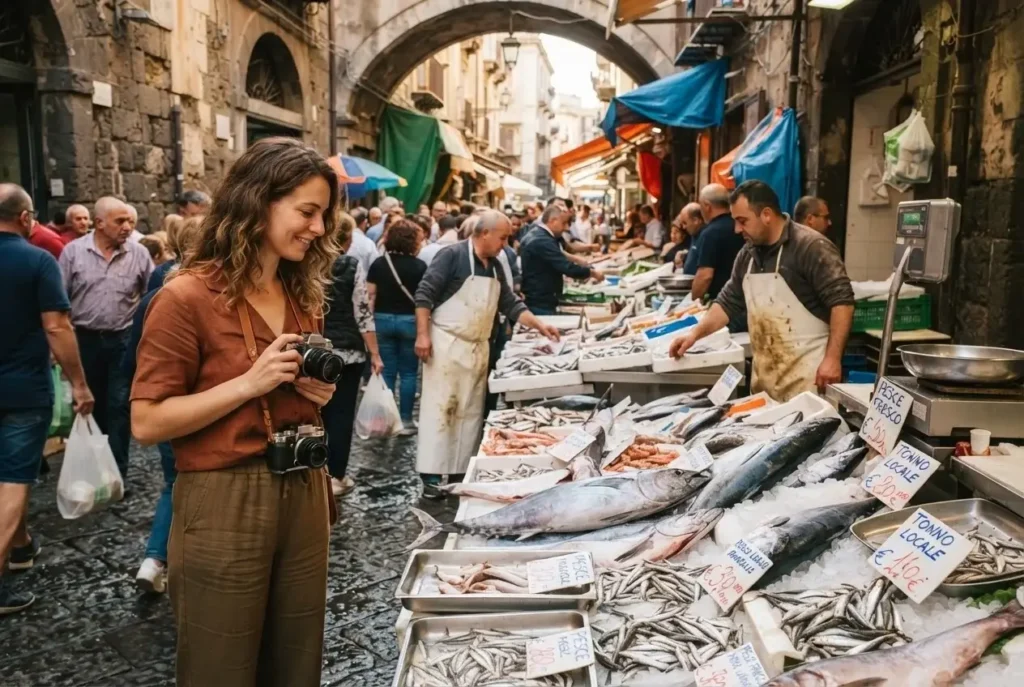
The heart of the experience is the market. In Catania, the A’ Piscaria fish market is loud, chaotic, and thrilling, with vendors shouting prices and slapping whole tuna onto slabs. In Palermo, the historic Ballarò, Il Capo, and Vucciria markets serve street seafood you eat on your feet. This is where you find that whole coastal food culture that UNESCO recognized when it inscribed the Mediterranean diet as intangible cultural heritage, a way of eating built around fish, olive oil, and shared tables rather than expensive ingredients.
What to order: pasta con le sarde (pasta with sardines), fried calamari from a market stall, sea urchin in season, and grilled swordfish. Market seafood snacks cost just a few euros, and a proper seafood pasta in a modest trattoria runs about 10 to 15 euros. Sicily is one of the best values on this entire list, which matters if you are stretching a trip the way I used to.
The Algarve, Portugal: grilled fish and the copper pot
Portugal takes its seafood seriously in a way that feels both humble and proud, and the southern Algarve coast is where sun, sand, and simple grilled fish come together. The country’s official travel resource, Visit Portugal, is a solid starting point for mapping coastal towns and their local specialties before you go.
The dish to seek out is cataplana, a seafood stew of clams, fish, prawns, tomato, and herbs cooked in a hinged copper pot that steams everything together at the table. The other essential is grilled sardines, especially in summer, served plain with boiled potatoes, cornbread, a simple salad, and grilled peppers. Nothing fancy. Just fish that tasted the ocean an hour ago. And do not leave Portugal without trying bacalhau, salt cod, which locals say has a different recipe for every day of the year.
Skip the big resort strips and drive to smaller towns like Olhão or Tavira, where fishermen still land the catch. A plate of grilled sardines can cost under 10 euros, and a cataplana for one or to share sits around 15 to 25 euros. Order the daily fish sold by weight, watch them weigh it, and you will eat like a local for a fraction of the tourist-strip price.
Bergen, Norway: cold water, clean flavor
Not all great European seafood is Mediterranean. Some of the cleanest, sweetest seafood I would send you toward comes from the cold Atlantic, and Bergen on Norway’s fjord coast is the gateway. Cold water means slow-growing fish with firmer flesh and a purer taste. Think salmon, cod, king crab, shrimp, and even whale on some menus, though I understand many travelers choose to skip that.
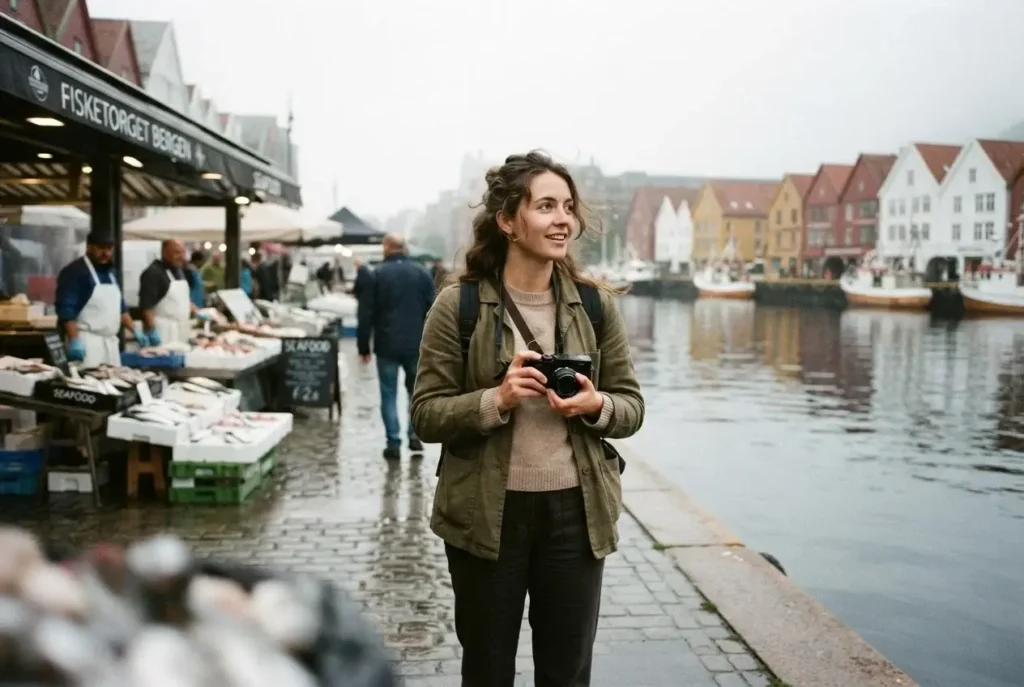
The centerpiece is the Fisketorget, the fish market that has been a trading spot since the 1200s. According to the official Visit Bergen fish market page, the indoor market hall Mathallen is open all year, with 2026 hours of roughly 9 in the morning to half past 9 at night Monday through Saturday and a slightly later start on Sundays, while the outdoor stalls run mainly from spring through mid-October. You can buy fresh seafood, or sit at one of the market restaurants and have it cooked on the spot.
Honesty check on budget: Norway is expensive, full stop. A seafood plate at the market can easily run 300 to 500 Norwegian kroner, which is roughly 25 to 45 euros. If money is tight, buy shrimp or a smoked salmon sandwich from a stall and eat it by the harbor. The setting is free, and it is spectacular.
Brittany, France: the oyster coast
If oysters are your love language, northwest France is your pilgrimage. Brittany’s cold tidal waters produce oysters with a clean, briny, sometimes nutty flavor, and the town of Cancale is the beating heart of it. Cancale oysters were added to France’s UNESCO intangible cultural heritage inventory in 2019, which tells you how seriously this region treats its shellfish.
At the end of Cancale’s harbor, below the lighthouse, there is a small oyster market where growers sell fresh oysters by the dozen and you eat them right there facing the sea, tossing the shells onto the beach. It is rustic, cheap, and one of the most authentic seafood rituals in Europe. The official Brittany Tourism oyster guide lists the twelve main growing areas and, helpfully, clears up the old “only eat oysters in months with an R” rule. Producers now grow triploid oysters, so you can enjoy them year-round, and the summer “milky” texture is a taste preference, not a safety issue.
Order a dozen with lemon, good bread, and salted Breton butter. At the harbor market, oysters can cost as little as a few euros for a half dozen, which makes this one of the great affordable luxuries in France.
Crete and the Greek islands: grilled octopus and patience
Greece belongs on any European seafood list, and the islands are where the simplest cooking shines. The star is grilled octopus, tenderized, hung to dry in the sun, then charred over coals and dressed with olive oil, lemon, and oregano. You will also find fresh grilled fish sold by weight, fried small fish eaten whole, and sea urchin scooped straight from the shell.
The lesson Greece teaches is patience. A good seaside taverna is not fast, and it is not supposed to be. You sit, you order, you watch the light change on the water, and the meal unfolds. As a solo traveler this can feel unfamiliar, but it is one of the most restorative ways to eat I know. Choose a taverna where the fish is displayed on ice and priced by the kilo, and always ask the price before it hits the grill, since fresh fish by weight is where surprise bills happen. A whole grilled fish for one might run 15 to 25 euros depending on the type, while octopus and small plates are gentler on the wallet.
Eat well and eat responsibly
Here is something the glossy roundups rarely mention. Europe’s seafood is only this good because, in the best places, it is fished carefully. Overfishing is real, and a few small choices on your part help keep these coasts thriving. When you have the option, I like to look for the blue label described in the Marine Stewardship Council’s guide to sustainable seafood, which marks fish from certified, better-managed fisheries.
You can also just ask. In a good local restaurant, “what is local and in season” is not only the sustainable question, it is the delicious one. Seasonal, local, and responsible almost always taste better than something flown in to satisfy a tourist menu.
A quick word on markets versus restaurants
If you take one practical idea from this guide, make it this. To eat the best seafood in Europe on a budget, spend at least one meal at a fish market instead of a restaurant. Markets like Bergen’s Fisketorget, Catania’s A’ Piscaria, Cancale’s oyster stalls, or even a wholesale institution like London’s Billingsgate Market, which is the UK’s largest inland fish market, let you see the catch, learn the names, and often eat it cooked simply for a fraction of a sit-down bill. It is also, quietly, one of the best free cultural experiences a coastal town offers. You learn more about a place from thirty minutes at its fish market than from an afternoon at most museums.
How to build a seafood-focused trip without overspending
Pick one or two coasts rather than trying to eat across the whole continent. Galicia paired with San Sebastián makes a superb northern-Spain seafood route. Sicily plus the Algarve gives you two affordable, sun-soaked options with very different flavors. Travel in shoulder season, roughly spring or early autumn, when prices drop and the catch is often at its best. Eat your big seafood meal at lunch, when many restaurants offer the same food for less than dinner.
And let go of the plan once you arrive. The whole point is to order what the sea gave up that morning.
I spent years believing I needed the perfect budget and the perfect moment before I could travel like this. That moment never arrived. What arrived instead was the decision to go anyway, sit down alone at a plain table by the water, and say yes. If you are waiting for permission, take this as it. Book the trip, follow the smell of grilled fish down a side street, and order the daily catch. The best seafood in Europe is waiting, and it tastes even better when you were brave enough to find it yourself.