A First-Timer’s Guide to Meditation Retreats in European Nature

I used to think sitting still was a waste of time. Back when I had my office job in New York, “relaxing” meant scrolling my phone until my eyes hurt. Then I spent time in places that forced me to slow down. Living with a family in Ghana, where evenings moved at the pace of conversation and not notifications. Hiking in China, where a long climb quiets your mind whether you ask it to or not. Those experiences taught me something I keep coming back to. Stillness is not empty. It is full of the stuff we usually run from, and also the peace we keep saying we want.
That is really what a meditation retreat offers. Not a spa weekend with a candle. A structured chance to stop, sit with yourself, and let a beautiful, quiet landscape do half the work. Europe happens to be one of the best places on earth for this, because you can find serious, welcoming retreats tucked into pine forests, alpine valleys, and coastal hills, often for far less money than people assume.
If you have been daydreaming about this but feel unsure where to start, this guide is for you. I will walk you through the main types of retreats, what a day actually feels like, what it costs, how to go solo without fear, and how to fold in a few days of nature and slow travel around it.
First, forget the Instagram version
The glossy version of a retreat sells you infinity pools and matching linen sets. The real thing is simpler and, honestly, better. Most meaningful retreats in European nature are modest. You get a small room or a shared dorm, plain vegetarian food, a daily schedule, and long stretches of quiet.
The magic is not the decor. It is the combination of structure and setting. When your only jobs for the week are to breathe, walk, eat simply, and pay attention, your nervous system finally gets the memo that it is allowed to relax. Add a forest outside the window and something shifts. I have felt versions of this on solo trips across Europe, where the days without wifi and without a plan ended up being the ones I remember most clearly.
So let go of perfection before you even book. You are not going to perform serenity. You are going to practice it, badly at first, which is exactly how it is supposed to go.
The main types of retreats, and how to choose
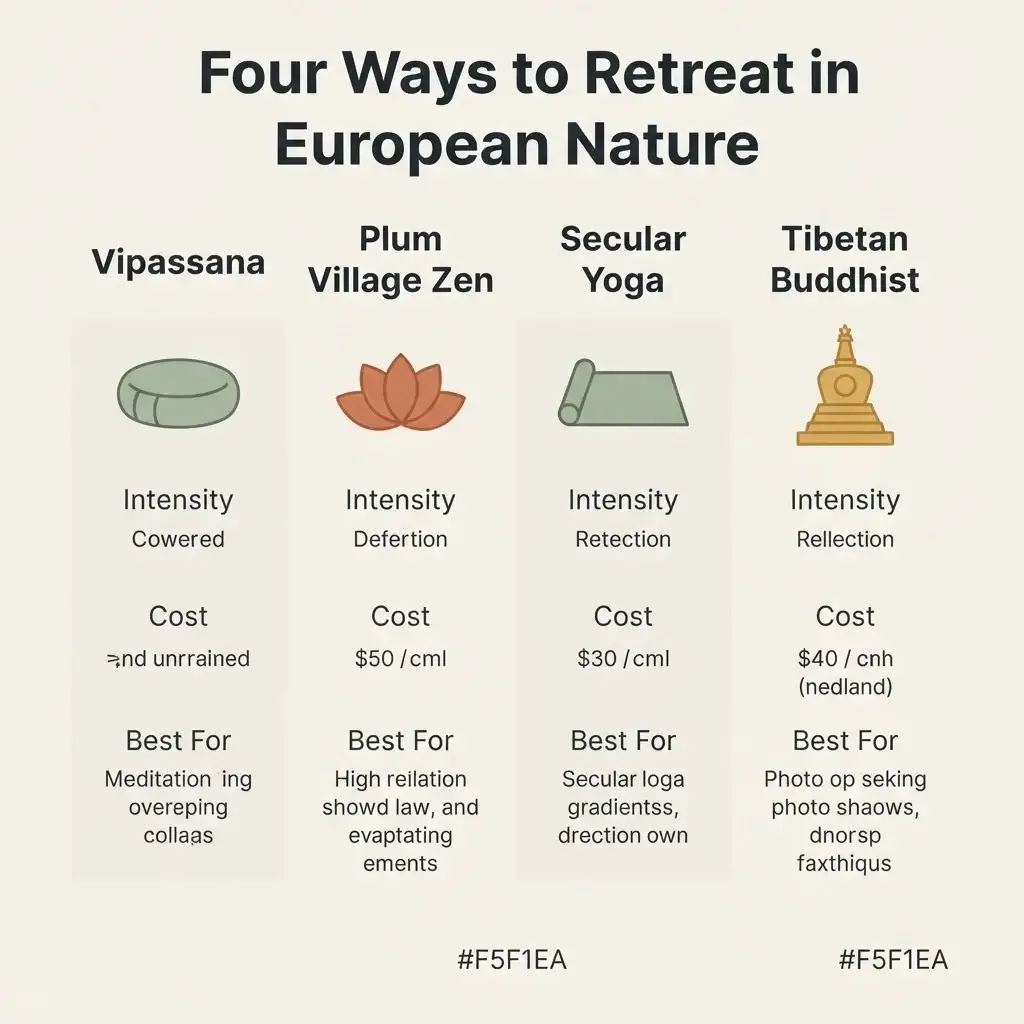
This is the single thing competitors skip, and it is the thing that will make or break your first experience. “Meditation retreat” is a huge umbrella. Here are the four styles you will run into most, described plainly.
Vipassana (silent, intense, and free by donation)
Vipassana is the deep end, and I say that with respect. The classic course is ten days of complete silence, no phone, no reading, no writing, with many hours of seated meditation each day. It is demanding. It is also one of the most respected traditions in the world, and it runs on a model that still amazes me. You pay nothing to attend. Teaching, food, and lodging are all covered by donations from people who took the course before you and wanted to pass it on. If you want to understand how something this serious can be free, the network explains its whole approach on its official page about the tradition of donation, or dana, and it is worth reading before you decide.
There are twenty-one Vipassana centers across Europe, with locations in France, Spain, Switzerland, Italy, Germany, Austria, Belgium, England, and Sweden, many of them set deep in the countryside. You can browse the real, current list on the official worldwide center directory. A quiet heads-up from what past students consistently report: days two and three are often the hardest, when the mind gets loud and restless before it settles. That is normal. It is not a sign you are failing.
Is ten days of silence right for a first-timer? For some people, absolutely. For others, it is too much too soon. Be honest with yourself.
Plum Village and the Zen approach (gentler, community-based)
If Vipassana sounds intense, the Plum Village tradition founded by the late Zen teacher Thich Nhat Hanh is a warmer on-ramp. Set in the countryside of southwest France near Bordeaux, it centers on mindful living woven into ordinary activities. You meditate, yes, but you also practice mindful walking, mindful eating, and even mindful chores, all in community rather than strict isolation.
It is famously beginner-friendly and open to all ages. Their big Summer Opening Retreat welcomes adults, families, and teens together, and they run dedicated retreats for young adults between eighteen and thirty-five, plus longer stays for those who want to go deeper. You can see the actual upcoming schedule on the official Plum Village retreats page. What I love about this style is that it teaches you to carry the calm home, not just feel it on the cushion.
Secular yoga-and-meditation retreats (flexible and comfortable)
These are the most common on booking sites, and they suit people who want structure without a religious framework. Expect daily meditation paired with yoga, decent food, comfortable rooms, and usually more freedom in your schedule. They are easy to find in Spain, Portugal, Greece, and Italy, often near the coast or in the hills. The trade-off is that quality varies wildly, and prices climb fast toward the “wellness luxury” end. If you go this route, read recent reviews closely and look for small group sizes and an experienced teacher rather than a pretty pool.
Tibetan Buddhist centers (rich tradition, striking settings)
For something with deep roots and dramatic scenery, Tibetan Buddhist centers are wonderful. In Scotland, Samye Ling, founded in 1967, holds the distinction of being the first Tibetan Buddhist center established in the West, set in the peaceful hills of the Scottish Borders. Centers like this welcome curious newcomers for weekend visits and longer retreats alike, and the atmosphere is unhurried and kind. It is a lovely middle path between a full silent course and a casual wellness weekend.
What a day actually feels like
Here is the honest rhythm, drawn from what retreatants across traditions consistently describe.
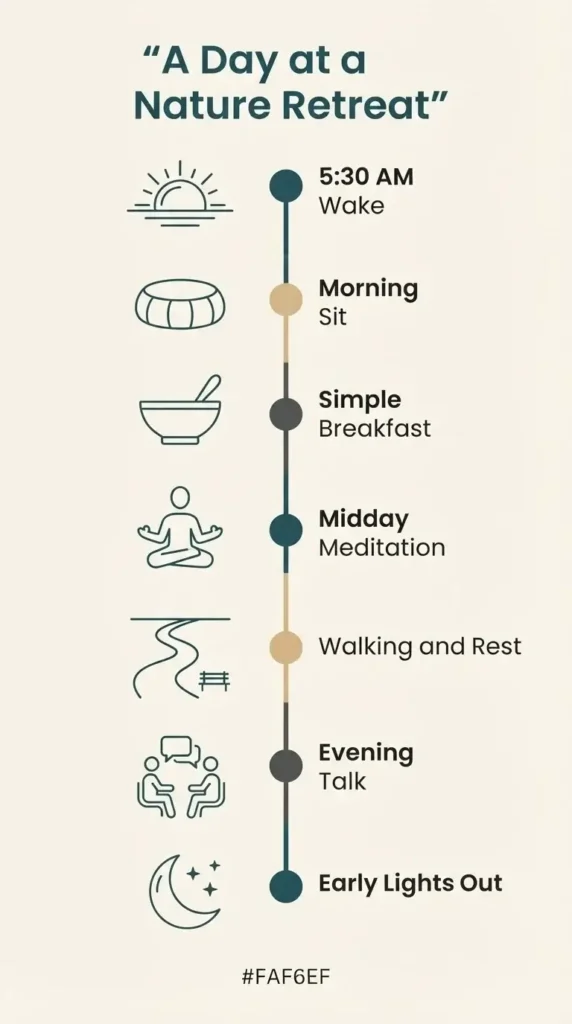
You wake early, often before six. There is seated meditation, sometimes before breakfast, when the world outside is still gray and quiet. Meals are simple and usually vegetarian, eaten slowly, sometimes in silence. There are more sessions through the day, broken up by rest, walking, or light work. Evenings might include a talk. Lights out is early.
The first day can feel awkward. You will notice how badly you want your phone. By the middle, something loosens. Emotions you have been outrunning may surface, and that is not a malfunction, it is the point. By the end, most people describe a clarity that is hard to put into words. You are not fixed. You are just quieter inside, and more able to hear yourself.
If you have ever done a long solo hike or a stretch of travel without a plan, you already know a small version of this feeling. The retreat just deepens it.
What it really costs
This is where good news lives. A meditation retreat does not have to be expensive, and some of the best are the most affordable.
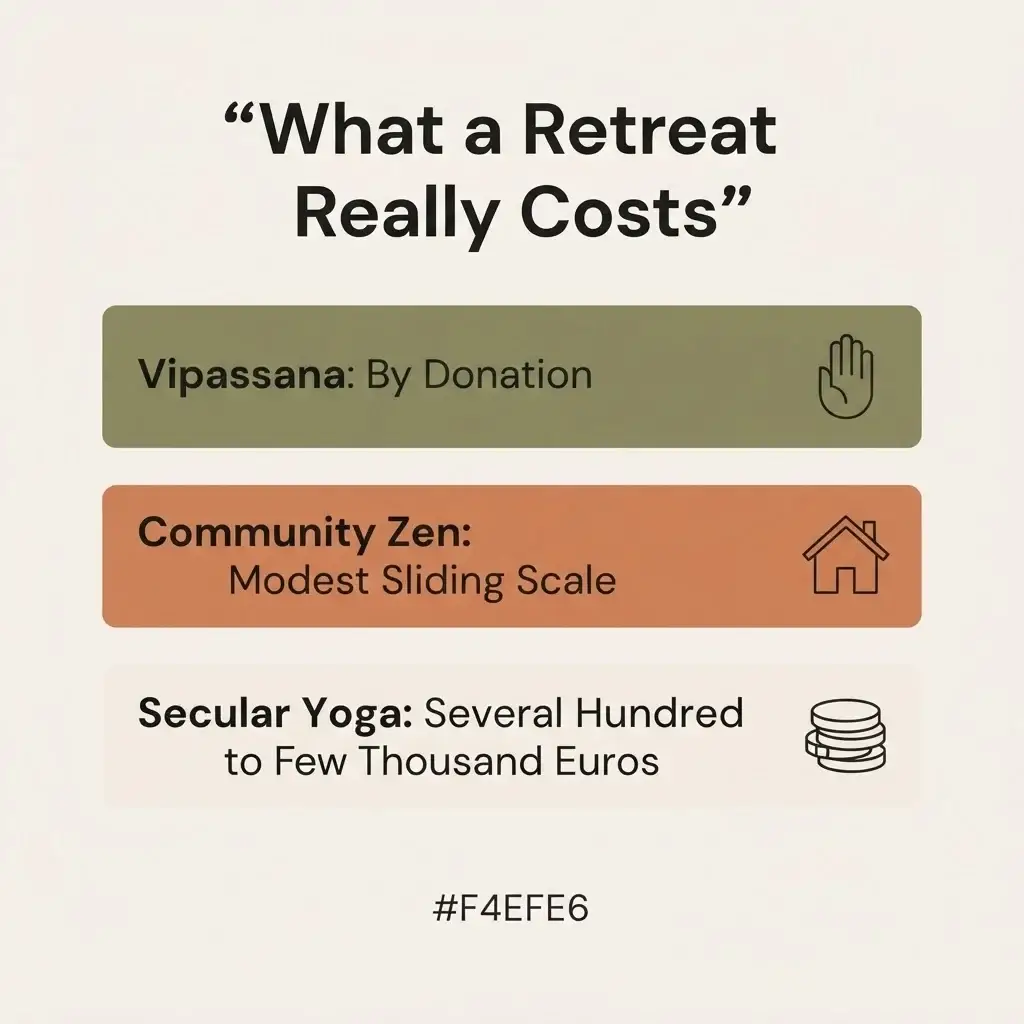
Vipassana courses are free to attend, funded entirely by donation. The estimated real cost of hosting one student runs roughly two hundred fifty to three hundred seventy-five US dollars for the full ten days, and you give what you can afford and feel moved to give, only after you complete the course. When I was saving for travel by working flexible jobs, a model like that would have felt like a gift.
Plum Village and similar community centers usually ask a modest, sliding-scale contribution, often well under what a hotel week would cost, because they are supported communities rather than businesses. Secular yoga-and-meditation retreats are the priciest, commonly ranging from several hundred to a few thousand euros for a week depending on comfort and location. Tibetan centers like Samye Ling tend to sit in the affordable middle.
My honest take: if budget is your worry, it should not stop you. The donation-based and community options make this one of the most accessible forms of meaningful travel out there.
Going solo, and going as a woman
Almost everyone arrives at a retreat alone, which quietly solves the loneliness problem. You are surrounded by people who also came by themselves, all pointed at the same gentle goal. On silent retreats you will not chat much, but there is a real sense of company in the shared quiet. On community retreats like Plum Village, you will likely leave with friends.
On safety, established centers are among the calmer, more secure environments you can travel to. They are structured, supervised, and full of people practicing kindness on purpose. As always, I recommend choosing a center with a long track record and clear reviews, telling someone at home your dates and location, and trusting your gut. Solo travel built my confidence more than anything else in my life, and a retreat is one of the softest, safest places to start if you have never done a trip alone.
Pairing your retreat with European nature
Here is where the travel writer in me gets excited. The landscapes around these retreats are worth extra days.
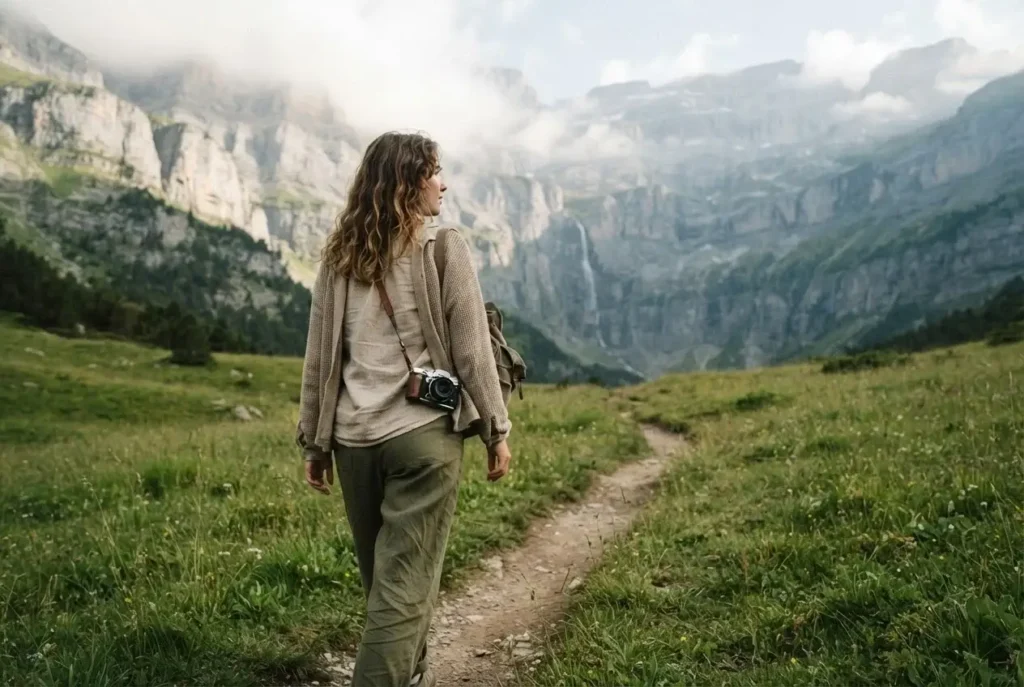
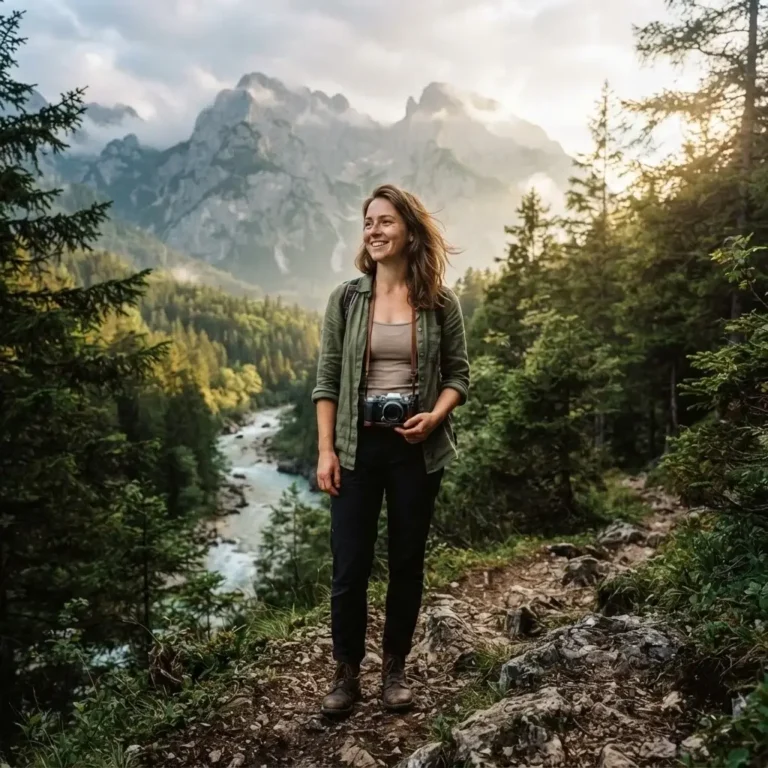
If you go to a retreat in the French or Spanish Pyrenees, you are near Ordesa y Monte Perdido National Park, a genuine UNESCO World Heritage site of glacial valleys, waterfalls, and towering limestone. You can read its official recognition on the UNESCO World Heritage listing, and Spain’s tourism board has a helpful overview of the trails and valleys on its official Ordesa y Monte Perdido page. A day of slow walking there after a week of stillness is one of the most grounding combinations I can imagine.
Retreating in southern Spain instead? The Sierra de Grazalema in Andalusia is one of the greenest, most peaceful corners of the country, laced with quiet trails. Drawn to the Alps? Plum Village has even run mindful hiking retreats along parts of the famous Tour du Mont Blanc, which tells you how naturally walking and meditation belong together. And in Scotland, the hills around Samye Ling practically invite you to wander after your sessions.
Whatever you choose, give yourself a buffer day on each end. Rushing in stressed and rushing out to a flight undoes half the benefit.
Getting there without a car
Many nature retreats feel remote, but most are reachable by public transport if you plan a little. The usual pattern is train to the nearest town, then a local bus, taxi, or a pickup the center arranges.
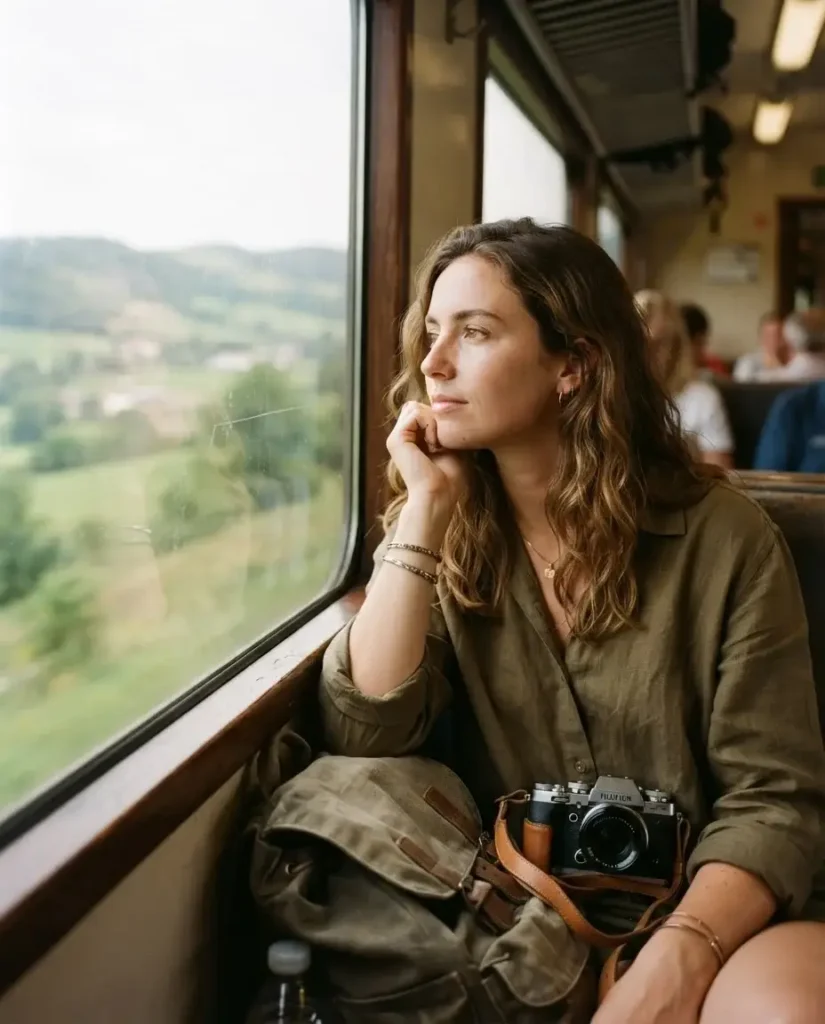
For the Pyrenees, the regional tourism site for Aragón has practical access details on its official Ordesa y Monte Perdido information page, and most retreat centers list exact travel directions once you register. Email them before booking if anything is unclear. In my experience, these places are used to solo travelers arriving by train and are happy to help you sort the last leg.
What to pack
Keep it simple, which is the whole spirit of the thing. Comfortable, modest, layerable clothing, because nature and old stone buildings get cool. A warm layer even in summer. Sturdy shoes for walking. A reusable water bottle. A small notebook if writing is allowed at your retreat. Earplugs and an eye mask for shared rooms. Any personal medication. And genuinely, leave the “outfit” mindset at home. Nobody is watching, and that freedom is part of the reset.
A few honest mistakes to avoid
Do not pick the ten-day silent option just to prove something if your gut says start smaller. A weekend or a gentler community retreat can be the wiser first step. Do not book the fanciest place assuming price equals quality, because some of the deepest experiences cost the least. Do not skip reading the daily schedule and the rules before you commit, especially the phone policy. And do not expect to feel amazing the whole time. The uncomfortable middle is where the real work happens, and pushing through it is what you will be proud of later.
Why this is worth doing now
Every excuse I hear about retreats, no time, not ready, not the right moment, is the same set of excuses I once used about travel itself. The perfect moment never arrives. You create it. A meditation retreat in European nature is one of the rare trips that gives back more than it takes, teaching you a skill you carry for life, in a setting that heals you just by being there. Start with a length that scares you a little but not a lot, book a buffer day for the landscape, and go meet the quieter version of yourself who has been waiting this whole time.