Beyond Machu Picchu: Underrated Archaeological Sites to See

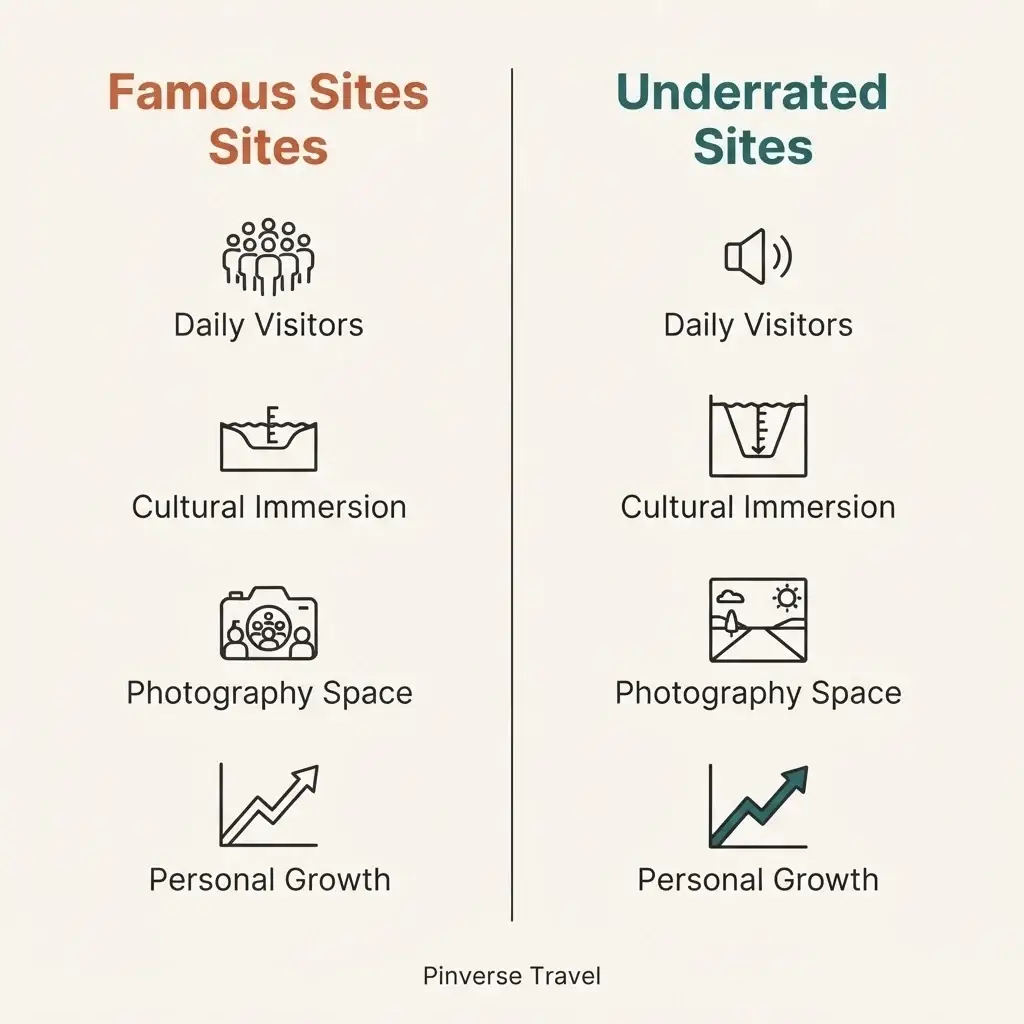
There is a particular kind of wonder that happens at places almost nobody else knows about. Not the kind where you snap a photo in a crowd of a thousand tourists, clutching your bottle of water, waiting for someone to move out of your frame. The real kind. The kind where you stand in front of something thousands of years old, the wind moves through tall grass around the ruins, and you feel genuinely small in the most beautiful way.
I have chased that feeling across multiple continents. I know what it is like to stand at a site that rewrites everything you thought you knew about human history, with almost nobody else around. And I want to point you toward more of that.
Machu Picchu is extraordinary. So is the Colosseum, Angkor Wat, and Petra. Nobody disputes that. But when 5,000 people pass through the same gate before noon, something shifts. The experience becomes more transactional and less transformative. The ancient sites I am going to share with you do not have that problem, at least not yet. They are real, legitimate, deeply researched historical wonders. They are just not on the itinerary most travel agencies are selling.
Here is what I know from everything I have researched about these sites, from solo travelers who have made the journeys, and from the archaeological record itself: these places will challenge you to think differently, move a little slower, and pay closer attention. That is exactly the kind of travel I believe in.
Why Overlooked Sites Hit Differently
Before we get into the sites themselves, it is worth asking why so many world-class archaeological wonders fly under the radar. The answer is usually a combination of geography, marketing budgets, and the tourism industry’s tendency to funnel travelers toward places with established infrastructure.
Morocco’s Roman ruins do not have the PR machine of Rome. A 5,000-year-old city in Peru does not have the photogenic marketing of Machu Picchu. An underground city in Turkey is not as instantly recognizable as Cappadocia’s hot air balloons (even though it is right there, underneath them). None of that means these places are lesser. It often means they are quieter, more generous with your time, and more likely to leave you genuinely changed by the experience.
This is slow travel at its most honest. You go to a place most of your friends have never heard of. You figure it out. You come home knowing something you did not know before. That is the whole point.
Göbekli Tepe, Turkey: The Site That Rewrites Human History
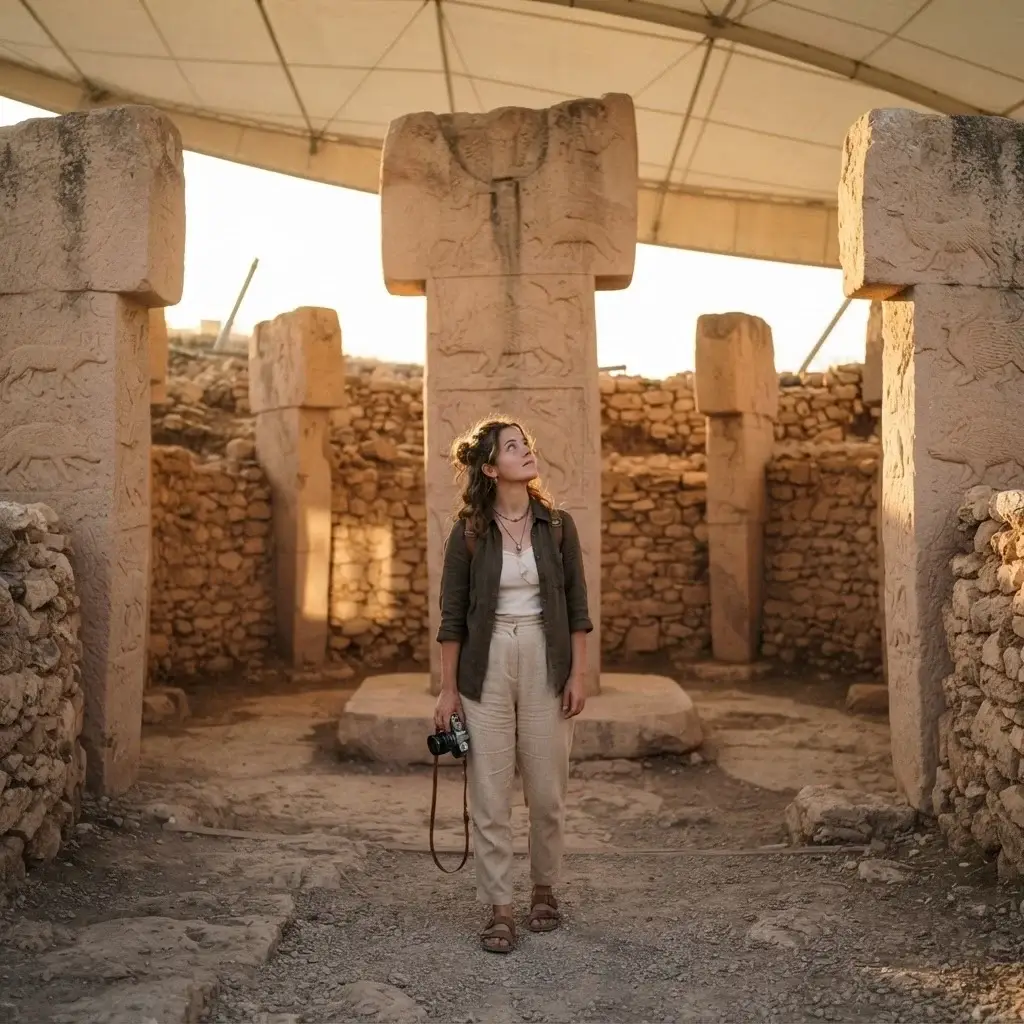
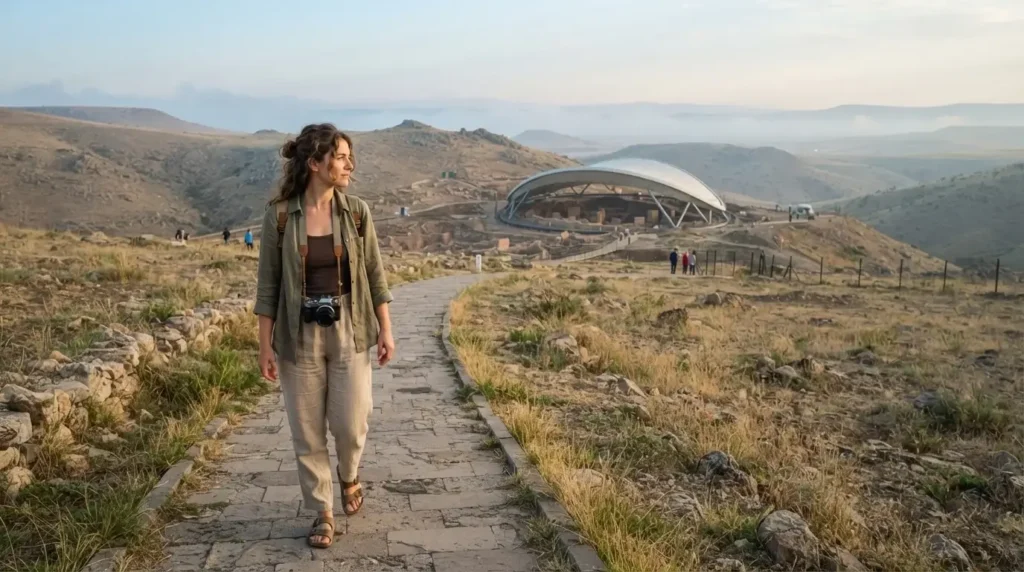
If any single archaeological discovery in the modern era deserves to shake your understanding of what human civilization is, it is Göbekli Tepe. Located in southeastern Turkey near the city of Sanliurfa, this site contains the world’s oldest known monumental structures, carved limestone pillars arranged in circles, some of them standing up to 5.5 meters tall. The oldest layers date to around 9500 BCE. To put that in perspective, Stonehenge was built roughly 6,000 years later. The Egyptian pyramids came even after that.
What is remarkable is not just the age. It is that the people who built Göbekli Tepe were hunter-gatherers. There was no agriculture, no permanent settlement, and no known precedent for this kind of coordinated, artistic construction. According to the UNESCO World Heritage listing for Göbekli Tepe, the T-shaped pillars are considered abstract representations of the human form, decorated with animals including foxes, snakes, and birds. Entire sections of the site remain unexcavated. What you are seeing is just the beginning.
The Smithsonian Magazine’s deep-dive on Göbekli Tepe frames it plainly: this site forces archaeologists to reconsider which came first, civilization or religion. That is not a small question.
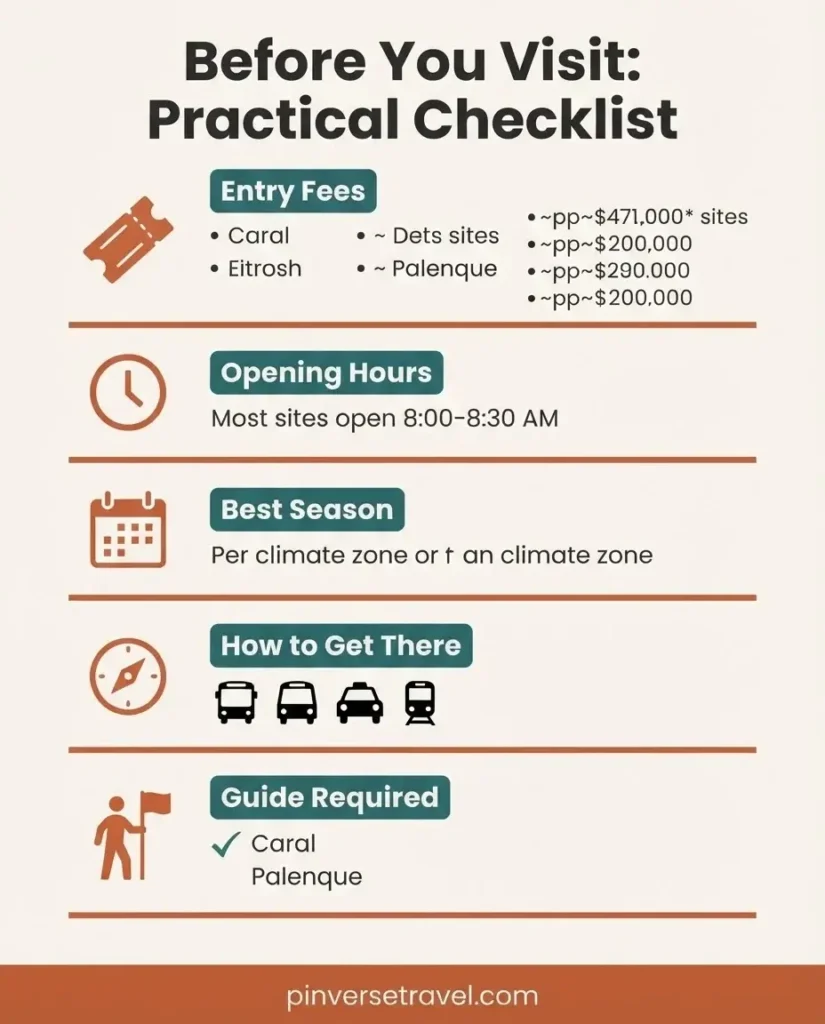
Getting there: Göbekli Tepe is about 15 kilometers northeast of Sanliurfa. From Sanliurfa city center, taxis and organized tours make the trip easily. Entry is approximately 21 euros, payable in Turkish lira or by card. The site is open from 08:30 to 18:30 between April and October, and 08:30 to 17:00 from November through March. A shuttle bus from the visitor center to the main monument area is included in the ticket price. Plan for at least 90 minutes, and honestly, more if the place grabs you, which it will.
What to eat nearby: Sanliurfa is one of Turkey’s great food cities. Seek out lahmacun (thin flatbread with spiced meat), cig kofte, and the local specialty of Urfa kebab, distinctly smoky and spiced with local dried chilies. The old bazaar near the fish lake is a brilliant place to wander before or after the site.
Solo tip: The site is well-organized and safe for solo visitors. Go on a weekday morning if you can. Early light hits those carved pillars in a way that photographs cannot capture.
Hampi, India: A Lost Empire in a Boulder Landscape
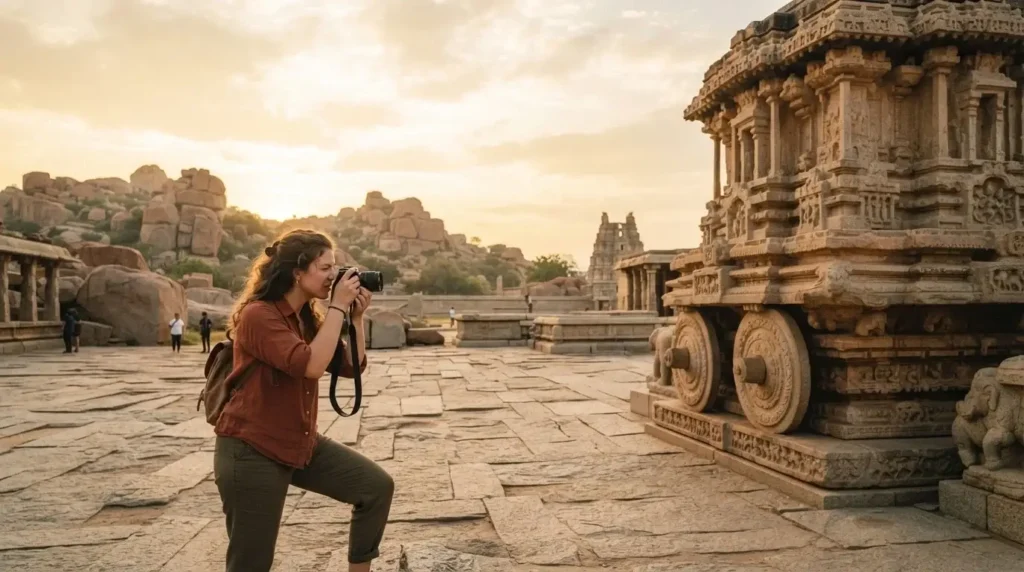
Southern India’s Hampi is one of those places that feels almost fictional when you first see images of it: ancient temple complexes scattered across a landscape of massive rounded boulders, banana plantations, and the meandering Tungabhadra River. What you are looking at are the remains of Vijayanagara, once one of the largest and wealthiest cities on Earth, capital of the Vijayanagara Empire from the 14th through 16th centuries.
The empire fell suddenly in 1565 at the Battle of Talikota. The city was abandoned. And there it has sat, across more than 4,000 hectares, with over 1,600 surviving structures including temples, market streets, elephant stables, royal baths, and water infrastructure that was centuries ahead of its time. The UNESCO World Heritage listing for the Group of Monuments at Hampi describes it as one of the most outstanding examples of a vanished civilization, with Dravidian architecture at its peak and an extraordinary integration of the built city with its natural landscape.
From what solo travelers consistently report, Hampi is deeply manageable on your own and surprisingly affordable. The main monuments are spread across the site, so renting a bicycle or hiring a local auto-rickshaw by the day is the standard approach. Entry for foreign tourists to the main monuments group is around 600 Indian rupees (roughly USD $7). Individual temples and structures may charge small additional fees, usually between 10 and 30 rupees.
Getting there: Hampi village is well connected. The nearest large city is Hospet (about 13 km), which has rail connections from Bangalore (roughly 9 hours overnight) and Hyderabad. From Hospet, local buses and auto-rickshaws reach Hampi easily. Budget travelers often take the overnight train from Bangalore and arrive early to maximize the day.
What to eat: The town around Hampi has a laid-back, traveler-friendly food scene. Look for banana pancakes and fresh fruit juices at the small cafes near the Virupaksha Temple, or ask where locals are eating for simple thali meals. The vibe in Hampi is unhurried, which suits the place perfectly.
Solo tip: The Vitthala Temple complex, with its famous stone chariot, tends to get busier mid-morning. Go at opening (8:30 AM) and you will often have large sections of it to yourself.
Volubilis, Morocco: Rome’s Most Forgotten Outpost
Most people do not associate Morocco with Roman ruins. That is exactly why Volubilis deserves to be on your radar. Situated in northern Morocco near the town of Moulay Idriss Zerhoun, about 30 kilometers from Meknes, Volubilis was once one of the westernmost outposts of the Roman Empire, a prosperous provincial city that thrived from roughly the first century BCE through the third century CE. When the Romans left, life continued under Berber, then Arab, then Islamic rule for centuries more.
What remains is extraordinary. According to the official Volubilis archaeological site, excavations have exposed more than 20 hectares of the town, including a dramatic Triumphal Arch, a capitoline temple, the civil basilica, and dozens of private homes still containing their original floor mosaics. Those mosaics, depicting mythological scenes in remarkable detail and color, are the standout feature of the site. You walk through what were once dining rooms and hallways of Roman-era homes and look straight down at 2,000-year-old art.
Entry is 70 dirhams. Official guides are available at the entrance for 120 dirhams and are worth it for the contextual depth they bring to the mosaics. The site is open daily from sunrise to sunset. If you are traveling between Fes and Meknes, Volubilis fits perfectly as a half-day detour. From Meknes, take a grand taxi toward Moulay Idriss and ask to be dropped at the site junction, which is about 3 kilometers from town. The walk is manageable in cooler weather, or negotiate with the taxi driver to go all the way.
What to eat nearby: Moulay Idriss itself is a beautiful, authentic Moroccan hilltop town worth a slow wander. Small cafes near the main square serve harira soup, msemen flatbread, and mint tea. If you have more time, Meknes has a fantastic medina with some of the best street food in northern Morocco.
Solo tip: Go in the late afternoon if possible. The golden light hits the mosaics and the Arch of Caracalla beautifully, and the crowds thin significantly after 3:00 PM.

Palenque, Mexico: The Jungle Reclaims Its Secrets
I want to be straightforward with you: Palenque is not completely unknown. But it is massively undervisited compared to Chichen Itza or Teotihuacan, and that gap in visitors makes all the difference to the actual experience. Palenque is a Maya city hidden inside Chiapas jungle, and the combination of dense green forest, rising mist, howler monkeys overhead, and intricately carved limestone temples is genuinely unlike anything else in Mexico.
The site was one of the most powerful city-states of the Classic Maya period, reaching its height in the 7th century CE under the ruler Pakal the Great. The Temple of the Inscriptions, where Pakal was buried with a famous jade mask, is one of the most significant funerary monuments in the Maya world. The carvings throughout the site demonstrate a level of artistic sophistication that still surprises researchers.
The official INAH page for the Palenque Archaeological Zone lists the site as open Monday through Sunday, with access via the town of Palenque in Chiapas state. Entry is approximately 215 Mexican pesos for the national park plus 100 pesos for the archaeological zone (roughly USD $16 combined), and the site opens at 8:00 AM with last entry at 4:30 PM. Getting there from Mexico City involves a flight or bus to Villahermosa or Palenque town, both manageable.
What to eat: Palenque town has a number of small family-run restaurants serving Chiapas-style food. Look for cochito al horno (slow-roasted pork), tamales de rajas, and the local taschiste drink. The town is small and easy to navigate on foot.
Solo tip: Stay inside the national park buffer if you can, rather than in the main town. The sounds of the jungle at night and the morning mist rolling across the ruins before the day tours arrive is an experience worth paying a slightly higher accommodation rate for.
Caral, Peru: The Oldest City in the Americas
Here is one that genuinely surprises most travelers: the oldest known city in the Americas is not in Mexico or Central America. It is in Peru, and it is not Machu Picchu. Caral, located in the Supe River Valley about 180 kilometers north of Lima, was settled around 2600 BCE and possibly as early as 3000 BCE. While ancient Egyptians were building pyramids, people in coastal Peru were constructing a city with platform mounds, plazas, residential areas, and evidence of a complex society with music, religion, and trade.
According to the UNESCO World Heritage listing for the Sacred City of Caral-Supe, the 626-hectare site is the best-preserved expression of the Caral civilization and demonstrates an advanced urban planning tradition that predates all other known cities in the Americas by more than a thousand years. There are no weapons or fortifications found at the site, suggesting a society that expanded through trade and cultural exchange rather than military conquest.
Entry to the site costs 11 Peruvian soles (approximately USD $2.90 for adults), but note that a guided tour is mandatory and costs around 20 soles shared among the group. The site is about 3 to 4 hours from Lima by bus. From Lima’s Norte Chico bus terminals, buses run toward Supe town, and from there local transport reaches the site. Some organized day tours from Lima also cover Caral and are a practical option if your time is limited.
What to eat: The Supe Valley area is agricultural country. Simple lunch spots near the entrance to the site serve fresh ceviche and rice dishes typical of coastal Peru. If you are doing a day trip from Lima, eat in the city before you leave and pack snacks for the road.
Solo tip: Caral is best visited with one of the mandatory guides, who genuinely add depth to the experience. The site is spread across a dry desert terrace with significant walking distances between structures, so wear comfortable shoes, bring sunscreen, and carry more water than you think you need.
Derinkuyu, Turkey: The City That Went Underground
If you are already in Turkey visiting Cappadocia (and you should be), Derinkuyu is sitting right there, underneath the landscape, and most visitors never bother to go down. That is a significant mistake. Derinkuyu is one of the largest ancient underground cities ever discovered. It extends at least 85 meters below ground across approximately 18 levels, with enough space and infrastructure to have sheltered up to 20,000 people along with their livestock, wine, food stores, religious spaces, and schools.
The underground network was carved by Phrygian peoples as far back as the 7th to 8th centuries BCE and expanded significantly during early Christian periods when communities used it as shelter during periods of invasion and persecution. Only about 10 percent of the city is currently open to visitors, and even that portion involves narrow corridors, rolling stone doors designed to block intruders, and ventilation shafts that descend straight down through the rock.
From what travelers consistently report, Derinkuyu takes about 1 to 2 hours to visit and is located in the town of the same name in Nevsehir Province, Cappadocia. It is about 30 kilometers from Goreme, accessible by dolmus (shared minibus) or rental car. Entry fees are modest and in line with other Cappadocian sites.
What to eat: After emerging from underground (and you will feel the contrast keenly), the surrounding towns in Cappadocia offer excellent pottery kebab, manti dumplings, and testi kebab. Urgup and Goreme have good local restaurants that have not been entirely touristified yet.
Solo tip: Derinkuyu can feel genuinely claustrophobic in the lower sections. If tight spaces make you anxious, the upper levels are still impressive and give you the full picture without having to squeeze through the narrowest passages. There is no shame in knowing your limits.
The Practical Reality: What to Know Before You Go
Visiting underrated archaeological sites as a solo traveler requires a slightly different kind of preparation than booking a tour-ready destination. Here is what I have learned from extensive research and from what experienced travelers at these kinds of sites consistently recommend:
First, infrastructure is lighter at lesser-known sites. That is part of their appeal, but it also means you should book transportation and accommodation in advance rather than assuming you can figure it out on arrival. Sites like Caral and Hampi require planning days in advance, not the night before.
Second, guided tours at archaeological sites are often worth it even if you usually prefer to explore independently. A knowledgeable local guide at Palenque, Volubilis, or Caral gives you specific historical and cultural context that you simply cannot access from a sign or a guidebook. Many of these sites also have mandatory or semi-mandatory guide requirements built into their entry systems.
Third, early morning visits at every single one of these sites will give you the best experience. Crowds are lower, temperatures are cooler, and the quality of light for observation and photography is better. If a site opens at 8:00 AM, be there at 8:00 AM.
Fourth, respect the conservation rules. These sites exist because people have protected them carefully. Stay on marked paths, do not touch carvings or mosaics, and follow all guidance from on-site staff. The reason these places survive to be visited at all is because previous visitors treated them with care.
What These Sites Actually Teach You
There is something that happens when you stand in front of a place that is 5,000 or 10,000 years old. Something that does not happen as easily in front of a skyscraper or a shopping district. You realize that the things you worry about, the plans that feel urgent, the timelines that seem important, exist in a very thin slice of human time.
When I was teaching English in Thailand, one of my students asked me what traveling had taught me most. I told her it had taught me that everywhere humans go, they build something, eat something, tell stories, and try to understand why they are here. Archaeological sites are where that effort becomes visible across millennia. They are the most honest version of human nature I have ever encountered.
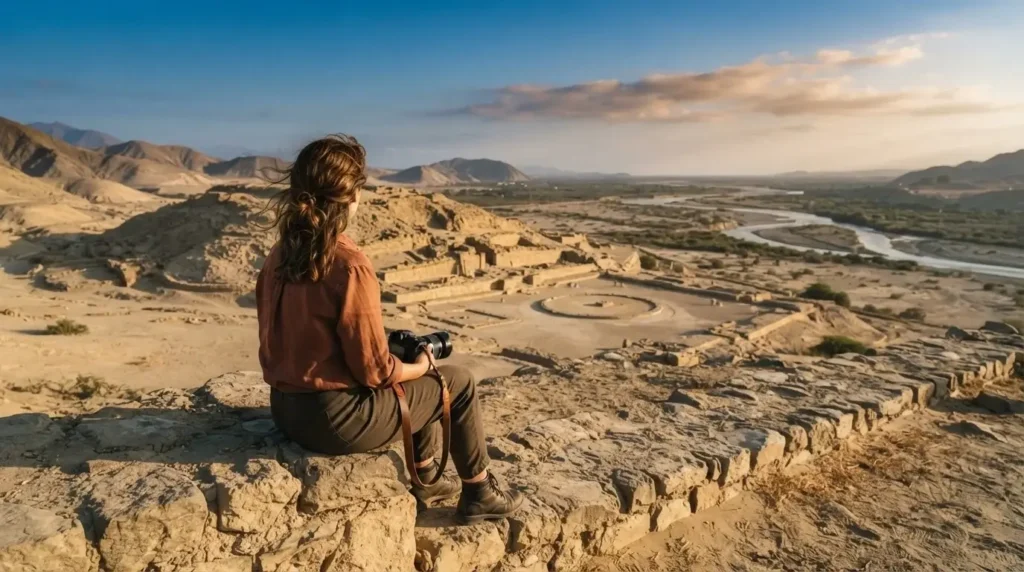
You do not need to be an archaeologist or a history scholar to feel that. You just need to show up, pay attention, and let the place do its work.
That is the whole point of this kind of travel. Stop waiting for the perfect moment, the perfect budget, or the perfect companion. These sites have been waiting for thousands of years. They can wait a little longer while you book the ticket, but they cannot wait forever, and neither can you.