Secret Travel Spots Pinterest Keeps Showing You for Good Reason

There is a particular kind of travel scroll that happens late at night, usually when you’re meant to be doing something else. You open Pinterest looking for a packing list or a hostel recommendation, and forty-five minutes later you’re staring at a fog-draped stone village perched above a turquoise sea somewhere you’ve never heard of, and you’re thinking: where is that, and why haven’t I been there yet?
I know this feeling well. Before I ever left New York to travel seriously, Pinterest was one of the first places I went to figure out that there was a whole category of travel that existed beyond the obvious. It was full of places that didn’t show up in the same ten articles, spots that felt discovered rather than marketed. And it turns out that feeling isn’t an accident. Pinterest’s algorithm is genuinely different from a search engine. It rewards visual and emotional resonance over advertising spend, which means genuinely compelling, lesser-visited places surface alongside the famous ones if you know how to look.
But there’s a catch. The same platform that surfaces secret travel spots can also turn them into the next overcrowded destination. The trick is learning how to use Pinterest with intention, to find places that are trending in the right direction but haven’t yet hit peak saturation, and then to actually plan the trip before everyone else does.
Here is how I approach it, and the destinations that keep appearing on my boards for very good reasons.
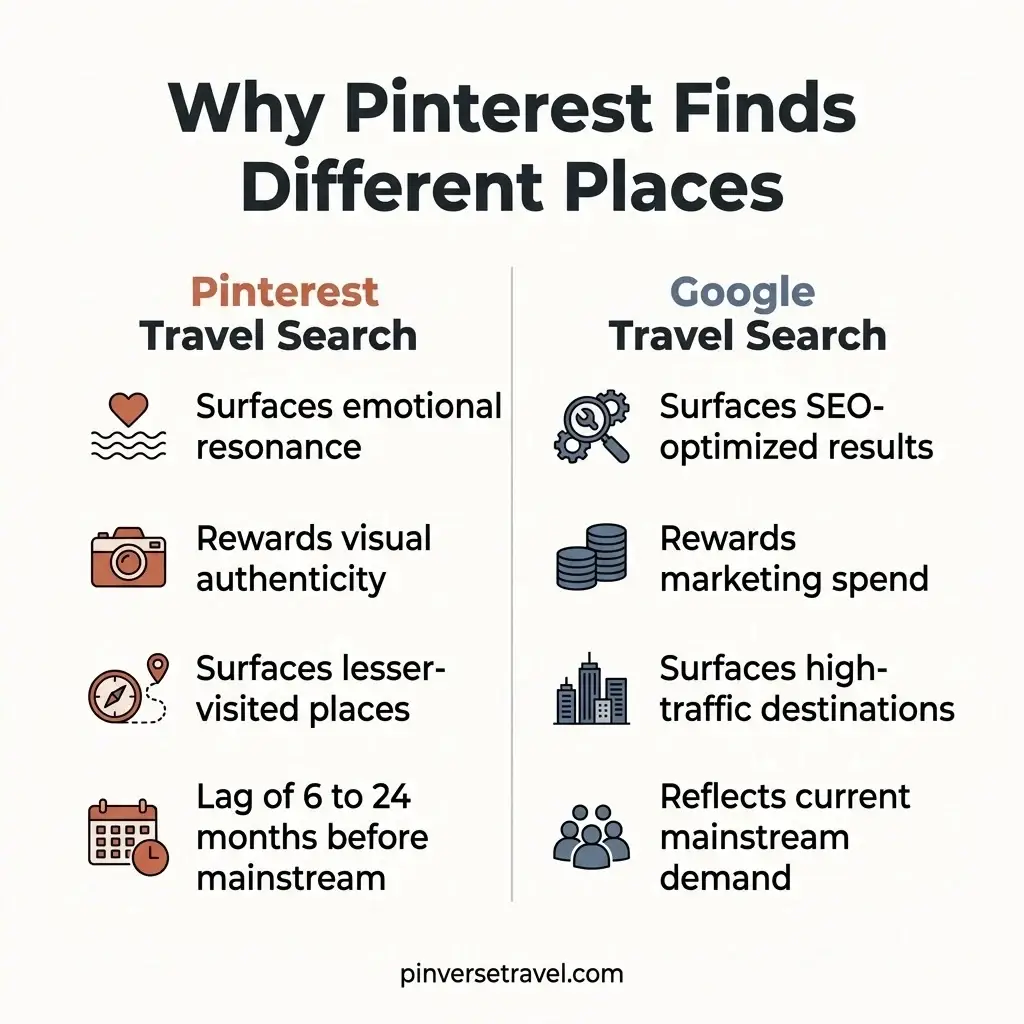
Why Pinterest Surfaces Different Places Than Google
When you type a destination into Google, you get results optimized for traffic, SEO, and often paid placement. The pages that rank highest have the most links and the biggest marketing budgets. This is why you’ll see the same twenty European cities recommended in nearly every mainstream travel roundup.
Pinterest works differently. Pins are saved and re-saved based on how much they resonate emotionally with real users. A solo traveler who visited a crumbling Roman theater in an Albanian hillside town saves a photo. Someone else finds it and re-pins it. Over time, that image builds its own momentum completely independent of whether there’s a major tourism board funding its distribution. Pinterest has now made this search behavior into actual trend forecasting data, and their annual Pinterest Predicts report for 2026 identifies a major macro-trend they’re calling “Mystic Outlands,” which they describe as travelers seeking out whimsical, distant destinations with an otherworldly or fairytale quality: misty ruins, enchanting forests, moody coastlines. These are not Instagrammed-to-death beaches. These are exactly the kinds of places that have been circulating on thoughtful travel boards for years.
The broader 2026 Pinterest Predicts data from their newsroom also points to “Darecations,” which captures adrenaline-driven travel: canyoneering, river rafting, remote wilderness. Together, these two trends describe a traveler who is specifically moving away from polished, packaged tourism toward something that feels real and earned.
That’s the direction Pinterest is moving. And if you search with the right terms, you’ll find it.
How to Actually Search Pinterest for Secret Spots
The mistake most people make is searching too broadly. If you type “Europe travel” into Pinterest, you’ll get Paris, Amsterdam, Rome. Beautiful, yes. Secret, no.
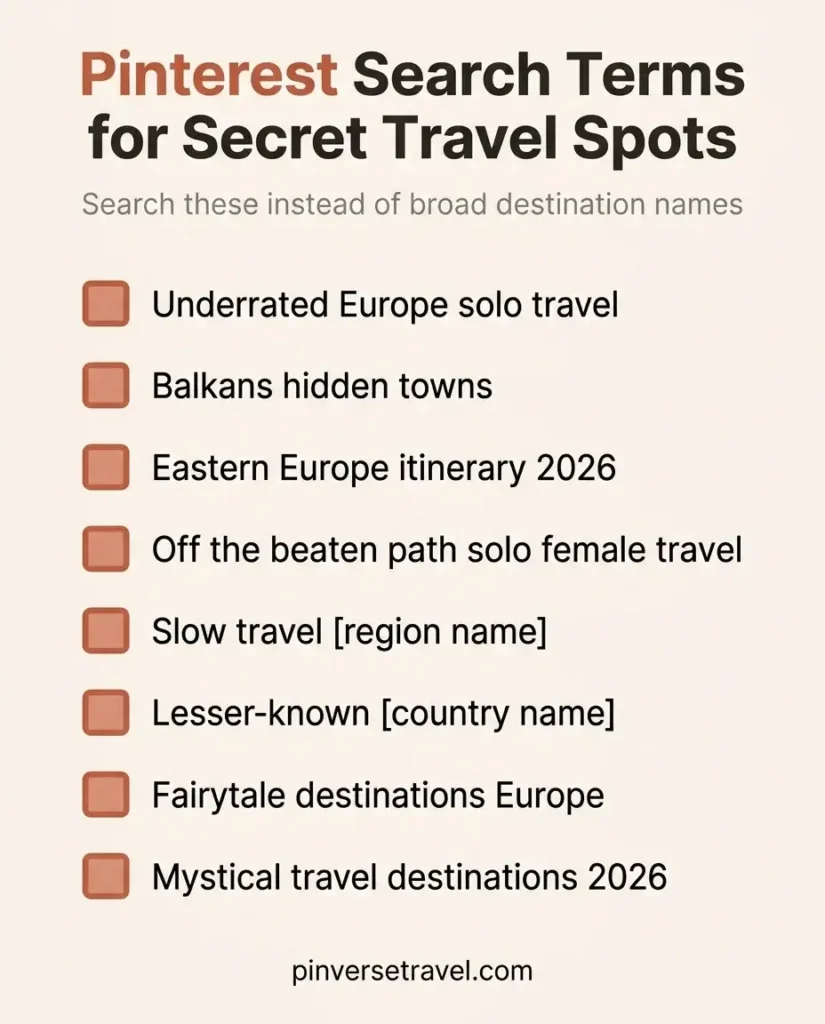
The search terms that surface genuinely underrated places are more specific and emotionally descriptive. Here are the ones that consistently open up different territory for me:
- “Underrated Europe solo travel”
- “Balkans hidden towns”
- “Eastern Europe itinerary 2026”
- “Off the beaten path solo female travel”
- “Slow travel [specific region]”
- “Lesser-known [country name]”
- “Fairytale destinations Europe”
- “Mystical travel destinations 2026”
Once you find a pin you love, don’t just save it and move on. Click through to the creator’s profile. Solo travelers and independent travel bloggers who post about lesser-known destinations often have entire boards dedicated to the regions they love, and following those creators is a much richer source of genuine discovery than any algorithm-generated “ideas” page.
The other move: pay attention to what’s trending on Pinterest’s travel board but hasn’t yet gone mainstream. The lag between a destination trending on Pinterest and being featured in major travel magazines can be six months to two years. That’s your window.
The Destinations That Keep Appearing (and Why They Deserve Your Attention)
Tbilisi, Georgia: The City That Rewards Slow Travel
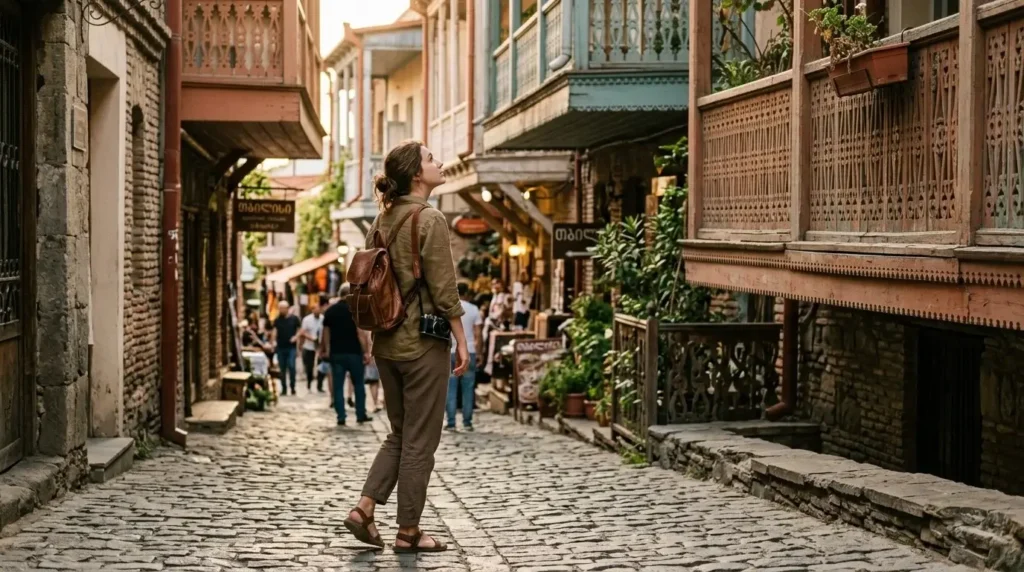
Tbilisi has been on adventurous travelers’ Pinterest boards for years, but it still hasn’t hit the kind of tourism saturation you’ll find in Lisbon or Prague. From what solo travelers consistently report, this city gives you everything: layers of history compressed into cobblestone streets, sulfuric bathhouses in the old city, natural wine poured freely in neighborhood restaurants, and mountain landscapes just a short drive away.
The practical side is unusually welcoming. As of 2025, citizens from over 90 countries can enter Georgia visa-free, and US citizens can stay for up to 365 days without a visa. The country’s official tourism board at georgia.travel is a solid starting point for understanding the full scope of what’s there, from Tbilisi’s Narikala Fortress to the mountain monasteries of Kazbegi.
What to eat: Khachapuri (cheese-filled bread, ideally the Adjarian boat-shaped version with an egg cracked into it), khinkali dumplings, and a glass of amber wine made in the traditional qvevri clay vessels. Georgia is one of the oldest wine-producing regions in the world, and local wine bars in Tbilisi charge almost nothing for a remarkable pour.
For solo travelers, Tbilisi is frequently described as safe, easy to navigate on foot in the old city, and unusually welcoming to independent visitors. The metro system is simple and cheap. English is spoken enough to get around, and learning even a few words in Georgian earns genuine warmth from locals.
The Albanian Riviera: What the Greek Islands Looked Like Before
Albania is one of those Pinterest scrolls that makes you stop mid-swipe. Turquoise bays, crumbling Ottoman architecture, mountains that drop straight into the sea. And for now, very few crowds.
What solo travelers who’ve made the trip consistently describe is a country that feels like the Mediterranean used to before mass tourism arrived: genuinely affordable, authentically local, and beautiful in a way that hasn’t been polished into a product yet. The southern coast, particularly the stretch around Himara, Dhermi, and Sarandë, features the kind of water clarity that gets pinned thousands of times for good reason.
Albania’s National Tourism Agency at akt.gov.al is worth bookmarking for practical planning, including current entry requirements and regional destination guides. The agency itself reports that Albania now ranks among the top countries globally for tourist arrivals relative to its population, which suggests the window of “underrated” is real but not permanent.
What to eat: Byrek (flaky savory pastry filled with spinach or cheese), tave kosi (baked lamb with yogurt), and fresh grilled fish from the Riviera. Meals at local restaurants remain remarkably inexpensive by Western European standards.
The practical note for solo travelers: Tirana, the capital, is modern and easy to navigate, with a buzzing cafe culture and walkable center. The Riviera requires more planning for transport, renting a car or joining small group transfers, but the payoff in scenery and solitude is significant.
The Faroe Islands: Pinterest’s Most Dramatic Landscape That Few Actually Visit
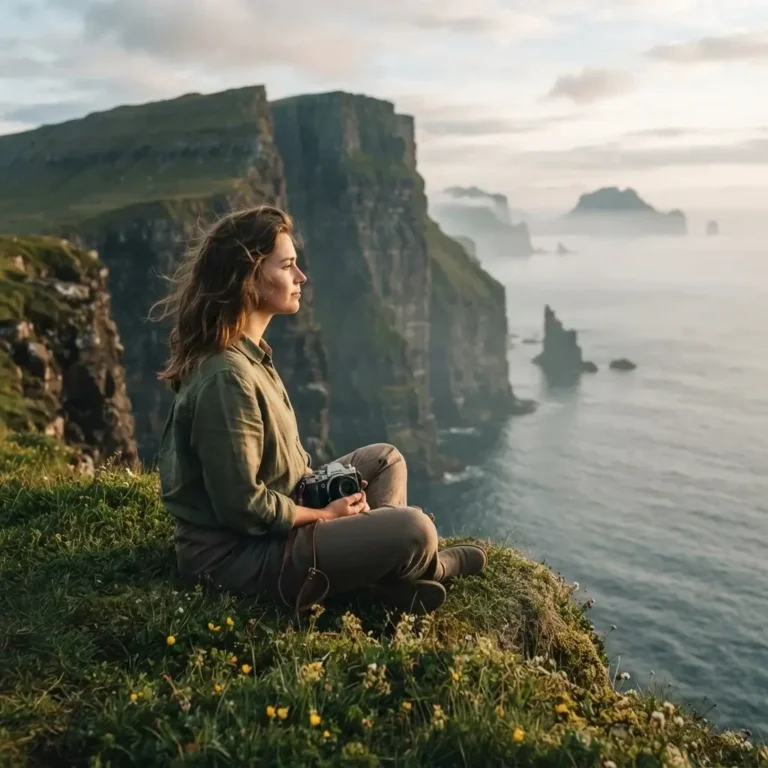
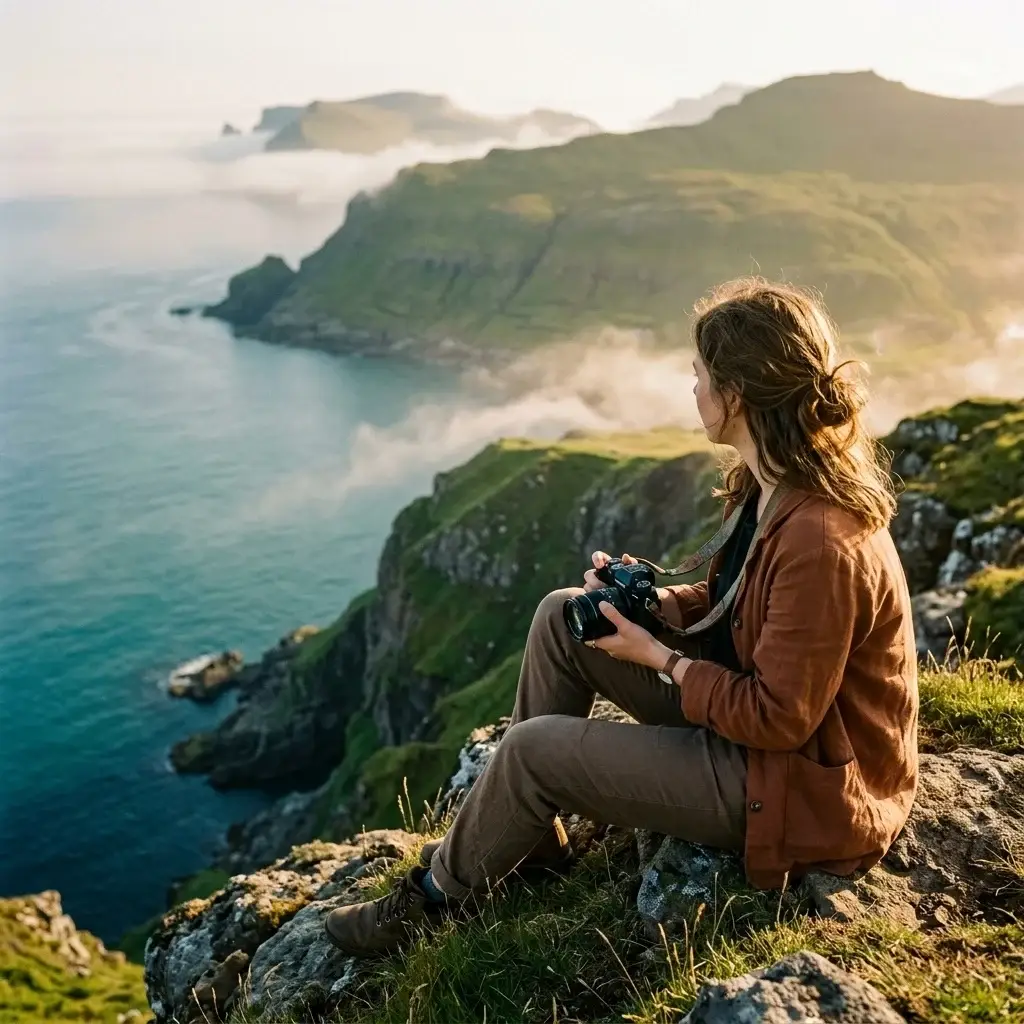
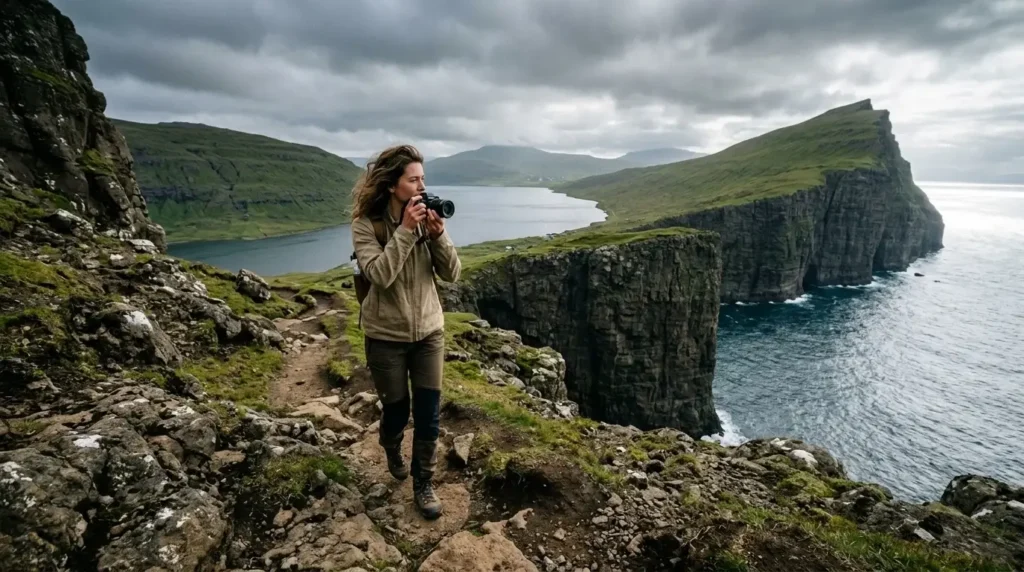
No destination appears on more “I need to go here” Pinterest boards and fewer people’s actual passports than the Faroe Islands. Eighteen islands in the North Atlantic between Norway and Iceland, with cliffs that drop hundreds of meters into the sea, a lake that appears to sit above the ocean, and a capital city, Tórshavn, that is so small and charming it barely feels real.
The Visit Faroe Islands official tourism board describes over 300 kilometers of marked hiking trails, from gentle coastal walks to the ascent of the archipelago’s highest peak, Slættaratindur at 882 meters. The iconic hike to Sørvágsvatn, the lake above the ocean, consistently ranks among the most visually striking walks in the world and remains far less crowded than equivalent hikes in Iceland or Norway.
For practical planning, the Guide to Faroe Islands travel information page is one of the most thorough first-trip resources available, covering visa requirements, weather preparation, and local customs. Most visitors from European countries and many others can enter for up to 90 days. The Faroe Islands sit outside the EU but inside the Schengen area for travel purposes, so check the specific entry rules for your passport.
What to eat: The local specialties here are not for the faint-hearted and that’s entirely the point. Skerpikjøt (wind-dried mutton) has a funky, intense flavor that reflects centuries of traditional food preservation. Ræst kjøt (fermented lamb) is equally polarizing and memorable. If neither sounds appealing, fresh fish from the harbor is exceptional. The restaurant scene in Tórshavn punches well above its size.
The Faroe Islands reward solo travelers who are comfortable with weather variability and self-directed exploration. Solo travelers consistently report feeling safe and, given how small and community-oriented the islands are, surprisingly welcomed. The Visit Faroe Islands homepage has a responsibly designed “please visit responsibly” section that sets a refreshing tone about how they think about tourism.
Plovdiv, Bulgaria: Europe’s Oldest Lived-In City
Plovdiv is the kind of city that appears on Pinterest boards about European underrated destinations and makes you wonder why you’ve never seen it in a mainstream travel article. It is considered one of the oldest continuously inhabited cities in Europe, with a beautifully preserved old town of 19th-century Revival-period houses, an intact Roman amphitheater still used for concerts and performances, and a contemporary art scene that punches far above the city’s size.
Bulgaria more broadly offers some of the most favorable value for money in Europe, with meals, accommodation, and transport costing a fraction of what equivalent experiences would in Western Europe. For solo travelers, Plovdiv is compact enough to walk everywhere within the old town, and English is widely spoken among younger locals.
The Roman Theater of Plovdiv, built in the 1st century AD, sits open-air in the city and entry is inexpensive. In summer, it still hosts opera and theater performances against a backdrop of the Rhodope Mountains.
The Paradox of Pinterest Secret Spots
Here is the honest conversation that most travel content avoids: the moment a place appears in a “secret travel spots” article, it becomes slightly less secret. Pinterest is specifically good at accelerating this cycle. The same algorithm that surfaces a beautiful, overlooked village to you surfaces it to thousands of other people at the same time.
This doesn’t mean you shouldn’t go. It means you should go thoughtfully and relatively soon, before peak saturation, and that you should travel with awareness of your impact when you get there. Eat at locally owned restaurants rather than tourist-facing chains. Stay in locally run accommodation when it’s available. Learn a few words of the local language. These things matter more in smaller, less-touristed places where the impact of visitor behavior is immediately felt.
The other thing Pinterest doesn’t tell you is how to move from a saved pin to an actual trip. That gap, between the beautiful image and the booked flight, is where most Pinterest-fueled travel dreams stay permanently. The pins stay beautiful and unvisited on a board called “someday.”
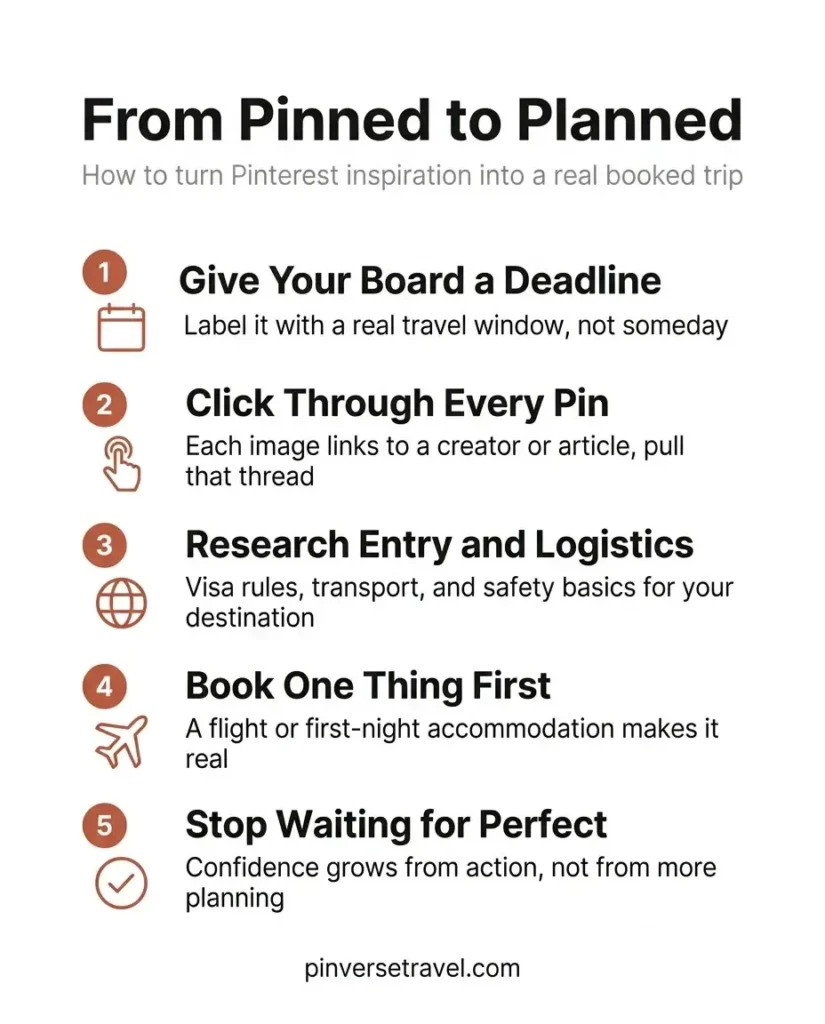
From Pinned to Planned: Closing the Gap
The shift from collecting inspiration to booking a trip doesn’t require a perfect moment. It requires making a small decision and following it with action.
Start by giving your Pinterest board a deadline, not a vague “someday” label but a specific travel window. “Albania: September 2026.” Then use the pins you’ve saved as a research starting point rather than a destination in themselves. Each pinned image links somewhere: a blog post, an article, a creator’s site. That’s your research thread. Pull it.
When I left my office job in New York, I didn’t have a fully formed plan. I had a strong feeling that the life I wanted was on the other side of the action I kept delaying. The places I eventually reached, backpacking across Europe, living with a family in Ghana, hiking through China, teaching in Thailand, none of them were waiting for me to feel ready. They were waiting for me to book the flight.
The secret spots on your Pinterest board are real places. The fog over that Albanian hillside is real fog. The wine in Tbilisi is poured by real people in a real bar, probably right now while you’re reading this. The only thing separating your board from your passport stamp is a decision.
Make it.