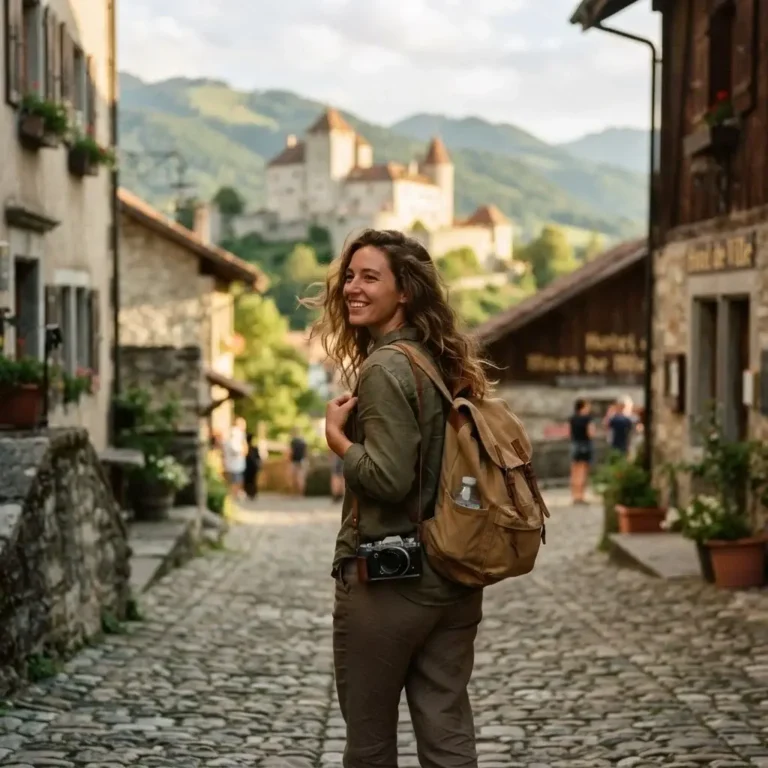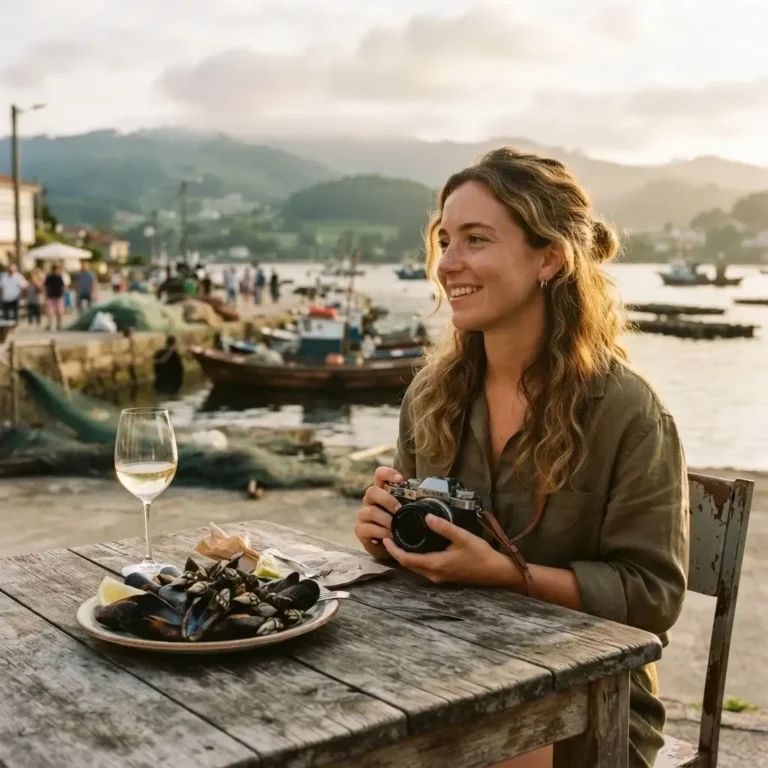
I still remember the moment I realized that “seeing Europe” and “understanding Europe” are two completely different trips. When I backpacked solo through the continent years ago, I had a running list of famous names scribbled in a notebook, cathedrals, squares, museums, all blurring together after a while. It wasn’t until I slowed down in a handful of cities that everything clicked. I started noticing patterns: domes that felt mathematically perfect, paintings that suddenly looked human instead of flat and stiff, town squares clearly built by people who believed cities themselves could be works of art. That was my first real brush with what historians call the Renaissance, and it changed how I traveled from that point on.
If you’re now standing where I once stood, curious about Renaissance history but not sure which cities are actually worth building a trip around, this is exactly the guide I wish someone had handed me. We’ll go city by city, but we’ll also talk honestly about logistics, costs, and the mistakes that trip up even experienced travelers.
What Actually Makes a City “Renaissance,” Anyway
Before we get into specific destinations, it helps to know what you’re looking for. The Renaissance was not a single event or a single place. It was a cultural and intellectual shift that swept through parts of Europe roughly between the 14th and 17th centuries, sparked largely in Italian city-states where wealthy merchant families, most famously the Medici in Florence, began funding artists, architects, and scholars instead of only churches and armies.
The result was a wave of humanism, meaning a renewed focus on human experience, proportion, and observation rather than purely religious symbolism. Architecturally, this showed up as a return to classical Roman ideas: symmetrical facades, rounded arches, and domes engineered with startling mathematical precision. Painters started giving their subjects real weight, real shadow, real emotion. It is genuinely one of the most exciting shifts in the entire history of art, and once you understand the “why,” visiting these cities stops feeling like sightseeing and starts feeling like time travel.
Here’s something most travel articles skip: the Renaissance wasn’t only an Italian story. A parallel, equally rich movement was happening at the same time in Flanders, in cities like Bruges and Ghent, driven by wealthy trade guilds instead of noble families. So this list intentionally mixes the famous Italian giants with a couple of Northern European cities that deserve far more attention than they usually get.
Florence, Italy: Where It All Began
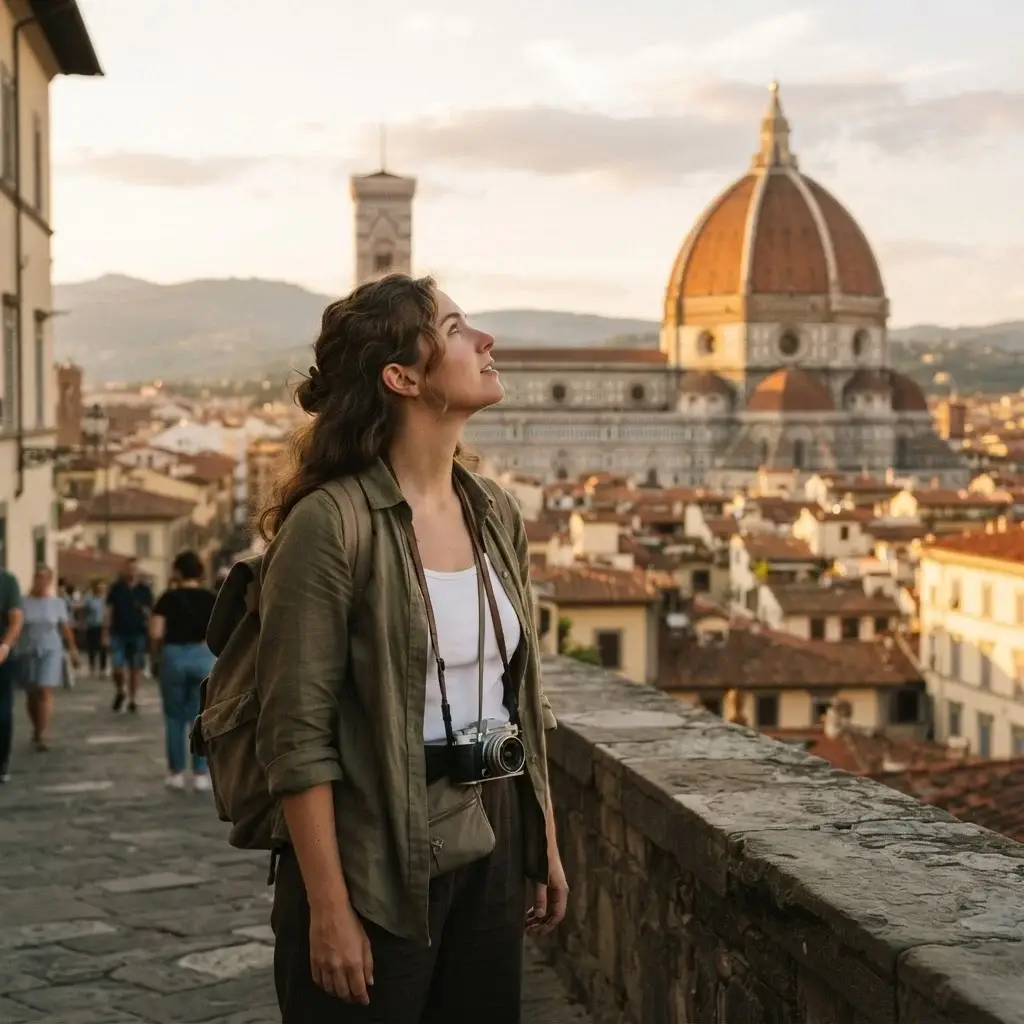
Florence is the obvious starting point, and for good reason. This is genuinely the birthplace of the Renaissance, the city where Filippo Brunelleschi engineered the dome of the Duomo using techniques that had puzzled architects for over a century, and where the Medici family turned patronage of the arts into something close to a civic religion. Florence’s historic center has been recognized as a UNESCO World Heritage Site since 1982, and walking its streets still feels like walking through an open-air museum that happens to have people living in it.
Plan for at least two to three full days here, not because Florence is enormous (it’s actually quite walkable and compact compared to Rome or Paris), but because the density of significant sites means you’ll want time to actually absorb what you’re seeing instead of rushing. The Uffizi Gallery holds one of the greatest collections of Renaissance painting on earth, including major works by Botticelli and Leonardo da Vinci, and I’d strongly recommend booking your entry in advance rather than gambling on walk-up availability. The gallery is open Tuesday through Sunday from 8:15am to 6:30pm and closed Mondays, and lines during peak season can eat up a serious chunk of your day if you show up unprepared.
A practical note that catches a lot of first-time visitors off guard: Florence charges a nightly tourist tax on top of your accommodation cost, typically ranging from about €3.50 to €8 per person depending on your hotel’s star rating, with kids under 12 usually exempt. It’s a small amount, but budget for it so it doesn’t feel like a surprise fee at checkout.
For food, skip the tourist-trap menus directly on Piazza della Signoria and walk a few streets over into the Santo Spirito neighborhood, where you’ll find smaller trattorias serving Florentine classics like bistecca alla fiorentina and ribollita at prices locals actually pay.
Rome: The Renaissance Meets the Ancient World
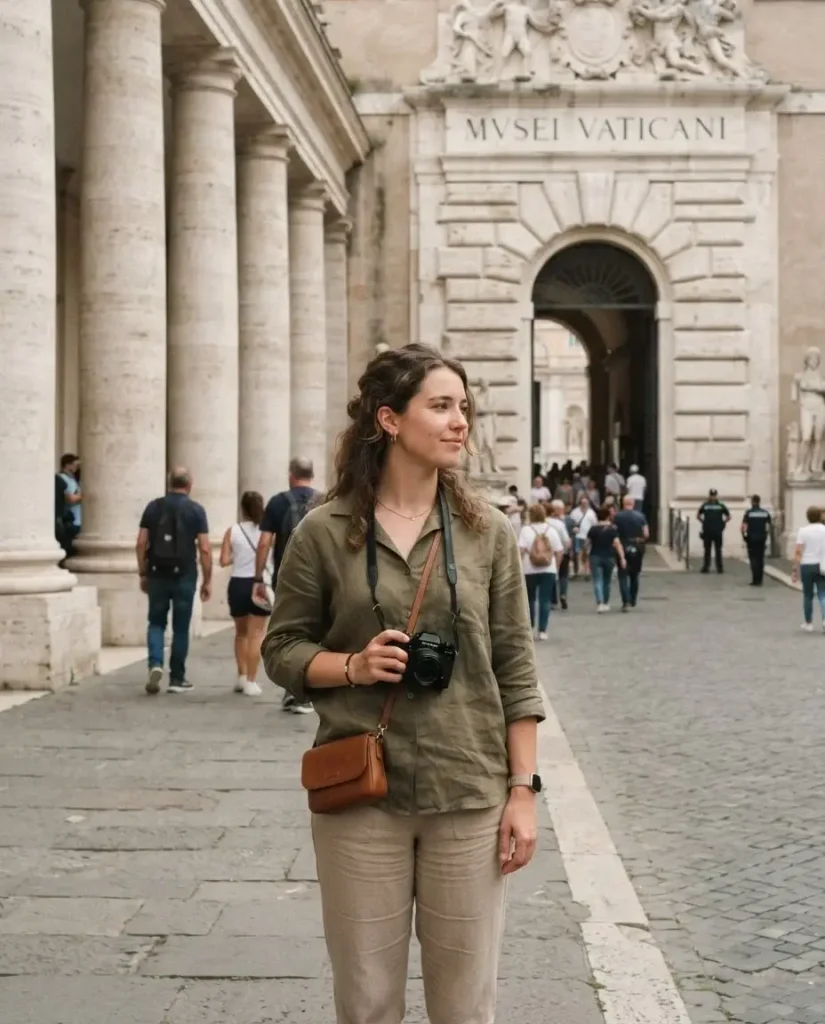
Rome technically straddles multiple eras at once, but its Renaissance chapter, centered heavily around Vatican City, is impossible to skip. This is where Michelangelo painted the ceiling of the Sistine Chapel, and where architects reimagined ancient Roman engineering through a Renaissance lens when redesigning St. Peter’s Basilica.
Give yourself at least a full day for Vatican Museums alone, and book ahead. A full-price ticket without online reservation runs €20, with a €5 fee added if you book in advance, which is honestly worth paying just to guarantee a timed entry and skip the notoriously long walk-up lines. If you’re traveling solo, this is one of those places where joining a small guided group can genuinely enhance the experience, since the sheer scale of the museum can feel disorienting without context.
One mistake I see travelers make constantly: trying to “do” Rome and Florence as day trips from each other. They’re roughly 90 minutes apart by high-speed train, which sounds tempting, but each city deserves its own dedicated days rather than being squeezed into a rushed side trip.
Venice: Art, Water, and the Doge’s Palace
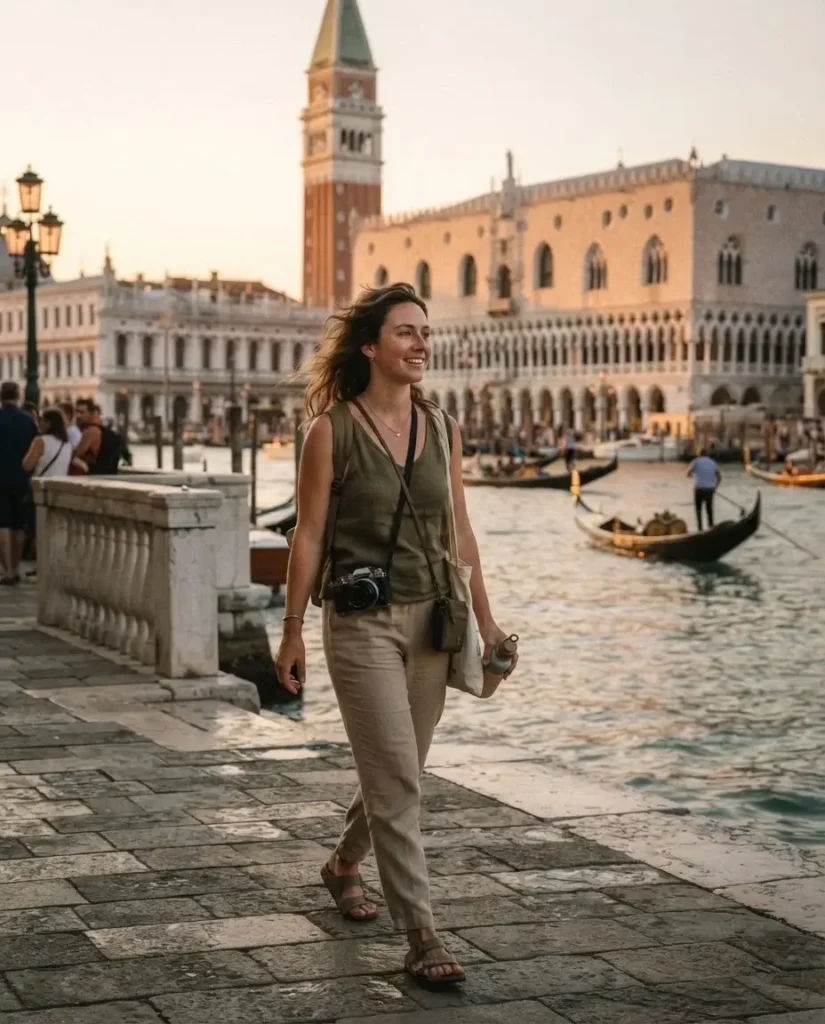
Venice’s Renaissance identity is a little different from Florence’s. Where Florence was shaped by banking families, Venice was shaped by maritime trade and a unique political system led by an elected Doge. The Doge’s Palace, right on Piazza San Marco, is the single best place to understand this era of Venetian power, with rooms full of massive Renaissance paintings by artists like Tintoretto and Veronese that were specifically designed to project the Republic’s wealth and authority.
Venice rewards slow, aimless wandering more than almost anywhere else in Europe, mostly because getting lost is basically guaranteed and often the best part of the day. Two to three days is a solid amount of time, and I’d genuinely recommend spending at least one evening after the day-trip crowds clear out, since Venice transforms completely once the canals quiet down.
For solo travelers specifically, Venice is one of the safer, easier cities on this list to navigate alone. Everything is walkable or reachable by vaporetto (water bus), there’s minimal risk of car traffic accidents since there are no cars, and the compact geography makes it hard to get seriously lost for long.
Mantua: The Renaissance City Most People Skip
If you want to feel like you’ve discovered something, this is the stop. Mantua, in Lombardy, doesn’t get nearly the attention Florence or Venice does, which is honestly baffling once you learn its history. The Gonzaga family turned this small city into a genuine Renaissance powerhouse, commissioning the sprawling Palazzo Ducale, a palace complex with over 500 rooms across multiple connected buildings. Mantua and the nearby town of Sabbioneta were jointly recognized by UNESCO in 2008 specifically for their Renaissance town planning, a rare honor that reflects how intentionally and artfully these places were designed.
One day is enough to see Mantua’s highlights, which makes it a fantastic add-on if you’re already routing between Florence and Venice by train, since it sits conveniently along that corridor. It’s also noticeably cheaper than the bigger names on this list, with smaller crowds and a slower pace that feels closer to how these cities probably felt five hundred years ago.
Bruges, Belgium: The Northern Renaissance’s Quiet Masterpiece
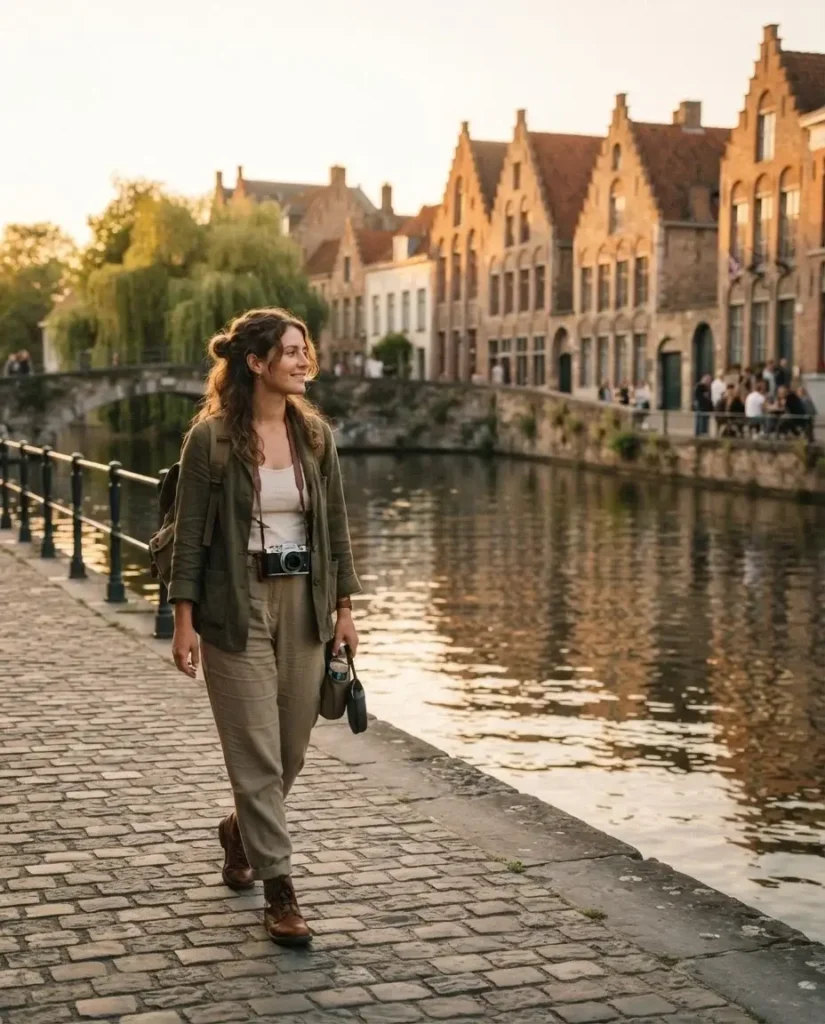
This is where the story shifts north, and where most “best Renaissance cities” lists completely drop the ball. Bruges is often labeled purely medieval, and it’s true the city’s canals and step-gabled buildings do carry strong medieval bones. But Bruges was also a thriving hub of Northern Renaissance painting, home to artists working in the same era as their Italian counterparts, developing oil painting techniques that would eventually influence artists across the continent. The historic center was recognized by UNESCO in 2000, and it remains one of the best-preserved cityscapes in Europe.
Bruges is small enough to see meaningfully in a day and a half, and it’s an easy train ride from Brussels, making it a natural stop if you’re building a Northern European leg onto your trip. Solo travelers tend to love it here specifically because the city is extremely walkable, well-lit, and low-stress compared to larger capitals.
Ghent, Belgium: Home of the Ghent Altarpiece
Just twenty minutes from Bruges by train sits Ghent, a city that deserves far more spotlight than it usually gets. This is where you’ll find the Ghent Altarpiece, painted by the Van Eyck brothers in the 1420s and 1430s, widely considered one of the most technically groundbreaking paintings in art history for its astonishing realism and detail. It remains on permanent display inside Saint Bavo’s Cathedral, the very building it was originally created for nearly six centuries ago.
Ghent has a grittier, more lived-in energy than Bruges, with a large student population that keeps it feeling current rather than frozen in time. If you’re trying to understand how the Renaissance played out beyond Italy’s borders, pairing Bruges and Ghent into a two to three day stretch gives you a genuinely complete picture that most itineraries miss entirely.
How to Actually Link These Cities Together
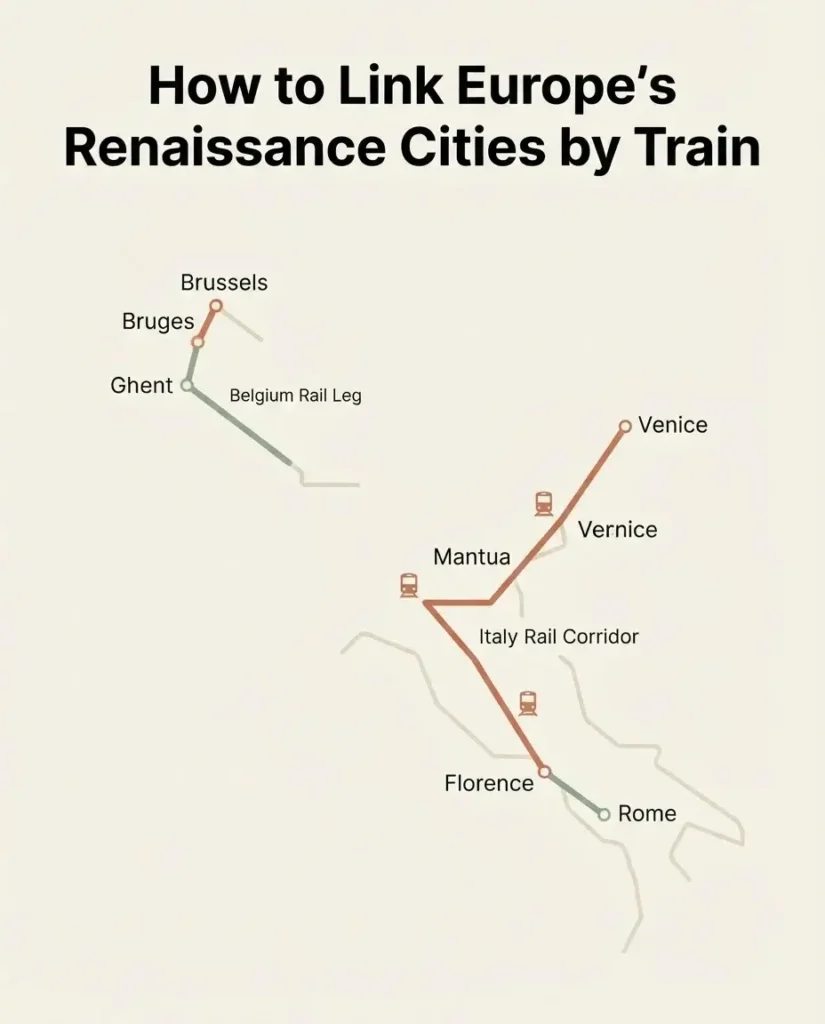
Here’s where planning gets practical. If you’re focusing on Italy, Florence, Venice, and Mantua sit conveniently along the same rail corridor, meaning you can move between them by high-speed or regional train without ever needing a rental car. Rome adds about 90 minutes onto that route from Florence. If you’re drawn to the Northern Renaissance side of this story, Bruges and Ghent are both short train rides from Brussels, making a Belgium-focused week entirely realistic without much backtracking.
Trying to combine both regions into a single trip is doable but requires a flight or a longer train journey between Italy and Belgium, so be realistic about how much time you actually have. I’d rather see someone spend eight unhurried days in three cities than a rushed twelve days trying to hit six.
Common Mistakes Solo Travelers Make in Renaissance Cities
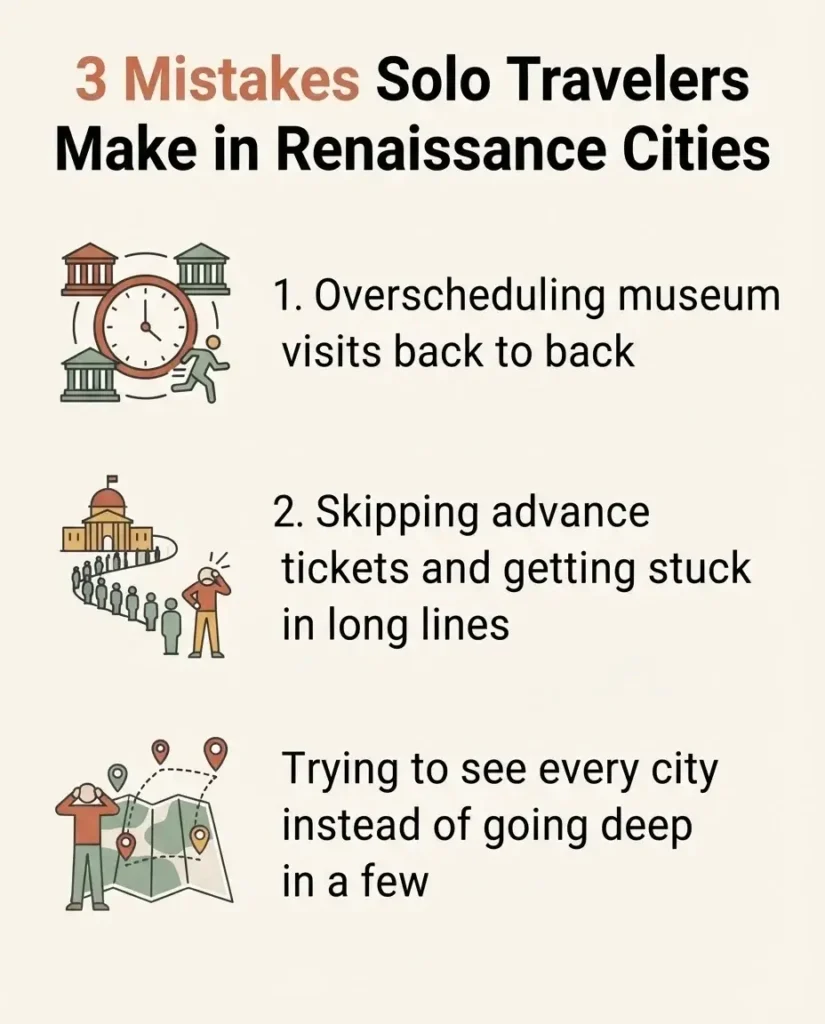
The biggest mistake I see, and one I made myself early in my travels, is scheduling museums back to back without any breathing room. Renaissance art asks for attention. Standing in front of a painting or sculpture that fundamentally changed how humans depicted the world deserves a few unhurried minutes, not a rushed glance before racing to the next stop.
The second common mistake is skipping advance tickets entirely, assuming you can just show up. During peak season, walk-up lines at places like the Uffizi or Vatican Museums can eat hours out of your day. Booking ahead isn’t about being overly organized; it’s about protecting your limited time.
The third mistake is treating every stop as equally essential. You don’t need to see every Renaissance city in one trip to “count” it as meaningful. Pick two or three that genuinely interest you and go deep instead of wide. That’s a philosophy that applies to travel generally, not just this specific itinerary.
Traveling These Cities Solo
If this is your first solo trip and you’re nervous about navigating unfamiliar cities alone, Renaissance-era destinations are actually a fantastic entry point. Cities like Florence, Bruges, and Ghent are compact, walkable, and built around dense historic centers where getting seriously lost is difficult and asking for directions is genuinely easy, since English is widely spoken in tourist areas. Venice, despite its maze-like layout, is one of the lowest-stress solo destinations in Europe simply because there’s no vehicle traffic to worry about.
My advice from my own solo backpacking days across Europe still applies here: build in slower mornings, don’t overschedule your days, and let yourself sit in a café or a quiet piazza doing nothing in particular. Some of the most memorable moments of solo travel come from unplanned pauses, not the sites themselves.
Final Thoughts on Choosing Your Renaissance Route
You don’t need to check off every city on this list to have a meaningful trip. If art and architecture genuinely excite you, start with Florence and Venice, since together they cover the two dominant strands of the Italian Renaissance. If you want a trip that feels less crowded and more personally discovered, add Mantua. And if you’re curious about a chapter of this era that almost nobody talks about, give Bruges and Ghent a real chance instead of treating them as a quick Brussels day trip.
Whichever combination you choose, go in with curiosity rather than a checklist mentality. The Renaissance was, at its core, about people daring to see the world differently. Traveling to these cities with that same openness is the whole point.