How to Plan Forest Bathing in Europe Without the Overwhelm

The first time I understood what a forest could do for a tired mind, I was hiking in China, somewhere quiet and green, far from the noise of the life I had built back home. I had spent years at a gray desk in New York City, convinced that rest was something you earned once a year with a two-week vacation. Standing under those trees, breathing slowly for what felt like the first time in months, I realized I had it backwards. Rest was not a reward. It was a need. And nature was handing it out for free.
That feeling has a name now, and a growing pile of science behind it. It is called forest bathing, and Europe happens to be full of extraordinary places to try it. If you have been circling this idea, half in love with it and half convinced you will mess it up, this guide is for you. I want you to finish reading and feel one thing above all: this is simpler than the internet makes it look, and you are absolutely capable of planning it yourself.
What forest bathing actually is, and what it is not
Forest bathing comes from Japan, where it is called shinrin-yoku, which means “taking in the forest atmosphere.” It started in the 1980s as a public health idea, a gentle prescription for a stressed, screen-heavy population. There is no water and no swimsuit involved. You are bathing your senses in the forest, not your body in a lake.
Here is the part that trips people up. Forest bathing is not hiking. Hiking has a destination and a pace. Forest bathing has neither. You walk slowly, sometimes barely at all, and you pay attention. You notice the light coming through the leaves, the smell of damp earth, the sound of wind moving through the canopy, the temperature of the air on your skin. A session that covers half a mile can easily take two hours, and that slowness is the whole point.
The benefits are real, not wishful thinking. Trees release compounds called phytoncides, and time spent among them has been linked to lower blood pressure, reduced stress hormones, and a calmer nervous system. If you like to see the evidence before you trust an idea, the research summarized in this peer-reviewed overview of forest environments and human health lays out the measured effects clearly, and it is the reason I stopped treating slow time in nature as a luxury and started treating it as maintenance. Even the official guidance from Forestry England frames it as a practical wellbeing tool rather than a wellness trend, which tells you how mainstream this has become.
This connects to everything I believe about travel. You do not need to conquer a place to be changed by it. Sometimes the most memorable hours of a trip are the slowest ones.
Do you need a certified guide, or can you do it alone
Short answer: you can absolutely do this alone, and most of the time I do.
A certified forest therapy guide leads you through a series of gentle “invitations,” small prompts to notice and slow down, and ends with a quiet tea ceremony. It is lovely, and if you are the kind of person who relaxes better with structure, it is worth trying once. Guides trained through bodies like the Association of Nature and Forest Therapy follow a consistent method, and you can often find one attached to a specific forest or wellness center in Europe.
But you do not need one to begin. Self-guided forest bathing costs nothing beyond getting to the trees. For a first-time or budget traveler, and for the solo travelers who make up so much of this community, that freedom matters. I spent years working flexible jobs to fund my travels, so I have a soft spot for experiences that are profound and free at the same time. This is one of them.
The best forest bathing destinations in Europe
I have chosen these places for a mix of atmosphere, accessibility, and how well they suit someone doing this quietly and often alone. Some I have walked in myself. For the ones I have not, I am giving you what the parks, the research, and consistent traveler reports make clear, because I would rather be honest than pretend.
Nuuksio National Park, Finland, for the easiest first try
If you want the gentlest possible introduction, start near Helsinki. Finland treats forests almost like a national therapy, and Nuuksio is the proof. It sits just west of the capital and is one of the country’s most visited parks, which means it is genuinely reachable without a car. You can take a train and a connecting bus from central Helsinki, and I would build the day around the Haltia Finnish Nature Centre, which works as an orientation point before you head into the trees. The official Nuuksio National Park page from Finland’s outdoor authority lays out the trails, huts, and seasonal conditions, and it is the source I would trust over any blog for current access details.
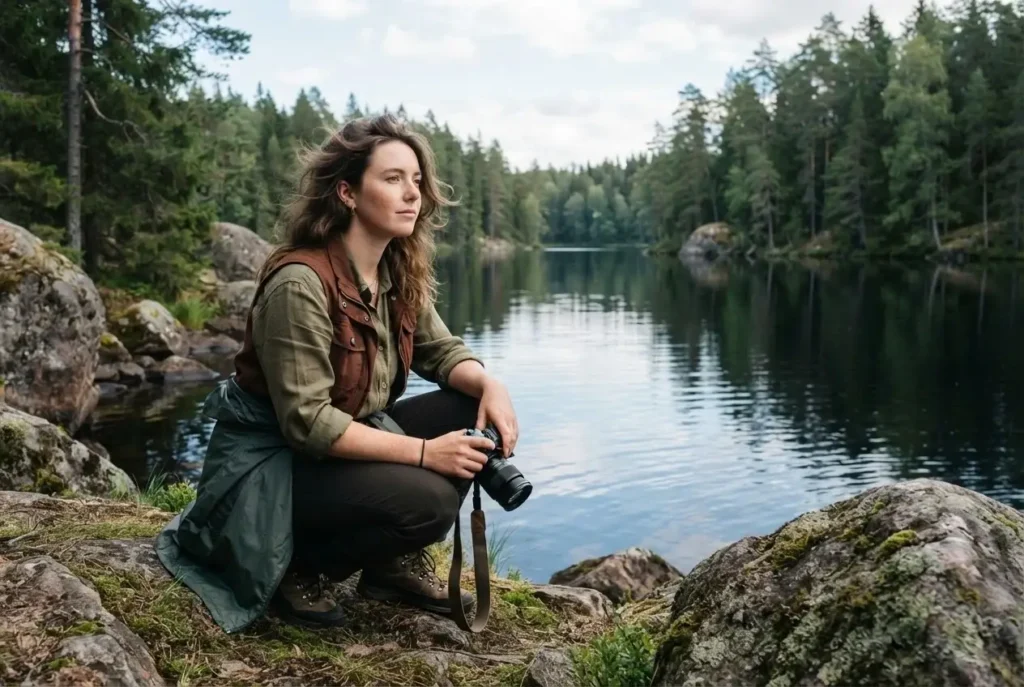
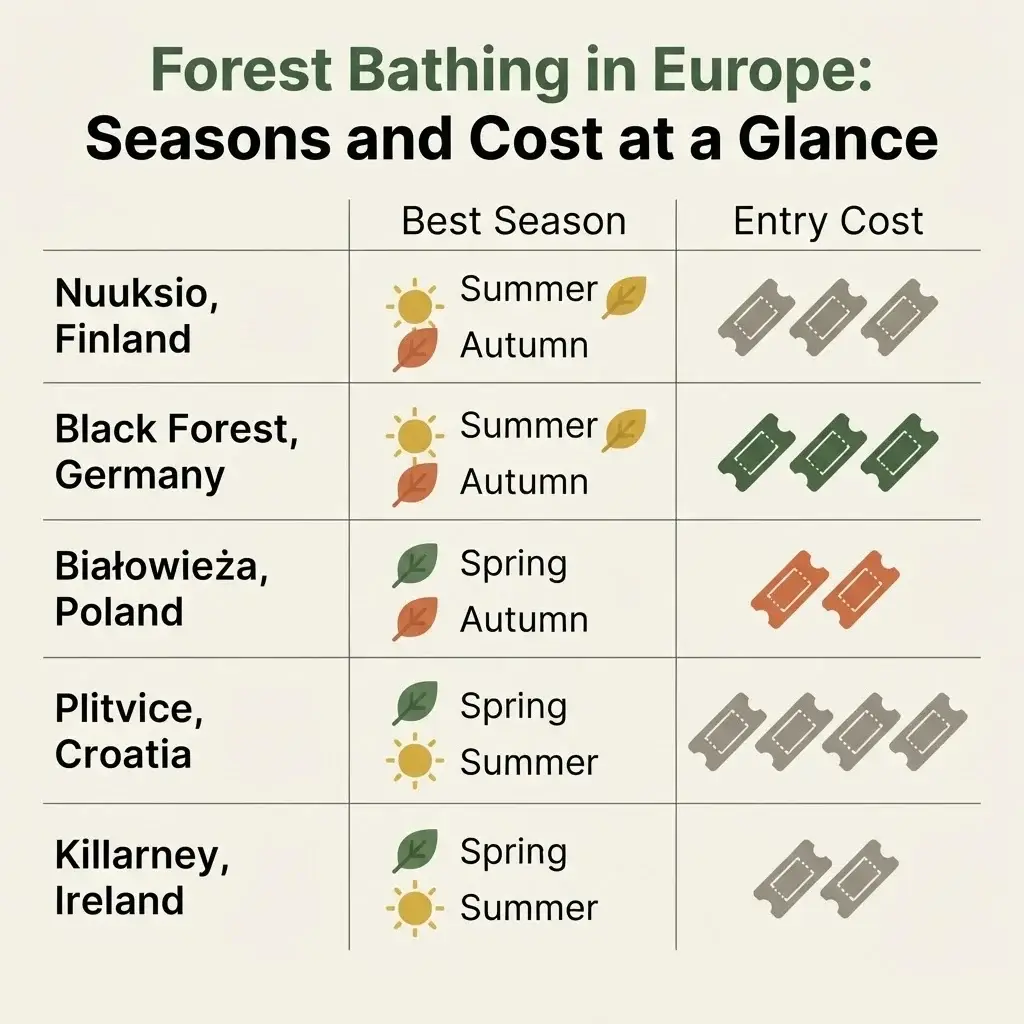
What makes Nuuksio special for forest bathing is the quiet. Old spruce forests, mossy boulders, and clear little lakes give you that hushed, cathedral feeling. Finland’s “everyman’s right” also means you can wander freely through much of the countryside, which suits slow, aimless walking perfectly. Best season is late summer through early autumn, when the light is soft and the berries and mushrooms appear. Bring water, a warm layer even in summer, and something waterproof to sit on so you can stop for a long while without getting up damp.
The Black Forest, Germany, for classic fairy-tale woodland
The Black Forest is what most of us picture when we imagine a European forest: dark, dense stands of fir climbing over rolling hills, wrapped in mist in the early morning. This region has leaned into forest bathing intentionally, and you will find waldbaden (the German word for it) offered around towns like Bad Herrenalb and Feldberg, along with plenty of trailheads where you can simply go alone.
From what regular visitors consistently report, the northern Black Forest around Bad Herrenalb is a little calmer and better suited to slow, mindful walking than the busier tourist hubs. You can reach the region by train to towns like Freiburg or Baden-Baden and use regional buses from there. For food, this is hearty country: expect Black Forest ham, fresh bread, mushroom dishes in autumn, and yes, the real Black Forest cake, which tastes nothing like the frozen version. My tip is to eat lightly before a session and save the big meal for after, because a heavy stomach pulls you out of the calm you are trying to find.
Białowieża Forest, Poland, for something ancient and wild
If you want to feel small in the best way, this is the place. Białowieża is one of the last primeval forests in Europe, a UNESCO World Heritage site straddling the Poland to Belarus border, and it protects around 900 European bison, roughly a quarter of the world’s population. Walking among trees that have grown, fallen, and regrown without human interference for centuries does something to your sense of time. The UNESCO listing for Białowieża Forest explains why it is so ecologically rare, and reading it before you go deepens the whole experience.
A practical note that trips people up: the strictly protected core of the forest can only be entered with a licensed local guide, while the surrounding areas and marked trails are open for free wandering. That is not a restriction to resent, it is what has kept the place intact. For planning the village, transport, and guide bookings, the official Poland travel page for Białowieża is a reliable starting point. Getting here takes effort, usually a train to Białystok and a bus onward, so I would treat this as a slow two or three day stay rather than a rushed day trip. That slowness is a feature, not a bug.
Plitvice Lakes National Park, Croatia, for forest and water together
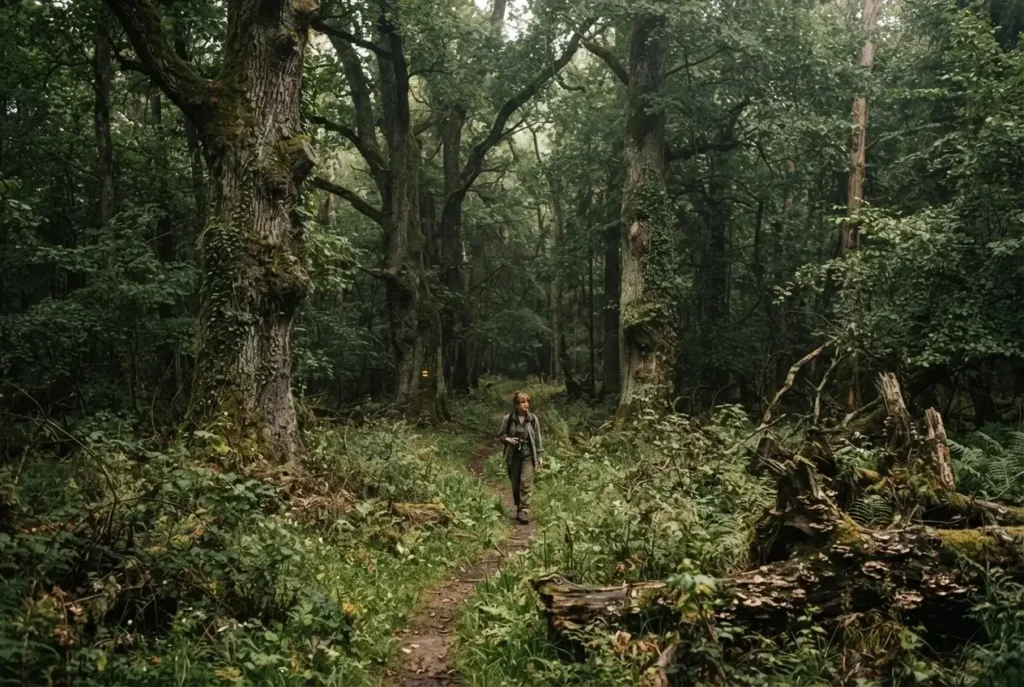
Plitvice is famous for its turquoise lakes and waterfalls, but the beech and fir forest wrapped around them is just as much a reason to go. The catch is that Plitvice is popular, so forest bathing here takes a little strategy. Arrive at opening time or in the last hours of the afternoon, and walk the upper lakes trails, which see fewer crowds than the star waterfall viewpoints.
Plan ahead on tickets, because prices change by season and the summer months are both the most expensive and the most crowded. You buy them through the official webshop for a specific date and entry time, and I would not leave this to chance in peak season. Check the current fees and time slots directly on the official Plitvice Lakes price list so there are no surprises at the gate. Go in late spring or early autumn if you can, when the temperatures are gentle and the light on the water is at its best.
Killarney National Park, Ireland, for mossy, misty magic
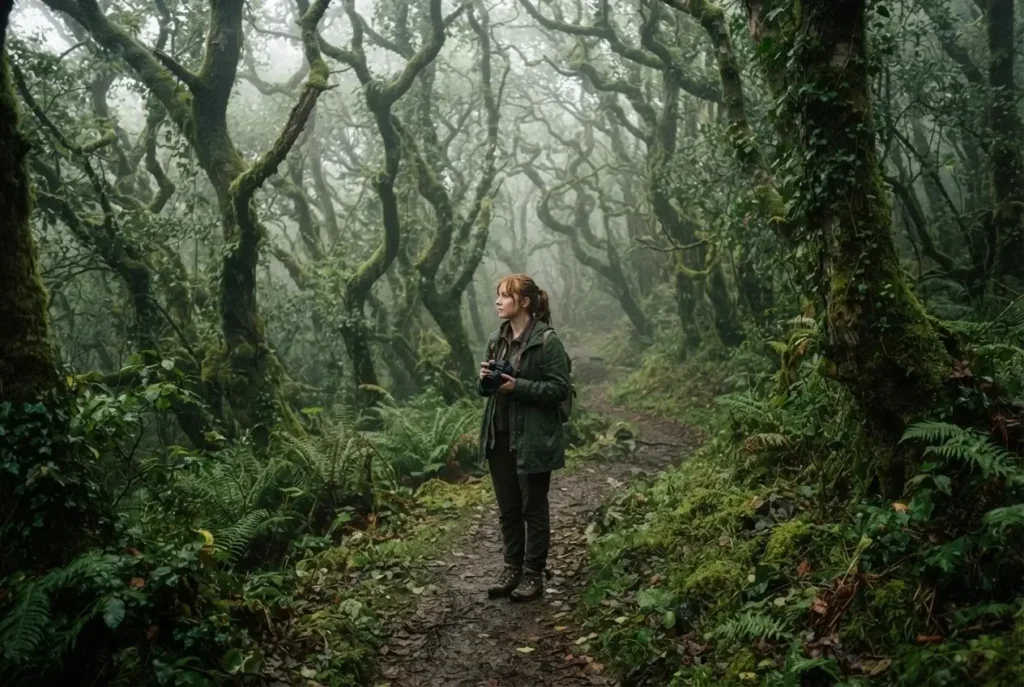
If the Japanese forests started this practice, Ireland’s oak woodlands feel like they were made for it. Killarney National Park protects some of the last ancient oak woodland in Europe, and walking through it is like stepping into a green, dripping dream: moss on every branch, ferns underfoot, and mist that softens all the edges. The park is free to enter, which fits the spirit of forest bathing perfectly, and the Killarney National Park official site has trail maps and conservation information worth reading before you go so you understand what you are walking through.
Killarney town is well connected by train and bus from Dublin and Cork, and you can reach parts of the park on foot or by bike straight from town, which makes it wonderfully car-free friendly. The weather changes constantly, so pack layers and a real rain jacket, and honestly, do not wait for a sunny day. The forest at its mistiest is the forest at its most magical.
Hallerbos, Belgium, and Brocéliande, France, for shorter escapes
If you are short on time or based in a city, two spots deserve a mention. Hallerbos near Brussels transforms into a sea of bluebells for a few short weeks in spring, usually around mid to late April, and it is easy to reach as a day trip. Brocéliande in Brittany carries the weight of Arthurian legend, all ancient oaks and quiet clearings, and it rewards slow, unhurried wandering. Neither requires a big commitment, which makes them perfect for testing whether this practice speaks to you.
How to actually do it: a simple beginner routine
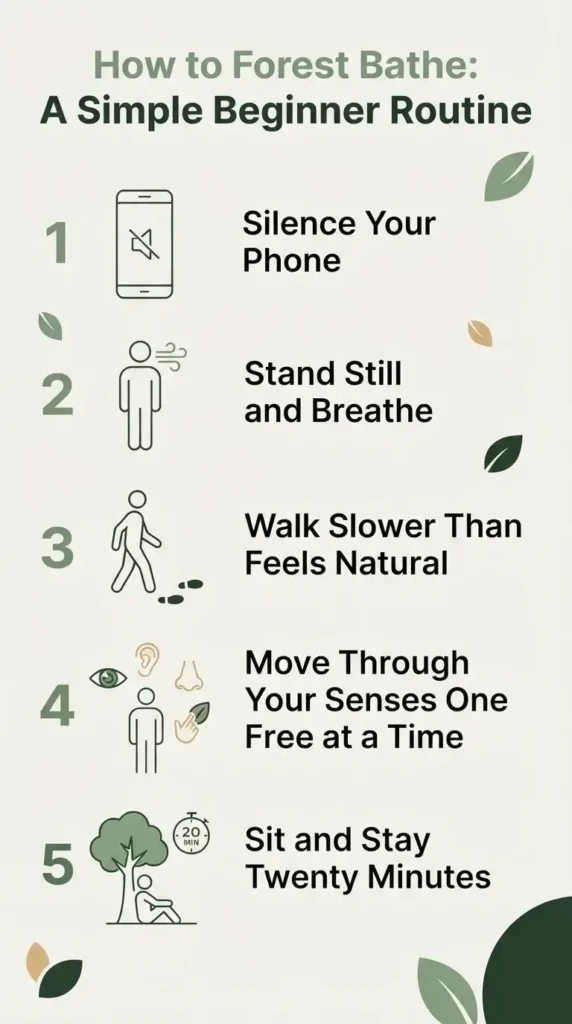
Here is the routine I would give a nervous first-timer, stripped of any mysticism.
Start by turning your phone to silent and putting it away, not just face down. For the first few minutes, do nothing but stand still and breathe slowly, letting your eyes go soft rather than staring at anything. Then begin to walk, slower than feels natural, and move through your senses one at a time. Spend a while just listening. Then a while noticing smells. Then touch: bark, moss, a cool stone. Do not aim for a destination. If you find a spot that feels right, sit there for twenty minutes or more and simply let the forest carry on around you. That is it. There is no wrong way to pay attention.
A session of ninety minutes to two hours is plenty.
If your mind races at first, that is normal, and it settles.
The forest is patient, and so should you be with yourself.
When to go, and what it costs
Seasons shape the whole experience. Late spring gives you bluebells and fresh green. Summer is lush but busier and warmer. Autumn, my quiet favorite, brings soft light, fewer people, and that earthy smell of leaves turning. Winter offers deep silence if you can handle the cold, and few things restore me like a still, snow-hushed forest.
On cost, this is one of the most affordable meaningful experiences in travel. Many forests and parks, like Killarney, are free. Others, like Plitvice, charge a seasonal entrance fee. A certified guided session will cost more, often comparable to a nice restaurant meal, but it is optional. Your biggest expenses are usually transport and a place to stay nearby, which is exactly why I recommend basing yourself in a small town at the forest’s edge and treating the trees as your daily ritual for a few days.
Doing it solo, and doing it safely
So much of forest bathing suits solo travelers, because silence and self-direction are the whole point. Still, a few sensible habits go a long way. Tell someone where you are going and roughly when you will be back. Stay on marked trails unless you are with a guide, especially in large wild forests. Download an offline map before you lose signal, carry water and a snack, and check the weather and sunset time so you are not caught out after dark. In protected core zones, respect the rule about guides, it exists to keep both you and the forest safe.
The confidence you build doing this alone spills into the rest of your life. Learning that you can sit quietly with your own company in a foreign forest, and come out calmer, is its own quiet kind of bravery.
You do not need the perfect free week, a car, or a big budget to begin. You need a train ticket, a few unhurried hours, and the willingness to slow down. Pick one forest from this list, the one that made something in your chest loosen a little as you read, and start planning that trip. The trees have been waiting a long time. They will wait a little longer, but there is no reason you should.