There is a specific kind of travel that changes you. Not the kind where you check attractions off a list and take photos through a fence. The kind where you are standing in the middle of something ancient and alive, surrounded by thousands of people celebrating something that has existed for centuries, and you feel it in your chest.
That is what cultural festivals in the Americas can give you, if you plan them right.
The Americas stretch across a staggering range of traditions, from Andean Incan ceremonies in Peru to Creole jazz parades in Louisiana to Indigenous dance gatherings in southern Mexico. What ties them together is that each one offers something you cannot find anywhere else on the planet, and none of them require you to be wealthy, adventurous in a risk-taking way, or part of a tour group.
This guide walks through eight of the most meaningful cultural festivals across North, Central, and South America, organized by the month they happen. For each one, you will find what it actually is, when it takes place, what to eat, how to navigate it as a solo traveler, and how far ahead you need to plan. No vague inspiration without follow-through. Let’s get into it.
Before We Start: A Word on Being a Respectful Visitor
Several festivals in this guide are rooted in Indigenous culture, religious tradition, or both. They are living, breathing ceremonies, not performances staged for tourists. Attending them is a privilege, not a right. Throughout this guide, I will flag where that matters most and what it looks like in practice, because showing up with curiosity and humility is what separates a genuinely transformative experience from an exploitative one.
February: Three Festivals, One Unforgettable Month
February is arguably the most festival-rich month in the entire Americas. Three of the most celebrated events on this list all fall within the same few weeks, which means you could, with careful planning, combine two of them in a single trip.
Carnaval de Barranquilla, Colombia
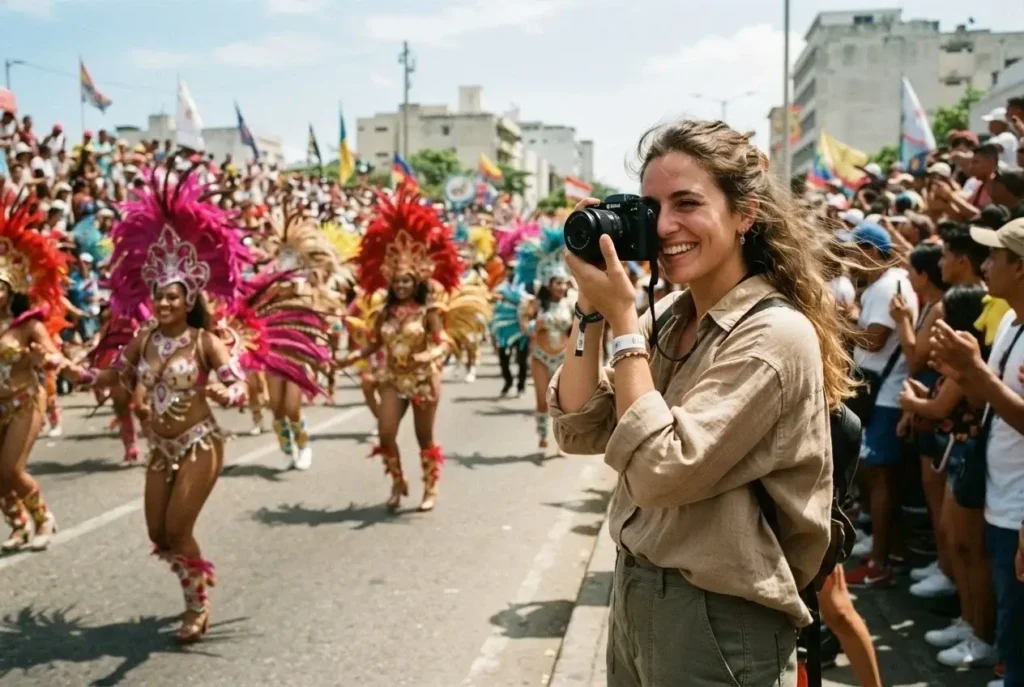
Most people have heard of Rio Carnival. Far fewer have heard of Barranquilla’s, which is one of the biggest misses in travel conversations about South America. The Carnaval de Barranquilla takes place every year over four days in the period directly before Lent, landing in early March for 2026, specifically March 1 through 4. It takes place in Colombia’s Caribbean coast city of Barranquilla, a port city where African, European, and Indigenous cultures have been mixing for centuries.
The UNESCO Intangible Cultural Heritage of Humanity listing for Carnival of Barranquilla describes it as a repertory of dances and musical expressions originating from Colombia’s diverse sub-cultures, with the cumbia as its dominant rhythm. What that looks and feels like in person, based on consistent accounts from solo travelers who have attended, is this: streets thick with people, brass and drum music coming from every direction, dancers in enormous headdresses performing the congo and the mapalé, and a four-day party that somehow manages to feel both wildly energetic and deeply rooted in meaning. The Battle of the Flowers parade on the first day sets the tone, followed by a grand procession called La Gran Parada de Tradición y Folklore.
For solo travelers, Barranquilla is considered one of the more accessible of the major Latin American carnivals. The crowds are massive but concentrated along parade routes, and much of the celebration happens on open streets. Book accommodation at least two to three months ahead, as the city fills quickly.
Eat arepas de huevo (fried corn dough stuffed with egg), bollo de mazorca (sweet corn tamale), and if you can find it, butifarra soledeña, a herbed pork sausage that is specific to the Caribbean coast region.
Carnaval de Oruro, Bolivia
Happening in the same February window, Oruro’s Carnival is one of the most extraordinary and undervisited cultural events in the entire hemisphere. The city of Oruro sits at 3,700 meters above sea level in the Bolivian altiplano, which means altitude is your first practical consideration. If you are flying in from sea level, give yourself at least two to three days before the festival to acclimatize. Take it slow, drink plenty of coca tea, and don’t rush.
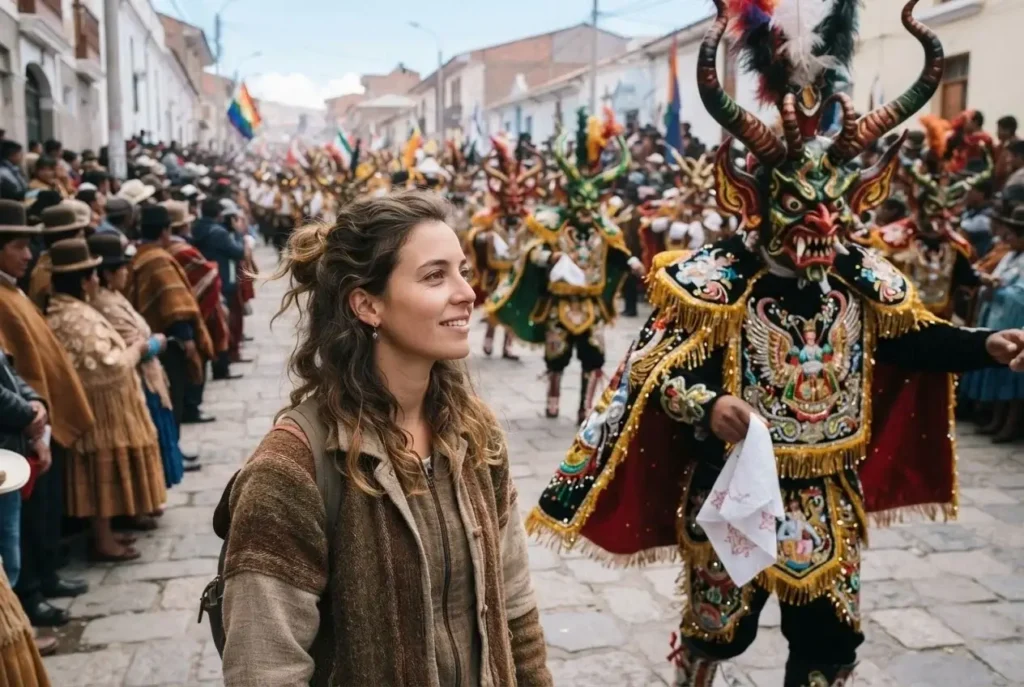
According to the UNESCO listing for the Carnival of Oruro, the main event, called the entrada, involves more than 28,000 dancers and 10,000 musicians organized into approximately 50 groups, walking a four-kilometer processional route and repeating it for a full twenty hours. The signature dance is the diablada, a vivid performance where dancers wear enormous, elaborate devil masks, which is a direct continuation of ceremonies that predate the Spanish colonial period. What the Spanish couldn’t eliminate, they absorbed into Catholic liturgy, and the diablada survived as a result.
From what solo travelers consistently report, Oruro is one of those places where you feel the weight of history in a way that tourist-polished festivals cannot replicate.
Plan your trip four to five months ahead. The procession is free to watch from the street, but grandstand seating with a clear view requires advance booking. Dress warmly, because February nights in the altiplano are cold even when the days are not. Eat salteñas (Bolivia’s baked empanadas, heavier and juicier than the Argentinian version) from street vendors in the morning, and look for chicharrón de cerdo served with boiled corn and potatoes for a hearty late-afternoon meal.
Virgen de la Candelaria, Puno, Peru
About seven hours from Cusco by bus or train, the city of Puno on the shores of Lake Titicaca hosts what many consider the largest folkloric festival in the Americas: the Virgen de la Candelaria. The 2026 festival runs from January 16 through February 10, with the central day being February 2. Over those weeks, more than 170 dance groups perform traditional Andean dances in the main plaza and surrounding streets, with UNESCO recognition for many of the dance forms performed.
Puno is often skipped by travelers who treat it as a transit point to the floating reed islands of the Uros people. Don’t make that mistake during festival season. The volume and variety of costumed dancers, the brass-heavy music, and the combination of Catholic procession with Andean spiritual tradition make it unlike anything else. Solo travelers find Puno manageable and relatively affordable. Book ahead, because accommodation near the main plaza sells out. Eat trucha (rainbow trout from Lake Titicaca, grilled or fried), sopa de quinoa, and chairo, a hearty Andean soup of dried potatoes and jerked meat that will keep you warm through the cold altiplano nights.
February to March: Mardi Gras, New Orleans, USA
Mardi Gras is the one festival on this list that most Americans have heard of and almost never prioritized. It doesn’t require a passport. It doesn’t require expensive tickets. And yet it consistently surprises people who finally go, because nothing about the real experience of New Orleans during Carnival season matches the Bourbon Street reputation that precedes it.
Mardi Gras season begins officially on January 6 (Twelfth Night) and runs through Fat Tuesday. In 2026, Fat Tuesday falls on February 17. According to the official New Orleans tourism guide to Mardi Gras, the main parades are free to attend, with no tickets required. The parade route runs down Saint Charles Avenue from Napoleon toward Canal Street, and the weeks leading up to Fat Tuesday see elaborate floats, marching bands, and signature throws (beads, cups, and in the case of the Krewe of Zulu, hand-painted coconuts) from riders in masks.
What the typical listicle misses about Mardi Gras is this: the neighborhoods. The French Quarter is the rowdy, tourist-facing version. The real experience is further uptown along the parade route, where locals set up ladders for their kids, grill food on the sidewalk, and catch throws from krewe members they have known for years. As a solo traveler from New York who spent years guiding tourists around a city that tourists often misunderstand, I know how differently a place reads when you step off the main tourist path. New Orleans during Mardi Gras rewards the same curiosity.
For food, eat a king cake at least once (find one from a local bakery, not a chain). Eat beignets at Cafe du Monde in the early morning before the crowds hit. Walk Magazine Street and find a neighborhood spot serving a proper New Orleans po’boy or red beans and rice. The food in this city is inseparable from its cultural identity, and Mardi Gras is the best possible time to experience both at once.
Book accommodation at least three to four months ahead for the final week before Fat Tuesday. Prices climb sharply. If you’re flexible on the specific week, arriving the weekend before is a sweet spot: the major super-krewe parades roll (Endymion, Bacchus, Muses), crowds are still manageable, and accommodation is slightly more affordable.
June: Inti Raymi, Cusco, Peru
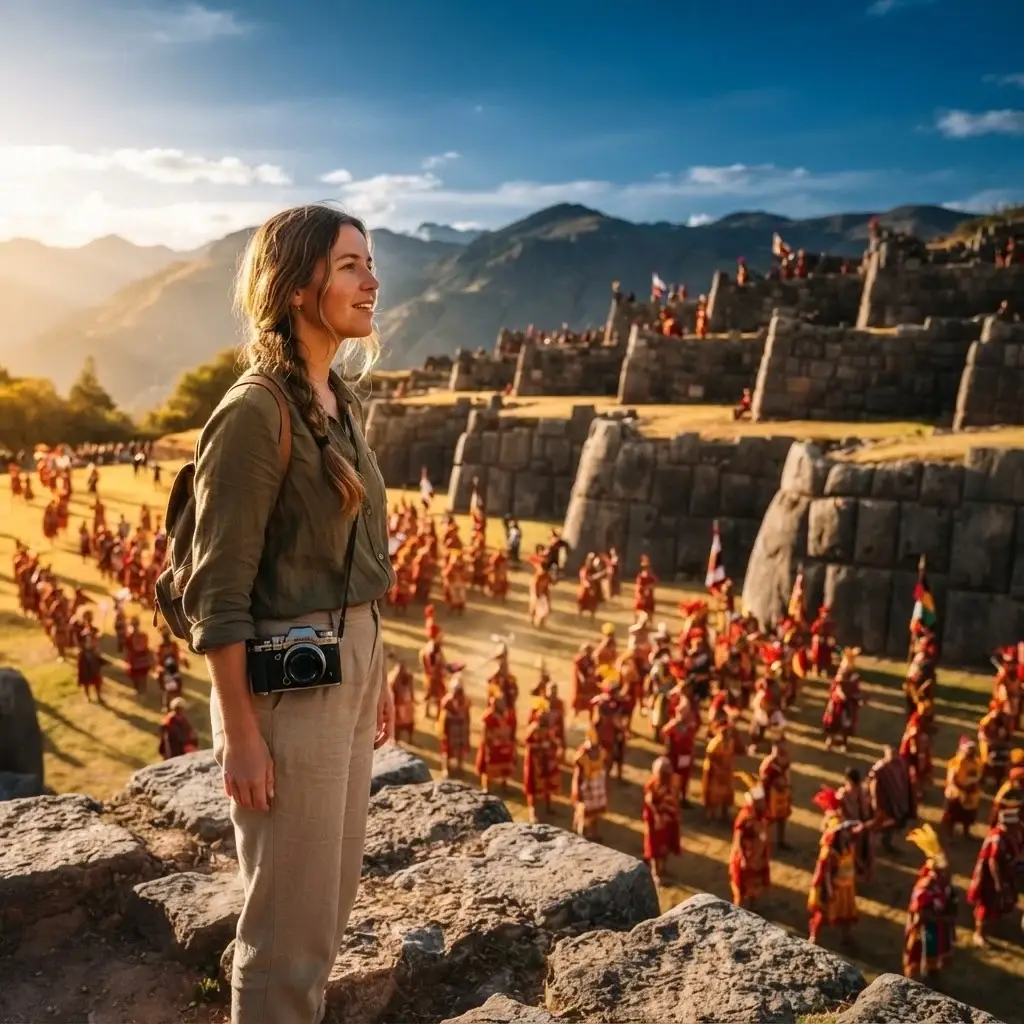
Every year on June 24, the city of Cusco in Peru reenacts one of the most important ceremonies of the Inca Empire. Inti Raymi, which means Festival of the Sun in Quechua, honors Inti, the sun god, and was historically one of the most significant events in the Inca religious calendar. The Spanish suppressed it in 1535. It was revived in 1944 and has been held every June 24 since.
The ceremony unfolds across three locations in Cusco: it begins at Qorikancha (the Temple of the Sun) at 9:00 AM, moves through the Plaza de Armas, and concludes at the dramatic fortress of Sacsayhuaman above the city, where the main theatrical reenactment takes place on the hillside in front of thousands of spectators. The PeruRail guide to Inti Raymi confirms that tickets are required for the main Sacsayhuaman ceremony. In 2026, orange zone tickets are priced at approximately $259 USD, with general admission options available through various operators from around $69 USD upward depending on seating and services included.
A free alternative exists: the opening ceremony at Qorikancha and the Plaza de Armas procession are open to the public and give you a genuine experience of the pageantry without the ticket cost. However, the Sacsayhuaman ceremony is the centerpiece, and if you can afford the access, the elevated view of thousands of costumed participants against the backdrop of Incan stone ruins is something that solo travelers consistently describe as one of the most powerful experiences of their lives.
Plan this trip at minimum three to four months ahead. June is Cusco’s peak tourist season (dry season, clear skies), and every hotel, hostel, and tour fills fast. If you plan to combine it with Machu Picchu, book the Inca Trail or Machu Picchu entrance permits as early as possible, as these sell out months in advance. At the festival, eat choclo con queso (giant Andean corn on the cob with fresh white cheese, sold by street vendors throughout Cusco), chicharrón de chancho (fried pork), and cuy (guinea pig) if you are willing to try a dish that is central to Andean cuisine and carries real cultural significance.
One genuine note for solo travelers: Cusco during Inti Raymi is busy, festive, and generally safe, but keep a close eye on your bags in large crowds. Use inside pockets for your phone and valuables. The atmosphere is joyful rather than chaotic, and the overwhelming majority of solo travelers, including women traveling alone, report feeling comfortable throughout.
July: Guelaguetza, Oaxaca, Mexico
If you have never heard of the Guelaguetza, you are in good company. It is one of Mexico’s most spectacular cultural celebrations and one of the least talked-about outside the country. The Guelaguetza is held in Oaxaca City on the last two Mondays of July. In 2026, those dates are July 20 and July 27. According to Oaxaca Airport’s official festival page, main event tickets for 2025 were priced at approximately $1,573 MXN (roughly $75-$80 USD) for premium seating at the Auditorio Guelaguetza, but free performances and community events also take place throughout the city during the entire month of July.
The word “guelaguetza” comes from the Zapotec word for reciprocity or giving. At its core, the festival is a gathering of the eight distinct cultural regions of Oaxaca state, each sending delegations in traditional costume to perform their own dances, music, and rituals. The result is an extraordinary showcase of Indigenous cultures that coexist within a single Mexican state, each with their own language, dress, and tradition.
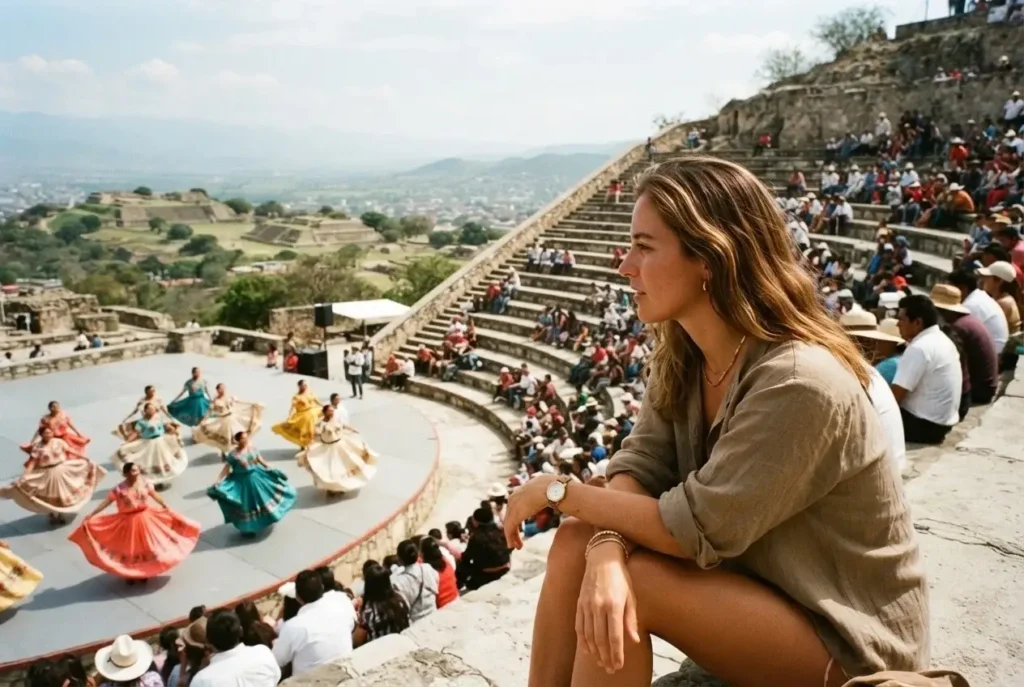
Performers from the Mixteca, the Cañada, the Sierra Norte, and the Coast all participate, throwing regional gifts like fruit, mole paste, and mezcal into the crowd.
Oaxaca in July is also one of the best food cities in Mexico doing what it does best. Eat mole negro (the complex, dark chili-chocolate sauce that Oaxaca is famous for), tlayudas (large crispy tortillas with beans, cheese, and meat), grasshopper-topped snacks called chapulines if you are up for it, and mezcal from a local distillery rather than a tourist shop. The city is walkable, the food market in the Mercado Benito Juárez is open daily, and the whole energy of the July festival season is celebratory rather than overwhelming.
Solo travelers find Oaxaca one of the warmest and most navigable cities in Mexico. English is spoken at most hotels and in the tourist zone, but learning even a handful of words in Spanish makes an enormous difference to how locals receive you, and in a city as proud of its culture as Oaxaca, that matters.
October to November: Day of the Dead, Oaxaca, Mexico
This one often surprises people: Day of the Dead (Dia de los Muertos) is not a Mexican Halloween. It is not a horror event. It is a multi-day ceremony rooted in Indigenous Zapotec tradition fused with Catholic observance, during which families honor deceased relatives by building elaborate ofrendas (altars), visiting cemeteries to clean and decorate graves, and spending time with their loved ones, living and dead, together in one space.
The main days are November 1 (honoring deceased children) and November 2 (honoring deceased adults). In Oaxaca, the tradition is especially vivid. Families gather in the city’s historic cemeteries, most notably at the Panteon San Miguel Arcangel and the General Cemetery, overnight on November 1 and 2. They bring marigolds, candles, food, music, and photographs. Visitors are welcome, but this is not a show. Locals are genuinely in mourning and in celebration at the same time, and the atmosphere is tender rather than performative.
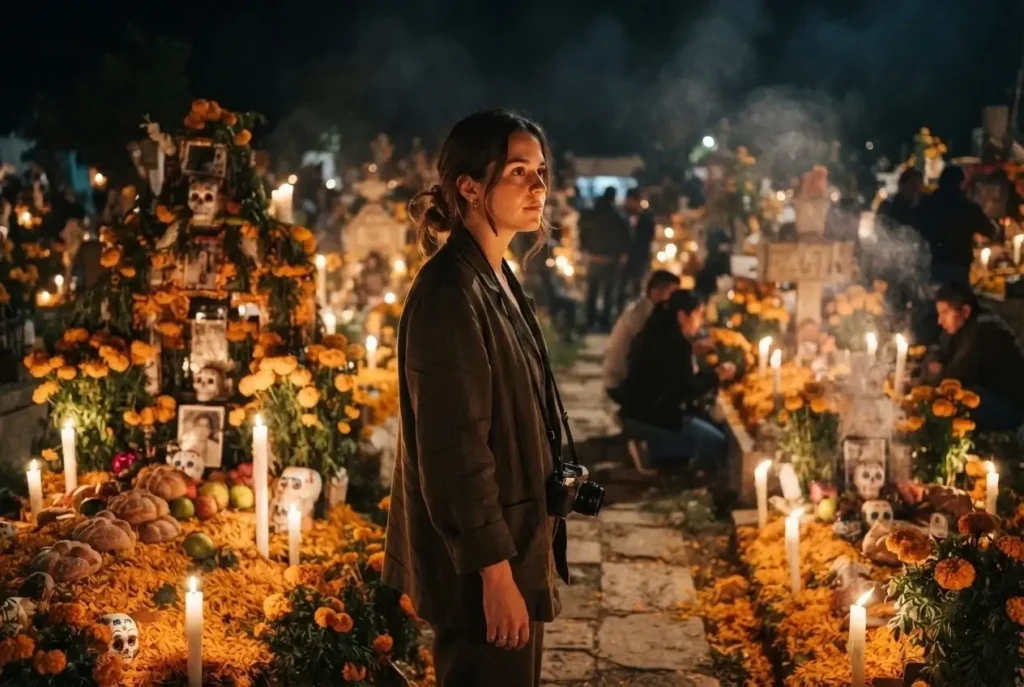
From what solo travelers consistently report, the most profound way to experience Day of the Dead is not the organized tours or the packed cemetery visits at peak hours, but simply walking through the neighborhoods in the days leading up to November 2, watching families build ofrendas in doorways, smelling the copal incense in the air, and picking up pan de muerto (a soft, orange-scented bread baked specifically for this season) from a local bakery. If you do visit the cemeteries, go with a spirit of quiet respect. Dress modestly. Don’t take photos of families without asking first, and accept a “no” graciously.
Book Oaxaca accommodation for late October and early November at least four to five months ahead. It has become one of the most visited periods for international travelers, and good options fill early.
Winter: Quebec Winter Carnival, Canada
Of all the festivals on this list, Quebec’s is probably the one least expected to appear in a roundup of the Americas’ best cultural events. Most people associate the word “carnival” with tropical heat, samba, and sequins. Quebec’s version, held each February in Quebec City, is the world’s largest winter carnival and a genuine celebration of French-Canadian culture that has no close equivalent anywhere.
The 2026 Quebec Winter Carnival runs from February 6 to 15. According to the official Carnaval de Quebec website, the festival features night parades, snow and ice sculpture competitions, ice canoe racing on the frozen St. Lawrence River, dog sled races, and the iconic snow slide in the shadow of the historic Chateau Frontenac. The Effigy (the festival’s wristband pass) is required for official sites for anyone 13 and over, and shuttle buses run from the Old Port area to the Carnival grounds every 30 minutes from 10 AM on weekends.
What makes Quebec Winter Carnival genuinely cultural is not the activities, charming as they are, but the way it expresses French-Canadian identity. The city’s residents don’t retreat from winter. They throw a party for it.
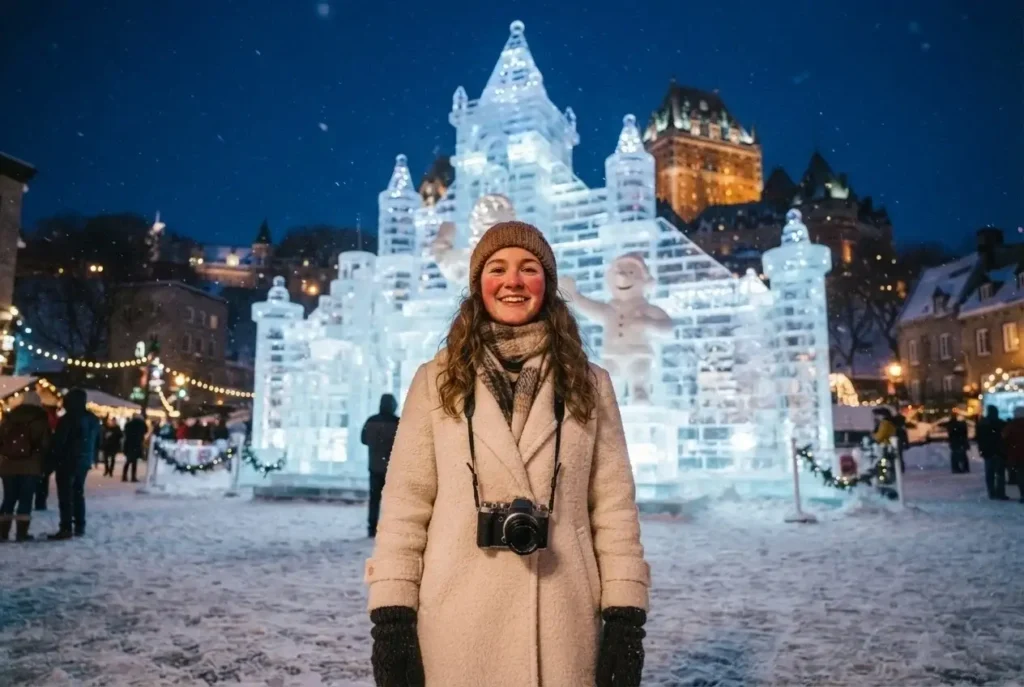
For solo travelers, Quebec City is one of the safest, most walkable cities in North America. The old walled city is compact, signage is bilingual, and the festival atmosphere is family-oriented and welcoming to travelers on their own.
Eat poutine (obviously), but specifically find it from a hole-in-the-wall casse-croute rather than a tourist restaurant. Try tourtiere, the Quebecois meat pie. Drink caribou, the traditional festival cocktail of red wine, whisky, and sugar, served in small paper cups by vendors throughout the carnival grounds. It is warming in both senses of the word.
How to Build a Festival Trip That Actually Works
The biggest mistake I see when people plan trips around festivals is building too tight a schedule. If you have only three days in Oaxaca for Day of the Dead, you spend most of that time jet-lagged, rushing, and leaving before you have actually settled in. Festivals reward slow arrivals and slow departures.
A few consistent principles from solo travelers who do this well: arrive at least two full days before the main event so you can find your bearings, explore at your own pace, and not panic if your first plan falls through. Stay one to two days after the peak if your schedule allows, because the city is quieter, locals are more relaxed, and you will see a completely different side of the place. For festivals at altitude, like Oruro, Puno, or Cusco, those two early days are not optional. They are essential.
For safety at large festival crowds regardless of destination: keep your phone and wallet in a front or inside pocket, not a back pocket or open bag. Wear a crossbody bag you can hold against your body in dense crowds. Stay aware of your surroundings without being anxious about it. The vast majority of festival crowds across the Americas are joyful rather than dangerous, but basic awareness is always smart.
A Few Honest Notes Before You Decide
Not every festival suits every traveler. If large, dense crowds are genuinely overwhelming for you, Rio Carnival or Mardi Gras at peak week may not be your starting point. Consider Guelaguetza instead, which is spectacular but more contained. If budget is a real constraint, Mardi Gras is one of the most extraordinary free cultural events in the hemisphere. If you want the maximum depth of cultural immersion and the least tourist infrastructure, Puno’s Candelaria festival offers that, though it requires more planning and logistics than the others.
The point is not to collect festivals like passport stamps. The point is to find one that genuinely calls to you, commit to it, and go deep.
The Calendar at a Glance
To make this easier to use for planning, here is a quick overview of each festival covered in this guide, organized by when it happens:
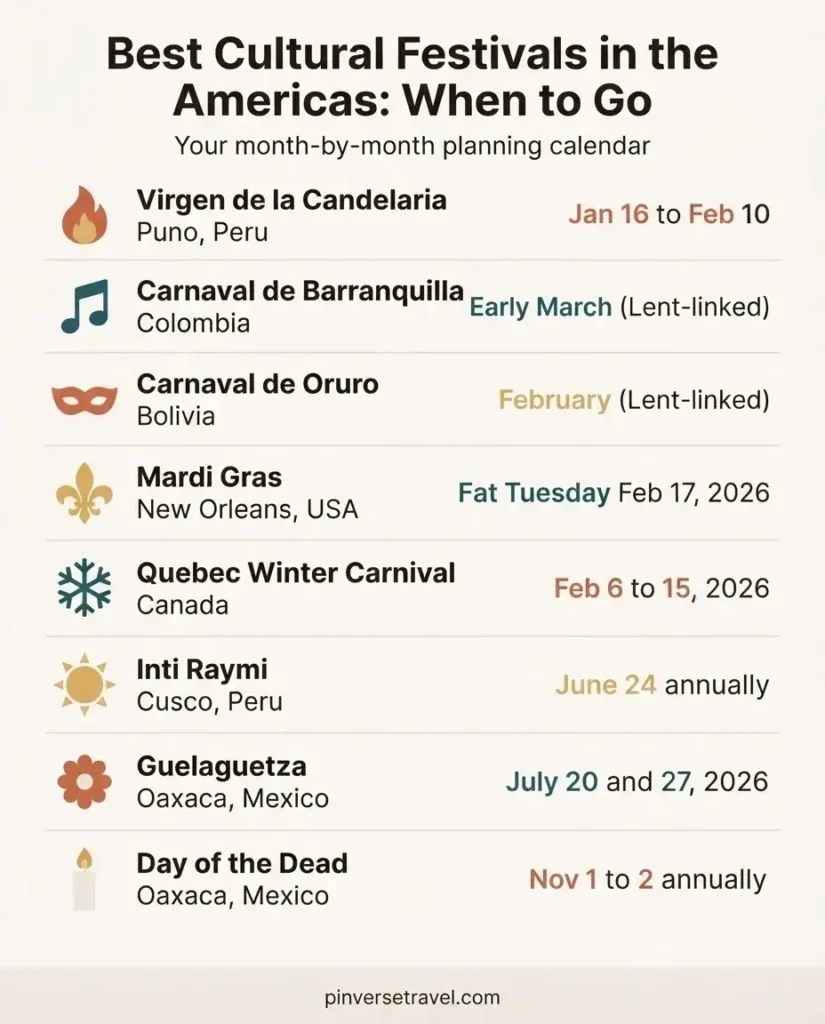
- January to February: Virgen de la Candelaria, Puno, Peru (January 16 to February 10; peak February 2)
- February: Mardi Gras, New Orleans (season January 6; Fat Tuesday February 17 in 2026)
- February: Carnaval de Barranquilla, Colombia (March 1-4 in 2026)
- February: Carnaval de Oruro, Bolivia (February, dates vary by Lent; altitude preparation required)
- June 24: Inti Raymi, Cusco, Peru (annually June 24; book 3-4 months ahead minimum)
- July: Guelaguetza, Oaxaca, Mexico (July 20 and 27 in 2026)
- November 1-2: Day of the Dead, Oaxaca, Mexico (annually October 31 to November 2)
- February: Quebec Winter Carnival, Canada (February 6-15 in 2026)
Final Thought
When I left my office job and started building a life around travel, what surprised me most was not the places themselves. It was what happened to me inside them. Cultural festivals accelerate that process in a way that ordinary sightseeing doesn’t. You are not observing someone else’s world from a distance. You are standing inside it, even briefly, even as a guest.
Pick one festival from this list. Put the date in your calendar right now. You don’t need the perfect plan or the perfect travel partner or a bigger budget. You need a date and a decision.
The rest figures itself out.