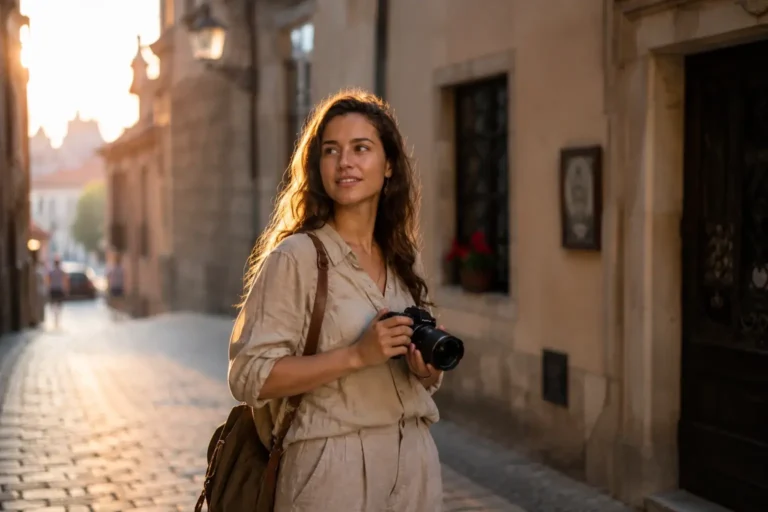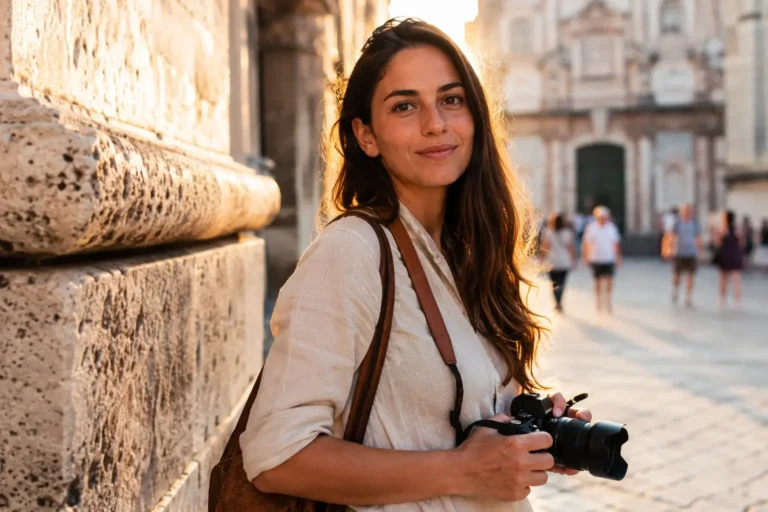
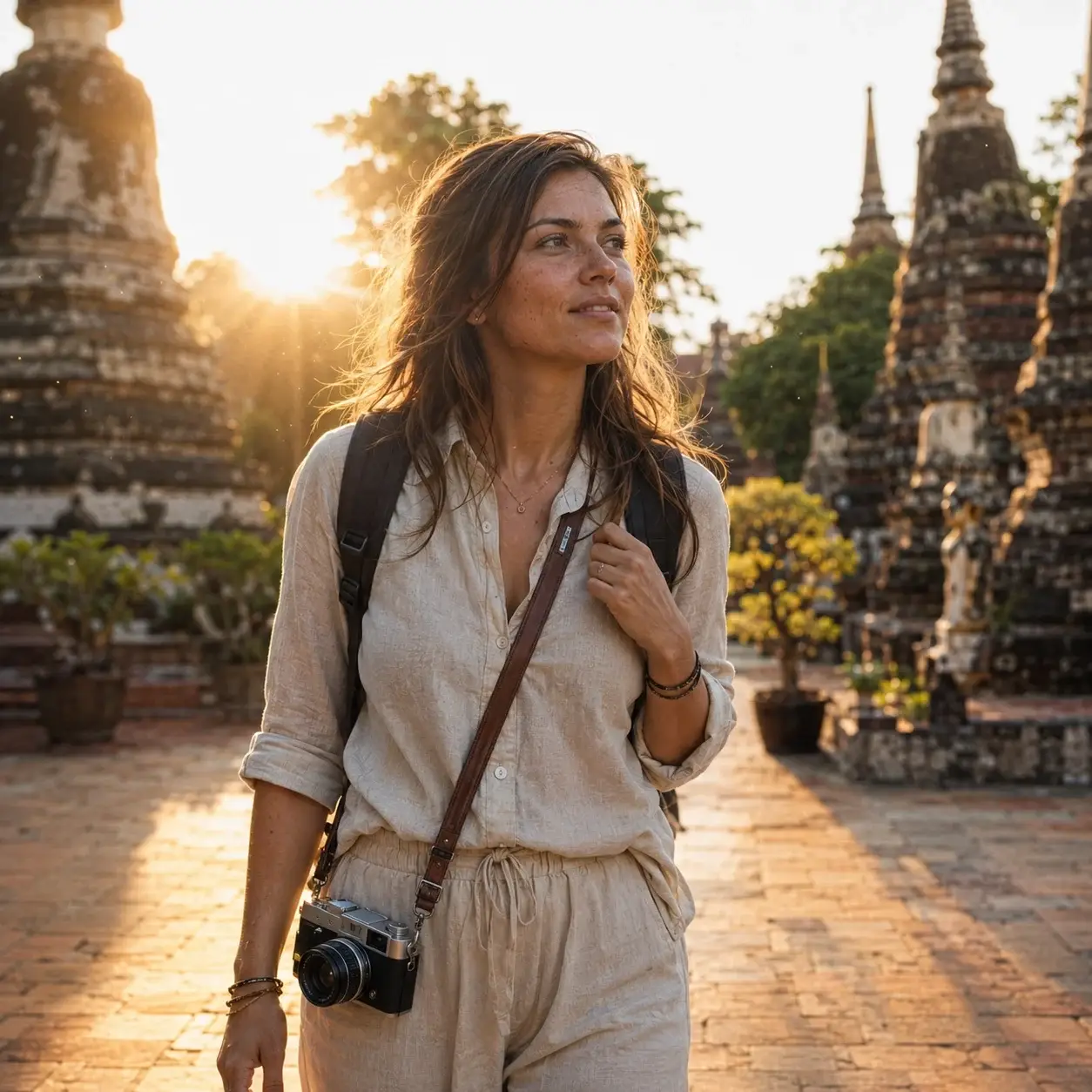
I still remember the crisp autumn morning I stood on a sidewalk in Manhattan, staring at a mountain of luggage. It was 2017. I had recently graduated with my master’s degree, walked away from a sterile corporate office job that made me feel trapped, and signed up to teach English in Thailand. To save up enough money for my plane ticket, I had been working double shifts as a certified NYC sightseeing guide and waitressing until midnight. I thought I was a prepared traveler. But looking down at my massive, 65-liter rolling suitcase and a bulging backpack, I realized I was actually a prisoner to my own stuff.
Getting that giant suitcase up the narrow staircases of the Bangkok Skytrain was a nightmare. Dragging it through the gravel pathways of ancient temples made me sweaty, frustrated, and exhausted. I spent more time worrying about my luggage than looking at the beautiful world around me. It was during that trip that I made a promise to myself: I would learn how to travel light.
Today, whether I am backpacking solo across Europe, hiking through remote villages in China, or navigating the busy streets of a new city, I use one small bag. Learning how to pack for a trip in just a carry-on completely changed my life. It gave me freedom, saved me thousands of dollars in checked bag fees, and allowed me to move through the world with confidence.
If you are a first-time traveler or someone who always brings too many clothes, this deep-dive guide is for you. We are going to break down every single step, strategy, and secret to help you pack light, eliminate travel anxiety, and focus on what truly matters: the adventure.
The Psychology of Overpacking: Why We Bring Too Much
Before we look at rolling techniques or packing cubes, we need to talk about why we overpack in the first place. Overpacking is rarely about the clothes. It is almost always about fear.
When you stand over an empty suitcase, your mind starts creating scary, hypothetical scenarios. What if it rains for a week straight? What if I get invited to a fancy dinner party? What if I spill coffee on my only pair of pants? What if I get sick?
Packing for Your Fears
When I was preparing to live with a host family in Ghana, I packed out of fear. I packed an extra pair of heavy hiking boots I never wore. I packed four identical flashlights. I even packed enough bottles of shampoo to last a year, as if stores did not exist across the Atlantic.
When you pack for every possible “what if” scenario, you end up carrying a bag full of heavy items you will never use. You are trying to buy certainty with material things. But true travel confidence does not come from a heavy suitcase. It comes from your ability to adapt, solve problems, and trust that you can find what you need when you arrive.
The “Just in Case” Trap
The phrase “just in case” is the ultimate enemy of minimal travel. If you pick up an item and say, “I’m bringing this just in case,” put it back on your closet shelf. If a rare situation happens, you can almost always buy a cheap solution at your destination. Need an umbrella? You can buy one from a local street vendor for three dollars. Need a warmer sweater? Visit a local thrift shop or market. Buying items locally does not just solve a problem; it supports the local economy and gives you a wonderful, authentic souvenir with a story behind it.
Choosing the Right Carry-On Bag: Your Foundation
You cannot learn how to pack for a trip in just a carry-on if your bag itself is heavy, bulky, or poorly designed. Your bag is your home on the road. It needs to be durable, comfortable, and compliant with strict airline rules.
Backpack vs. Rolling Suitcase
This is the classic travel debate. The truth is, both options have pros and cons, and the right choice depends on your physical health and where you are going.
- The Travel Backpack (My Personal Choice): A high-quality carry-on backpack is the ultimate tool for freedom. If you are walking over the cobblestone streets of Rome, navigating the dirt roads of Southeast Asia, or climbing five flights of stairs in a Parisian hostel, wheels will only slow you down. A backpack keeps your hands free to hold a map, buy a train ticket, or eat a slice of local street food. Look for a bag with a front-opening panel (often called a clamshell design) rather than a top-loading bag. This allows you to open your backpack like a suitcase so you can see all your gear at once without digging to the bottom.
- The Rolling Carry-On: If you have back pain, shoulder issues, or simply prefer not to carry weight on your body, a two-wheel or four-wheel suitcase is excellent. It is perfect for smooth airport terminals and paved city sidewalks. If you choose wheels, buy a two-wheel “roller” model instead of a four-wheel “spinner.” Two-wheel bags have recessed wheels that take up less space, leaving more room inside the bag for your clothes. They also handle rough sidewalks much better than fragile spinner wheels.
Understanding Airline Size and Weight Limits
Every airline has its own rules for carry-on baggage, and these rules have become much stricter over the years. Before you pack a single item, check the exact dimensions allowed by the airlines you are flying.
Standard international carry-on dimensions are usually around 22 x 14 x 9 inches (55 x 35 x 23 cm). However, budget airlines in Europe and Asia often have smaller size limits and strict weight caps, sometimes as low as 15 pounds (7 kg). If your bag is too heavy or too large, you will be forced to check it at the gate, which can cost an expensive fee. To avoid this anxiety, I always recommend looking at the official government guidelines before you head to the airport. For example, you can review the current security and baggage rules on the US Department of State Travel advisory pages to ensure your gear passes through check-ins smoothly and safely without unexpected roadblocks.
The Master Blueprint: The 5-4-3-2-1 Packing Method
If you want to know how to pack for a trip in just a carry-on without spending hours agonizing over your clothes, you need a simple formula. My absolute favorite strategy is the 5-4-3-2-1 packing method. It is a minimalist framework that ensures you have enough clothes for a week of travel, yet everything fits easily into a standard carry-on bag.
Here is how the capsule wardrobe breaks down:
- 5 Tops: This includes a mix of casual t-shirts, tank tops, and one nicer button-down or blouse for evenings.
- 4 Bottoms: A good mix is one pair of comfortable jeans, one pair of lightweight travel pants, one pair of shorts, and one casual skirt or dress.
- 3 Pairs of Shoes: One pair of sturdy walking sneakers, one pair of comfortable sandals or flats, and one pair of lightweight flip-flops for the shower or beach.
- 2 Layers: One lightweight sweater or fleece, and one versatile jacket (like a denim jacket or windbreaker).
- 1 Hat or Swimsuit: Depending on your destination, bring one sun hat or one swimsuit.
The Power of the Capsule Wardrobe
The secret to making this method work is color coordination. Every single top you pack must match every single bottom. If you pack a bright pink shirt that only matches one specific pair of pants, leave it at home. Stick to a neutral base color palette—like black, navy, grey, or khaki—and add two or three accent colors.
By mixing and matching these few items, you can create over twenty unique outfits. No one on your trip will notice that you are recycling clothes, because you will look different every day just by changing your combinations.
Compression and Organization: Packing Cubes and Rolling
Once you have selected your clothes, the next challenge is getting them to fit into the bag. If you just fold your clothes and stack them inside your suitcase, you will run out of room instantly. You need to use space-saving techniques.
Why Packing Cubes are Non-Negotiable
If you take only one piece of advice from this guide, let it be this: buy a set of packing cubes. These lightweight fabric pouches are a total game-changer for solo travelers. They act like drawers for your backpack or suitcase.
I use three different cubes: a large one for bottoms and jackets, a medium one for tops, and a small one for underwear and socks. Packing cubes keep your bag perfectly organized. When you arrive at a hostel or hotel, you don’t have to unpack your entire bag; you just pull out the three cubes and place them on the bed. They also compress your clothes, squeezing out trapped air so you can fit about 30% more items into the same space.
The Ranger Roll vs. Folding
Stop folding your clothes. Folding creates hard creases and wastes massive amounts of space. Instead, use the rolling method. Rolling your clothes smooths out wrinkles and creates compact, log-shaped bundles that slide perfectly into your packing cubes.
For the ultimate space-saving technique, learn the “Ranger Roll.” This involves folding the bottom hem of a shirt or pair of socks inside out to create a small pocket, rolling the garment tightly toward that pocket, and then wrapping the edge around the roll to lock it in place. This prevents the clothes from unrolling inside your bag, keeping everything tight, secure, and incredibly small.
Managing Toiletries and Cosmetics in a Carry-On
Packing toiletries is often the biggest hurdle when learning how to pack for a trip in just a carry-on. Liquids take up space, add significant weight, and are subject to strict airport security regulations worldwide.
Mastering the 3-1-1 Liquid Rule
If you are flying with a carry-on, you must follow the standard aviation liquid rules: all liquids, gels, and aerosols must be in containers of 3.4 ounces (100 ml) or less, and all containers must fit into a single, clear, one-quart plastic bag.
- Never bring full-sized bottles: Buy reusable silicone travel bottles and fill them with your favorite shampoo, conditioner, and lotion from home.
- Do not pack things you can find at your hotel: Most hotels, guesthouses, and even hostels provide free soap, shampoo, and body wash. Leave yours at home unless you have specific medical needs.
- Keep your liquid bag accessible: Put your clear toiletry bag at the very top of your carry-on or in an easy-access exterior pocket. You will need to pull it out quickly when walking through airport security lines, and you don’t want to be the person unpacking your entire suitcase on the dirty airport floor.
Embracing Solid Toiletries
The absolute easiest way to beat the liquid rule is to switch to solid products. The beauty industry has made incredible advancements in solid toiletries over the past few years, and they are perfect for minimal travelers.
- Solid Shampoo and Conditioner Bars: These look like bars of soap, smell amazing, and last for months. They take up zero space in your liquid bag and will never leak all over your clean clothes.
- Solid Toothpaste Tabs: Instead of a messy tube of paste, you just chew a tiny, dry tablet and brush with a wet toothbrush.
- Solid Deodorant and Sunscreen Sticks: These count as solids, keeping your precious quart-sized liquid bag free for things that must be liquid, like contact lens solution or face serum.
Electronics and Photography Gear for Minimalists
As a digital nomad and travel writer, I have to carry tech gear to do my job. But when I first started, I carried a heavy laptop, a giant DSLR camera with three lenses, a heavy tripod, a drone, and a tangled web of cords. It was breaking my back. Over the years, I have streamlined my tech setup so that it takes up minimal space.
The All-in-One Smartphone
For 90% of travelers, your smartphone is the only camera, guidebook, flashlight, and map you need. Modern phone cameras take breathtaking, high-resolution photos and video. Unless you are a professional photographer selling large-format prints, leave the heavy DSLR camera at home.
Your phone also acts as your entertainment center. Instead of carrying heavy paper books, download the Kindle app. Instead of carrying paper maps, download offline Google Maps or local transit apps before you depart.
Staying Connected Locally and Safely
When traveling solo, keeping your phone charged and connected is a vital safety measure. I always pack a high-capacity, lightweight power bank (at least 10,000 mAh) so I can charge my phone on long bus rides or when navigating unfamiliar streets.
To keep your costs low and stay connected smoothly, look into digital SIM cards (eSIMs) or local ride-sharing apps depending on your destination. For instance, if you find yourself wandering through vibrant night markets or heading to remote temples in Southeast Asia, you can check out the official Grab app traveler guide to see how easy it is to book safe, affordable transport directly from your phone without needing to carry excess local cash or worry about taxi meters.
The Art of Footwear: How to Limit Yourself to Three Pairs
Shoes are the heaviest, most awkward items to pack. They do not bend easily, they take up massive amounts of physical space, and they are often dirty. If you want to master how to pack for a trip in just a carry-on, you must limit yourself to a maximum of three pairs of shoes—and honestly, if you can manage with two, you will be a travel superstar.
Pair 1: The Heavy Companion (Wear These on the Plane)
Your primary walking shoe should be your heaviest shoe. This is typically a high-quality, supportive pair of sneakers or lightweight hiking shoes. Because they take up the most space, you should never put them inside your carry-on bag. Always wear them on the plane, along with your bulkiest jacket and jeans. This saves immense space and weight inside your bag.
Make sure these shoes are fully broken in before your trip. There is nothing worse than getting painful blisters on day two of a walking tour through a beautiful historic city because you decided to wear brand-new shoes.
Pair 2: The Versatile Transitional Shoe
Your second pair should be a comfortable, stylish flat, loafer, or supportive leather sandal. This shoe needs to be comfortable enough to walk five miles during the day, but nice enough to wear to a classy sit-down dinner or a local theater performance in the evening. Stick to simple, classic colors like black or tan that match all your outfits.
Pair 3: The Compact Utility Shoe
The third pair should be ultra-lightweight flip-flops or minimalist water shoes. These take up almost zero space and can slide into the side pockets of your backpack. They are essential for protecting your feet in shared hostel showers, walking across hot sand on the beach, or relaxing in a casual café after a long day of exploring.
Footnotes from the Road: Navigating Specific Sub-Locations
To show you how this minimalist packing philosophy works in the real world, let’s look at three completely different travel destinations. Each requires a unique approach to culture, climate, and navigation, but all of them can be conquered perfectly with just a carry-on bag.
Case Study 1: Slow Travel Through Chiang Mai, Thailand
Chiang Mai is a paradise of ancient temples, incredible night markets, and lush green mountains. The climate is tropical and hot, but culturally conservative.
- What to Pack: Because you will be visiting stunning sacred sites, you must dress respectfully. Your shoulders and knees must be covered. Pack loose, breathable linen pants and light cotton t-shirts. I always carry a lightweight sarong scarf in my pack; it takes up no space and can be quickly wrapped around my shoulders or waist before entering a temple.
- Culinary and Etiquette Insights: When walking around the bustling historic center, you must try Khao Soi—a rich, aromatic coconut curry noodle soup topped with crispy fried noodles and served with pickled mustard greens. It is comfort in a bowl. For a detailed breakdown of local customs and important holiday dates, I highly recommend exploring the Tourism Authority of Thailand cultural guides so you can plan your visits around beautiful regional celebrations like Yi Peng.
- Navigation Tip: The historic Old City of Chiang Mai is a perfect square surrounded by an ancient moat, making it incredibly easy to navigate on foot. For longer trips up the mountain to see the golden pagodas of Wat Phra That Doi Suthep, hail a Songthaew—the iconic red pickup trucks that operate as shared public taxis. Simply wave one down, tell the driver your destination, and enjoy the breezy ride for a few Thai Baht.
Case Study 2: Exploring the History of Rome, Italy
Rome is a dense, high-energy metropolis where ancient history sits directly next to modern European city life. You will be walking miles over uneven volcanic cobblestones called sampietrini.
- What to Pack: Romans are naturally stylish, but you do not need luxury clothes to fit in. Focus on classic, tailored basics. A crisp white linen button-down shirt paired with dark denim or tailored trousers works perfectly. Avoid athletic shorts or flip-flops during the day if you want to blend in with locals.
- Culinary and Local Secrets: Skip the overpriced tourist restaurants directly facing the main plazas. Instead, wander into the narrow side streets of the Trastevere neighborhood to find an authentic Osteria. Order a plate of authentic Tonnarelli Cacio e Pepe (pasta with pecorino romano cheese and freshly cracked black pepper) alongside a carafe of local house wine.
- Navigation Advice: Rome is an open-air museum, and the absolute best way to experience it is by walking. To understand the profound historical value of what you are seeing, you can read about the archaeological preservation efforts on the official UNESCO World Heritage Centre Rome page before you tour the Colosseum and the Roman Forum. For public transit, buy a multi-day integrated ticket at a local tobacco shop (Tabaccheria) to get unlimited rides on the city’s subways and buses.
Case Study 3: Adventure and Culture in Kyoto, Japan
Kyoto is the cultural heart of Japan, home to thousands of classical Buddhist temples, sublime gardens, and traditional wooden houses. It is a place where modern efficiency meets ancient serenity.
- What to Pack: In Japan, you will frequently need to remove your shoes before entering temples, traditional restaurants, or local guesthouses. Pack slip-on shoes or sneakers that do not require complex laces, and ensure you are wearing clean, high-quality socks without any embarrassing holes.
- What to Eat: Visit the historic Nishiki Market, a narrow five-block shopping street lined with over a hundred lively stalls. Try Takotamago (a small skewered octopus stuffed with a quail egg), fresh matcha ice cream, and delicate seasonal sashimis.
- Navigation Secrets: Kyoto’s public transit system is exceptionally clean, punctual, and easy to use. Buy a rechargeable IC card (like a Suica or Pasmo card) at the train station. You can tap this card instantly to ride the city buses and subways, or even use it to buy a cold drink from one of Japan’s ubiquitous vending machines.
Doing Laundry on the Road: The Ultimate Carry-On Secret
Let’s address the elephant in the room. If you are only packing five tops and four bottoms using the 5-4-3-2-1 method, how do you survive a trip that lasts two weeks, a month, or even longer?
The answer is simple, liberating, and very unglamorous: you do laundry on the road.
Many people overpack because they assume they need a completely clean, fresh outfit for every single day of their trip. But clothes can be washed anywhere in the world. Shifting your mindset from “packing for the whole trip” to “packing for just one week” is the ultimate secret of carry-on travel.
The Sink-Washing Technique
You don’t need a washing machine to clean your clothes. I wash my lightweight items (like underwear, socks, and thin t-shirts) right in my bathroom sink. It takes less than five minutes before I go to bed.
- Pack Sink Packets: Bring a few travel-sized packets of concentrated liquid laundry detergent, or a solid laundry soap bar.
- The Wash: Fill the bathroom sink with warm water, add a small splash of detergent, and agitate your clothes with your hands for a couple of minutes. Focus on areas like the underarms. Rinse thoroughly with clean, cold water.
- The Towel Roll Trick: This is a vital secret tip to speed up drying times. Lay a clean, dry hotel towel flat on the bed. Place your wet garment on top of the towel. Roll the towel up tightly with the clothing inside like a burrito, and then stand on the roll to press down firmly. The towel will absorb 80% of the excess water. Hang the garment up, and it will be completely dry and smelling fresh by the morning.
Utilizing Local Laundromats and Services
If you don’t want to wash clothes in your sink, don’t worry. Almost every city on earth has affordable laundry options.
In places like Europe and North America, you can visit a local laundromat, meet some friendly locals, and wash a full load of laundry for a few coins while reading a book or planning your next day of sightseeing. In places like Southeast Asia or Central America, local laundry services are incredibly cheap. You can drop off your bag of clothes at a local shop, pay by the kilogram, and pick up your clothes the next day perfectly washed, dried, and folded for under five dollars.
Emergency Preparedness and Health While Traveling Light
Packing light does not mean leaving your safety behind. When you are a solo traveler, keeping yourself healthy and prepared for emergencies is your top priority. You can easily fit a robust, smart medical kit into a tiny corner of your carry-on bag if you focus on the essentials.
The Minimalist Medical Kit
Never bring full, bulky boxes of medication. Take the blister packs out of the boxes, rubber-band them together, and place them in a small, lightweight pouch. Your kit should include:
- Pain relievers and fever reducers (like Ibuprofen or Acetaminophen).
- Antihistamines for unexpected allergic reactions.
- Motion sickness pills for bumpy bus rides or boat trips.
- Anti-diarrhea medication (an absolute lifesaver if local food upsets your stomach).
- A handful of adhesive bandages and a small tube of antiseptic cream.
Staying Informed on Global Health
Before you travel to a new region, it is essential to know what health risks exist and what vaccines you might need. I always check the official health advisories on the CDC Travelers’ Health website to learn about current food safety tips, water quality notices, and necessary medical precautions for my specific destination. Being informed prevents emergencies before they ever start.
The Safety of Travel Insurance
No matter how carefully you pack, some things are out of your control. Flight cancellations, lost bags, or unexpected illnesses can happen to anyone. I never leave home without securing reliable coverage. If you want to understand how medical coverage and emergency trip protection work while exploring remote corners of the globe, you can read the detailed coverage overviews provided on the World Nomads Travel Insurance guide pages to find a plan that fits your personal style of adventure.
Final Checklist: What to Remove From Your Bag Right Now
You have picked your bag, chosen your capsule wardrobe, rolled your clothes into packing cubes, and streamlined your toiletries. But before you zip up your carry-on and head out the door to catch your flight, perform one final edit.
Open your bag, lay everything out on your bed, and ruthlessly remove these common overpacking culprits:
- The “Just in Case” Outfit: That extra fancy dress or heavy jacket that you don’t have a specific plan to wear. Remove it.
- More Than Two Heavy Books: Real paper books are wonderful, but they are heavy blocks of dead weight. Keep one for the plane, and use your smartphone or an e-reader for the rest of your trip.
- Excessive Cotton Items: Thick cotton sweaters, heavy cotton sweatpants, and thick cotton towels take up massive space and take days to dry. Replace them with lightweight synthetic blends, merino wool, or microfibers.
- Bulky Jewelry and Valuables: Travel is about freedom, not flashing your wealth. Leave expensive jewelry, heirloom watches, and unnecessary valuables safely at home. It protects you from theft and eliminates the anxiety of losing something irreplaceable.
Step Into the World Unburdened
When you learn how to pack for a trip in just a carry-on, you are doing something much deeper than saving money on baggage fees. You are making a conscious choice to prioritize experiences over possessions. You are choosing mobility, flexibility, and peace of mind.
I remember when I finally stepped off the train on my second trip to Thailand, carrying only a light, 40-liter backpack. I walked past the crowds of stressed-out tourists waiting anxiously at the baggage carousel. I walked out into the warm, tropical air, waved down a local driver, and smiled. I felt completely free, independent, and ready to face whatever adventures the world had waiting for me.
Stop waiting for the perfect, predictable moment to travel. Grab your carry-on bag, pack the beautiful essentials, trust your ability to navigate the challenges, and step out onto the road. The world rewards curiosity and courage—and it is so much easier to explore when you aren’t carrying unnecessary weight.