Chile stopped me in my tracks the first time I looked at it on a map. It is one of the strangest-shaped countries in the world: a narrow ribbon of land stretching over 4,300 kilometres from the driest desert on Earth in the north to the wild, wind-battered glaciers of Patagonia in the south. That geography is both what makes ay, the mountains look impossibly close.
Chile so extraordinary and what makes planning a trip here feel genuinely overwhelming at first.
I have not been to Chile myself, but I have spent a lot of time researching it, talking with solo travelers who have, and studying what makes it one of the most rewarding destinations in South America for independent travel. What I can tell you is this: Chile rewards people who plan thoughtfully. It is not the kind of place you improvise entirely, especially if your time is limited. But once you understand how it is laid out and what it has to offer in each region, the whole thing clicks into place beautifully.
This guide walks you through the top things to do in Chile, region by region, so you can build a trip that matches your time, budget, and the kind of traveler you actually are.
Before You Go: The Basics That Matter
Chile is one of South America’s most politically stable and visited countries, but it has some practical realities worth knowing upfront. According to the official Chile Tourism Board’s entry and visa requirements page, most travelers from the United States, Canada, Australia, the European Union, and across South America can enter Chile as tourists without a visa for stays up to 90 days. You just need a valid passport. If you want to double-check the specifics for your passport, the U.S. Embassy in Chile’s entry and exit requirements page is a reliable reference for American travelers.
One thing to understand before you start booking: Chile is not a budget destination by South American standards. A realistic solo backpacker should budget around USD $50 to $70 per day covering accommodation in hostels, food, local transport, and modest activities. Mid-range travel runs closer to $100 to $150 per day. Patagonia and Easter Island push those numbers significantly higher. This is not a reason not to go. It is just useful information so you are not blindsided.
Safety-wise, Chile is generally a safe destination for solo travelers. The most common issues tourists face are petty theft, pickpocketing, and bag snatching, particularly in Santiago and busy tourist areas. Violent crime against tourists is relatively low. The usual smart travel habits apply: keep your phone in your pocket in busy plazas, use hotel safes for passports and extra cash, and pay attention to your surroundings at night. Solo women travelers report feeling generally safe in Chile, especially in the popular destinations covered in this guide.
Now, let’s get into the good stuff.
Santiago: Start Here, Stay Longer Than You Think
Most international flights into Chile land at Santiago’s Arturo Merino Benitez International Airport, and a lot of first-timers treat Santiago as a quick layover before heading somewhere more dramatic. That’s a mistake.
Santiago is a genuinely exciting city with a strong food scene, distinct neighborhoods with real personality, and more culture than most people expect from a South American capital. Give it at least two to three full days.
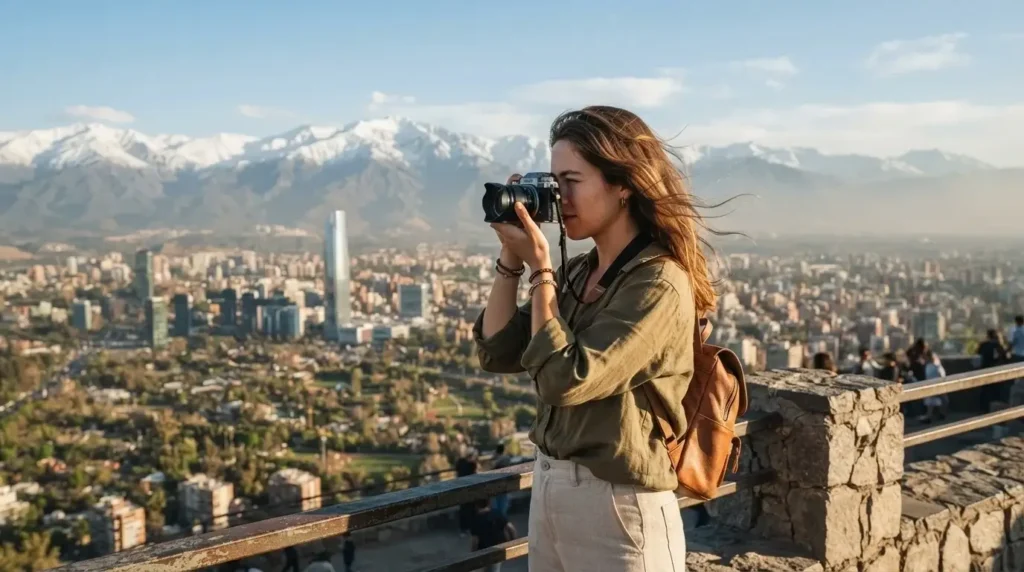
Start with Cerro San Cristobal, a steep hill in the middle of the city with a cable car and sweeping views across Santiago’s skyline toward the Andes. On a clear day, the mountains look impossibly close. Then walk or taxi down to the Bellavista neighborhood, which fills up in the evenings with restaurants, craft cocktail bars, and the kind of spontaneous energy that solo travelers love.
The Lastarria neighborhood is where you go if you want bookshops, coffee shops, contemporary art galleries, and a slower pace. It’s walkable, safe, and full of good places to sit with a coffee and watch the city move. From there, the Museo Nacional de Bellas Artes is free to enter and worth an hour or two even if you’re not a museum person.
For food, do not leave Santiago without eating an empanada de pino. This is the Chilean version of the empanada, bigger and denser than what you might have tried elsewhere, filled with spiced ground beef, olives, boiled egg, and raisins. You’ll find them at street stalls and bakeries across the city. And you absolutely need to try a pisco sour. Chile and Peru argue endlessly over who invented it, but in Santiago, you’ll find the Chilean version made with pisco, lemon juice, sugar, and sometimes bitters. It’s sharp, refreshing, and the perfect introduction to Chile’s drinking culture. Carménère, a grape variety that essentially disappeared in Europe and thrived unexpectedly in Chilean vineyards, is the wine to order.
If you have a spare half-day, the Central Market (Mercado Central) near the city center is a working seafood market with loud vendors, fresh ceviche, and a genuine local energy that tourist-facing markets often lack.
Valparaiso: Colour, Chaos, and a City Unlike Anywhere Else
About 90 minutes from Santiago by bus, Valparaiso sits on a series of steep hills tumbling down to the Pacific Ocean, and it looks like someone painted it by hand. Brightly colored houses, elaborate street murals covering entire building facades, and narrow staircases connecting the neighborhoods make it one of the most visually striking cities in South America.
The historic quarter of Valparaiso is a UNESCO World Heritage Site recognised for its extraordinary industrial-age heritage and its unique urban development built around the hills, or cerros, that define the city’s character. The funiculars, called ascensores, are a classic way to move between the hillside barrios and the flat port area below. Some have been running since the 1880s and are still the most charming way to get around.
The cerros of Alegre and Concepcion are the most walkable for visitors, packed with cafes, small galleries, and street art around every corner. Pablo Neruda’s house, La Sebastiana, is one of the highlights of the city: the Chilean Nobel laureate built it as an eccentrically personal space, and it’s now a museum that gives you a real window into his personality and poetry.
Valparaiso rewards wandering. Get deliberately lost in the upper barrios, stop for a coffee when you find somewhere that looks interesting, and let the city unfold. It is messy and beautiful in equal measure.
Most travelers do Valparaiso as a day trip from Santiago, but if you have the flexibility, staying a night or two gives you a very different experience. The city has a nightlife scene that goes late, and the cerros feel completely different after dark.
Atacama Desert: The Northern Extreme
The Atacama Desert in northern Chile is the driest non-polar desert on Earth. Some weather stations in the region have never recorded rainfall at all. That extreme environment produces a landscape so alien and beautiful that it genuinely looks like another planet, which is why NASA has tested Mars exploration equipment here.
The gateway to the Atacama is San Pedro de Atacama, a small town in the middle of the desert that has built itself into a solid base for exploration without losing all of its charm. You fly into the nearest major city, Calama, and then take a short bus or transfer to San Pedro.
The top things to do here cluster into a handful of genuinely spectacular experiences. Valle de la Luna, a short bike or tour ride from town, is a valley of salt formations and eroded rock that turns extraordinary shades of orange and purple at sunset. El Tatio Geyser Field is best visited at dawn, when the geysers are most active and the steam billows dramatically against the cold morning air. Laguna Cejar lets you float effortlessly in highly saline water, a smaller-scale but equally surreal version of the Dead Sea experience.
The Salar de Atacama, Chile’s largest salt flat, is worth a half-day, especially if you time it to see the flamingos that feed in the lagoons along its edges. Seeing flamingos in a desert environment is one of those genuinely disorienting nature moments that travel keeps delivering if you pay attention.
And then there is the night sky. The Atacama hosts more than 70 percent of the world’s most advanced astronomical observatories for a reason: the altitude, the dry air, and the almost complete absence of light pollution produce a sky so densely packed with stars that first-timers often describe it as unbelievable.
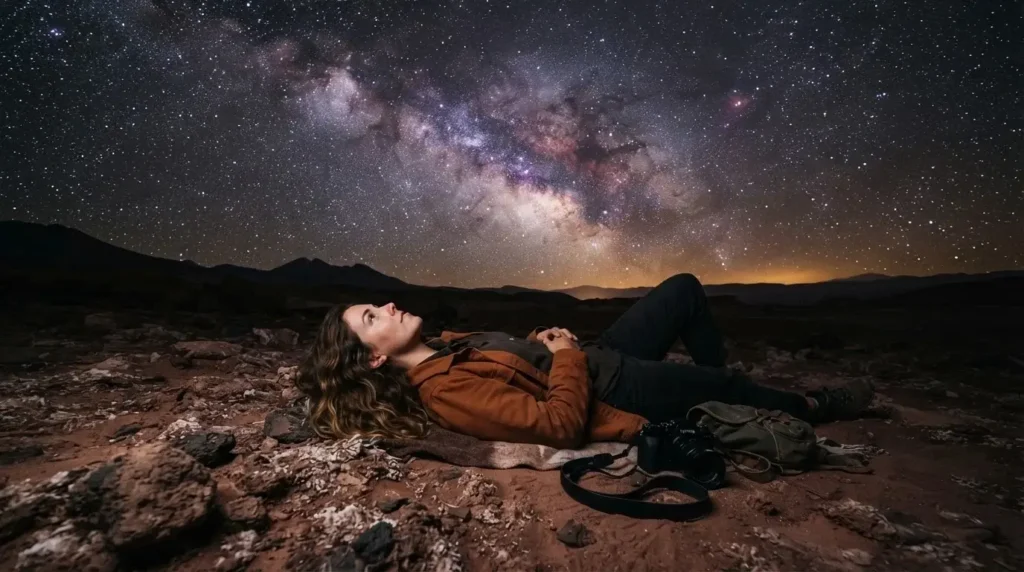
Dedicated stargazing tours run nightly from San Pedro and are one of the most consistently life-changing things travelers report doing in Chile. Book one.
The best time to visit the Atacama is year-round, though the Bolivian winter (January-February) can bring afternoon thunderstorms to the highlands. Any other month is reliably excellent.
Easter Island (Rapa Nui): The Trip You’ll Plan a Whole Trip Around
Easter Island, known in the Rapa Nui language as Rapa Nui, sits in the Pacific Ocean about 3,700 kilometres west of mainland Chile. It is one of the most remote inhabited islands on Earth, and visiting it feels exactly like what it is: a journey to the edge of the world.
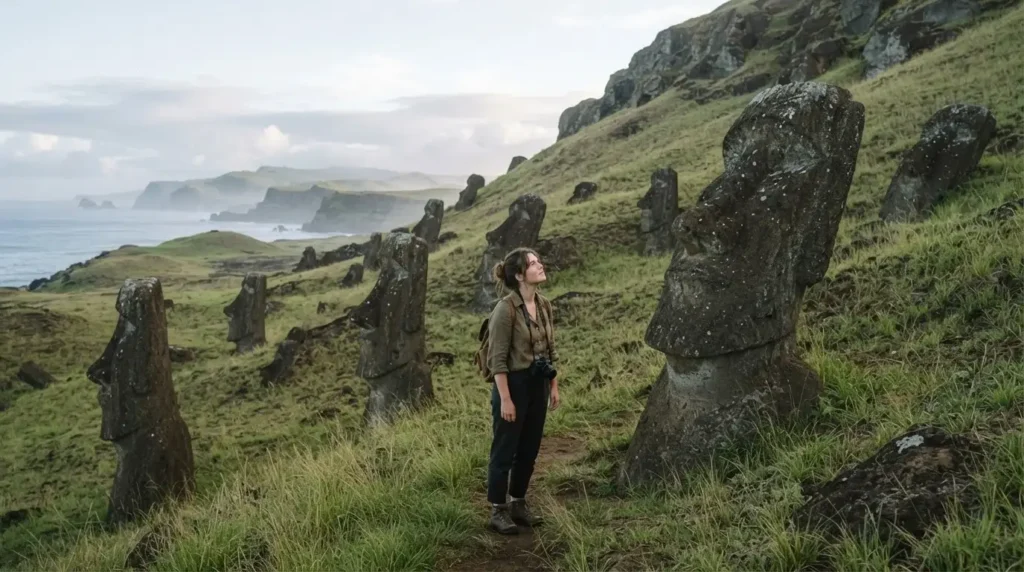
The island is famous for its moai, the monolithic stone statues carved by the Rapa Nui people between roughly the 13th and 16th centuries. There are nearly 1,000 of them scattered across the island, in various states of preservation, and being among them in person is a quietly overwhelming experience that photographs don’t fully prepare you for.
Rapa Nui National Park, which covers much of the island, was inscribed as a UNESCO World Heritage Site in 1995, recognized for both its extraordinary archaeological heritage and its concentration of Polynesian cultural legacy. The quarry at Rano Raraku, where the moai were carved from volcanic rock, is the most fascinating single site on the island: hundreds of statues in various stages of completion stand embedded in the hillside, abandoned mid-process when the carving culture collapsed, and the whole place has an eerie, suspended-in-time quality.
Solo travelers consistently report that hiring a local guide here is genuinely worth the cost. Not just because guides are required to access most major sites, but because the island’s history and the Rapa Nui culture are so layered that having someone who can explain the context transforms what you’re looking at. A good guide turns a row of stone faces into a story about a people, a collapse, and a survival.
The only way to reach Easter Island from mainland Chile is by flying from Santiago with LATAM, the sole airline operating that route. Book flights early, especially for peak season travel (December-March and July). Most travelers spend four to five days on the island, which is enough to see the major sites without feeling rushed.
Torres del Paine: Patagonia’s Crown
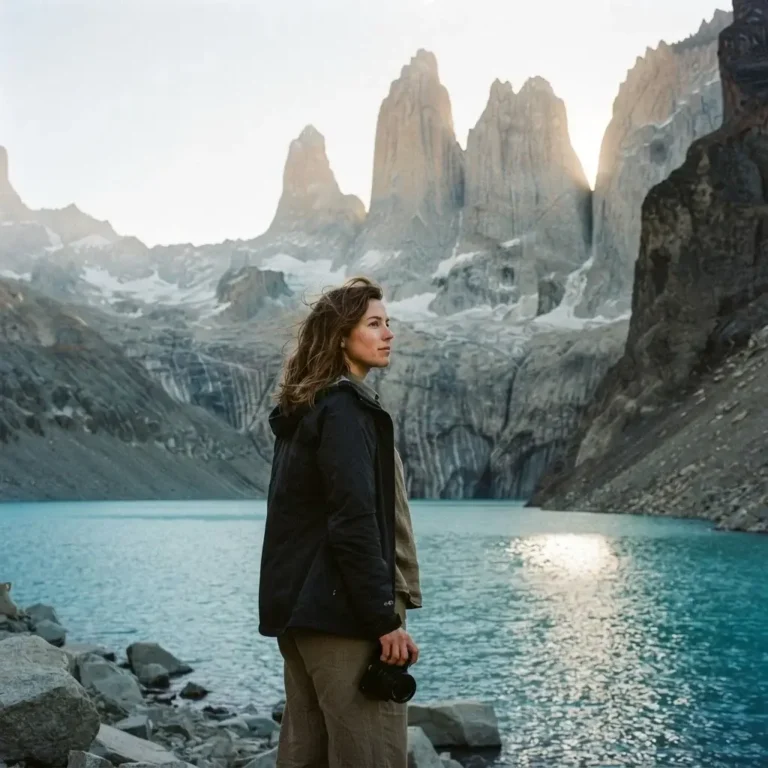
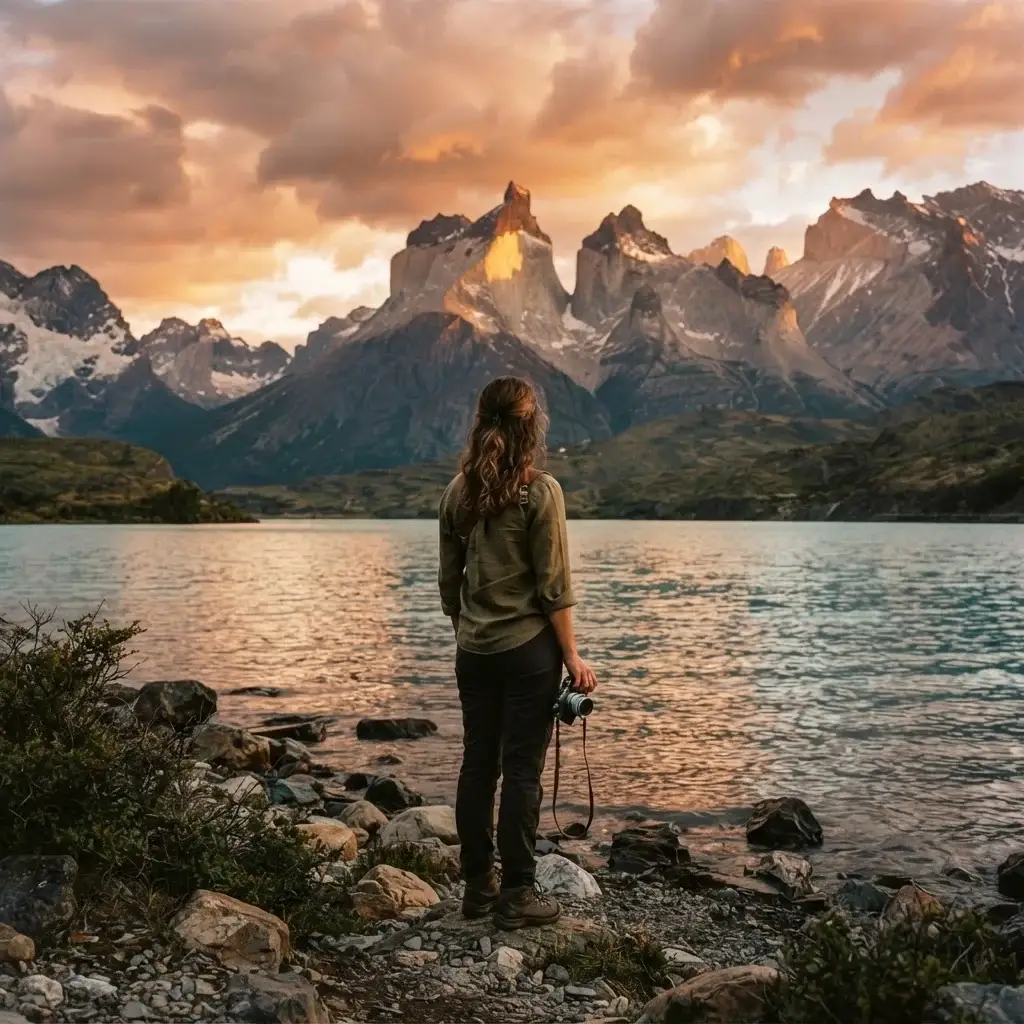
If you have seen photographs of Chile, you have almost certainly already seen Torres del Paine. The three granite towers that give the park its name are among the most photographed mountains in the world, and being there in person confirms that the hype is fully earned.
Torres del Paine National Park is located in Chilean Patagonia, near the southern city of Puerto Natales. Getting here takes commitment: you fly to Punta Arenas or Puerto Natales from Santiago (a three-plus hour flight), then transfer to the park. It is worth every minute of logistics.
The park offers two main trekking routes. The W Trek takes four to five days and covers the park’s most iconic viewpoints, including the base of the towers, the Grey Glacier, and the Valle del Frances. The O Circuit is longer, nine to eleven days, and loops the full massif including the less-visited back side. For first-timers, the W Trek is the standard recommendation: demanding enough to feel like a real achievement, structured enough to manage without previous multi-day trekking experience.
This is where planning early becomes non-negotiable. Campsites and refugios inside the park sell out months in advance for the peak season of November through March. Entrance tickets must be purchased online in advance through Chile’s official national parks pass portal, Pasesparques. Park entrance for foreign visitors runs around USD $53 for a single day or $75 for a multi-day pass, and you’ll want the multi-day version for any meaningful trekking. The national parks authority CONAF manages the park, and their official Torres del Paine page is the most reliable source for regulations, fire restrictions, and current conditions.
The best time to visit is November through March for trekking, with October and April being excellent shoulder season options with fewer crowds. Patagonian weather is famously unpredictable at any time of year: bring waterproof layers, wind protection, and no expectation of consistent sunshine. The wind alone can be a physical force in the park.
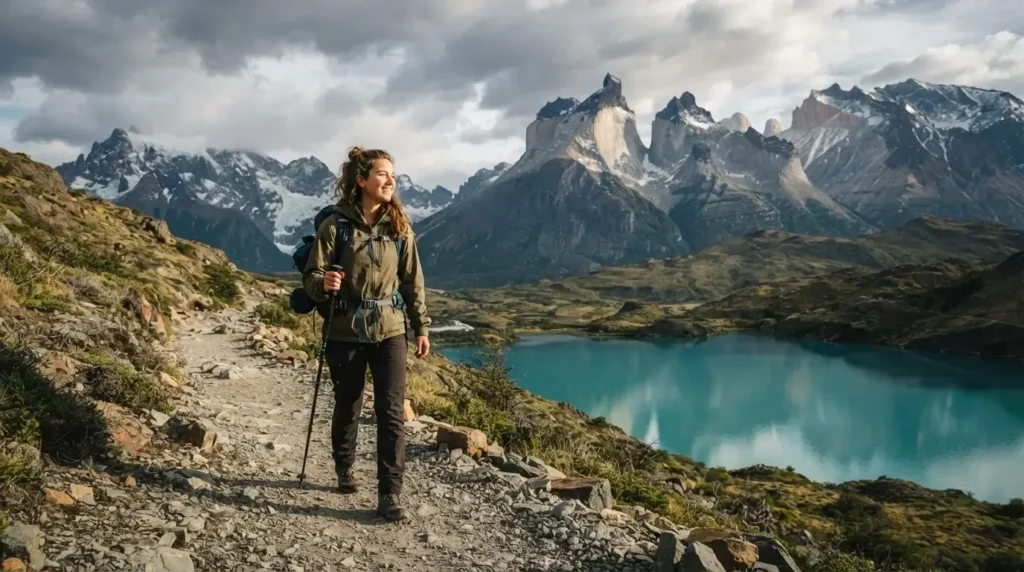
Solo travelers who have done the W Trek consistently describe it as one of the most physically demanding and emotionally rewarding things they have ever done.
One practical note for solo hikers: most refugios and campsites require reservations regardless of whether you are trekking alone or in a group. Some sections of the trail also require you to book meals in advance at the refugios. Don’t wing this one. Plan it properly and it will reward you enormously.
The Lake District: Volcanoes, Hot Springs, and Something Slower
Between Santiago in the north and Patagonia in the south lies a region that many first-time visitors to Chile skip, and that is their loss. The Chilean Lake District, spanning roughly between Temuco and Puerto Montt, is a landscape of ancient forests, perfectly conical volcanoes, and turquoise lakes fed by glacial melt.
Pucon is the adventure hub of the Lake District and one of the most popular towns for solo travelers on the backpacker circuit through Chile. The dominant feature is Villarrica Volcano, an active stratovolcano with a near-perfect cone, and guided summit hikes are possible most of the year (conditions permitting). The hike is hard, full crampons and ice axe territory for the upper portion, but the summit views over Patagonia and the ability to look down into an active crater are something you will not forget.
After the climb, the region’s natural hot springs offer exactly the kind of recovery your body needs. The Termas Geometricas near Conaripe are especially beautiful: a series of pools built into a narrow fern-lined ravine, each heated to a slightly different temperature, connected by timber walkways. Solo travelers consistently describe the experience of sitting in those pools, surrounded by forest, as one of the most peaceful hours of their entire South American trip.
The Lake District is also where Chile’s serious food traditions come into focus. Curanto is the dish you look for here: a traditional slow-cooked stew of shellfish, smoked pork, chicken, potatoes, and vegetables, originally cooked in a pit in the ground with hot stones. It is heavy, deeply satisfying, and specific to this region and to Chiloé Island further south.
Chiloé Island: The One Most People Miss
Chiloé is the kind of place that grabs certain travelers and never quite lets them go. It is an archipelago off the Pacific coast in southern Chile, accessible by a short ferry from Puerto Montt, and it has a culture, mythology, and landscape completely distinct from the rest of the country.
The island is famous for its UNESCO-listed wooden churches, built by Jesuit missionaries in the 17th and 18th centuries using a distinctive combination of local architectural traditions. Sixteen of them are inscribed on the World Heritage List. They are painted in unexpected colors and decorated with a folk-art sensibility that feels both deeply religious and entirely Chiloé’s own.
The palafitos, the brightly painted wooden houses built on stilts over the water in Castro (the island’s main city), are one of the most photographed images in Chile, and they look even better in real life. The seafood here is extraordinary: the local speciality is curanto, and you can also find exceptional smoked mussels, sea urchin, and king crab at the local markets.
Chiloé has a mythology tradition unlike anywhere else in South America, full of sea monsters, witches, and a ghostly ship called the Caleuche that appears in the fog and carries the souls of drowned sailors. The locals take these stories seriously in a way that is not performative for tourists. It is simply part of how the island understands itself. That cultural depth is exactly what makes Chiloé worth the detour.
Getting Between All of This
Chile’s geographic length creates a real logistics challenge, and understanding your transport options before you book makes the difference between a smooth trip and a stressful one.
For Santiago to Valparaiso: buses run frequently (about 90 minutes, under $10 USD). Comfortable, easy, and perfect.
For Santiago to the Atacama: fly. The drive is over 20 hours. LATAM and Sky Airline both operate the Santiago to Calama route. Budget around $80 to $150 for a one-way domestic ticket booked in advance.
For Santiago to Patagonia (Torres del Paine): fly to Punta Arenas or Puerto Natales. Overland buses exist but take multiple days and are only worth it if you have a very specific reason to do the journey that way.
For Easter Island: the only option is flying from Santiago with LATAM.
For the Lake District to Puerto Montt: comfortable overnight buses connect many cities and save on accommodation costs. The official tourism board’s guide to getting around Chile breaks down all transport modes and connections clearly if you want to dig into the specifics.
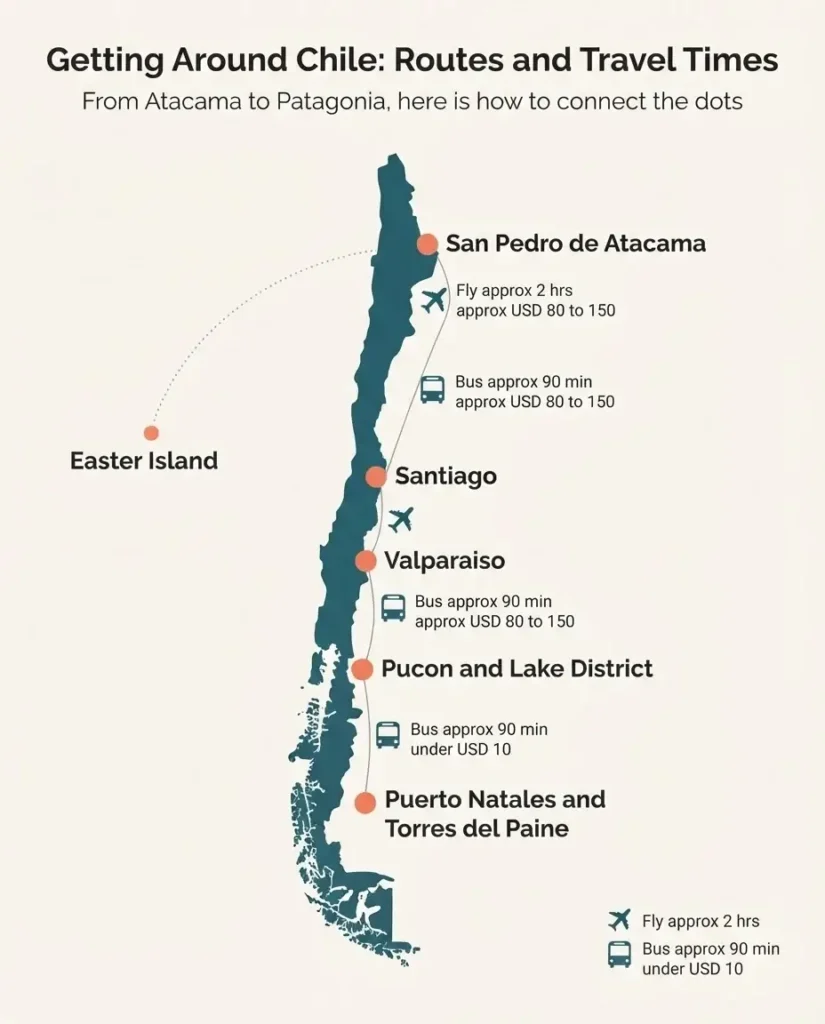
For budget travelers, the long-distance bus network (Turbus and Pullman Bus are the main operators) offers fully reclining cama seats on overnight routes that are genuinely comfortable and far cheaper than flying. On the shorter routes, they are the obvious choice.
What to Eat (and Drink) Across Chile
Chilean food doesn’t always get the attention it deserves on the global stage, but the country has a deep culinary tradition rooted in fresh seafood, hearty stews, and produce from one of the world’s most productive agricultural regions.
Beyond empanadas de pino and curanto, look for pastel de choclo, a savory corn-topped casserole of ground beef, chicken, olives, and boiled eggs that shows up in traditional family restaurants and is exactly the kind of warming, honest food that cold travel days require. Cazuela is a lighter broth-based stew of meat and vegetables that appears everywhere and costs almost nothing.
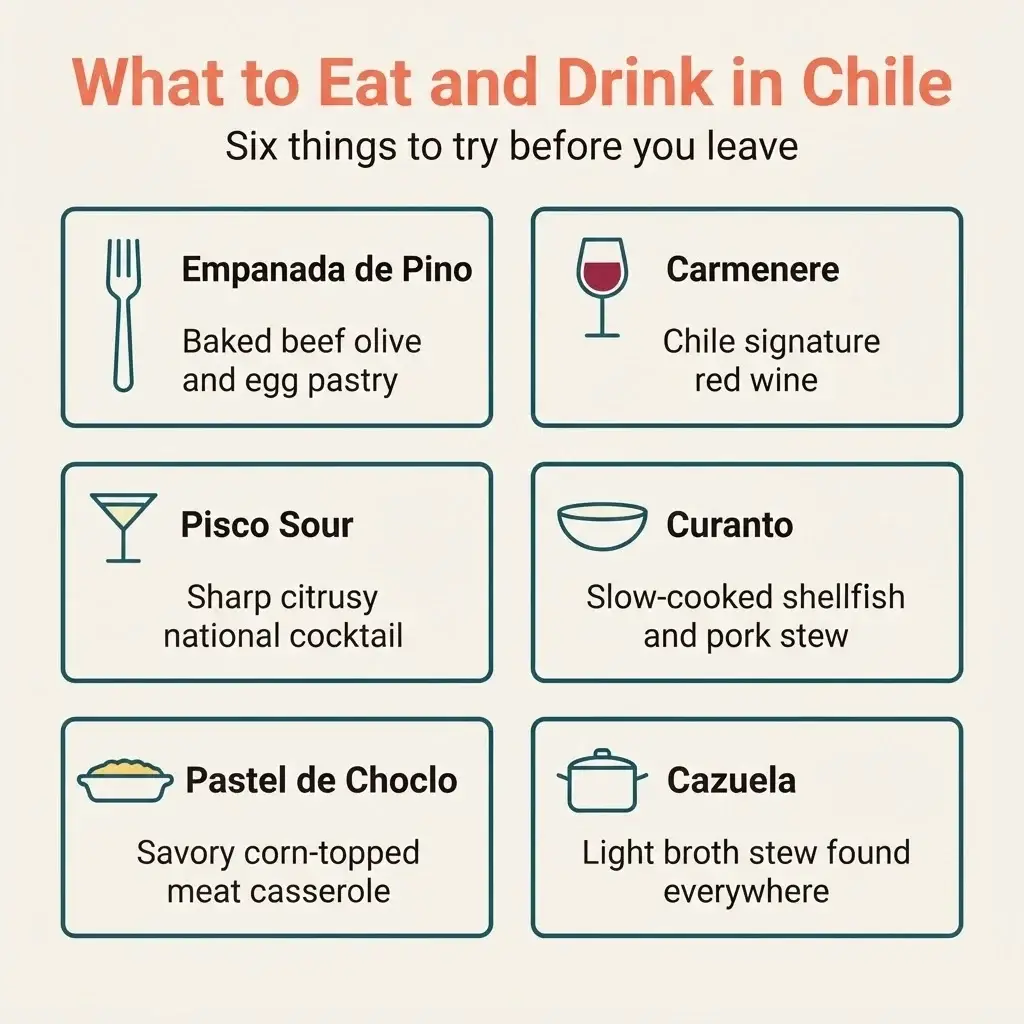
For drinking: pisco sour first, Carménère wine second. If you’re in the south, try chicha, a fermented drink made from apples in Chiloé or grapes in central Chile. It is not always strong, but it is always interesting.
A Few Honest Notes for Solo Travelers
Chile is among the more solo-travel-friendly countries in South America. The hostel infrastructure is solid in all the major destinations covered above. English is spoken reasonably well in tourist areas, though learning a handful of Spanish phrases will open doors and earn immediate goodwill. Chileans are generally proud of their country and happy to help a visitor who makes even a small effort.
The main adjustments to make: book Torres del Paine infrastructure very early (some travelers book six months ahead for peak season), carry more cash than you think you’ll need in remote areas where cards are unreliable, and download offline maps before heading anywhere in Patagonia where connectivity disappears.
Chile also demands an honest acknowledgment that it is not the cheapest South American adventure. If budget is your primary constraint, you can make it work, but you will need to be strategic: cook some meals in hostel kitchens, use overnight buses instead of domestic flights where possible, and research free activities like the many excellent Santiago museums and the self-guided walks in Valparaiso.
What Chile gives back for that investment is extraordinary. A country that stretches from one of the world’s most otherworldly deserts to some of its most dramatic mountains, with a distinct island culture, world-class wine, and more stargazing potential than almost anywhere on Earth, is not a country you visit and forget. Solo travelers who have been to Chile almost universally describe it as a country they are already planning to return to. That says everything you need to know.
Start planning. It is worth every bit of the effort.