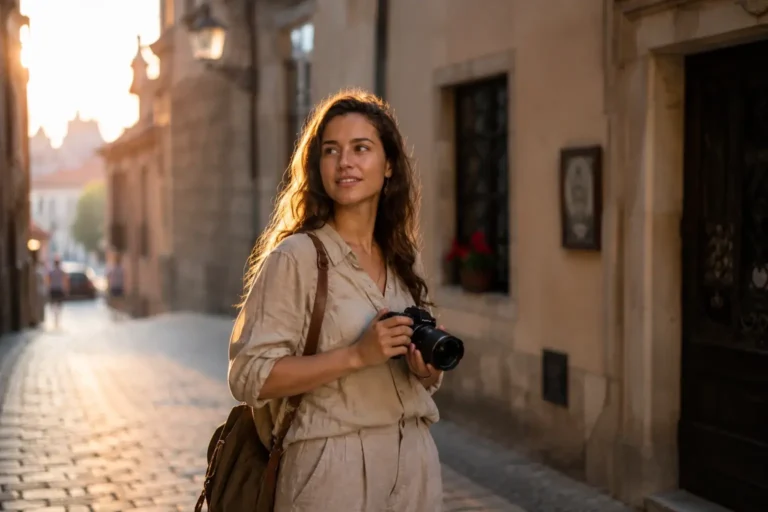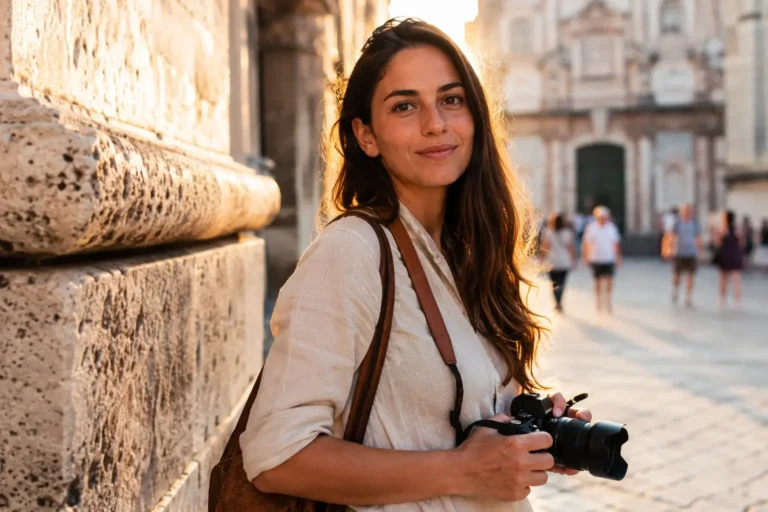

There is a specific moment that every solo traveler knows by heart. You have just stepped off a long, cramped flight. The air in the new airport smells different—maybe like sweet jasmine, damp stone, or rich coffee. Your heart is beating a little fast with a mix of nerves and pure excitement. You walk past the crowded, stressful baggage claim carousel where hundreds of people are waiting anxiously for their suitcases. Instead of stopping, you walk straight past them, head through the exit doors, and step directly into your adventure.
That freedom is exactly what happens when you master the art of packing light.
I did not always travel this way. Years ago, before I started Pinverse Travel, I packed like I was moving across the ocean permanently. I used to stuff massive, heavy suitcases with outfits I never wore, extra shoes that hurt my feet, and heavy bottles of shampoo that ended up leaking all over my clothes. I will never forget pulling a huge, broken-wheeled suitcase up three flights of stairs in a rainy train station in Europe, sweating, crying, and wishing I had left everything at home.
When I finally quit my rigid 9-to-5 office job to build a life centered around exploration, everything changed. I worked long hours waitressing in New York City and saved every single dollar to fund my trips. When you spend months saving tip money to buy a plane ticket, you quickly learn to value freedom over things. Later, when I worked as a licensed sightseeing guide in New York, I spent all day walking the city streets with tourists. I watched people ruin their trips because they were physically exhausted from carrying too much stuff.
Living out of a small bag while teaching English in Thailand and backpacking solo through remote villages taught me a major lesson: choice is a burden, and less is always more. Packing light is not just a way to save money on baggage fees—though that is a great perk. It is a mindset. It is about trusting that you are capable of handling whatever the world throws at you with just the things on your back.
If you are standing in your bedroom right now, looking at a messy pile of clothes on your bed and feeling overwhelmed, take a deep breath. You can do this. Let us walk through the absolute must-have carry-on travel essentials that will help you travel independently, safely, and with total peace of mind.
1. The Core Luggage System: Your Mobile Home
Before we look at what goes inside your bag, we need to talk about the bag itself. Your luggage is your mobile home. If it is uncomfortable, too heavy, or poorly made, it will become an obstacle between you and the culture you came to see.
Choosing Between a Backpack and a Spinner Bag
Many people ask me if they should buy a travel backpack or a hard-shell suitcase with four wheels. The honest answer is that it depends on where you are going.
When I was guiding visitors around the historic, cobblestone streets of Lower Manhattan, I constantly saw travelers break the wheels off their shiny new suitcases. If you are planning to explore places with uneven sidewalks, dirt roads, or lots of stairs—like the hilly neighborhoods of Lisbon or the ancient villages of Europe—a high-quality travel backpack is your best friend. Look for a carry-on bag that opens flat like a suitcase, rather than a top-loading hiking pack. This layout makes it incredibly easy to find your socks without dumping your entire life onto a dirty hostel floor.
However, if you have back pain, or if you are doing a city-hopping trip where you will mostly move between smooth airport floors and hotel lobbies, a lightweight spinner suitcase is a wonderful choice. The key is to make sure the dimensions comply with international airline rules, which are often much stricter than domestic flights within the United States. Aim for a bag that fits within 22 x 14 x 9 inches.
The Personal Item Magic
Never underestimate the power of your smaller second bag, usually called your personal item. This is the bag that slides right under the seat in front of you. I highly recommend using a small, lightweight daypack or a sturdy crossbody bag for this purpose.
Your personal item should hold your transit lifelines: your passport, your phone, your wallet, your medications, and one change of clothes just in case you are forced to gate-check your larger carry-on bag. When I fly, I treat my under-seat bag like a survival kit. If my main bag disappears, I can still comfortably navigate a new city for 48 hours using only what is under my seat.
2. Organization Tools: The Secret to Sanity
The biggest secret to fitting two weeks of life into a tiny overhead compartment is not magic—it is organization. When everything has a dedicated home, your anxiety levels drop to zero.
Compression Packing Cubes
If you take only one piece of advice from this guide, let it be this: buy a set of compression packing cubes. Regular packing cubes are great for keeping your shirts away from your underwear, but compression cubes use a special double-zipper system to squeeze all the excess air out of your clothes. They can reduce the physical volume of your clothing by up to 40 percent.
I like to assign one cube for tops, one for bottoms, and a smaller one for undergarments and socks. When you arrive at a small guesthouse in a remote village, you do not need to unpack everything and scatter your belongings across the room. You simply lift the cubes out of your bag, place them on a shelf, and your room is clean. This keeps you organized and prevents you from leaving small items behind when it is time to catch an early morning bus.
The Wet-Dry Bag and Laundry Strategy
When you travel light, you will be doing laundry on the road. It is a beautiful part of slow travel. Instead of paying expensive hotel laundry fees, I love finding local, coin-operated laundromats. It is a fantastic way to sit, rest, observe everyday local life, and talk with residents.
To manage this system, you need a lightweight, waterproof wet-dry bag. This keeps your dirty, dusty, or damp clothes completely separate from your fresh outfits. If you have to pack up your bag in a hurry after a rainy day hike, the wet-dry bag ensures that your clean clothes stay dry and smell fresh.
3. Universal Electronics and Connectivity Gear
In our modern world, staying connected is not just about posting photos online; it is a vital safety tool, especially for solo travelers. Being able to pull up a local map or call for a ride changes how safe and confident you feel in an unfamiliar environment.
The All-in-One International Adapter
Different countries use completely different wall outlets. Instead of carrying a confusing bag of individual plastic adapters, invest in one high-quality universal travel adapter that features built-in USB and USB-C ports.
Look for an adapter that has a built-in fuse protector to shield your expensive phone or laptop from unexpected electrical surges. When you are staying in older buildings or rural guesthouses, the wiring can sometimes be unstable. Having multiple USB ports on your adapter means you can charge your phone, your camera, and your power bank at the same exact time using just one single wall outlet.
The Heavy-Duty Power Bank
There is nothing more stressful than watching your phone battery drop to 2% when you are trying to find your accommodation in a new city at night. A portable power bank is a non-negotiable, must-have carry-on travel essential.
I always carry a 10,000mAh power bank in my personal item bag. This size is small enough to pass through airport security checkpoints anywhere in the world, yet powerful enough to charge a standard smartphone fully two to three times. Keep the charging cable wrapped tightly with your power bank so you can plug your phone in while you are out exploring local street markets or taking long train rides through the countryside.
Digital Navigation and Local Apps
Before you even leave your house, your smartphone needs to be prepared for the destination. I always download offline maps of the entire city or region I am visiting via Google Maps. This allows me to use GPS tracking to find my way around even if I have zero cellular data or Wi-Fi connection.
Additionally, you should research and download the local ride-sharing or transportation apps used at your destination. For example, if you are planning a trip to Southeast Asia, you will find that regular street taxis can sometimes be stressful for independent newcomers to negotiate. To avoid language barriers and clear up any confusion about pricing, I always recommend that people download the official transportation platform by checking how Grab works for travelers before they arrive at the airport. Using local transit apps gives you a clear, upfront price and tracks your route via GPS, which adds a massive layer of safety and confidence to your solo journeys.
4. Documentation and Financial Security
Losing your money or your identity can turn an incredible adventure into a logistical nightmare. Protecting your documents requires a mix of physical security and digital backups.
The Passport Shield and Digital Backups
Your passport is the most valuable object in your bag. Protect it from water damage, sweat, and wear by keeping it inside a durable, water-resistant passport cover.
But physical protection is only half the battle. Before I depart on any trip, I take clear photos of my passport identification page, my driver’s license, my travel insurance policy, and my vaccination records. I email these photos to myself and save them in a secure cloud storage folder that I can access offline. I also leave a printed paper copy of my passport hidden at the very bottom of my main carry-on bag, completely separate from my actual physical passport. If my small daypack is ever lost or stolen, having these immediate backups makes getting a replacement at a local embassy significantly faster and less stressful.
Managing Cards, Cash, and Split Banking
When it comes to money, never keep all your financial eggs in one basket. I travel with two different debit cards and one credit card, issued by different banks.
When I am out exploring a destination, I carry one debit card and a small amount of local cash in my front pocket or a secure crossbody bag. The backup cards and the rest of my emergency cash stay locked inside my main luggage back at my accommodation. If a pickpocket targets you in a crowded market, or if an ATM unexpectedly eats your card, your trip is not ruined. You simply walk back to your room, grab your backup card, and continue your journey.
Emma’s Travel Tip: Always notify your banks about your travel dates before you leave home. There is nothing worse than trying to buy a delicious bowl of local noodles only to have your card blocked because the bank thinks someone stole it!
5. Apparel Strategy: The Capsule Wardrobe
The biggest misconception about packing light is that you will run out of clothes. You do not need a new outfit for every day of your trip. You just need clothes that work hard, dry fast, and match each other perfectly.
The Power of Merino Wool and Technical Fabrics
When you are selecting clothes for your carry-on capsule wardrobe, look closely at the fabric tags. Avoid heavy cotton items like thick denim jeans or bulky sweatshirts. Cotton holds onto sweat, smells bad quickly, and takes days to dry when hung up in a hotel bathroom.
Instead, look for lightweight synthetic blends or merino wool. Merino wool is a miracle fabric for slow travelers. It regulates your body temperature beautifully, keeping you cool in hot climates and warm in chilly weather. Best of all, it naturally resists odor-causing bacteria. You can wear a high-quality merino wool shirt multiple times without it smelling bad. When it does get dirty, you can wash it in a bathroom sink with a tiny bit of soap, wring it out in a towel, and it will be completely dry and ready to wear by the next morning.
Dress with Cultural Respect in Mind
One of my core travel beliefs is that cultural immersion is far more valuable than rushing through top tourist sights. Showing respect for the local culture starts with how you dress. In many beautiful parts of the world, wearing revealing clothing is considered deeply disrespectful, especially when visiting sacred spaces, temples, churches, or traditional villages.
When I plan my travel outfits, I always include clothing that covers my shoulders and my knees. Loose, lightweight linen trousers and long-sleeved cotton shirts are perfect for hot climates because they keep you cool while shielding your skin from the sun and respecting local norms.
I also never travel without a lightweight, oversized scarf or sarong. It takes up almost zero space in a carry-on bag but serves dozens of purposes. You can wrap it around your shoulders to enter a gorgeous historic temple, use it as a light blanket on a freezing air-conditioned bus, or lay it down on the grass for an impromptu picnic in a local park.
6. The Footwear Philosophy: Two Pairs Are All You Need
Let us talk about shoes. Shoes are the heaviest, bulkiest items in any suitcase, and they are the main reason people end up checking large bags. You do not need a pair of shoes for every single outfit. To travel light and walk comfortably for miles, you only need two pairs maximum.
The Everyday Walking Shoe
Your primary shoe should be a high-quality, supportive, and broken-in walking sneaker. Never, ever bring brand-new shoes on a trip without wearing them around your hometown for at least a few weeks first. Blisters can completely ruin an otherwise magical day of exploration.
Choose a sneaker that is neutral in color so it matches all your capsule wardrobe outfits. It should have a thick, cushioned sole to protect your feet from the impact of walking on hard concrete or uneven cobblestones all day long. When you are flying or taking long train rides, always wear your heaviest, bulkiest walking shoes on your feet instead of packing them inside your bag. This single trick saves an incredible amount of space and weight inside your carry-on luggage.
The Versatile Second Pair
Your second shoe should be a lightweight, supportive travel sandal or an ultra-packable flat. Look for a sandal that has secure ankle straps and a contoured footbed, rather than flimsy plastic flip-flops.
A great travel sandal can transition effortlessly from a morning walk along a dusty path to a casual dinner at a local family-run eatery. If you plan to use shared hostel bathrooms or walk around public pool areas, a pair of lightweight, waterproof sandals also serves as a protective barrier for your feet.
7. Health, First-Aid, and Self-Care Comforts
Getting sick far away from home can feel scary, but being prepared with a compact, customized medical kit gives you the confidence to navigate health challenges independently.
The Compact First-Aid Survival Pouch
Do not waste your limited carry-on space with massive, store-bought first-aid boxes. Instead, use a tiny, clear zipper pouch to build your own customized wellness kit. Take pills out of bulky cardboard boxes and keep them in labeled, clear zip-top bags.
Your kit should include:
- Pain relievers and anti-inflammatory medications (like ibuprofen or acetaminophen)
- Anti-diarrheal tablets (an absolute lifesaver when trying new street food)
- Rehydration salts (vital for recovering from heat exhaustion or stomach bugs)
- A small selection of adhesive bandages and blister cushions
- Antiseptic wipes to clean minor cuts or scrapes
- Motion sickness pills for bumpy boat rides or winding mountain roads
When traveling, it is important to check the official health guidelines for your destination before you depart. For up-to-date health notices and vaccine recommendations, I always cross-reference my packing list with the official CDC Travelers’ Health destination advisories to ensure I have the exact preventive medications or health supplies required for the specific environment I am entering.
Navigating Food and Water Safety
Part of the joy of travel is tasting local food. Whether it is a rich bowl of curry in an open-air night market or fresh tropical fruit from a roadside stand, food connects us to culture. However, sensitive digestive systems can sometimes react to unfamiliar bacteria.
As a general rule of thumb when traveling in regions with developing water infrastructure, avoid drinking tap water or using ice cubes made from tap water. Look for vendors where you can see the food being cooked fresh and hot right in front of you. If you are ever unsure about food preparation standards, water safety, or regional health risks in an area you are exploring, you can read the safety guides provided by the World Nomads Travel Insurance safety content to learn how experienced backpackers protect their health while enjoying authentic local culinary traditions around the world.
8. Liquids and Toiletries: The Minimalist Routine
The airline rule allowing only small bottles of liquids inside a single, quart-sized clear bag can feel like a major restriction. But it is actually a fantastic opportunity to simplify your self-care routine.
Embracing Solid Toiletries
The easiest way to conquer the liquids rule is to stop carrying liquids entirely where possible. The modern sustainable travel industry has created incredible solid alternatives for almost every liquid toiletry product.
Switch out your liquid body wash for a classic bar of soap kept in a lightweight, breathable sisal soap bag. Swap your liquid shampoo and conditioner bottles for solid shampoo bars, which look like small bars of soap but are formulated beautifully for your hair. You can also find solid facial cleansers, solid deodorant sticks, and even dehydrated toothpaste tablets.
Solid toiletries have three massive benefits: they take up a fraction of the space, they last significantly longer than travel-sized liquid bottles, and they will never, ever leak inside your bag and ruin your favorite clothing.
Streamlining Your Necessary Liquids
For the liquids you absolutely cannot live without—like high-quality facial sunscreen, contact lens solution, or specific skincare serums—use premium, leak-proof silicone squeeze tubes.
Label each tube clearly so you do not accidentally put hair gel on your face in the dark. Pack these tubes tightly into a durable, clear, TSA-approved toiletry bag that features a strong zipper. When you reach the airport security line, place this clear bag right at the very top of your carry-on luggage so you can lift it out smoothly without holding up the line or creating unnecessary stress.
9. Safety Tools and Smart Vigilance
Travel is not perfect, and challenges are a natural part of any meaningful journey. But being smart, observant, and prepared helps you move through the world with a sense of calm security.
Choosing the Right Anti-Theft Bags
You do not need to wear an ugly, uncomfortable plastic money belt under your pants to stay safe. Modern pickpockets look for easy, distracted targets. The best way to protect your daily belongings is to use a compact, durable crossbody bag or a fitted sling bag worn across the front of your chest.
Look for a bag made from water-resistant nylon with durable, interlocking zippers. When you are walking through crowded transit hubs, busy train stations, or popular street markets, simply place your hand casually over the zipper of your front-facing bag. This simple posture signals to anyone watching that you are alert, aware of your surroundings, and not an easy target.
Securing Your Space
When you are staying in shared hostel dorm rooms, budget guesthouses, or homestays, you need a reliable way to secure your main carry-on luggage. Always pack a sturdy, medium-sized combination padlock in your bag. Many accommodation spaces provide personal lockers, but they rarely provide the actual lock.
If your room does not have a locker, you can use your combination lock to secure the main zippers of your backpack together. For an extra layer of peace of mind when sleeping in private budget hotel rooms, I love carrying a tiny, rubber door wedge. Slipping that wedge firmly under your closed hotel room door from the inside ensures that no one can enter your room at night, allowing you to get a deep, restful night of sleep before your next big day of adventure.
10. Mindset and Comfort Essentials for Transit
The journey itself can be long, tiring, and full of delays. Packing a few small, thoughtful comfort items can transform a exhausting twelve-hour economy flight into a peaceful space for reflection and preparation.
The Travel Journal and Pen
Among all the high-tech gadgets and smart packing cubes, a simple paper notebook and a reliable pen remain some of my absolute favorite travel tools.
When I left the corporate world to travel full-time, writing down my daily observations changed how I processed my experiences. Don’t just write down a list of the tourist sights you saw. Write down how the air felt when you woke up, the funny translation mistake that made you laugh at breakfast, or the kindness of the local resident who helped you find the correct bus platform.
Documenting your thoughts during slow moments in transit helps you build self-awareness and processes the personal growth that solo travel naturally sparks.
Conquering In-Flight Discomfort
To arrive at your destination feeling energized and ready to explore, your body needs to be cared for during the flight. Long transit days can cause dehydration and poor circulation.
Always pack a durable, empty, reusable water bottle in your carry-on bag. Once you pass through the airport security screening checkpoint, find a water filtration station and fill your bottle up completely so you do not have to rely on tiny plastic cups of water from flight attendants.
I also highly recommend wearing a pair of graduation-compression socks on flights longer than four hours. Compression socks help maintain healthy blood flow in your legs, prevent uncomfortable swelling, and reduce the physical fatigue caused by sitting in small airline seats for long periods.
A Detailed Look: Applying the Essentials in the Real World
To show you exactly how these must-have carry-on travel essentials work together to create a seamless, independent journey, let us look at a real-world scenario. Imagine you have decided to stop waiting for the perfect moment and have booked a solo trip to explore the breathtaking cultural landscapes of Thailand.
Arriving Natively in Bangkok
You step off the plane at Suvarnabhumi Airport in Bangkok. Because you packed completely light using your core luggage system, you walk past the long lines of travelers waiting for checked bags. You pull out your phone, connect to the airport Wi-Fi, and open your downloaded transportation app to book an affordable ride straight to your guesthouse near the historic old quarter.
Before heading out to explore the spectacular historic temples, you open your compression packing cubes and pull out a breathable linen shirt and lightweight trousers that cover your shoulders and knees, ensuring you fully respect local customs. You slip your offline maps, your power bank, and your first-aid pouch into your front-facing crossbody bag.
[ A Perfect Day of Light Travel Exploration ]
08:00 AM ─ Walk light to the ferry pier using offline GPS maps
09:30 AM ─ Explore the historic temples with respectful clothing covering shoulders & knees
12:00 PM ─ Stop at a bustling local street market for a fresh plate of Pad Thai
03:00 PM ─ Rest at a riverside cafe while writing your reflections in your travel journal
06:00 PM ─ Head back to your guesthouse, wash your technical shirt in the sink, hang to dry
Deep Cultural Immersion
Because you are not weighed down by heavy bags, you can confidently hop onto local public water commuter boats along the Chao Phraya River, navigating the city like a resident. You stop at a bustling open-air market to try a plate of fresh, authentic Pad Thai cooked over a hot flame.
To ensure you stay completely safe and fully understand the local cultural expectations, festival schedules, and regional customs during your journey, you can always research your itineraries using the official Tourism Authority of Thailand destination guides, which give independent travelers deep insights into local life without relying on sterile, generic tourism brochures.
You spend your afternoon sitting on the stone steps of an ancient ruin, writing in your travel journal, watching the sunset, and realizing that you didn’t need a massive suitcase to find happiness. You have everything you need to navigate the world right on your back.
The Ultimate Must-Have Carry-On Travel Essentials Checklist
To help you pack for your next big adventure with complete peace of mind, here is a highly practical, scannable checklist of everything we have discussed. Print this out, lay your items across your floor, and check them off one by one.
▢ Luggage & Structure
- International-sized carry-on bag (Backpack or Spinner under 22″x14″x9″)
- Lightweight daypack or front-facing crossbody bag (Your personal item)
- Set of double-zipper compression packing cubes
- Waterproof wet-dry bag for laundry management
▢ Electronics & Connection
- Universal international travel adapter with built-in USB/USB-C ports
- 10,000mAh portable power bank with matching charging cables
- Smartphone loaded with offline maps and pre-installed local transit apps
▢ Security & Finance
- Passport inside a protective, water-resistant cover
- Two different debit cards and one credit card from separate banks
- Printed paper copy of your passport hidden in your main luggage
- Secure cloud storage folder containing digital copies of all major documents
- Medium combination padlock for hostel lockers or luggage zippers
- Small rubber door wedge for private room security
▢ Apparel & Footwear
- 5 versatile, matching tops (Merino wool or lightweight synthetic blends)
- 4 breathable bottoms (Linen pants, lightweight trousers, or secure shorts)
- 1 lightweight rain jacket or windbreaker
- 1 oversized scarf or sarong for cultural respect and temperature comfort
- 1 pair of broken-in, highly supportive everyday walking sneakers
- 1 pair of lightweight, strapped travel sandals
▢ Health & Toiletries
- Clear, compact wellness pouch with pain relievers and anti-diarrheal pills
- Oral rehydration salts and a small supply of blister cushions
- Solid shampoo bar, solid conditioner bar, and solid bar soap
- Dehydrated toothpaste tablets and a travel toothbrush
- Premium silicone squeeze tubes filled with high-protection facial sunscreen
- Strong clear toiletry bag for quick airport security inspection
▢ Comfort & Mindset
- Empty, durable reusable water bottle (Fill up after security checkpoint)
- Pair of graduated compression socks for deep-vein circulation during long flights
- Paper travel journal and a reliable pen to document your journey
Step Out of Your Comfort Zone
Packing light is far more than a practical travel hack. It is an act of courage. When you deliberately choose to leave behind the excess material things that society tells you that you need to be comfortable, you are making a powerful statement. You are telling yourself that you trust your own mind, your own body, and your own resourcefulness to handle the unexpected joys and challenges of travel.
The world rewards curiosity, open-mindedness, and bravery. Mistakes will happen on the road, flights will be delayed, and you might occasionally get turned around in a strange city. But those unexpected moments, those little surprises, are almost always the most beautiful and memorable parts of the entire journey. They are the moments where your confidence grows, your perspective expands, and you realize how capable you truly are.
Stop waiting for the perfect moment to see the world. The perfect moment does not exist. Grab your bag, pack only the essentials, step out of your comfort zone, and start creating meaningful experiences right now. The adventure of a lifetime is waiting for you, and you already have everything you need to live it.